Mideast History Expert Rashid Khalidi to Deliver
2007 Flexner Lectures on Cold War, Middle East
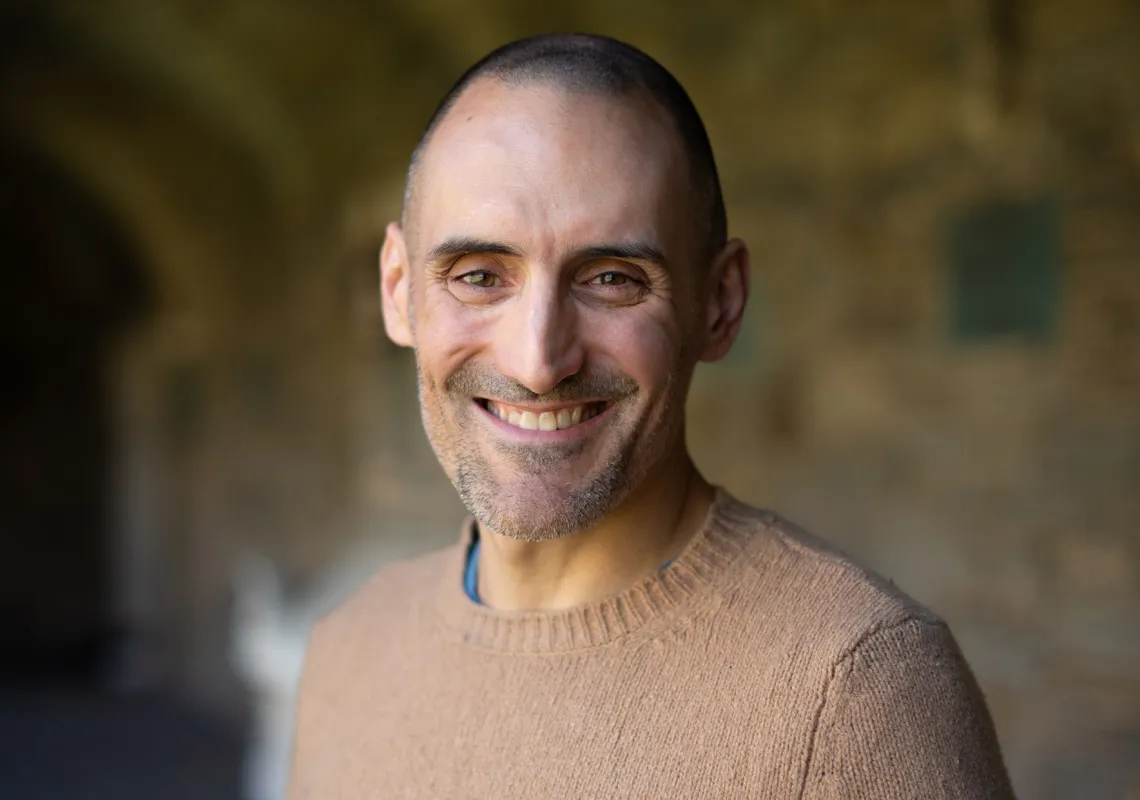
Rashid Khalidi, one of the foremost authorities on the history of the modern Middle East, will deliver the 2007 Mary Flexner Lectures at Bryn Mawr College on three Wednesdays in October and November. The overarching theme of the series will be "The United States, the Middle East and the Cold War."
The Flexner lectures have brought some of the world's best-known scholars of the humanities to Bryn Mawr's campus and have resulted in some of the most influential books of the 20th century. That tradition continues into the 21st century, thanks to an agreement between the College and Harvard University Press to publish the lectures. The 2005 series by K. Anthony Appiah will be available through HUP in January 2008 as Experiments in Ethics.
Khalidi's talks, which are free and open to the public, will take place at 8 p.m. in Thomas Great Hall. His topics are "Rethinking the Cold War in the Middle East" (Oct. 24), "Oil, Strategy and the Cold War in the Middle East" (Oct. 31) and "The Middle East in the Cold War and Afterwards" (Nov. 7).
Khalidi's visit has prompted a series of associated workshops and discussions for members of the Bryn Mawr faculty and staff. Two discussions to be held in advance of the lectures — the first scheduled for next Wednesday, Oct. 3, at 4:15 p.m. — will focus on readings that treat the historical background of Khalidi's Flexner Lecture subjects, including some of Khalidi's previous work. Post-lecture events will give participants an opportunity to discuss each lecture topic with Khalidi, and three special workshops with Khalidi will focus on associated subjects. For dates, times and readings, see the Provost's Web site.
Kahlidi is the Edward Said Professor of Arab Studies and Director of the Middle East Institute at Columbia University. He has published scores of scholarly works on the history and politics of the Middle East. In recent years, Khalidi has also embraced the role of a public intellectual: his five monographs and two edited volumes include works intended for a general audience, and he has appeared on numerous radio and television news and public-affairs broadcasts. He has also published opinion pieces in the popular press, often urging more consultation with Middle East experts in the shaping of U.S. foreign policy.
Khalidi's research and teaching encompass the history of the modern Middle East, and in particular the countries of the southern and eastern Mediterranean, with an emphasis on the emergence of national identity and the involvement of external powers in the region. He is particularly interested in the role of the press in the formation of new publics and new senses of community, in the place of education in the construction of identity, and in the way narratives of self and other have interacted over the past two centuries in this conflicted region.
Born in the United States to a Lebanese mother and a Palestinian father, Khalidi grew up in New York and earned his undergraduate degree from Yale University. He went on to Oxford University for his doctorate in history, writing a dissertation about British policy toward Syria and Arab nationalism in the years preceding World War I. He taught at the American University in Beirut and at the University of Chicago before his appointment to the Said Chair at Columbia in 2003.
The pioneering Egyptologist James H. Breasted gave the first series of Flexner Lectures in 1928-29, to be followed in later years by Ralph Vaughan Williams, Alfred North Whitehead, I.A. Richards, Alfred H. Barr Jr., Arnold Toynbee, Erwin Panofsky, Isaiah Berlin, Paul Henry Lang, Douglas Cooper, Frank Kermode, Natalie Zemon Davis, Harold Bloom and K. Anthony Appiah, among others.
<Back to Bryn Mawr Now 9/28/2007
Next story>>
|