

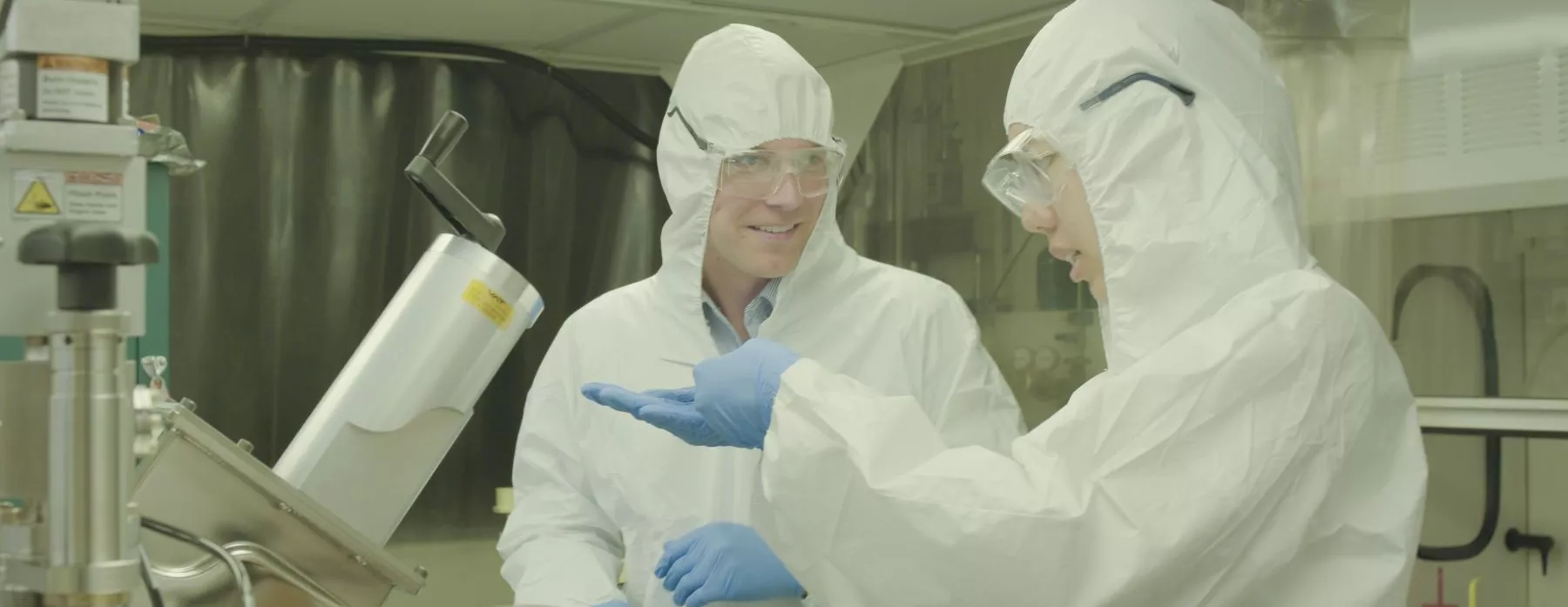
The College
Bryn Mawr College is a small university consisting of an undergraduate college for women with approximately 1200 students and two coeducational graduate schools. The Graduate School of Arts and Sciences, with about 160 students, offers work leading to the degrees of Master of Arts and Doctor of Philosophy in eleven departments consisting of eighteen graduate programs. The Graduate School of Social Work and Social Research, with about 280 students, offers work leading to the degrees of Master of Social Service, Master of Law and Social Policy, and Doctor of Philosophy. Students and faculty members form a closely knit community of scholars dedicated to the highest standards of excellence in teaching and research. General information about Bryn Mawr College and its graduate programs is available at http://www.brynmawr.edu/gsas/.
Bryn Mawr College is located about 15 miles west of Philadelphia in a suburban setting with excellent public transportation to the city. There is a wide variety of cultural and recreational opportunities available both in Philadelphia and the surrounding area. The entire geographic region is rich in historic sites. Outdoor enthusiasts will find numerous state parks and forests to visit and the popular New Jersey and Delaware beaches are only one to two hours away by car.
The Physics Department
A sound education in physics offers in general an excellent grounding for any career that requires critical thinking, problem solving and the ability to put issues into a broad perspective. See our flyer for an overview of the distinctive attributes of our program. The department has a very long tradition of training both graduate students and undergraduate students in a supportive atmosphere. With approximately 5 faculty members, 4 graduate students and 30 junior and senior undergraduate majors in any given year, there is a true sense of a professional family within the department.
The Graduate Program in Physics
The graduate program in physics is designed to give students both a broad background in physics and a high degree of expertise in a chosen field of research. While the Department is small, it provides a breadth of coverage in physics, which includes the different specialties of our faculty covering a variety of topics and research interests. We offer Ph.D. and Master's programs in experimental, theoretical and computational research specialities including atomic and optical physics, molecular spectroscopy and dynamics, condensed matter physics using nuclear magnetic resonance techniques, and topics in fundamental theoretical physics.
You can visit http://www.brynmawr.edu/physics/faculty/ for details on faculty research programs and contact information for individual faculty. Our size allows students and faculty members to work together closely. Formal graduate course work is handled in small tutorials, which can be tailored to the needs of the students. As a consequence, graduate students find a supportive and stimulating environment on our campus. Students may also take introductory or advanced graduate courses at the University of Pennsylvania or at Drexel University in nearby Philadelphia (about 30 minutes by car or train). Research projects can also be interdisciplinary nature, involving two or more groups in the Physics, Mathematics, and Chemistry Departments.
In the past ~25 years, the Physics Department has awarded ~20 Ph.D.'s and ~8 MA's. The majority are currently employed as physicists. Many have held postdoctoral fellowships. A large number are on college or university faculties and others are employed by industry or government. Research in the department has been recognized and sponsored by funding from agencies such as the National Science Foundation, the National Institutes of Health, the American Chemical Society, Research Corporation, and the North Atlantic Treaty Organization. The Physics Department's research programs have also been supported by a variety of generous grants to Bryn Mawr College from many corporations, foundations and private individuals. The facilities and equipment available for experimental research are of high quality and enable each research group to remain competitive in its area.
In addition to the academic program in Physics, there are several other campus-wide oppotunities for graduate students to pursue professional development. The GSAS offers a Dean's Certificate in Pedagogy and graduate students in the sciences hold monthly student-led cross-disciplinary journal clubs supported by Bryn Mawr's Center for Science in Society. Also, each year a Symposium on Graduate Research in the Sciences is held on campus. See for example, http://www.brynmawr.edu/physics/grad02/symp.html for a description of the Symposium held in 2002.
Financial Aid for Graduate Students
Graduate student stipends are available in the form of teaching and research assistantships. Financial aid awards based on merit provide tuition scholarships. The 12-month stipend for the 2006-2007 year is $22,125 in addition to full tuition remission. Graduate students in recent years have also won outside support for their studies, including Newport Research Awards, Ford Foundation Minority Awards, grants and fellowships from SPIE, Fulbright pre-doctoral fellowships, American Association of University Women pre-doctoral fellowship, and fellowships from Zonta International. Others have arranged part-time or full-time study while working in industrial positions where the employer provided tuition support or partial stipend support. Advanced graduate students have also been supported through faculty research grants from the NSF.
Facilities
The Physics Department is housed in the Park Science Center with the other science departments. Physics shares with these departments the services of a well-equipped and well-staffed machine shop. The physics library collection located in the Collier Science Library wing of the Science Center includes more than 5,000 monographs and 64 current journal subscriptions. There are many other relevant monographs and journals in the chemistry collection. Through TRIPOD, an on-line system, the library offers a joint catalog for the collections of Bryn Mawr, Swarthmore and Haverford Colleges and monographs can be borrowed from all three colleges. There are many on-line and CD ROM database and search facilities available to students including a prompt interlibrary loan program. More information on library facilities is available at http://www.brynmawr.edu/libraries/index.shtml.
Computing support at Bryn Mawr College extends across three operating systems: Windows, Macintosh and Unix. Desktop computers are all networked, and interact with central and departmental servers. The campus network is connected to the internet via SMDS (at 1.5 mbs) to PREPnet, the regional provider. The physics department has a range of PCs and Macs available for scientific computing. An up-to-date collection of software is maintained including: current operating systems, data acquisition and manipulation systems, curve-fitting and plotting systems, algebraic and analytic symbolic computing systems, database systems and, general coding in standard low- and high-level languages. Unix computers are available on Sun, Solaris and HP-UX Workstations. Several faculty members make use of supercomputing in their research through grants from national supercomputing centers such as the National Center for Supercomputing Applications at the University of Illinois and the Pittsburgh Supercomputing Center. In addition, a new 48-node Beowolf Cluster has recently been brought online in a collaboration with the Computer Science Department and is available for use.
Campus-wide facilities include a Student Center with a cafe, lounge, bookstore, meeting rooms, and a modern Sports Center. The Sports Center contains an Olympic-size pool, a Fitness Center which includes Nautilus and Cybex equipment as well as treadmills, stairmasters, elliptical runners, and rowers, and a main gymnasium for volleyball, badminton and basketball. Additionally, seven outside tennis courts and two playing fields are available.
Further Information
Information about how to apply is at the Graduate School of Arts and Sciences web
site. Interested students can also write, phone or e-mail
the department for further information.
Graduate students, Tom Carroll and Ahmed Rashed, participating in a student research symposium.