Share
Firefox does not support native sharing. Use another option.
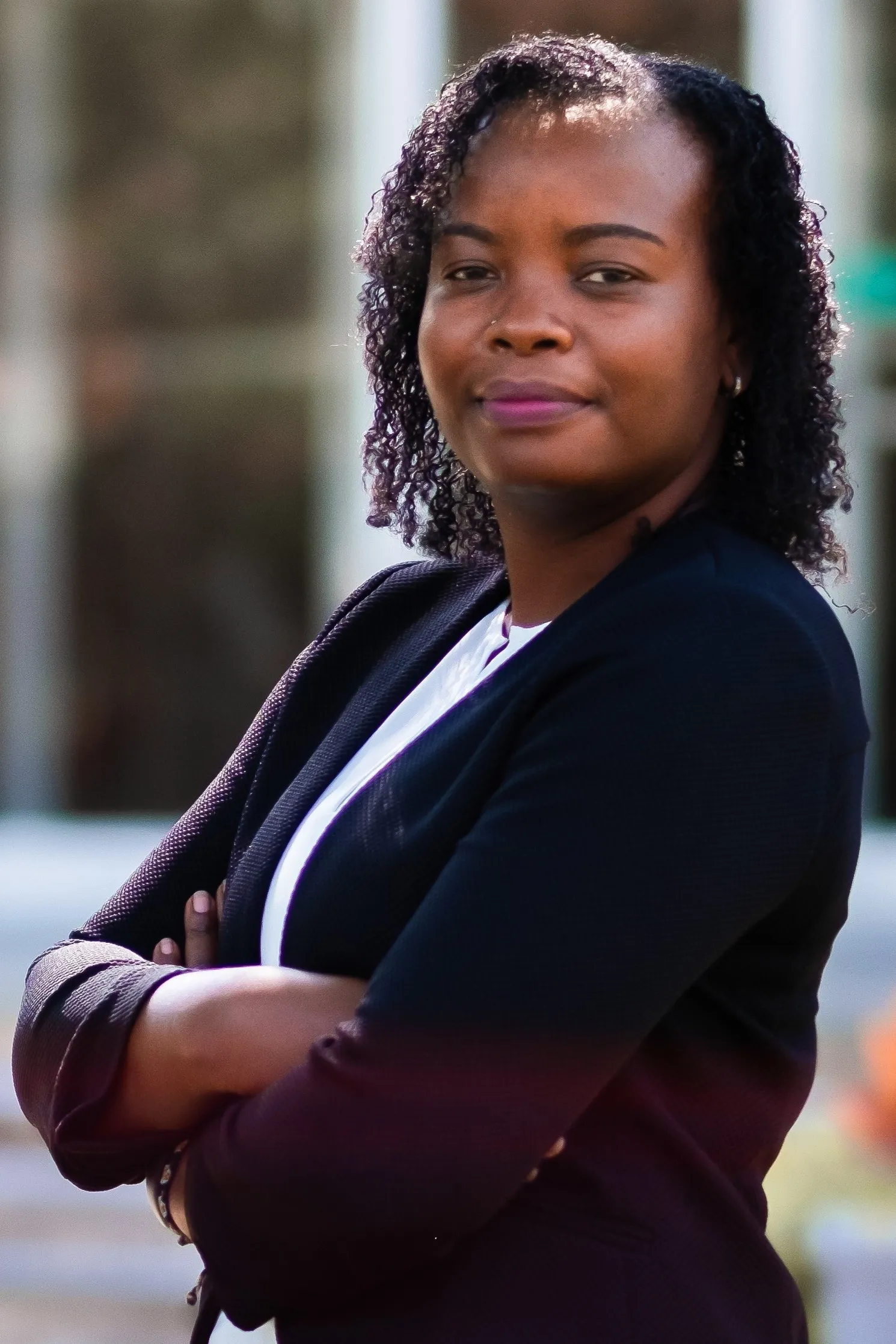
Assistant Professor of Social Work and Social Research Kerry Lee
Even though many men face violence at the hands of female intimate partners, they remain woefully underrepresented in both research and services, according to Assistant Professor of Social Work Kerry Lee, who contributed to one of the first large-scale studies helping to change that dynamic.
The study, published online in the journal Psychology of Men & Masculinities in April (lead author Lyric Russo of George Mason University), found that men across racial and ethnic backgrounds who experience female-perpetrated intimate partner violence (IPV) often encounter barriers to seeking support, underscoring the necessity for culturally responsive and gender-inclusive interventions.
The research part of a multi-phase project titled “Understanding Male IPV in Racial and Ethnic Minority Communities” is led by a team of six women: principal investigator Denise Hines of George Mason University; Lee; Emily Douglas of Montclair State University; Chiara Sabina of Rutgers University; Russo, who is a postdoctoral fellow at George Mason; and Jennifer Mezzapelle, who is currently a visiting assistant professor at Haverford College.
According to a 2016–2017 report on intimate partner violence from the Centers for Disease Control and Prevention (CDC), 44.2 percent of men compared to 47.3 percent of women will experience contact sexual violence, physical violence, and/or stalking by an intimate partner in their lifetime.
“Men, just like women, are victims of partner violence,” says Lee, who investigates family violence among racially and ethnically minoritized individuals and families. “The goal of this all-encompassing project is to shed light on the experiences of men who are victims of intimate partner violence and reduce the stigma, but also around help-seeking,” Lee says. “Where are the systems that are supposed to provide support failing, and in which areas are they doing well?”
The project, funded through an anonymous $1 million grant, recruited close to 1,200 men, with an emphasis on Latino men, who made up half the pool, and examined differences across racial and ethnic groups. Among Latino, Black, and White men, the top barrier was viewing abuse as a private matter, the research found. Others were shame, fear of retaliation, and fear of not being believed.
Latino men, more than the other groups, reported worries over bringing shame to their families, the research found. They also reported more language and immigration-related hurdles.
“It’s hard for men to seek help and say, ‘My female partner was the one who busted my lip or gave me this cut on my head,’” Lee says. “There’s this perception that men are supposed to be strong, tough, and not have a woman put hands on them.And in most cases, the natural assumption is he’s the perpetrator and not the victim.”
In another paper that came out of the IPV project and was published this August in the journal Acta Psychologica, Lee led an analysis of male IPV victims and their endorsement of masculinity norms and the resulting impact on post-traumatic stress disorder symptoms, finding variation depending upon racial and ethnic groups and highlighting the need to tailor interventions.
In other research, Lee found that the most prevalent IPV among Black male and female study subjects was bi-directional IPV. “Sometimes we tend to look at intimate partner violence in isolation — You’re the perpetrator. You’re the victim — not recognizing it can be both,” she says. A new project, she adds, will look at intimate partner homicide.
Lee’s interest in intimate partner violence grew out of her experiences in her native Jamaica, where she says IPV is often accepted as a cultural norm, even in situations where the woman is the victim, and rarely reported.
“The curious side of me wondered what would trigger this man,” she says, “to inflict harm or pain on someone he loves.”
As a researcher, Lee has investigated the trauma or experiences that might lead to individuals committing violence against a partner.
“If we understand both sides of the coin, the victimization piece and the perpetration piece,” she says, “we’d be better able to develop interventions that not just focus on serving those who have experienced violence as victims, but those who have perpetrated it.”
Likewise, Lee says, the IPV project seeks to raise awareness of male victims and the need to provide ways for men to report experiences and find support.
“It is moving the needle,” she says, “and contributing to the vast gap that currently exists in the literature.”