
An American in Athens
As the next director of the American School of Classical Studies at Athens, Thomas Brogan, M.A. ’90, Ph.D. ’99, highlights the long, shared history of the American School and Bryn Mawr College.
Thomas Brogan, M.A. ’90, Ph.D. ’99, hasn’t spent a single summer in the United States for the past 40 years. Ever since 1986, when he first attended the Summer Session at the American School of Classical Studies at Athens (ASCSA), he has spent his summer months in Greece, most of them at excavations on the island of Crete.
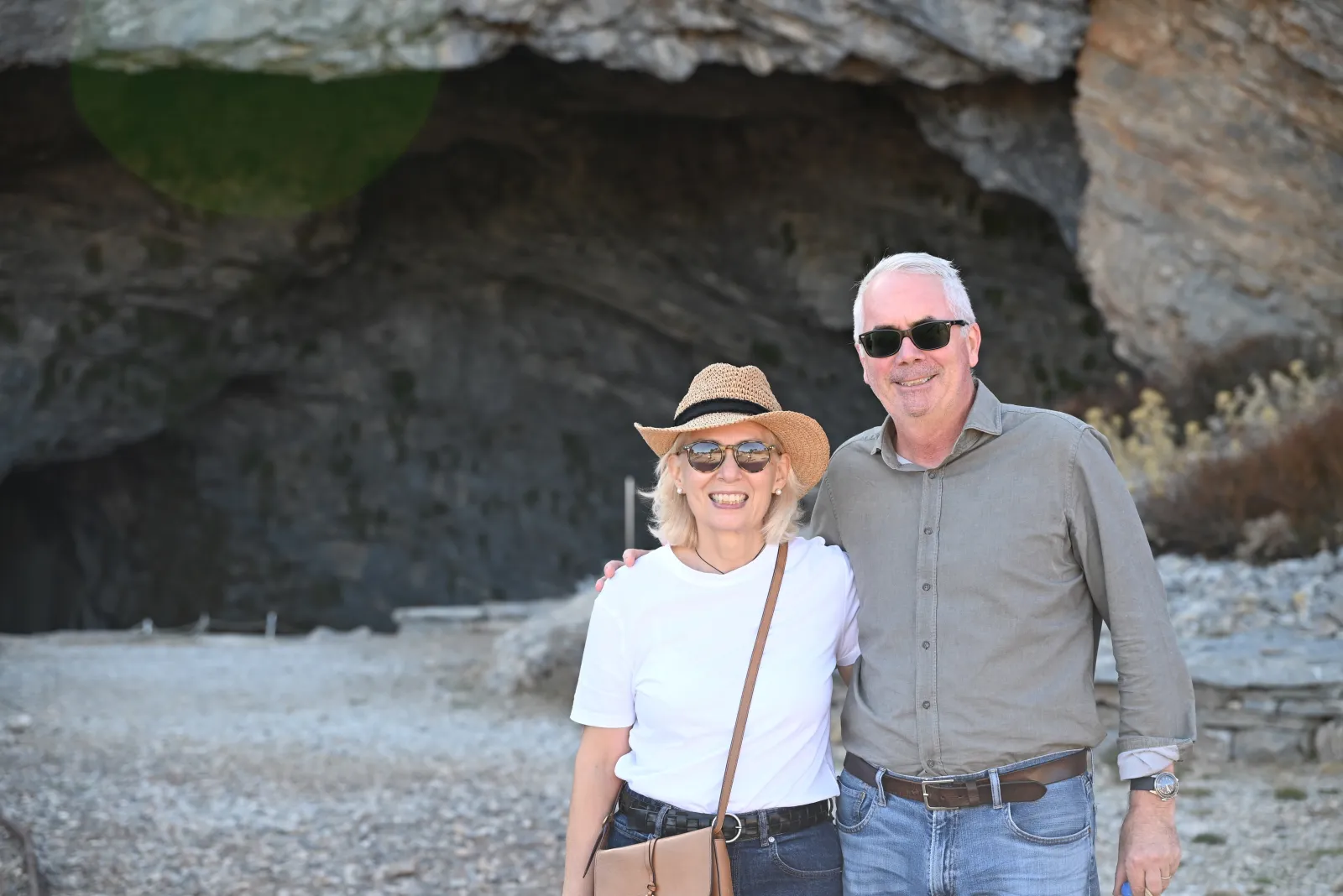
Beginning July 1, 2027, Brogan will step into his new role as the director of the American School, the latest link in a long chain of connections between Bryn Mawr and the internationally renowned institution.
The American School was founded in 1881 and today stands as the primary resource for scholars of Greek language, history, archaeology, and other related fields from American institutions. In addition to teaching the next generation of scholars, the American School also oversees the major excavations at the Athenian Agora — one of the most visited sites in Greece — and at the ancient site of Corinth, one of the world’s oldest continuous excavations, ongoing since 1896.
“There was wonderful synergy between my networks at Bryn Mawr and the American School, which really revealed to me how connected the two institutions were. I have remained in contact with many of the people from the American School in ways that continue to affect my professional career.”
— Danielle Bennett, M.A. ’11, Ph.D. ’17, ASCSA Associate Member 2015–2016, Assistant Curator, Mediterranean Art and Provenance at the Museum of Fine Arts, Houston
All but one of the previous directors of the American School had academic backgrounds, teaching at universities across the United States, but Brogan’s background is different. He spent the majority of his career as director of the Institute for Aegean Prehistory Study Center for East Crete and since 2022 has served as the executive director of INSTAP. Over the years, Brogan worked closely with the American School in a variety of ways, including by leading the school’s students on trips to Crete for more than a decade.
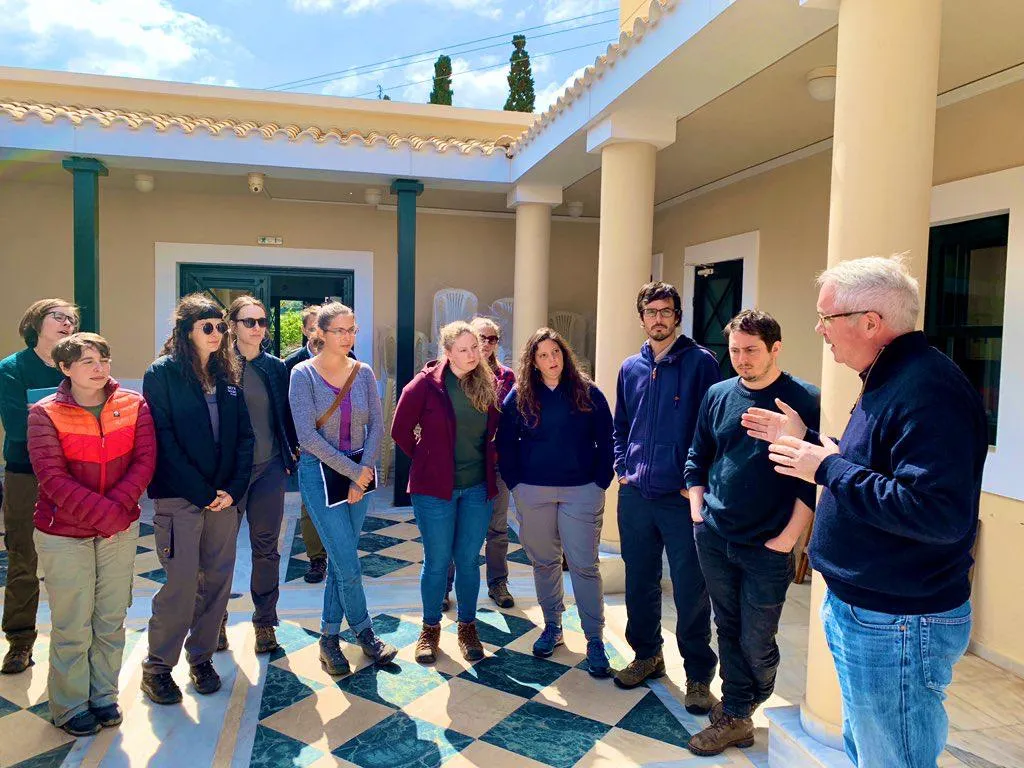
Shannon Dunn, M.A. ’19, Ph.D. ’24, is a postdoctoral fellow at the University of Edinburgh and attended one of those trips led by Brogan. “He’s so knowledgeable and affable and was a great trip leader,” Dunn says. “He always liked to ask how things were going at Bryn Mawr and showed me some great photos from his student days.”
Brogan was legendary Bryn Mawr archaeology professor Brunilde Ridgway’s final Ph.D. student before she retired. The first student who completed her dissertation under Ridgeway’s tutelage at Bryn Mawr, Nancy Bookidis, received her Ph.D. in 1967 and went on to hold many roles at the American School, including as curator of the excavation collection at Corinth until her retirement in 2012.
“My first contact with the American School was as a participant, and like many others, I found the inspiration for my dissertation topic during that time. After finishing my Ph.D. at Bryn Mawr, I was hired as collection development librarian for the ASCSA library in June 2015. Since then I have had the opportunity to interact with Bryn Mawr students and graduates on a regular basis.”
— Andrea Guzzetti, M.A. ‘06, Ph.D. ‘12, ASCSA Regular Member 2007–2008
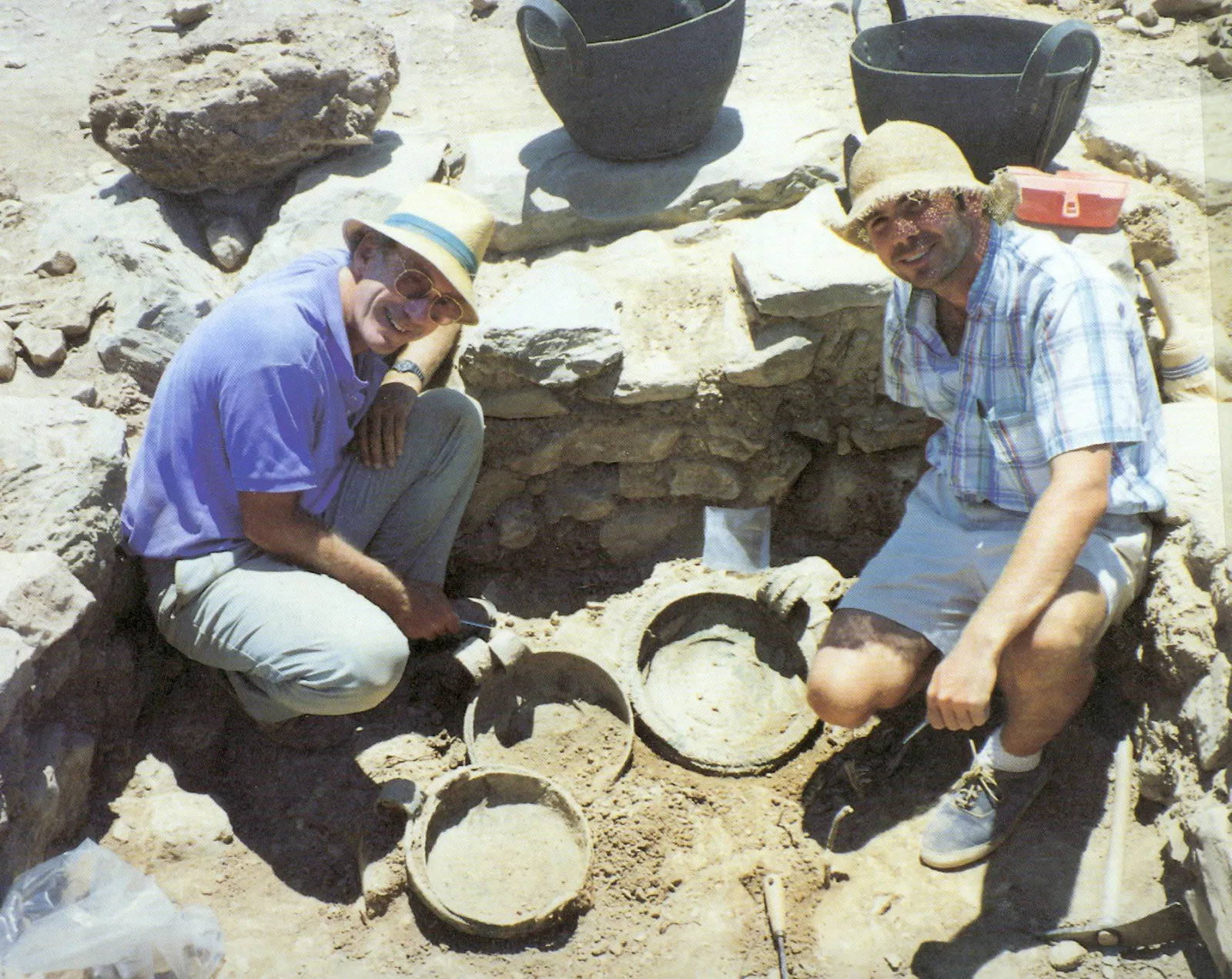
“I cannot emphasize enough the importance of both experiences,” Bookidis says. “Bryn Mawr for acquiring the background by which one can do research, and the American School for the opportunity to put that into practice, to have a year in which one visits the whole of Greece, to do research in its wonderful libraries, and perhaps one day to have one’s own excavation.”
Bryn Mawr and the American School — which first admitted women in 1885, the same year that Bryn Mawr opened its doors — have shared hundreds of scholars over the years. While figures such as Rhys Carpenter, former director of the American School and founder of Bryn Mawr’s Archeology department, may be the most recognizable, hundreds of Bryn Mawr students and faculty have found themselves at the American School during their time as students and beyond.
“At the American School, I constantly met Bryn Mawr alumni — they are everywhere, and they are always so welcoming and encouraging . . . I feel proud of our archaeology department, its role as one of the first institutions in the U.S. to grant women Ph.D.s, and its contributions to the development of both Mediterranean and Near Eastern Archaeology.”
—Yusi Liu, M.A. ’21, Ph.D. candidate, ASCSA Summer Session 2019, Associate Member 2025 to 2027, Samuel H. Kress Art and Architecture of Antiquity Fellow 2026–2027
Likewise, Brogan has strong ties — professional and personal — to both Bryn Mawr and the American School. Brogan met his wife, Natalia Vogeikoff-Brogan, M.A. ’88, Ph.D. ’93, at a party in Bryn Mawr’s on-campus, graduate-student housing when they were both students. When Brogan assumes the director position at the American School next year, the couple will become colleagues, thanks to Vogeikoff-Brogan’s longtime role at the American School as the Doreen C. Spitzer Director of Archives. (Spitzer, née Canaday, was Bryn Mawr class of 1936; Canaday Library is named for her mother, Mariam Coffin Canaday, class of 1906.)
“There’s just something magical about everyone’s graduate experience at Bryn Mawr,” Brogan says. “I could not have been better prepared for the career that I ended up finding.”
Published on: 10/16/2026