
Inside the Mind of a . . . Worm
Astra Bryant ’08 began studying brains at Bryn Mawr. Now she leads a lab researching a little-studied parasitic worm that affects more than 600 million people worldwide.
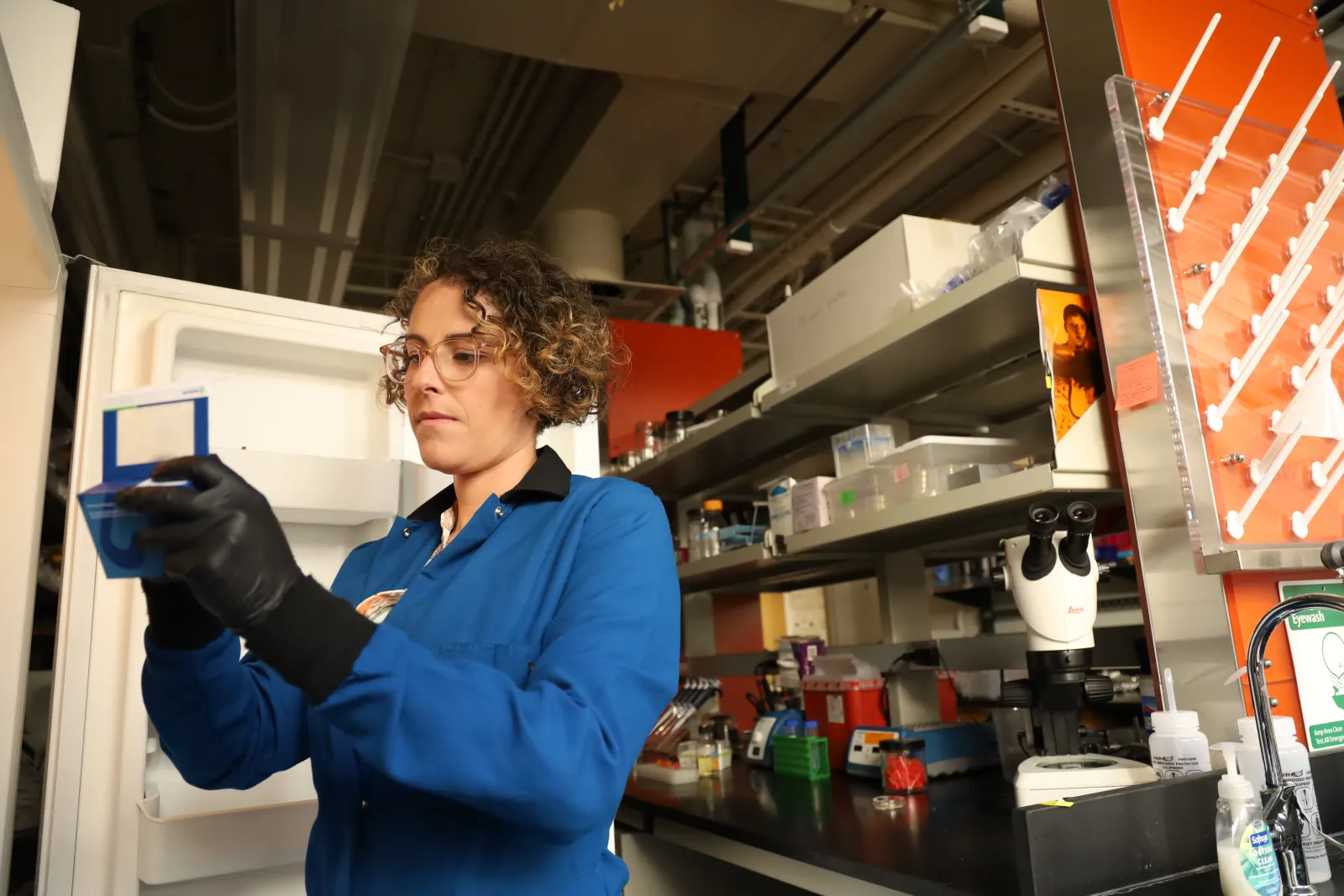
No one could have changed Astra Bryant’s mind.
Bryant knew at 18 years old that her only undergraduate option was Bryn Mawr College; she was drawn to the small campus, the science programs, and the idea of being surrounded by like-minded women.
Now, Bryant, class of 2008 and a sensory neuroethologist and parasitologist, uses lessons from her undergraduate experience at Bryn Mawr every day in her research and teaching at the University of Washington (UW).
“Bryn Mawr created an environment where both students and professors could be excited about the same thing and excited together about science,” Bryant says. “For me, it has really modeled how I want to interact with students in my current position.”
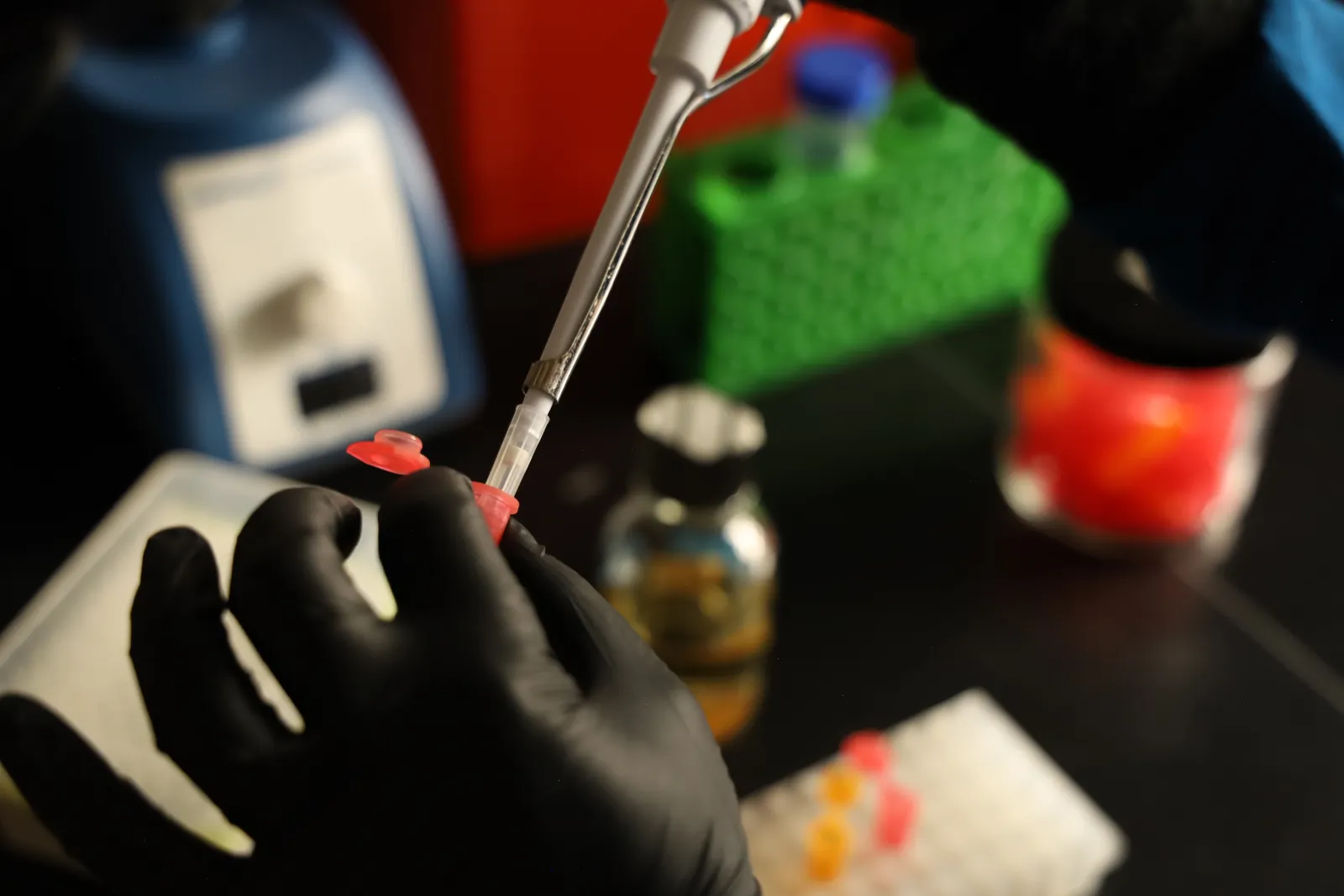
Bryant runs the UW lab studying the thermal physiology of soil-transmitted parasitic worms — specifically, the molecular and neural adaptations that enable Strongyloides stercoralis, commonly known as the threadworm, to respond to thermal cues emitted from human hosts. The larvae of the threadworm actively search for hosts — humans, nonhuman primates, or dogs — then infect by burrowing through the skin. They migrate to the small intestine, where they transition into adults that can survive for many months.
The threadworm has infected at least 610 million people around the world. They are endemic to subtropical and tropical regions and have ravaged some of the world’s most socioeconomically disadvantaged areas. Their infections can lead to chronic infection, disease, and — in extreme cases — death.
Recently, cases have been reported in Arkansas, Alabama, Texas and Florida.
The hope is that if we understand how these worms produce their behaviors, how they find and infect hosts, we can identify new targets for therapies.
“There’s a real need to develop new therapies, and despite this pretty urgent need, we understand very little about the basic biology of these worms,” Bryant says. “The hope is that if we understand how these worms produce their behaviors, how they find and infect hosts, we can identify new targets for therapies.”
It was at Bryn Mawr that Bryant fell in love with studying the brain. All because one professor, Peter Brodfuehrer, took a particular interest in her career, a connection she attests she could not have had at any other school.
Brodfuehrer, an electrophysiologist, focused his lab’s projects on recording signals from the individual neurons of leeches. The goal was to understand how the brain produces a fundamental behavior. The processes of neuron visualization enamored Bryant. Her postgraduate career took her to California for her doctoral and postdoctoral research at Stanford University, then she continued her postdoctoral research career at the University of California, Los Angeles, where she first crossed paths with the threadworm.
Although scientists still know little about S. stercoralis, they know that across the many species of roundworms, such as the Caenorhabditis elegans (C. elegans), their nervous systems are very similar. However, though both have 302 neurons, C. elegans and S. stercoralis behave in drastically different ways.
“We want to know how you take that same brain plan, make it produce a worm that likes to eat bacteria and rotting fruit, and a worm that wants to live in the human small intestine,” Bryant says.
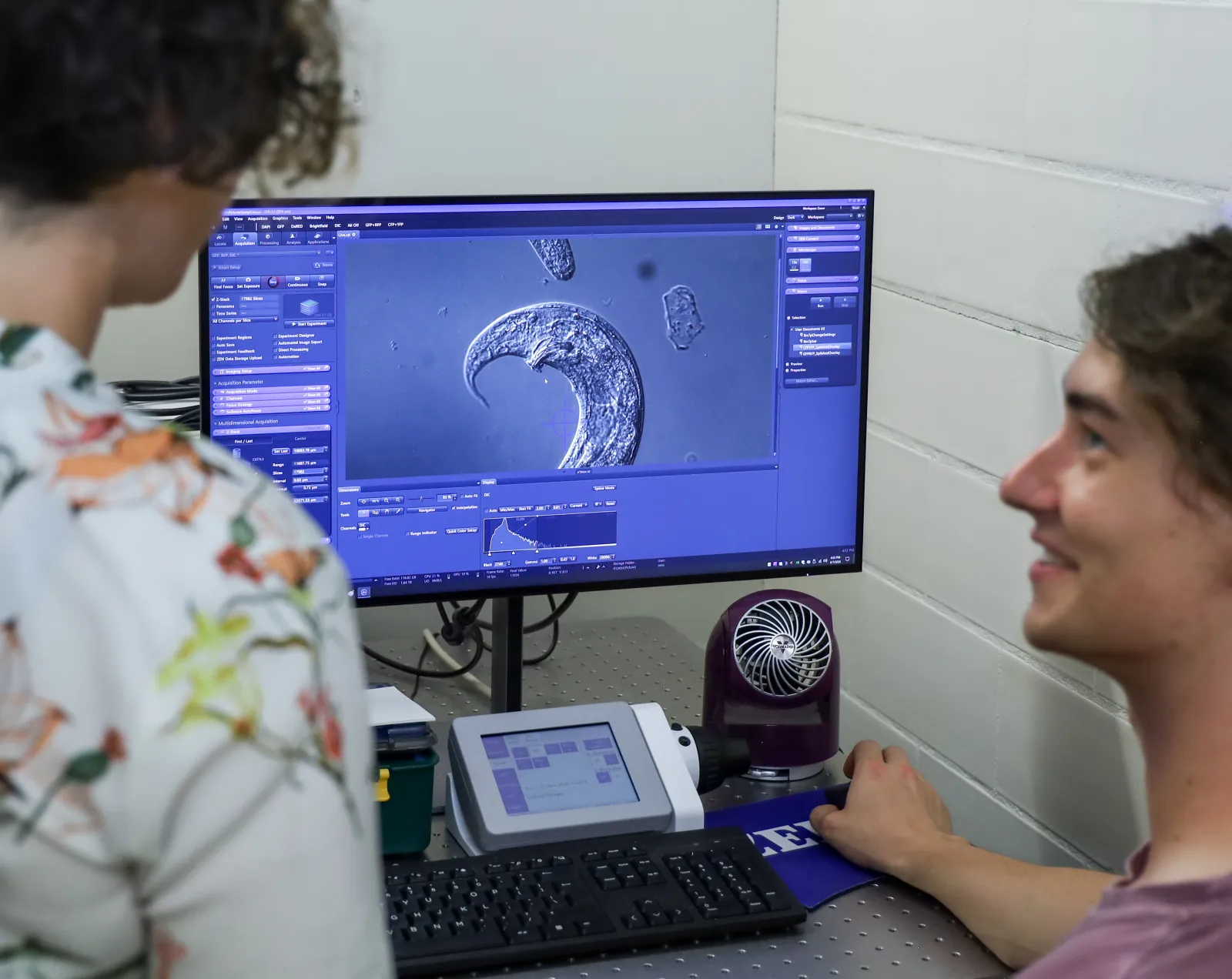
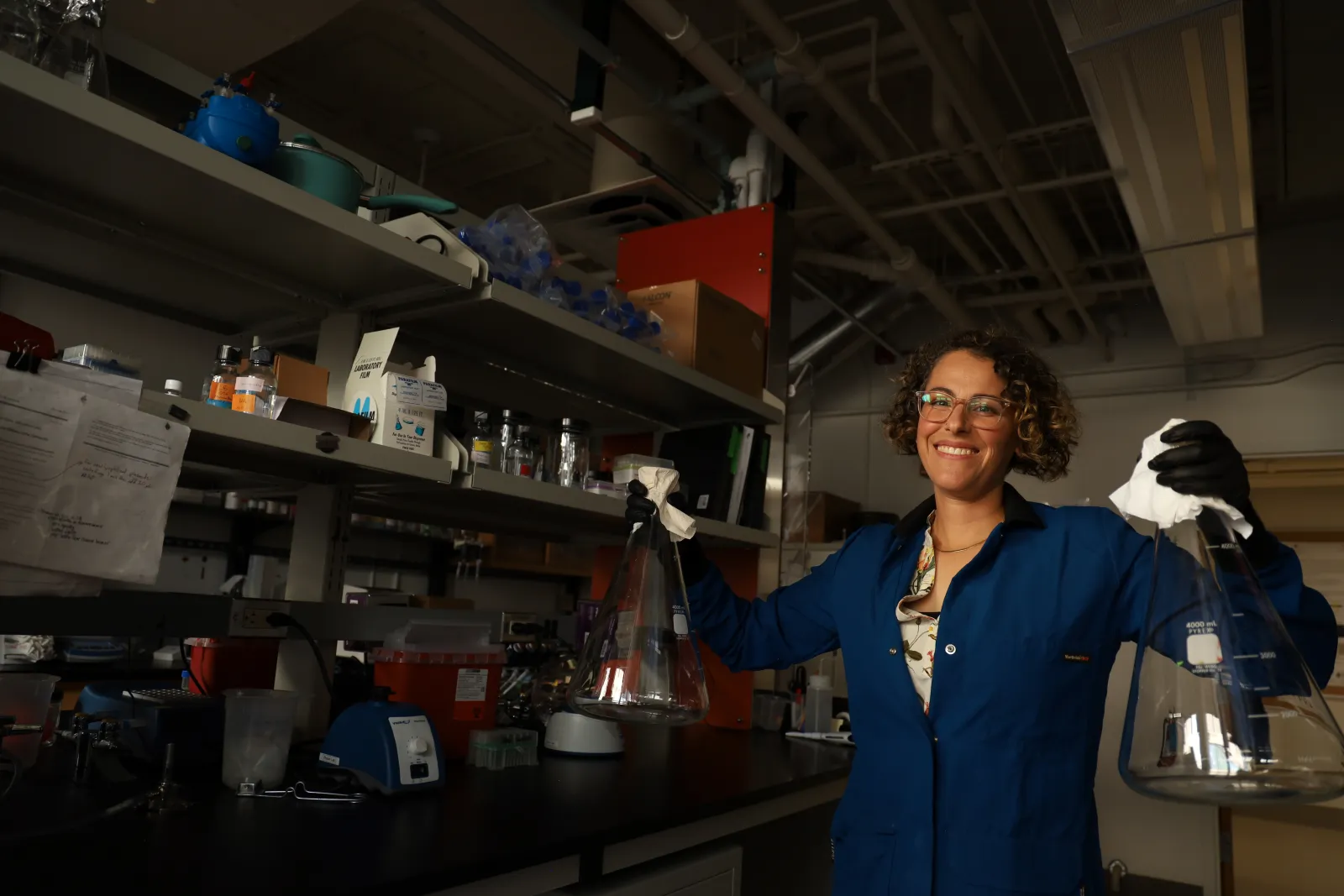
Since January 2023, her lab at UW has taken an interdisciplinary approach to understanding these nematodes. Bryant was recently presented with the McKnight Scholar Award — awarded to early-career neuroscientists who pursue independent research — which supports her research and lab of seven members. Bryant’s lab is one of only three labs in the world that houses S. stercoralis for research.
During summer, Bryant also co-teaches a grant-writing course, and during the academic year, she teaches a course designed to help first-year graduate students transition to graduate work. Much like the culture she promotes in her lab, it’s yet another way she works to build a supportive community in a space where it’s easy to slip into a siloed work environment.
“Teaching science does not have to be didactic and memorization based, it can be about storytelling and curiosity,” Bryant said. “To me, that opens doors to people who can’t take a standardized test or memorize each and every fact. It opens doors to better understanding many questions we have in science.”
Published on: 10/16/2026