
Campus as a Sacred Space
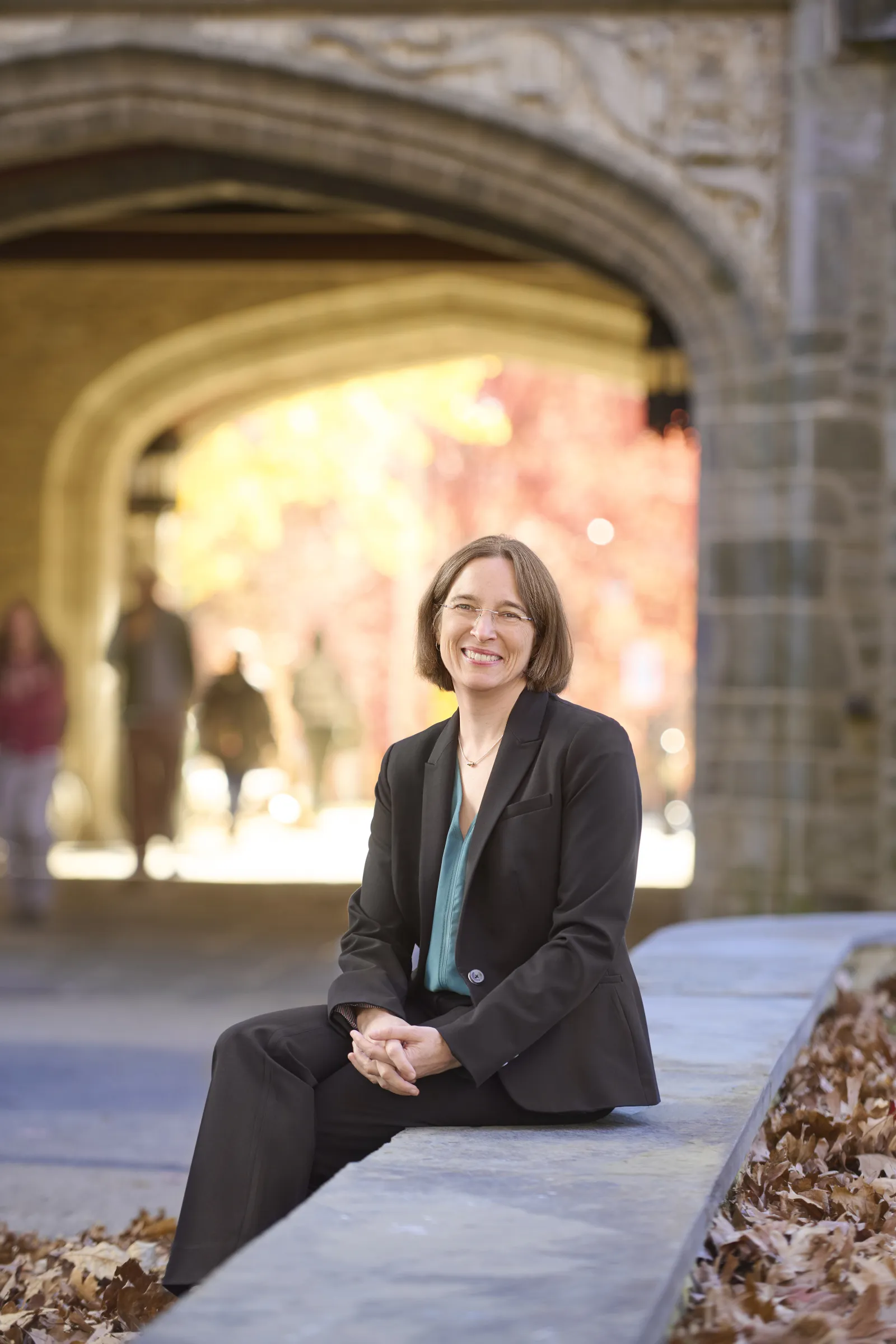
There is something about Bryn Mawr — the architecture, the quiet, the abundance of beauty — that can evoke, in some, aspects of the sacred. First-time visitors sometimes assume one or more of our Gothic buildings are chapels. In fact, there was once a chapel in Taylor Hall that also served as a place of campus assembly; services were held there and in other locations across campus. Add to this context the College’s many traditions and rituals, including offerings to Athena, and the parallels to traditional forms of spiritual practice extend.
I have been reflecting on campuses as sacred spaces in preparation for leading a first-year seminar, the first course I will teach at Bryn Mawr. Titled “Sacred Spaces, Bryn Mawr and Beyond,” the course explores the concept of sacred space with particular attention to the presence — or absence — of such spaces at the College. Through primary and secondary sources, by touring campus buildings and delving into archives, the students and I are examining the campus and its traditions to consider how places and practices have evolved across time and generations.
The 19th-century sociologist Émile Durkheim famously distinguished the sacred from the profane, a theory that extended beyond human beliefs and actions to physical places and spaces. In the Durkheimian conception, a place becomes sacred not necessarily because of its inherent qualities but because a community imbues it with special importance, designating it a place set apart.
As a sociologist of religion and as a college president, I am fascinated by the ways in which communities of all kinds — religious and secular, academic and vocational, mainstream and marginalized — create and recreate so-called sacred places. The land on which the College sits was certainly sacred to the Lenni-Lenape, its original inhabitants. And although Bryn Mawr’s culture today is somewhat removed from its Quaker origins, its claim as a special place for knowledge is defensible and resonant.
Studies that my colleagues and I have conducted show that what I call the “spiritual infrastructure” that supports emerging generations is increasingly found in nature, open spaces, and informal gatherings. Some of these spaces are visible and open; some are hidden; some are virtual. But all, as akin to a college community, fill the call to affiliate with something larger than oneself.
A campus today cannot only be a place apart. As we move into the next chapter of a Bryn Mawr education, the campus that will support it must be profoundly entwined with, and open to, the world our students will encounter, shape, and lead. Our castle-like walls must be accessible — not intimidating, exclusionary, or secret. Bryn Mawr must be a beacon, not a cloister. At the same time, the beauty, belonging, contemplation, and tradition sacred and central to the Bryn Mawr experience must endure.
One of my deepest pleasures at Reunion is watching alums back on campus reencountering the touchpoints of their time on campus, be it a seminar room, a suite shared with friends, a dance studio, or a study carrel. My own understanding of Bryn Mawr is deepened by seeing its layered history through your eyes. If there is a place at the College that holds special meaning for you, I would love to hear about it. Please write me at wcadge@brynmawr.edu and let me know if I can share your reflection with my students.
Published on: 10/14/2026