
Class in Action
A new partnership between GSSWSR and Villanova brings social work support into legal clinics.
Villanova University has eight legal clinics within the Charles Widger School of Law that specialize in legal issues ranging from domestic violence to clemency to immigration services. The clients who come to the clinics are low-income and are frequently dealing with trauma and a lack of resources.
“We have clinics where clients have significant social work needs,” says Deeya Haldar, director of the clinical program and professor and director of the Civil Justice Clinic at Villanova.
Until this year, the clinics had no trained professional to address such needs.
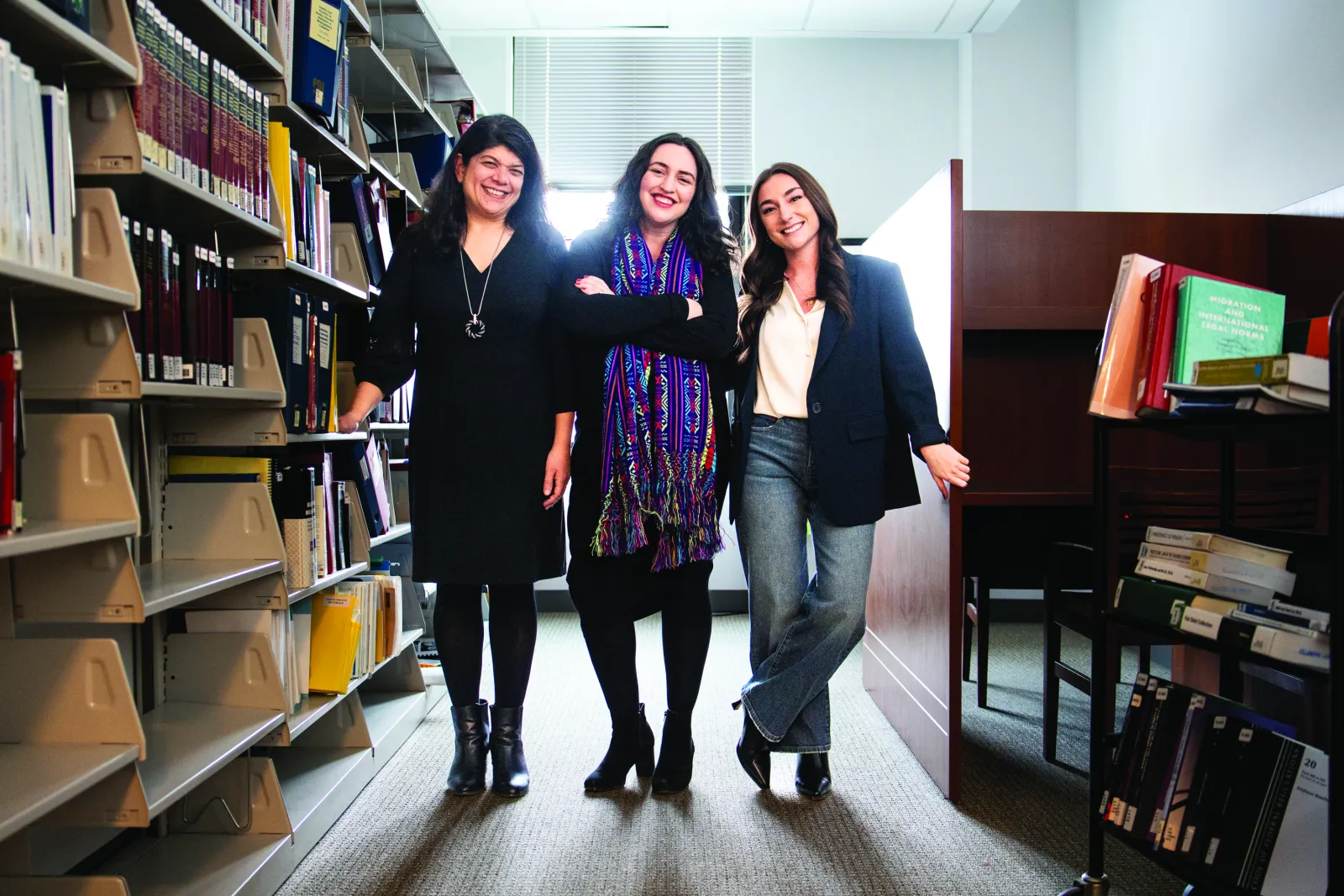
A new partnership with the Graduate School of Social Work and Social Research brought them Sarah D’Antonio, a social work master’s student interested in the intersection of social work and the law. D’Antonio started working part-time in the clinics last fall, giving presentations on trauma-informed representation and vicarious trauma to the law students and working with clients to support their needs.

“As social workers, we interact with all these systems that our clients are affected by, so we act as the buffer, or the bridge, between these systems,” D’Antonio says.
With Villanova only minutes away from Bryn Mawr and a desire from both schools for more interdisciplinary opportunities, the idea of a collaboration had bounced around for a few years. Mary Florence Sullivan ’11, a GSSWSR doctoral candidate and the school’s advisor for strategic initiatives, had interned at an immigration legal clinic at New York Law School and experienced the benefits firsthand.
“The issues folks are facing are so complex,” Sullivan says. “They might need support from a therapist, they might need support for their kids, they might need financial literacy support.”
Not only does a social worker's presence help clients navigate what can be an adversarial environment and teach the social work students the intricacies of the legal system, but it also helps inform the interactions law students have with their clients now and in the future. Learning to build rapport and gain trust can help them as they gather information from and represent their clients.
“As social workers, we interact with all these systems that our clients are affected by, so we act as the buffer, or the bridge, between these systems.”
– Sarah D'Antonio
“It encourages them to see their client as a whole person, rather than a legal problem,” Haldar says. “I think having a social work intern reinforces the attorney-client relationship as a human relationship.”
D’Antonio graduates this spring, but there is hope that the partnership will continue with more practicum students and even expand into the GSSWSR curriculum. The practice of having social workers in legal clinics is growing but still not very common, Haldar says.
“Interdisciplinary work is vital to supporting communities we work with, and I’m hopeful more organizations and groups are doing more of that,” Sullivan says.
Published on: 03/05/2026