
Taking Care
Over the past few years, counseling and mental health services have expanded through the efforts of both staff and student workers. The goal is to bring a holistic view of wellness to the entire campus.
As Tiffany Hebron ’08 remembers it, counseling and ideas around mental health were very different in her days at Bryn Mawr.
“I think my generation, our first thought would be to talk to peers, or journal about it, or listen to sad music,” she says. “Nowadays, the students’ first thought is, let me get to counseling.”
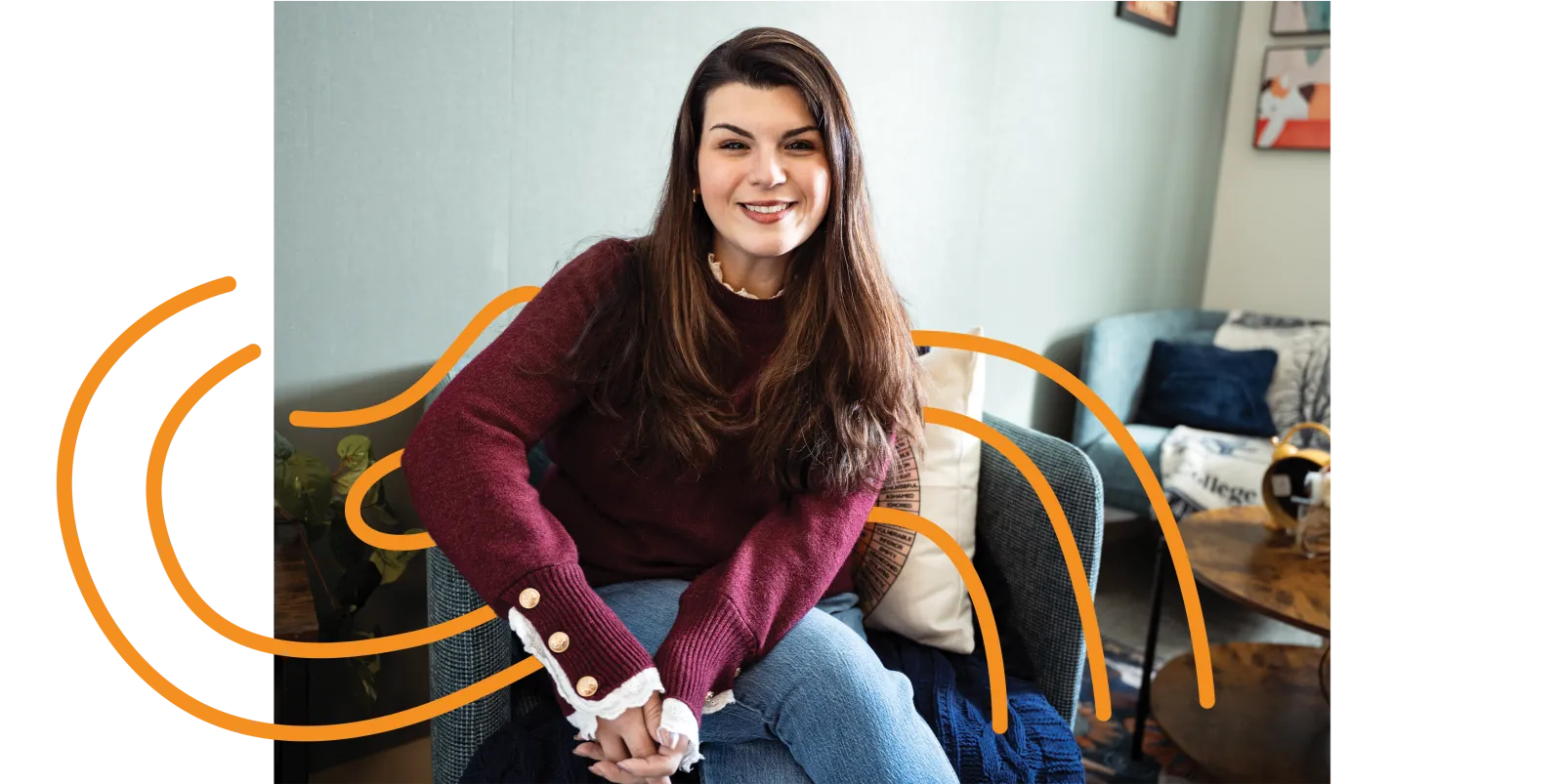
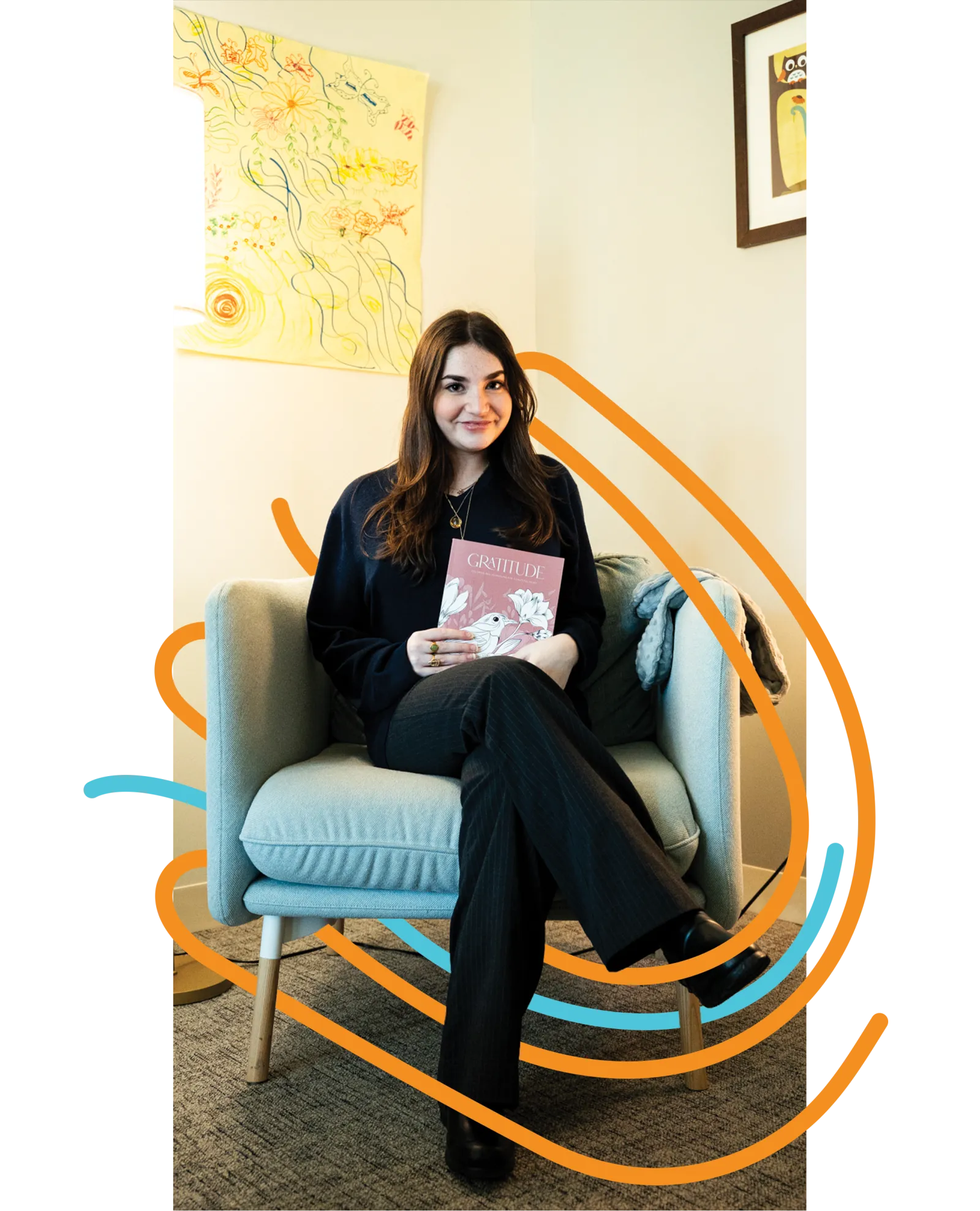
From her cozy, lamplit office in the airy Health and Wellness Building near Erdman, Hebron, a counselor at Bryn Mawr, recalls the previous office as being somewhat buried, not well-publicized, and offering a limited number of free sessions. In contrast, the new building (the Well) — and the counseling and wellness programs — are designed to be accessible and put students at ease.
“I think the landscape of mental health and wellness has changed in a cultural way, and I think we’ve really met the challenge of that on campus,” Hebron says.
A 2024 KFF analysis of a National Health Interview Survey found that from 2019 to 2022, the percentage of adults receiving mental health treatment increased, particularly among young adults ages 18 to 26, and particularly among women.
“In my time doing this work, I’ve seen the stigma around accessing mental care work drop considerably,” says Wellness Program Director Cristen Kennedy. “I think with each class year there’s less and less.”
According to Dr. Luci MacNamara, director of counseling, the national average participation rate for college counseling is 12 to 13 percent, but at Bryn Mawr, participation is above 30 percent. Last semester, Counseling saw more than 300 students for a total of over 1,000 appointments.
Anxiety and depression are the biggest issues facing college students, especially at a school as rigorous as Bryn Mawr. From undergraduates experiencing newfound independence and responsibility, to graduate and postbac students taking on extraordinary courseloads, students shoulder a range of personal and academic burdens.
“We see a lot of perfectionism, which goes hand in hand with anxiety,” MacNamara says. “Even just coming to college, leaving their support system behind and being in a new place, can trigger something more serious.”
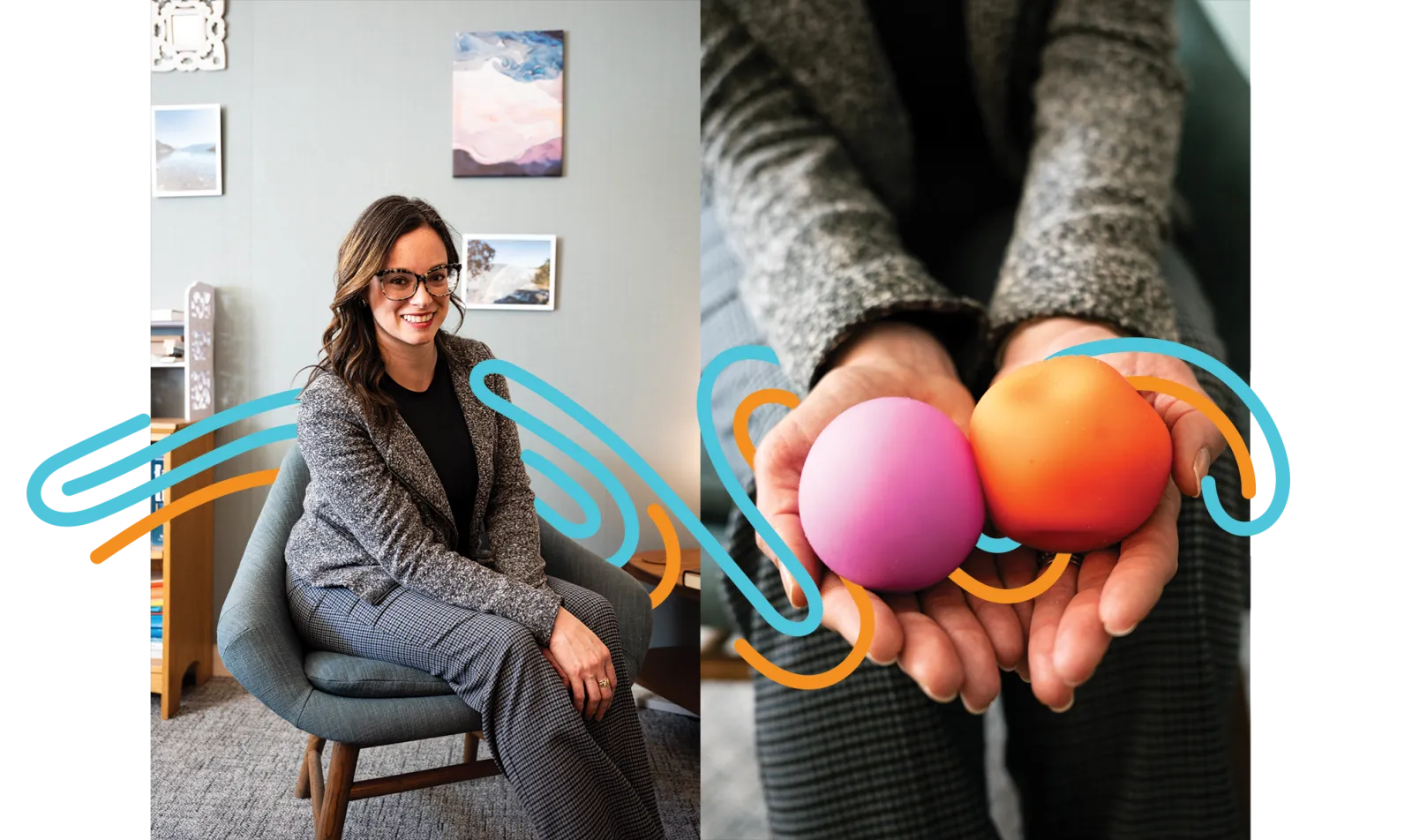
MacNamara started in her role in August 2023, and has grown the staff, hiring three full-time counselors, two part-time counselors, and a receptionist. For students who need a higher level of care, Counseling has connections with and can refer them to outside psychiatrists, therapists, and in- and out-patient care facilities.
Counseling sessions are free; only medications get billed, which is no small achievement when, as MacNamara points out, “Therapy is not easy to come by and can be expensive.”
Sasha Weisman ’27 remembers a conversation she had with a friend at another college who shared that campus attitudes toward mental health were less welcoming at her school. “She doesn’t know as many people who go to therapy as I do at Bryn Mawr,” Weisman says. “I think Bryn Mawr, especially, does a really great job.”
The Counseling Department works hand in hand with Wellness, and Weisman is part of a novel way in which Wellness services have expanded student support: through their peers. Weisman is a Peer Health and Wellness Educator (PHWE), one of eight students who work off-hours providing resources and support for their classmates.
“We’re a group of students who are here for other students,” she says. “I think having a friendly face that gets the student experience is something really valuable.”
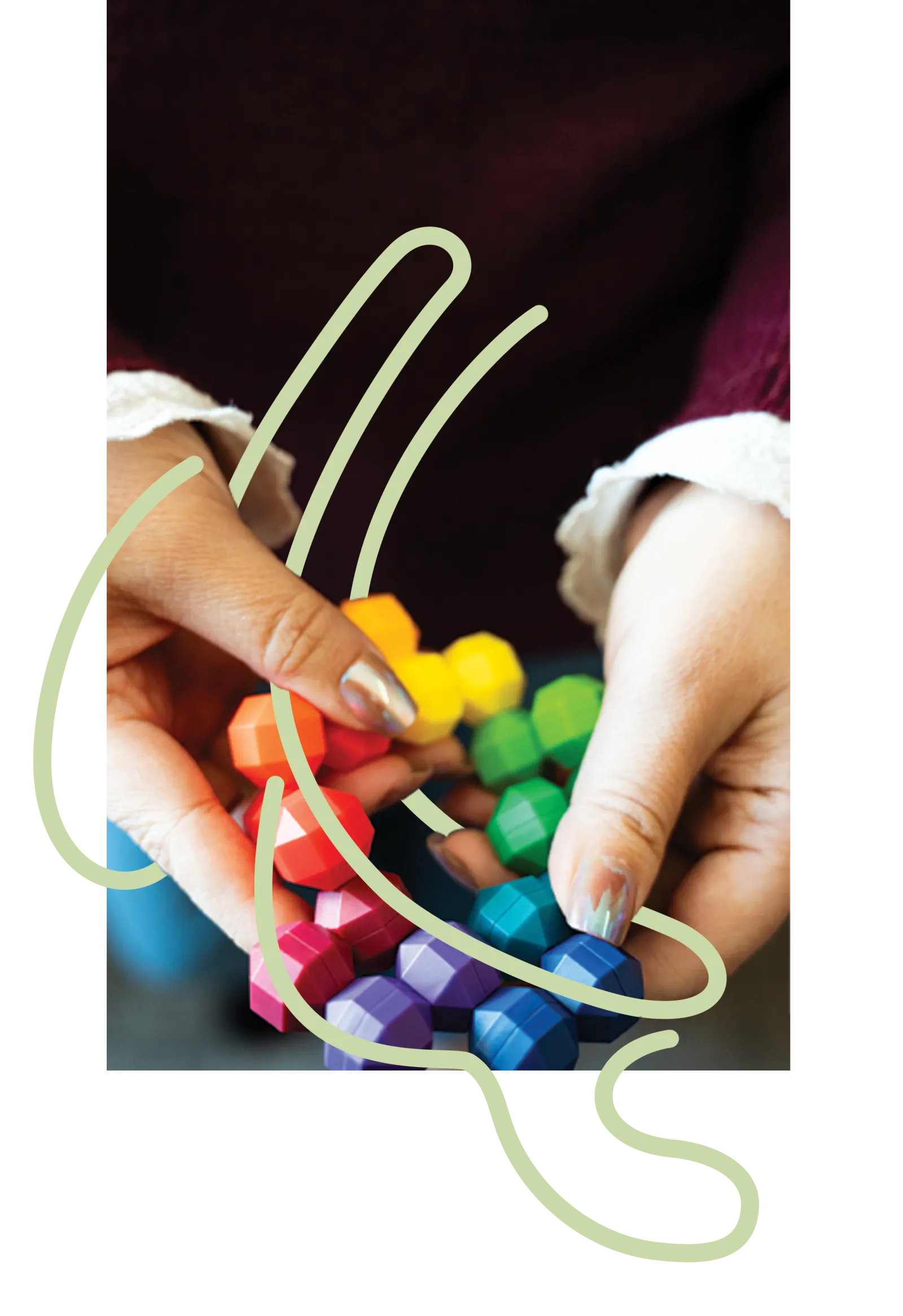
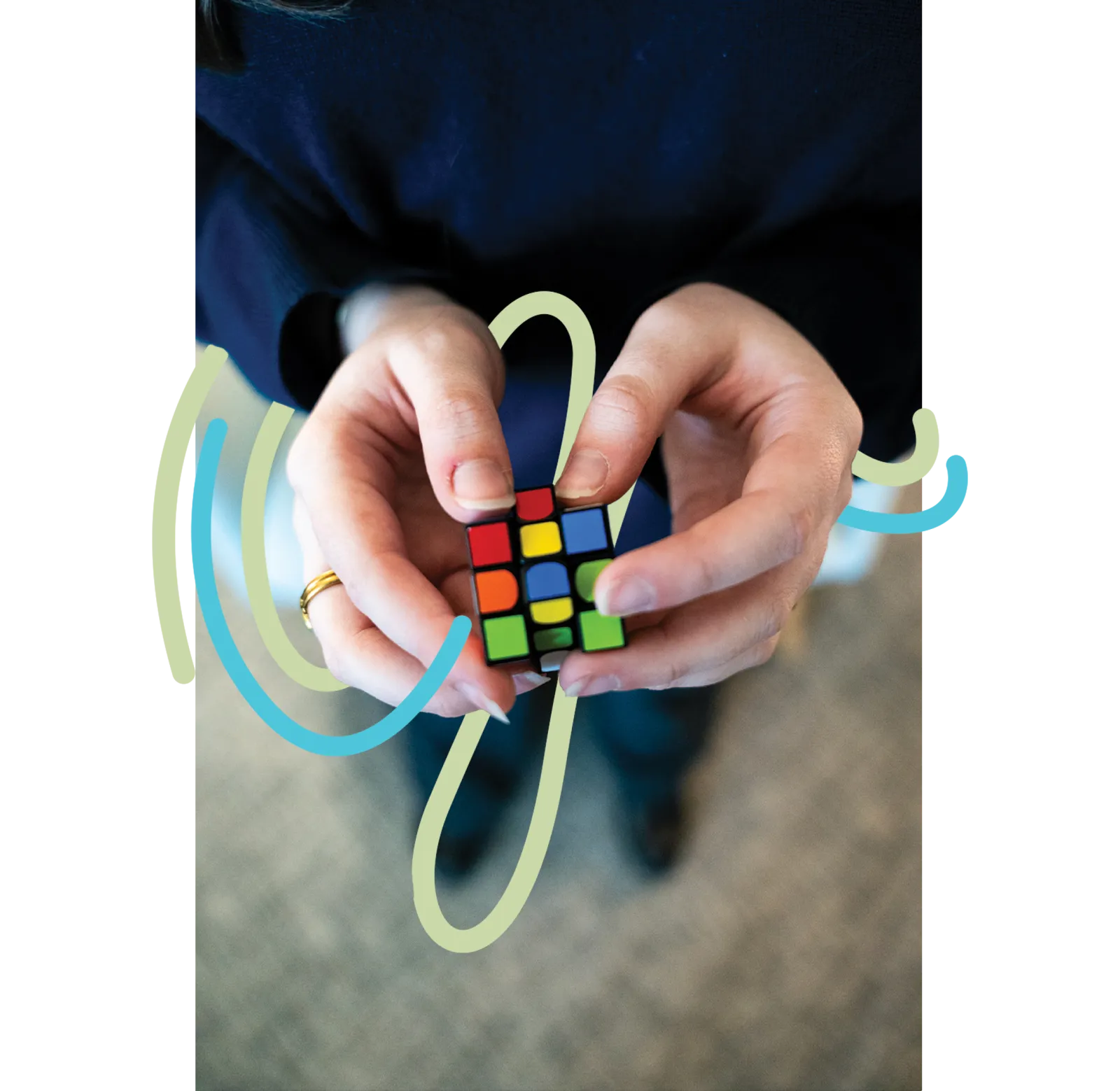
PHWEs hold “office hours” every evening in the Nest, a living room-like space in the Well with sofas and beanbag chairs where students can relax with tea and snacks, unwind with crafts or fidget toys, and find helpful pamphlets and sympathetic ears.
“They provide a valuable service for students who maybe aren’t comfortable talking to a staff member or want to talk to someone they perceive as a peer,” Kennedy says. “Also, they are really great resources for us to better understand the health and wellness needs on campus directly from students.”
According to Anadys Rodriguez ’26, both Kennedy and Erika D’Andrea, the wellness program coordinator, have dramatically changed the Wellness program. Rodriguez knew early on she wanted to pursue psychology and applied to be a PHWE as soon as she learned about the program, after her first year.
“I think in general, being in college is hard, and freshman year is the hardest,” Rodriguez says. “It’s really exhausting, going to classes, learning to take care of yourself as an adult for the first time.”

“I’ve been very passionate about making sure everyone knows about our office and the kind of services we provide.”
– Anadys Rodriguez ’26
Plus, there’s the challenge of finding friends and a social circle, something Rodriguez struggled with her first year living in Brecon, far from the main campus. “I really could have used some peer health and wellness,” she says, “so I’ve been very passionate about making sure everyone knows about our office and the kind of services we provide.”
A shared goal of Counseling and Wellness is meeting students where they are. The PHWEs play a role in that, as do the regular pop-ups they host in partnership with the Well. During finals last December, students gathered for a tea-making event, spooning herbal concoctions into mesh bags in the Well’s community kitchen. Before big parties, they may host an event to make wellness kits with electrolyte powder and talk to the students about safer partying.
“More students are coming to see us at the Nest,” Rodriguez says. “Our programs have become more popular . . . A lot more students are interested in harm-reduction practices.”
There are still areas for growth and improvement. As a student of color, Rodriguez wants to do more antiracism programming and training to help her white peers become good allies. She would like to see more support for BIPOC and LGBTQ+ students and a focus on health equity.
Weisman points out that while Bryn Mawr is an accepting community, the flip side can be a perceived lack of privacy, especially for people seeking help with a friend or roommate problem. “It’s not like a school of 30,000 people where you never see us again,” Weisman says. “The community is one of the biggest strengths and one of the most difficult things.”
And even with what MacNamara called a large staff for a school of Bryn Mawr’s size, Counseling is often booked solid. Still, “if a student comes in crying, even if we are booked, we are going to find a way to see them,” she says. “We don’t want people to wait to address an issue when there is a crisis.”
"We’re a group of students who are here for other students”
– Sasha Weisman ’27
Counseling has done trainings with staff and would like to increase training for faculty, so those closest to students can recognize signs for concern and get them help. The staff would also like to see wellness integrated into curriculum and policies campus-wide, not just within the walls of the Well.
Hebron sees this work as having long-term positive outcomes that will help students and produce more well-adjusted adults.
“In the 20 years I’ve been out of college, it’s definitely gone through an evolution,” she says. “Bryn Mawr does have this beautiful ability to grow and change and reflect the needs of the students that are here.”
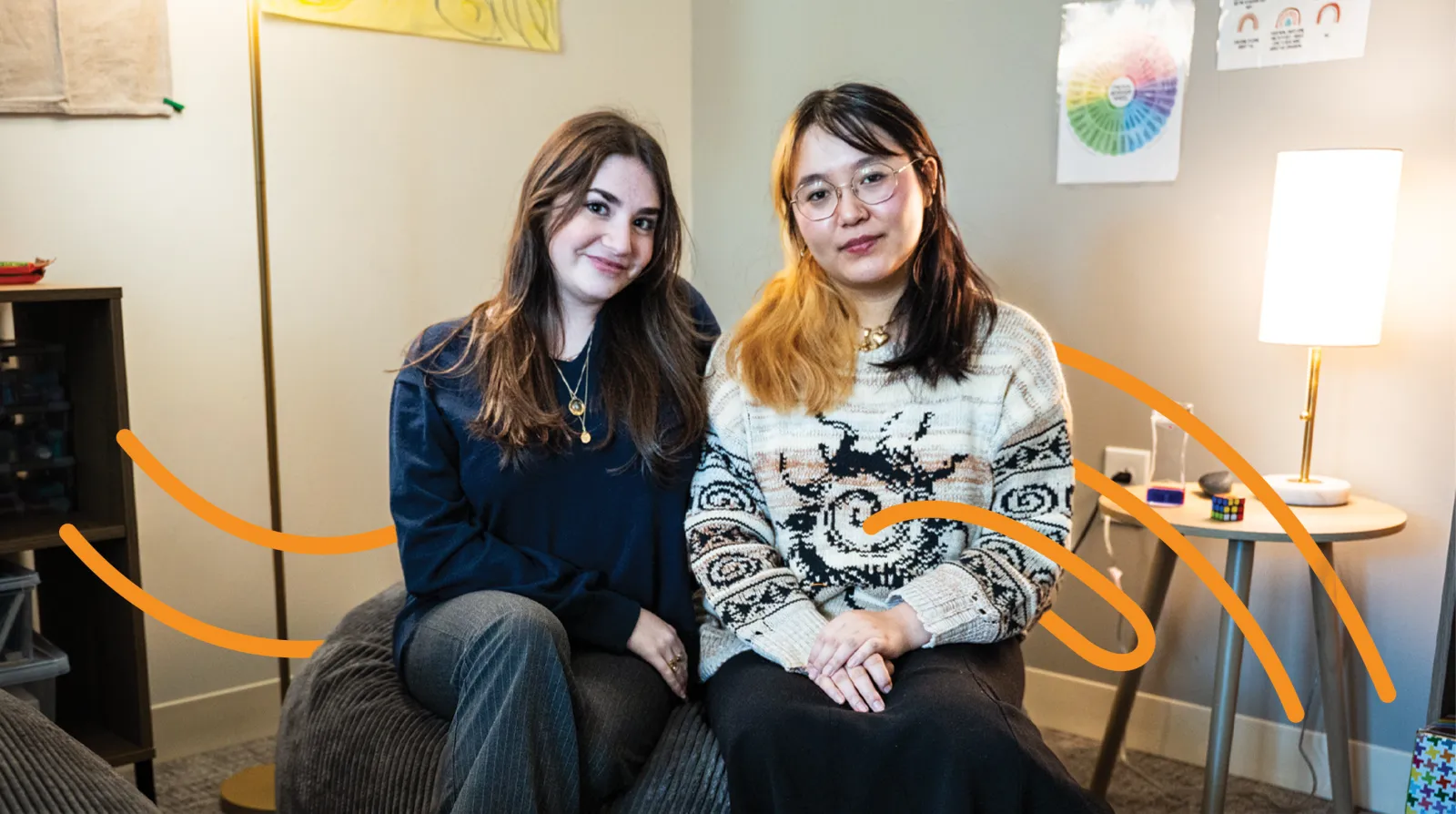
For the PHWEs, especially those like Rodriguez and Weisman who want to pursue careers in psychology, the work has been a great opportunity to have a clinical-adjacent experience — rare in an undergraduate setting — while also working to help their classmates and improve campus life. They have learned important skills around body language, how to approach people, and how to broach difficult subjects.
“I think I’ve become a better friend, a better daughter, a better sister,” Weisman says. “These are skills that go beyond the job.”
Rodriguez, who graduates this spring, noted that Wellness will be hiring several new PHWEs soon. What would she tell interested students? “It’s a really great way to help your community, to serve your community, to learn how to take care of yourself and those around you.”
Published on: 03/06/2026