
For College Presidents Past and Present, Class is Back in Session
The 2026–27 academic year includes offerings from President Emeritus Kim Cassidy, President Wendy Cadge, and a conversation series led by President Emeritus Mary Patterson McPherson.
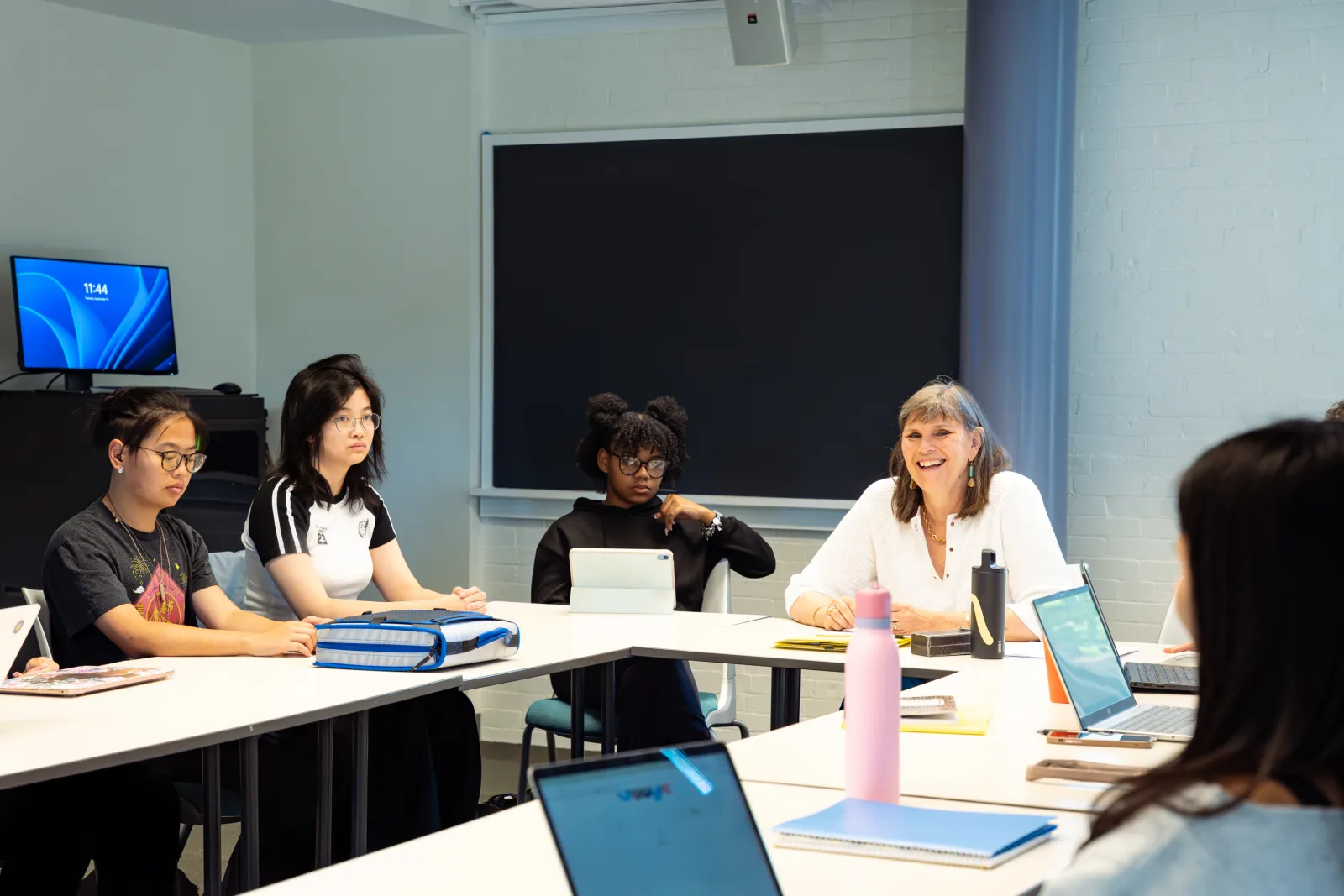
In the second week of this year’s fall semester, the first-year students in Finding Purpose in Higher Education were asked to read and analyze Bryn Mawr’s mission statement.
A lively debate ensued about various aspects of the statement: How can one make a difference in the world? How does the college promote equity and inclusion? What’s foundational and what’s aspirational?
The discussion was familiar to the instructor of the class, which shouldn’t be a surprise since she helped draft the statement back in 2019, during her tenure as Bryn Mawr’s ninth president.
Kim Cassidy returned to the Bryn Mawr classroom this year for the first time since taking a two-year sabbatical following her presidency. She wanted to draw on her experience as president to help students in the class better understand themselves and the college they chose to attend.
“As president, I had all this experience in higher education and became a student of higher education myself,” Cassidy says. “This class lets me combine that knowledge with a heavy amount of psychology.”
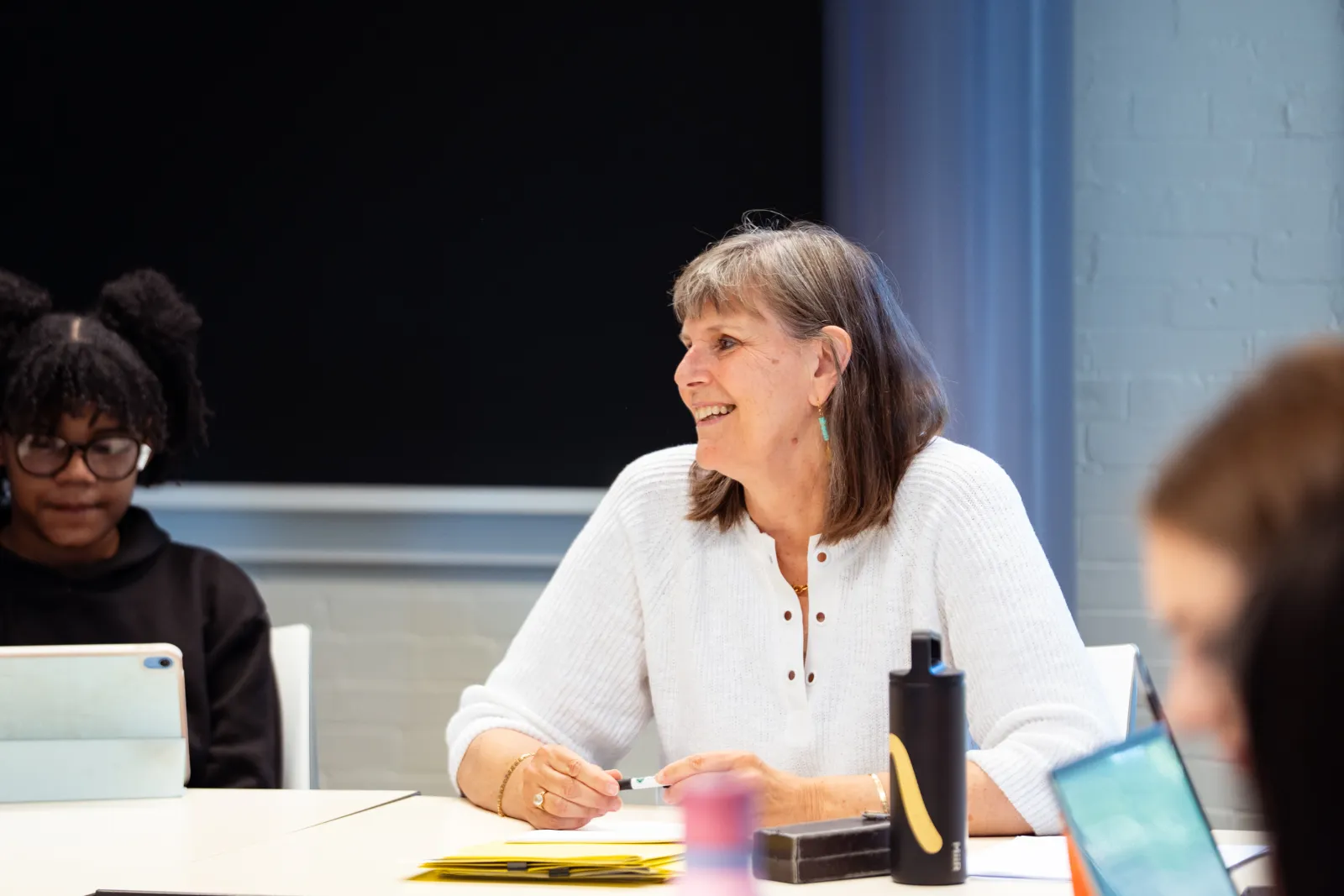
Psychology is her specialty; while president she continued to teach a psychology course every year. But this is Cassidy’s first time teaching an Emily Balch Seminar. Also known as ESEMs, the seminars are meant to introduce first-year students to the active discussion and the intensive reading and writing that are the hallmarks of a Bryn Mawr education.
“The course operates on three levels,” Cassidy explains. “What’s the purpose of higher education? What’s the purpose of a liberal arts college like Bryn Mawr? And what’s their personal purpose and how do they find it?”
Those questions shape the progression of the course. Early course material looks at the purpose of a liberal arts college, and of Bryn Mawr in particular. Students are then asked to consider their own purpose for attending Bryn Mawr and the importance of personal purpose from a broader psychological perspective by introducing the work of Martin Seligman and the concept of human flourishing. The curriculum then bridges this psychological foundation to the concept of thriving, framing it as the ultimate purpose of higher education.
Students will look at the theory behind the ways higher education institutions try to meet that purpose through academic engagement, high-impact practices, and creating environments centered around a set of shared values and a strong sense of belonging. They also examine the challenges to meet those goals and offer proposals to address those challenges.
“The course operates on three levels. What’s the purpose of higher education? What’s the purpose of a liberal arts college like Bryn Mawr? And what’s their personal purpose and how do they find it?”
In addition to her ESEM, Cassidy is teaching Educational Psychology. This spring, she’ll co-teach a new course with Professor of Psychology Marc Schulz called The Science of a Life of Meaning, Joy, and Connection.
Cassidy isn’t the only person to hold the Bryn Mawr presidency who will be leading a class this academic year.
This fall, current President Wendy Cadge is also teaching an ESEM: Sacred Spaces, Bryn Mawr and Beyond. As a professor of sociology whose research is centered on religion in public institutions, religious diversity, and pluralism, Cadge also combines her research interest and her experience leading Bryn Mawr into the course.
In the spring, Mary Patterson McPherson, who was Bryn Mawr’s president from 1978 to 1997, will host a seven-week conversation series on Zoom bringing together alumnae/i, students, faculty, and other members of the Bryn Mawr community around various subjects relating to intellectual and civic life.
McPherson says that at 91 years of age, she’s looking forward to a chance “to learn new things from splendid Bryn Mawr faculty.”
Published on: 10/15/2026