
Meant to Bee
Campus has been buzzing about Ann Isenberg’s bees since the first hives went up by Lake Vickers in spring 2025.
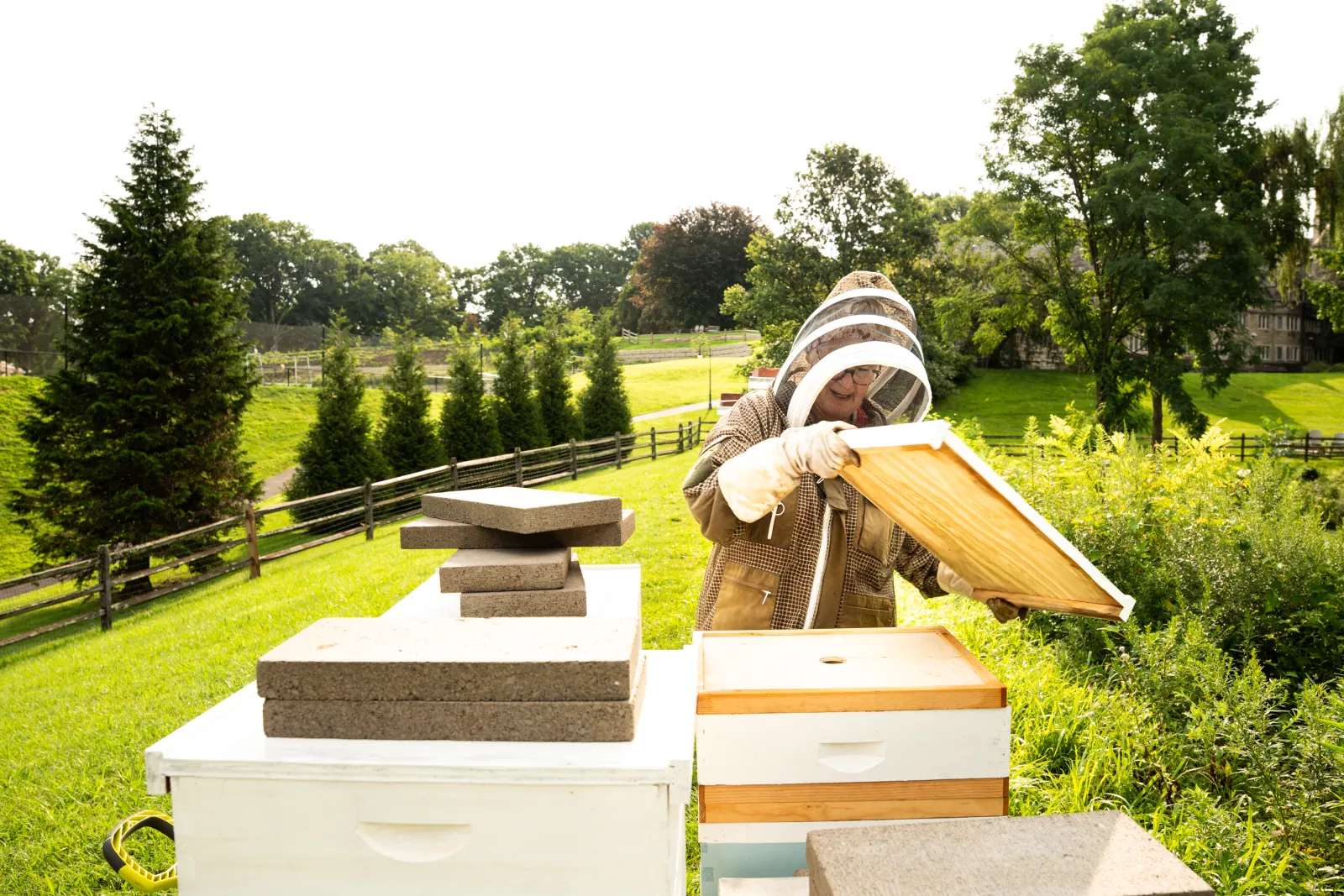
Beekeeping is deeply ingrained in master beekeeper Ann Isenberg — she can still remember her uncle smoking a pipe under his veil as he tended to his bees and her, as a child, mimicking his bee smoker with a little tin horn.
She also remembers walking around Bryn Mawr’s campus with her daughter — Bridget Gurtler, who grew up to become an adjunct professor at Bryn Mawr — riding her training bike when the young family briefly lived in Bryn Mawr town.
So now, when Isenberg tends to her beehives by Lake Vickers and chats with the people walking by — students, neighbors walking their dogs, parents from the Phebe Anna Thorne School — it’s like she has come full circle.
“It’s really magical for me to be here,” she says.
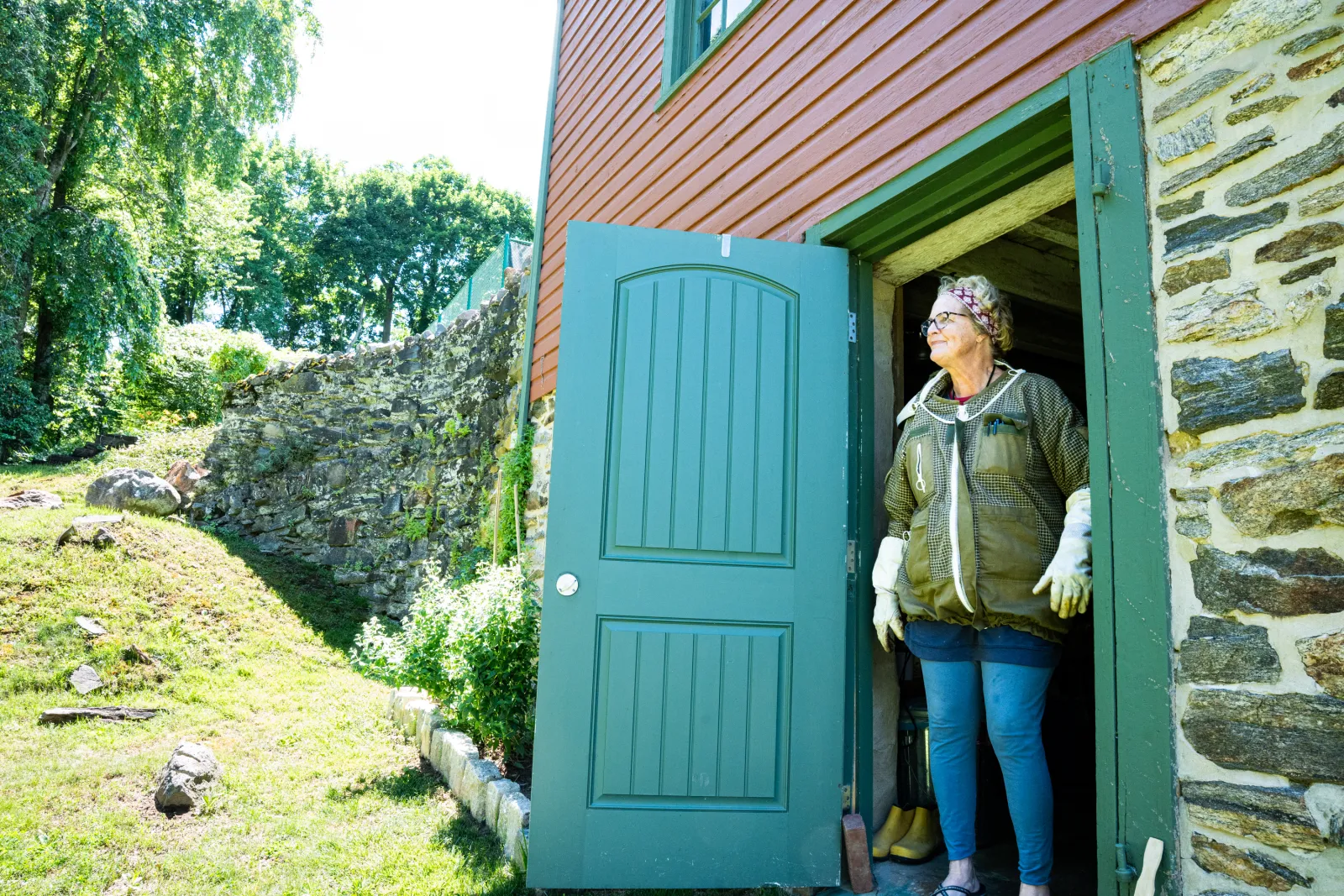
Campus has been buzzing about Isenberg’s bees since the first four hives went up by Lake Vickers in spring 2025. Isenberg spends several days a week in the warmer months tending to them, with equipment she stores in the basement of a facilities barn nearby that she cleaned up and furnished with lawn chairs. “It’s kind of like my lady cave,” she says while kicked back inside the cool stone walls on a hot August day.
Isenberg’s journey as a beekeeper began in New England 15 years ago when awareness was growing around colony collapse and efforts to save the bees. Isenberg worked as a clinical psychologist and had clients with stinging phobias. She, too, was stung when she was young and developed a fear of wasps, so she desensitized herself alongside her clients.
Having conquered her fear, Isenberg studied beekeeping while living in New Hampshire. She enjoyed digging into the science and research aspect and even found parallels to her clinical work — just with bees instead of human clients.
“It’s a little like being a clinician; I was perpetually, always, on call,” she says.
When she moved to Philadelphia two years ago to be close to family — including Gurtler and her daughter-in-law Anita Kurimay, associate professor of history and co-director of gender and sexuality studies at Bryn Mawr — she went looking for a place to keep beehives.
“It was Anita, who’s just a real weaver of people,” Isenberg says. “Anita said, ‘Let me talk to the grounds people at Bryn Mawr.’”
It was the perfect partnership, says Neha Sood, director of sustainability and environmental action, who had previous experience beekeeping at another college.
Bees bridge science and ecology with the social sciences, humanities, and more, Sood says. “There’s so much potential for honeybees as a learning opportunity for a liberal arts institution.”
Plus, she adds, “I think the hives represent an element of sustainability that would otherwise be missing on our campus.”
Bees love water of any kind — they are even attracted to chlorinated swimming pools — so the pond is their favorite place, Isenberg says. The bees spend the spring and early summer foraging before what Isenberg calls the “dearth” of midsummer, when pollen is scarce and she harvests their honey. They get back to work in the fall, making the honey that sees them through winter.
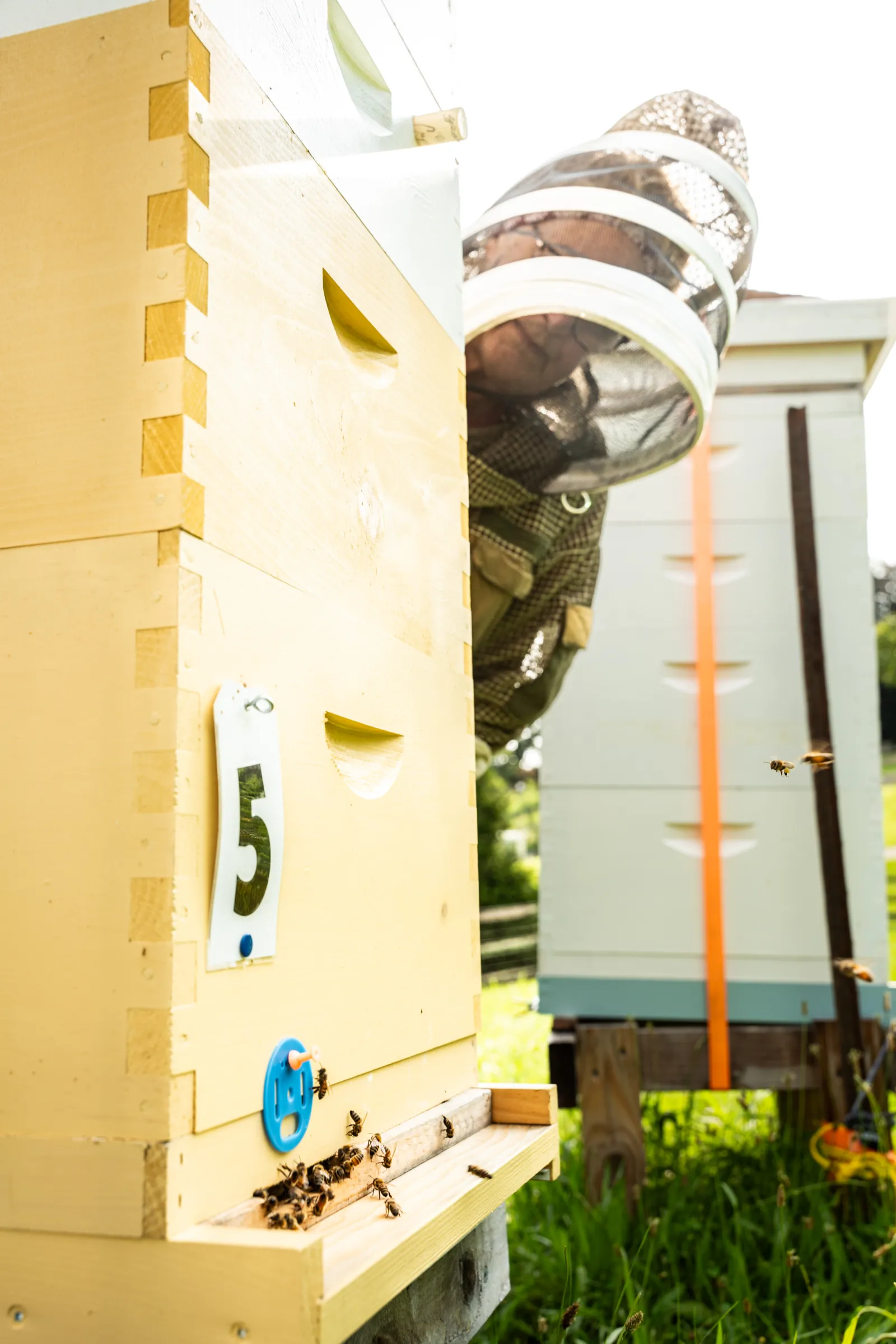
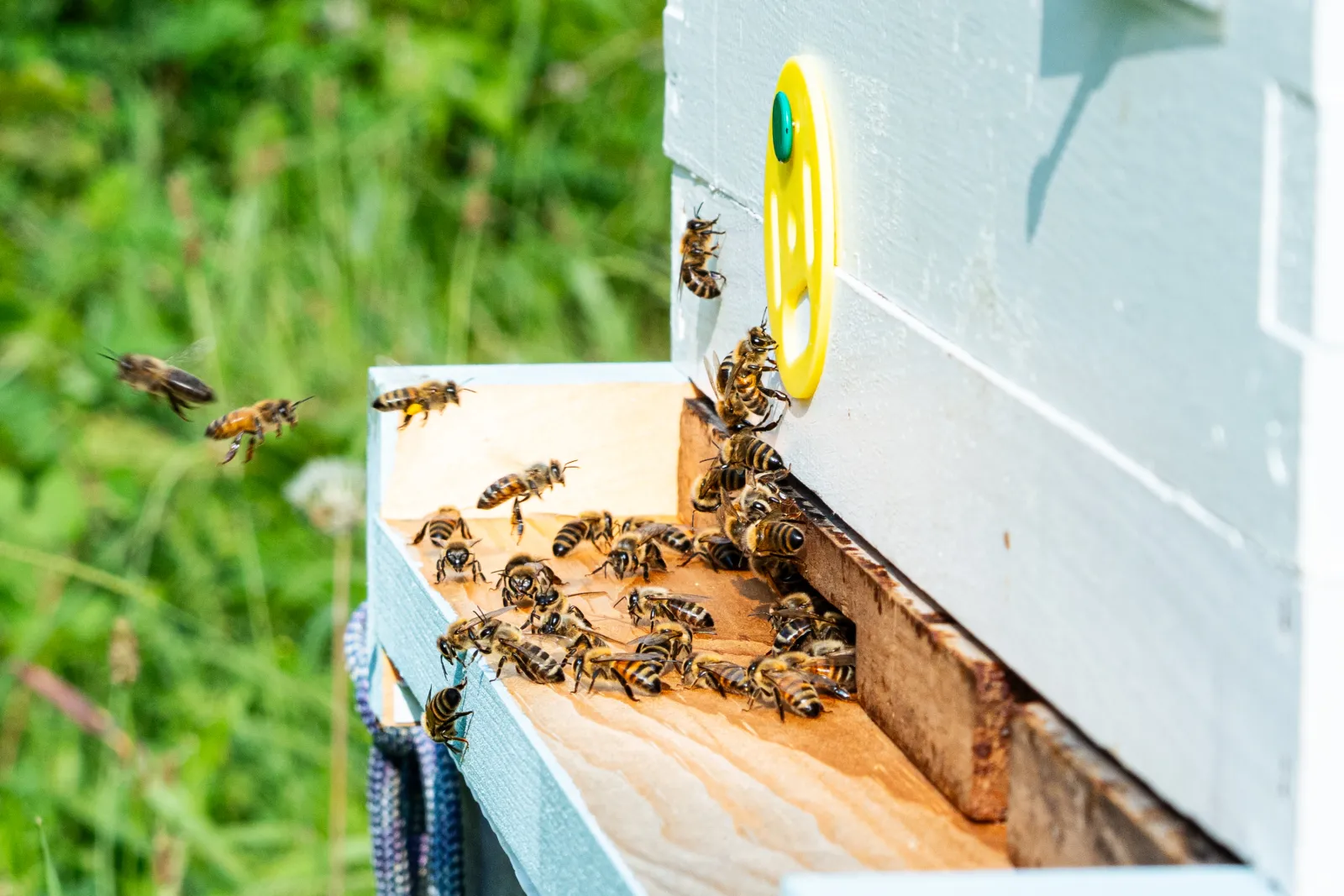
The bees are constantly coming and going. “It is like an airport,” Isenberg says. Each hive has different colored symbols at the entrance that help the bees find their colony.
Isenberg’s bees are Russian bees, which are winter-tolerant and resistant to varroa mites, the main threat to honeybees. Those traits and the lush landscape of campus have allowed them to thrive at Bryn Mawr; all the bees survived the snowy winter.
“Not only did they all survive, they started cranking up in March,” Isenberg says. “They expanded so fast.”
Bees are biologically driven to swarm, to break apart from their hive and repopulate new colonies. Isenberg split the first four hives to reduce swarming, creating eight colonies lined up between the walking path and pond.
Sood says there is work underway to expand beekeeping on the campus and increase student participation, but in partnership with Isenberg, who provides consistent, expert care. “She has the best beekeeping operation I’ve ever seen,” Sood says.
Over the summer, Isenberg harvested 150 pounds of pale amber honey, which she gifted in jars to people who have helped her, including the grounds crew.
“Everybody has been lovely,” she says. “So accommodating and lovely.”
Published on: 10/14/2026