

Ph.D. Student Yuzhu Wang Sheds Light on the Power of Landscape in Buddhist Art
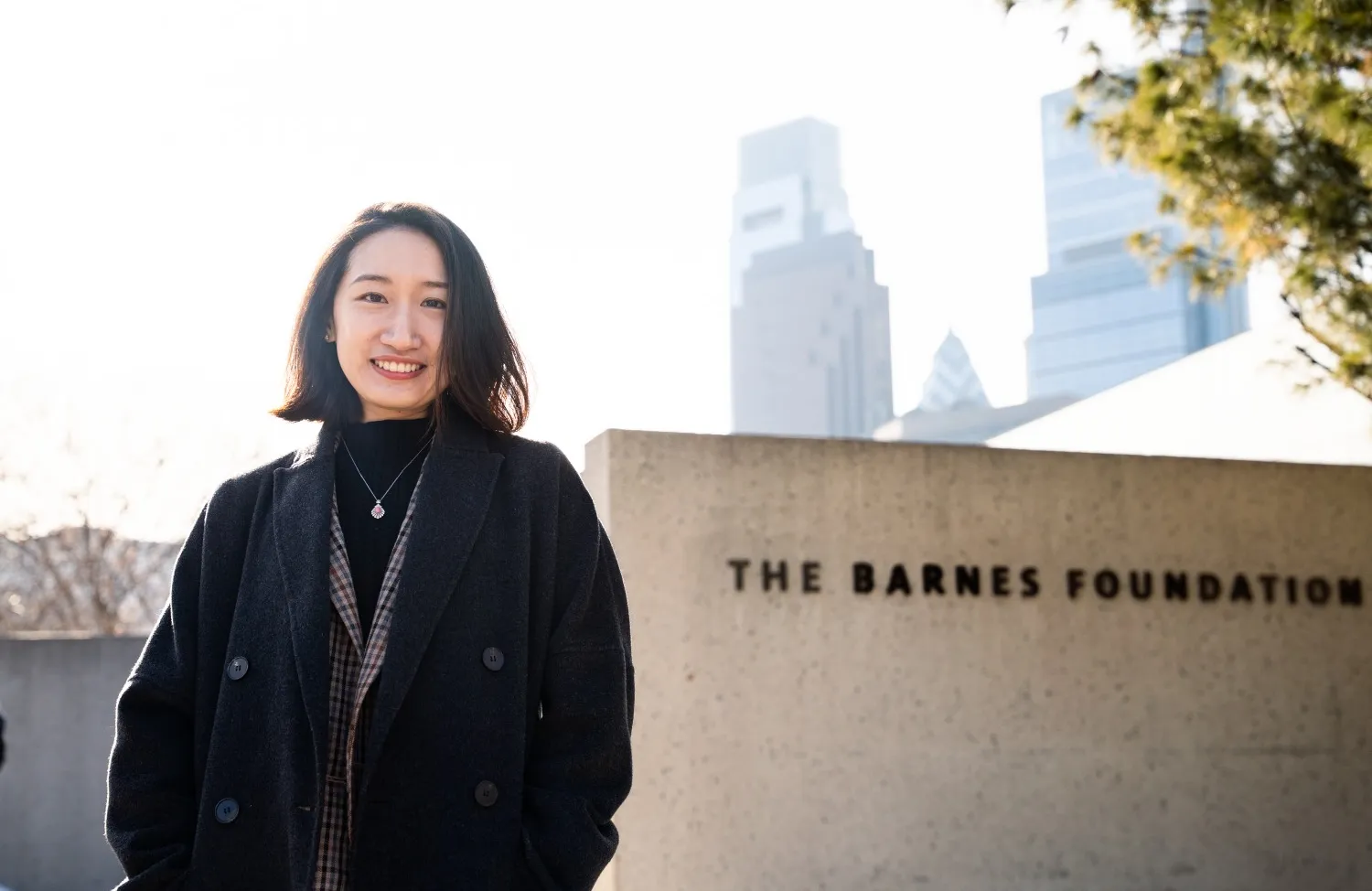
Ph.D. student Yuzhu Wang represented Bryn Mawr at the Barnes Foundation's 30th Annual Graduate Student Symposium on the History of Art.
Located in downtown Philadelphia, the Barnes Foundation attracts visitors and scholars alike to its world-renowned collections of impressionist, post-Impressionist, and modern art. Celebrating new scholarship and thoughtful exchange across generations of art historians, the Symposium brings together graduate students from across the mid-Atlantic to present current research in the field. Wang has attended this conference as an audience member since 2023, but this year, for the first time, she took the stage and shared her own work with the crowd.
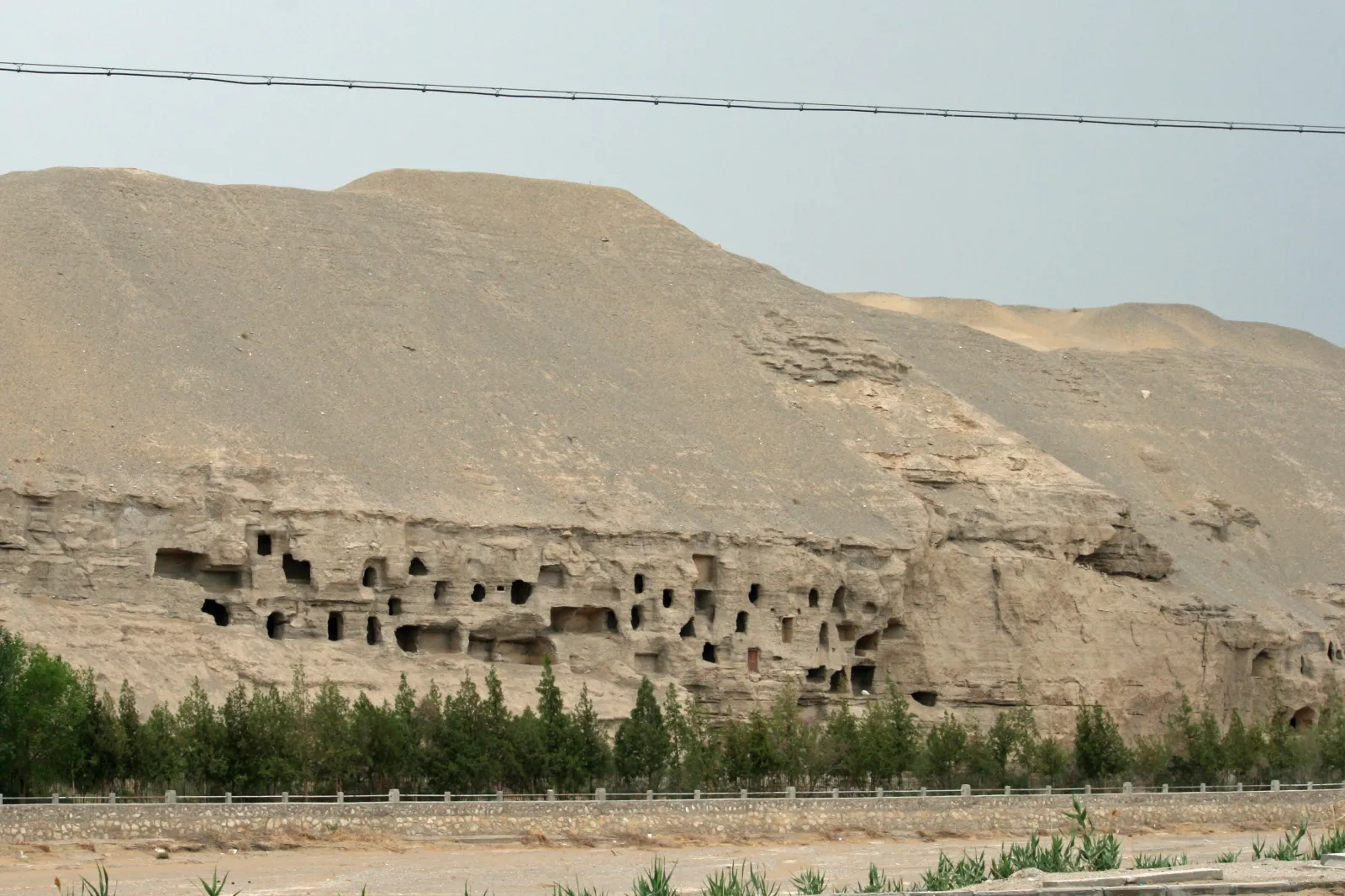
At the edge of the Gobi Desert sit the Mogao Caves, a system of temples carved directly into the natural landscape that house some of the finest examples of Buddhist art. Wang's presentation titled "Visualizing the Cosmic Center: Artists and the Transformation of Mount Sumeru in the Medieval Dunhuang" builds on her master's thesis and situates the paintings in these caves into their physical and symbolic landscapes.
In many mediums, landscape is studied as a secondary element — a decorative background more than anything, says Wang. But at religious sites such as the Mogao Caves, the specific landscape in which the paintings are situated informs both their artistic interpretation and the lived experience of viewing the art.
Additionally, emphasis is placed on the paintings' religious overtones, assigning them power and taking it away from the artists who created them.
Wang's research turns the typical sequence of understanding religious art on its head and, in turn, gives agency back to the artist who created it many centuries ago.
"There is a clear sequence: the artist created something first, and the religious interpretation followed that," she says. "The artists take the lead."
As she continues her academic career and delves deeper into her research, it is this relationship that has encouraged Wang to move farther and farther away from the pure religious context of Buddhist art and towards recontextualizing artworks within their landscapes, both physical and symbolic.
In fact, it was thanks to Bryn Mawr courses that she had the idea of studying landscape and power in association with Buddhist art. It was in a course with Associate Professor of History of Art Professor Jie Shi where the idea of studying landscape came to the foreground of Wang's mind. The complexities of landscape in art and the power dynamics that inform them are discussed in American art, but less so in East Asian art, and the discussion of these relationships in Shi's class acted as inspiration for Wang's work.
Wang was a teaching assistant for Associate Professor of History of Art C.C. McKee's class, “Landscape, Art, and Racial Ecologies,” while writing and revising her thesis last year. Assisting with that course also shaped her thinking, especially by prompting her to attend more closely to questions of power in her project.
Shi, who was Wang's M.A. thesis advisor and whom she credits as a great mentor, introduced her at the Symposium and emphasized her passion and eagerness to learn.
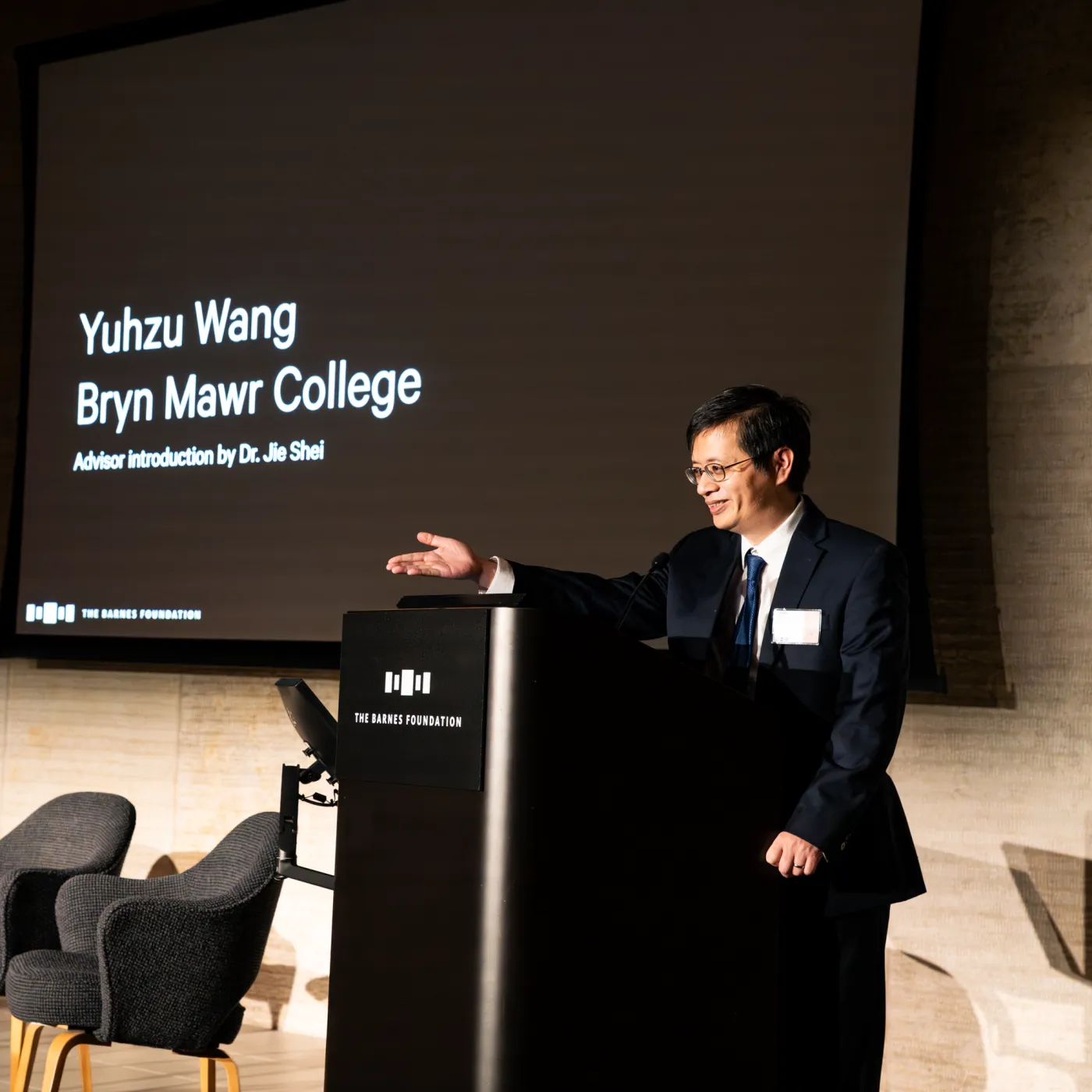
Jie Shi
Associate Professor of History of Art
"Yuzhu is intellectually agile, disciplined, and methodical in her approach to both research and teaching. As a teaching assistant, she demonstrates clarity of explanation, sensitivity to audience needs, and an ability to guide discussion with both structure and openness. At the same time, she is undertaking a thesis project of serious ambition and rigor, marked by careful research design, thoughtful engagement with scholarship, and a willingness to grapple with complex questions rather than settling for easy conclusions. These dual strengths — pedagogical skill and scholarly seriousness — were evident in her recent presentations at the two academic symposia held at Bryn Mawr College and the Barnes Foundation."
Wang received her B.A. in Archaeology from Renmin University of China in 2019 and her M.A. in Art History from Tufts University in 2021. After spending a year working in museums, she came to Bryn Mawr in 2022.
It was while she was studying at Tufts that Wang first heard of Bryn Mawr. She ran into a number of Mawrter scholars during her time there, and she says each of them emphasized the positive, supportive community they were grateful to be part of at Bryn Mawr. Although she knew very little about Bryn Mawr at the time, the remarks those students made stuck in her mind and sparked her curiosity about what it would be like to be in a small, supportive community as she looked for places to pursue a Ph.D.
"Graduate school is already so stressful, you want some place that can really work for you," she says. "I get a sense that Bryn Mawr really is that place. I've worked with every faculty member in my department, one way or another." Whether it's as a teacher, advisor, or mentor, she has learned valuable lessons from each of them and says they each deserve credit for any success she finds down the line.

Studying History of Art at Bryn Mawr
The curriculum in History of Art immerses students in the study of visual culture. Structured by a set of evolving disciplinary concerns, students learn to interpret the visual through methodologies dedicated to the historical, the material, the critical, and the theoretical.