All News

Celebrating the TLI: 20 Years of Collaboration and a Model for a Movement

October 7, 2026
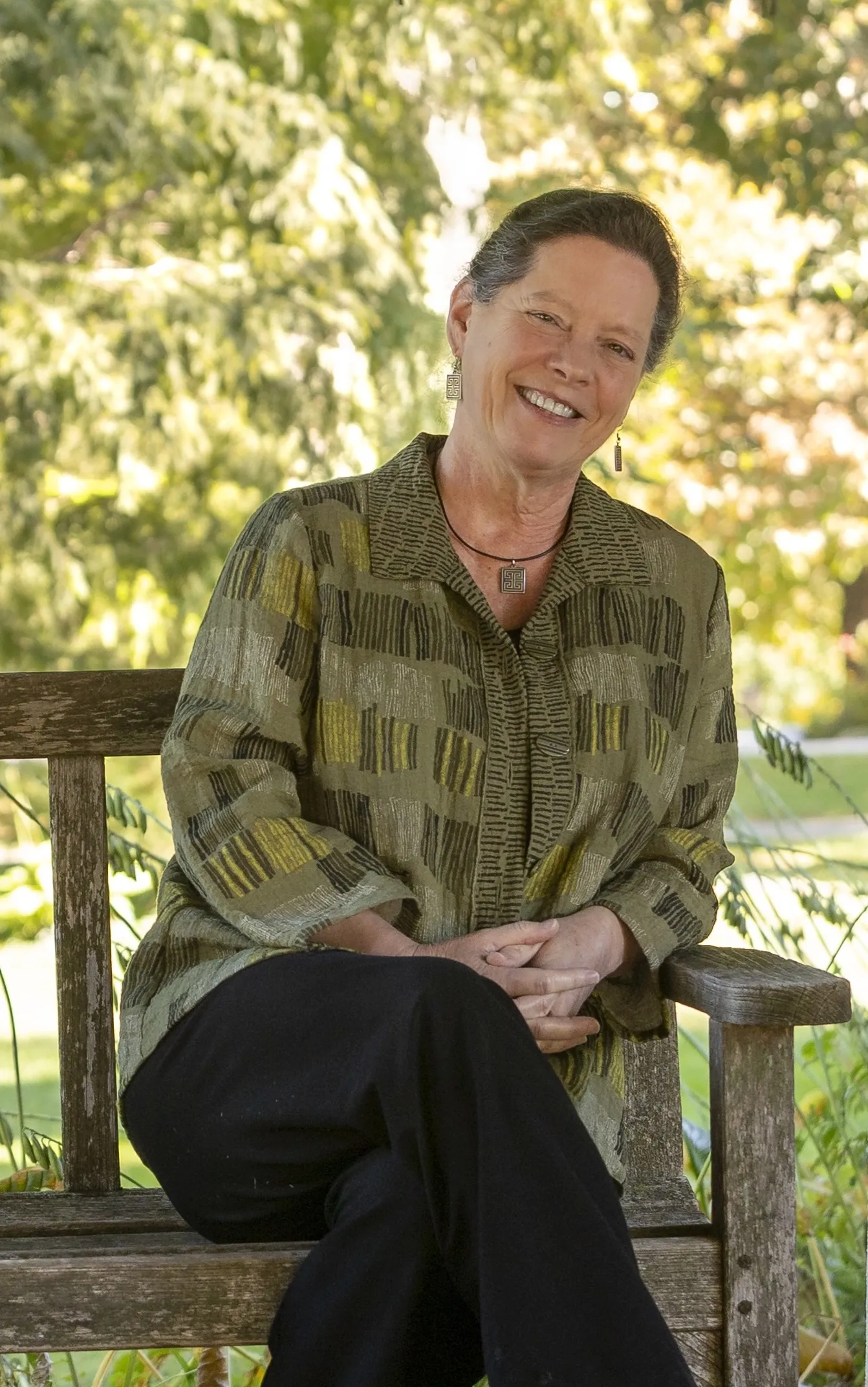
Alison Cook-Sather bench portrait
Professor of Education Alison Cook-Sather

When Alison Cook-Sather became director of the Bryn Mawr/Haverford (Bi-Co) Education Program in 1994, she was determined to build a program that centered the experiences and perspectives of students and fostered dialogue between the aspiring teachers the program was preparing and the students they’d teach.

Cook-Sather, who is a former high school teacher, worked with Springfield High School teacher Ondrea Reisinger to develop the Teaching and Learning Together project, which was based in a methods course Cook-Sather taught in the fall semester to the preservice teachers prior to their semester of student teaching.

Reisinger recruited a cross-section of high school students for the project, each of whom was partnered with the Bi-Co students in Cook-Sather's course. The pairs engaged in an on-going, semester-long dialogue in which the high-school students were positioned as every bit an authority on teaching as any theorist, practicing teacher, or even Cook-Sather. In keeping with their status, the high school students were paid for their contributions. 

In 2006, with the first of several grants from The Andrew W. Mellon Foundation, this pedagogical partnership approach became the basis of the Teaching and Learning Institute (TLI) and its signature Students as Learners and Teachers (SaLT) program. 

When Cook-Sather shifted her focus from supporting the preparation of future high school teachers to supporting practicing college faculty, she retained the foundational principle that there can be greater reciprocity across the roles of teacher and learner than most educational systems assume or allow.

The TLI provides structures and spaces within which students, faculty, and staff can reflect and engage in dialogue about developing inclusive spaces and practices. Including students as dialogue partners and collaborators linked to pedagogy seminars, circles, and other forums is central to the model.


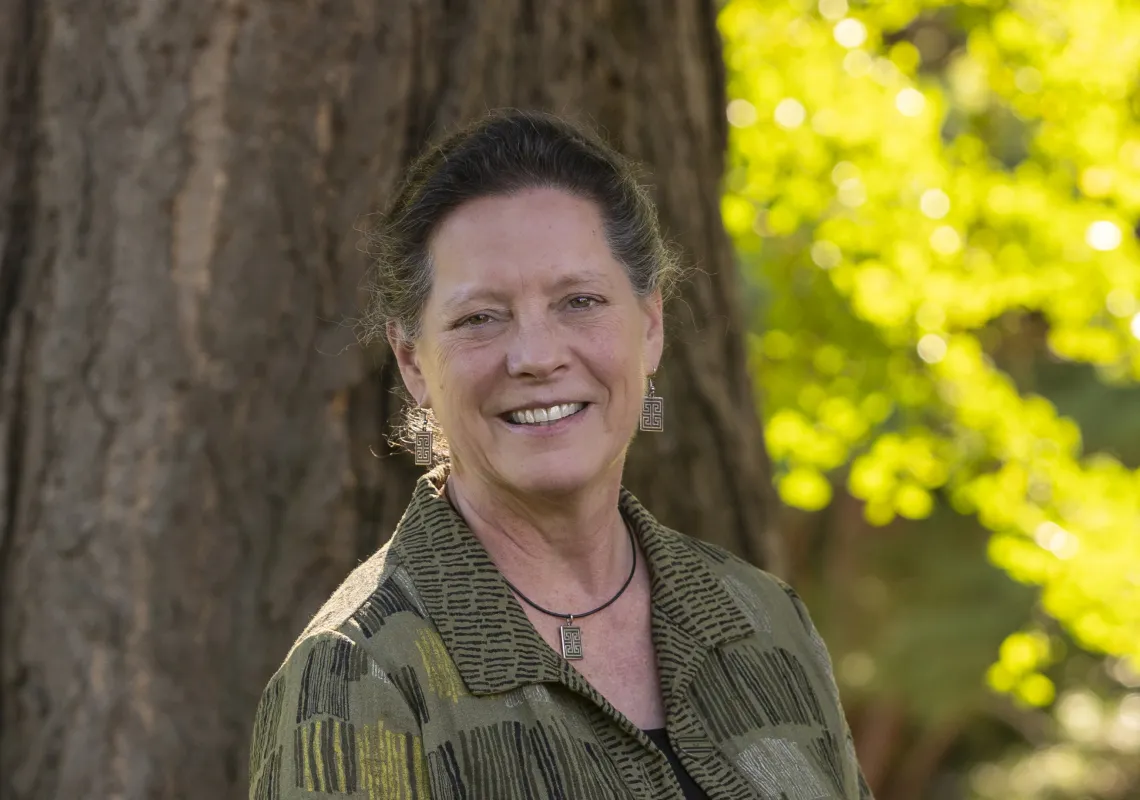
headshot of Alison Cook-Sather

“The most common response I hear when I introduce the idea of student-faculty pedagogical partnership is, ‘Of course. Why didn’t I think of that?’”

Professor of Education Alison Cook-Sather

“The most common response I hear when I introduce the idea of student-faculty pedagogical partnership is, ‘Of course. Why didn’t I think of that?’” says Cook-Sather. “The reason is that the structures and practices of higher education clearly delineate the roles and responsibilities of teachers and learners, but this separation prevents informed dialogue about and approaches to teaching and learning.”

Since coming to Bryn Mawr, Cook-Sather has become an international leader in this rapidly expanding approach, supporting exploration of pedagogical partnership approaches at 72 U.S. institutions and 23 institutions around the world, including in New Zealand, Australia, Canada, Hong Kong, Israel, Pakistan, Ireland, Singapore, Italy, Japan, Sweden, and the Netherlands. U.S. colleges and universities inspired by SaLT include Yale’s Pedagogical Partner Program, Smith College’s Student-Faculty Pedagogical Partnership Program, and the University of Texas Rio Grande Valley’s SaLT program. 

“Alison and SaLT are quite literally changing higher education around the world, to the great benefit of students, faculty, institutions, and communities,” says Peter Felten, executive director of the Center for Engaged Learning at Elon University and co-author of Relationship-Rich Education: How Human Connections Drive Success in College.

International examples of programs influenced by the SaLT program include the University of Queensland’s Institute for Teaching and Learning’s Students as Partners program, as well as programs at McMaster University in Canada and Edinburgh Napier University in the U.K.

“Alison’s work has shaped the higher education landscape across Australian universities for the better,” says Kelly Matthews, an honorary professor in the University of Queensland School of Education and Pro Vice-Chancellor (Teaching and Learning) at the University of Wollongong. “Her capability to translate ideas and possibilities into practice and then inspire action is unmatched.”

Matt Farmer, associate professor and chair of Haverford’s Classics Department, is among the faculty who have participated in the TLI and SaLT programs, and he says the experience had a profound impact on his teaching. 

Farmer partnered with SaLT consultant Sophie Jackson early in his career, focusing on his course “Sex and Power in the Ancient World.”

“My conversations with Sophie throughout that semester really helped me see my teaching from the students' perspective,” he says. “In those days, still relatively early in my teaching career, I was overplanning every session of class, and this created a real mismatch between my intentions — to foster student-led conversation — and the reality of the classroom. My work with Sophie helped me gain the confidence I needed to yield up control of the classroom to my students and to create space for them to drive their own learning.”

The TLI experience has been equally transformative for many of the students who have taken part.

Sophia Abbot ‘15 has gone on from the program to become a faculty development specialist at the University of Rhode Island, Anita Ntem Thomas ‘18 is chief of staff at Democracy Prep Public Schools, and Van Nguyen ’24 is a college access and success educator at TGR Foundation.

At Bryn Mawr, Abbot crafted an independent major focused on her TLI work before going on to get her master’s and Ph.D. in higher education, with a focus on examining how to further engage in partnership and co-creation in teaching practice and research. Prior to her current position, Abbot was a fellow in the Collaborative for Learning and Teaching at Trinity University in San Antonio, Texas, where she launched a program modeled on the SaLT program.

“It's been really amazing to craft my life's work around something that started as a unique student job,” says Abbot. “I’m so grateful to the program, and to Alison Cook-Sather for seeing something in me worth nurturing.”
 

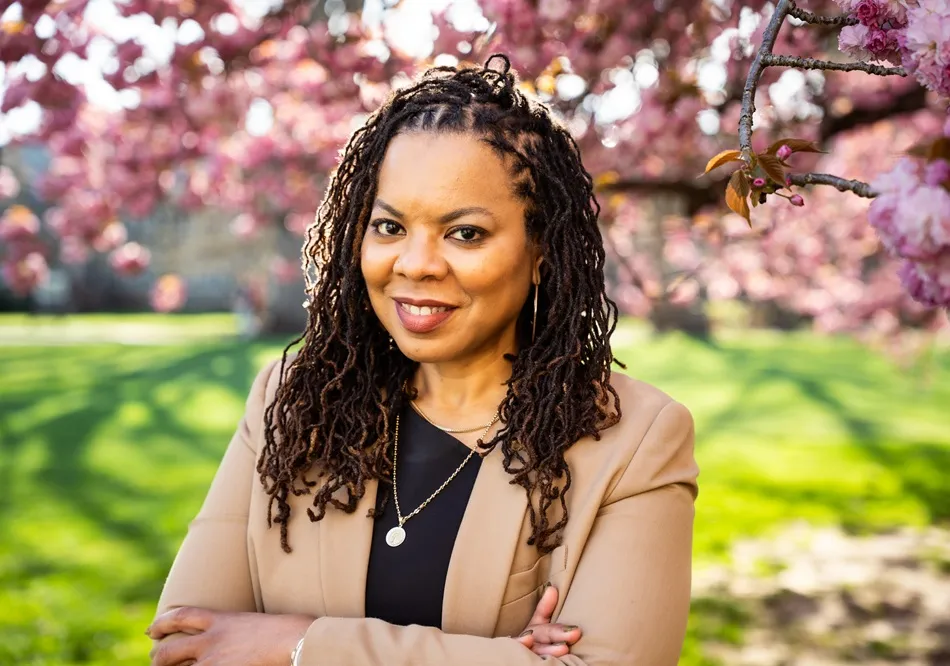
Woman in tan blazer standing in front of tree

"The TLI begins with a fundamental conviction that I hold close: students teach all of us how to learn."

Bryn Mawr Provost Dee Matthews

While 20 years is a significant milestone, Cook-Sather has another reason to celebrate. 

Last spring, the parents of a Bryn Mawr graduate made a gift of $100,000 to the TLI. 

These funds are supporting SaLT student consultant participation in pedagogical innovation and curricular development across departments and programs, including in biology, Black Studies, the Emily Balch Seminars, Jewish Studies, political science, and sociology, in the first summer and fall of gift-supported work. 

“We are very grateful for this generous gift,” Cook-Sather says, “And for the confidence these parents of a Bryn Mawr alumna have in our student-faculty pedagogical partnership approach.”

The TLI and SaLT have also been recognized recently through the receipt of two grants. 

The first is an Educating Character Initiative grant for a project called, “Teaching and Learning Character Together: A Partnership Approach to Preparing Students for Lives of Purpose,” which was described by the selection committee as “a standout among standouts.” 

This project supports faculty in developing ways to more intentionally embed the virtues of respect, open-mindedness, and courage in the curriculum of Bryn Mawr’s Emily Balch Seminars and other introductory courses. Cook-Sather and Co-PI Joel Schlosser have an article forthcoming in Journal of Character Education on the project: “A Student-Faculty Pedagogical Partnership Approach to Enacting the Seven Strategies for Character Development.”

The second is a grant from the Network for Vocation in Undergraduate Education for a project called “From Way of Working to Way of Being: Understanding Undergraduates’ Experiences of Pedagogical Partnership as a Calling.” Research from the project by Cook-Sather, Gongyu Yang ‘27, and Shay O’Connor (HC ‘27) resulted in an article under review at Studies in Vocation and Calling.

Faculty, staff, and students involved in pedagogical partnership at Bryn Mawr and Haverford and at institutions across the United States that have been inspired by the SaLT program will gather at Bryn Mawr on October 22 and 23 to celebrate the impact of the TLI, the SaLT program, and Cook-Sather’s scholarship.

"The TLI begins with a fundamental conviction that I hold close: students teach all of us how to learn,” says Bryn Mawr Provost Dee Matthews. “Alison has given that conviction an architecture at Bryn Mawr, by creating space for students and faculty to share and build something together. Practicing that type of sustained attention to one another is central to the education we offer."

Alison Cook-Sather has written over 200 articles, chapters, prefaces, opinion pieces, and more published by a wide range of journals, as well as 12 books. This work, as well as some of her more than 80 presentations and 170 keynote addresses and workshops in 17 states in the U.S. and 20 other countries or regions, is featured on her web site, and contributed to her receipt of a Fulbright U.S. Scholar Award to develop a country-wide infrastructure for pedagogical partnership in Ireland.