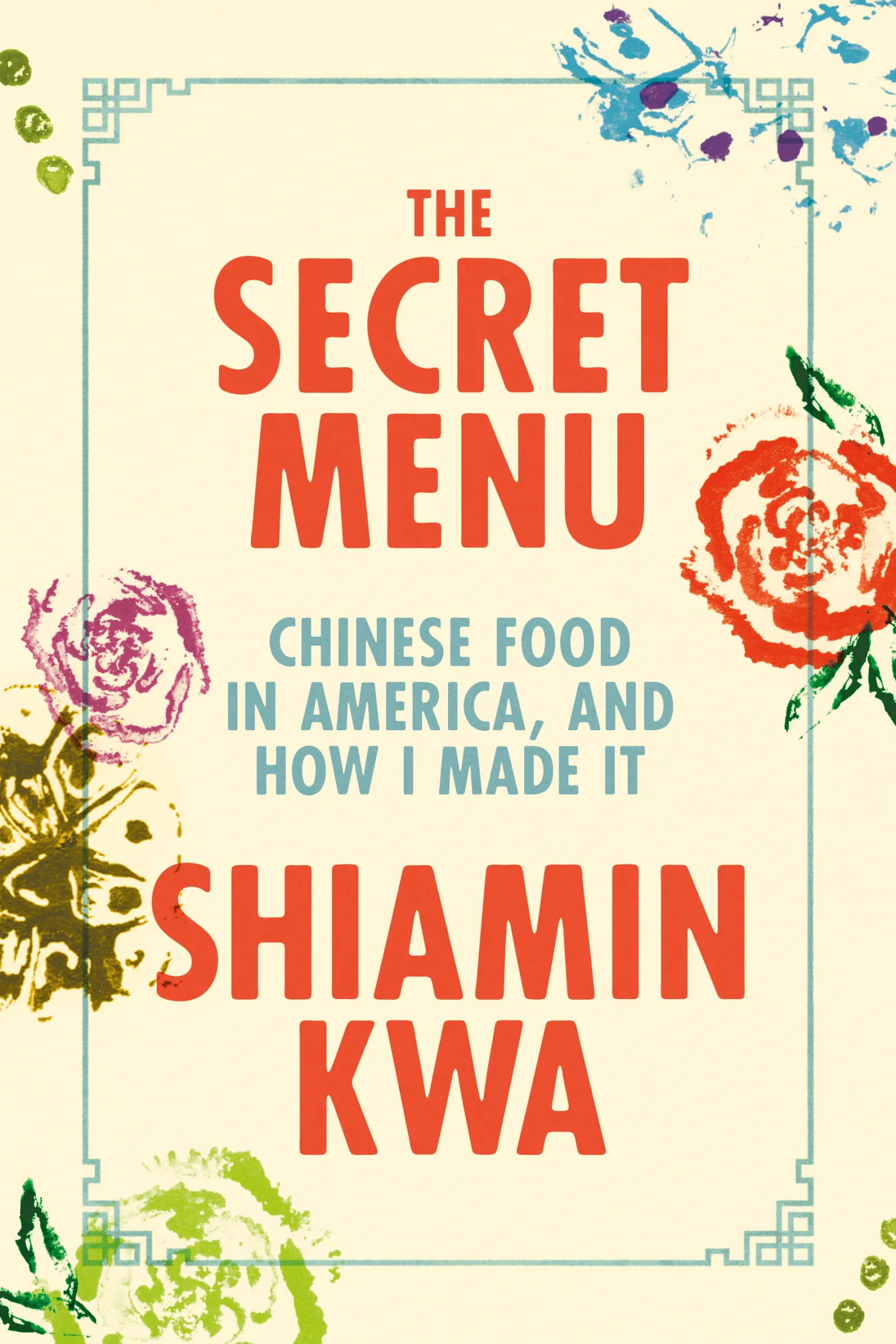
“A meal reminds us that everything is fleeting, and it reminds us that everything can be held on to.” — The Secret Menu, by Shiamin Kwa
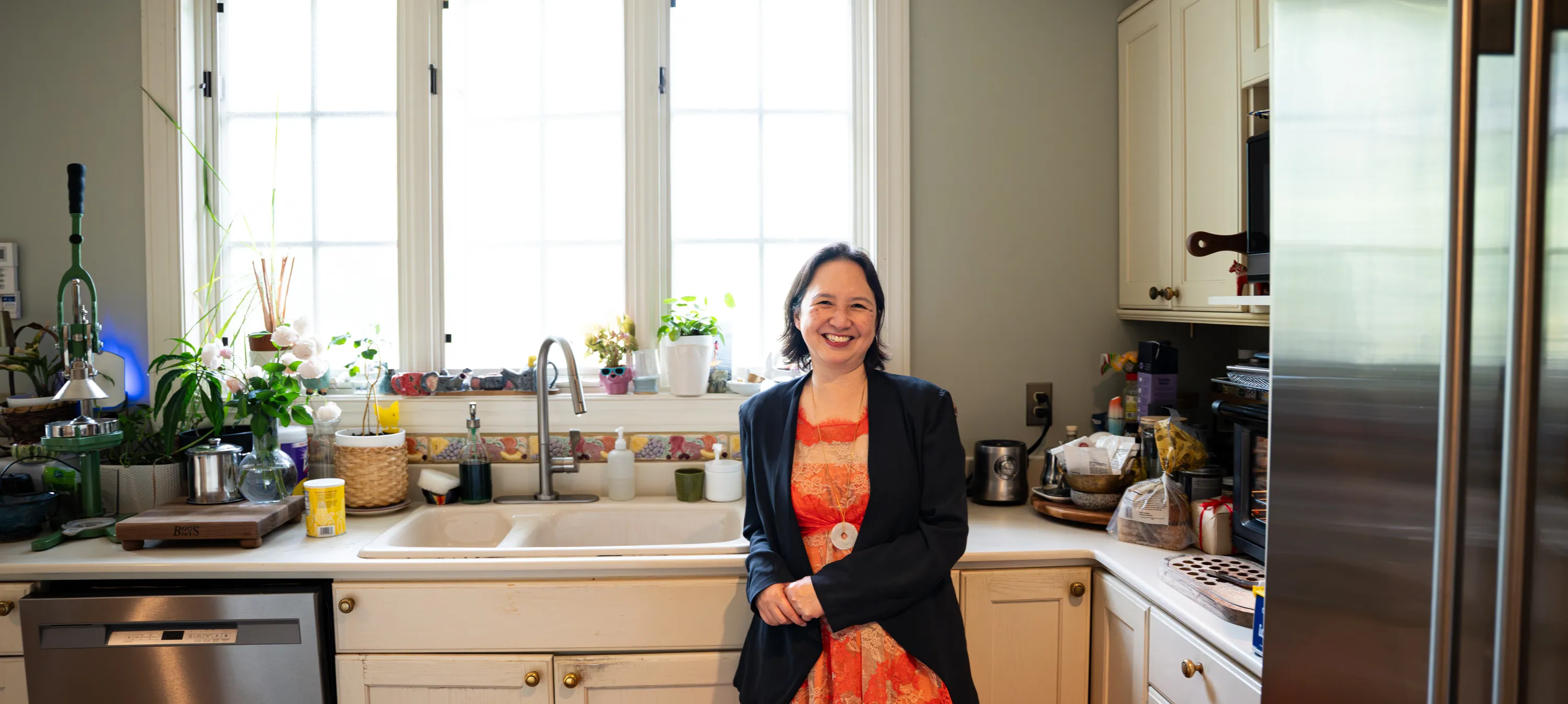
When Professor Shiamin Kwa first started thinking about her new book, The Secret Menu: Chinese Food in America, and How I Made It, she envisioned a scholarly work examining Chinese immigration through the history of Chinese food in America and the questions surrounding what it means for something to be “authentic.”
Launch of The Secret Menu, book signing, and reception, Nov. 5, 4-6 p.m. Great Hall
She pitched the book to her agent with a table of contents that included examinations of chop suey in the 1890s and 1920s nightclubs with “American” and “Chinese” sections on the same menu.
To illustrate her idea, Kwa shared with her agent a story about trying to recreate a dish she missed from Malaysia using instant noodles and the spices available at her aunt’s home in Delaware, where she had moved to attend middle school.
“I want to know more about that story, and I want to know more about how that food defines you,” Kwa remembers her agent telling her.
Reluctant at first, Kwa began writing about her life and her personal questions of authenticity and identity. She realized that by telling her own story, she was making the point she had initially planned to argue in a much more academic fashion.
“The argument I had planned to make was that there’s no such thing as Chinese food,” Kwa says. “It’s impossible to tell a blanket story about Chinese food in America or Chinese experience in America, because everybody has such a different, very specific experience, and that included me.”
At each stage of what many would consider a life of accomplishment — from attending Dartmouth and teaching English in Beijing after college to earning a master’s degree and Ph.D. from Harvard — Kwa questions herself.
Is she Chinese enough? Is she American enough? Is she smart enough? When will she truly feel at home?
“We've all felt like we didn't belong somewhere,” says Kwa. “We've all hidden something about ourselves because we thought people wouldn't like the real thing about ourselves. And we've all worried that we don't know who our real self is.”
One of the experiences that shaped Kwa’s understanding of identity took place at a Chinese restaurant in Delaware, where she went with her aunt, uncle, and cousins.
It was here that she first heard about the secret menu after making the mistake of ordering from the restaurant’s regular menu.
“We don’t order from that menu,” her cousin tells her. “It’s fake Chinese food. You get it?”
The experience shook Kwa at the time. She had grown up in a Chinese household in Malaysia, speaking English, and then came to America to discover that there were competing ideas of “real” and “fake” Chinese food, neither of which looked much like the food she had eaten at home.
“The thing that I had expected to be familiar to me, the Chinese restaurant, was just another American mystery,” Kwa writes.
The Search for Belonging
As The Secret Menu tells Kwa’s story, it also shares recipes that mark her journey.
These include Curry Mee, prepared by her mother during her childhood in Malaysia; Apple Cake, a family favorite she has come to love despite a nausea-inducing initial encounter with baked apples on her first playdate in America; and Noodle Hot Pot in a Forbidden Dorm Room Rice Cooker, which is pretty much exactly what it sounds like.
Late in the book, Kwa shares a Daoist fable about a frog in a well who is content to be “king among the crabs and the minnows” until a giant sea turtle passes by and tells him of the vastness of the Eastern Sea.
She writes that for much of her life, she thought that “mastering the well would be my greatest achievement,” but with each diploma earned and paper published, “there was now a next staircase to climb.”
But cooking is different.
“Cooking is not something you do until you are so good at it that you don’t need to do it again,” she writes. “It is about something else, about cultivating endless lifetimes, each one different and finite. It is about respite from comparing, and striving, inferiority and superiority…cooking is a way of knowing both the well and the Eastern Sea.”
A Place at the Table
At Bryn Mawr, Kwa has been teaching courses on food and culture for many years. This fall, she is teaching “Food and Culture of the Chinese Diaspora,” a course that asks students to examine how food reflects the histories and experiences of the people who prepare and eat it.
One assignment begins with a cookbook from the 1920s. Students find a recipe in the book and then cook it, confronting the practical questions that can arise when a historical text meets the present day.
“It’s a way to get students to look at something and try to evaluate what the heck it actually means,” says Kwa. “What is a pinch? What is a sprinkle?”
The exercise also opens the door to larger questions about how we interpret texts and translations, what gets lost in the process, and how much we bring to a text from our own experiences and assumptions.
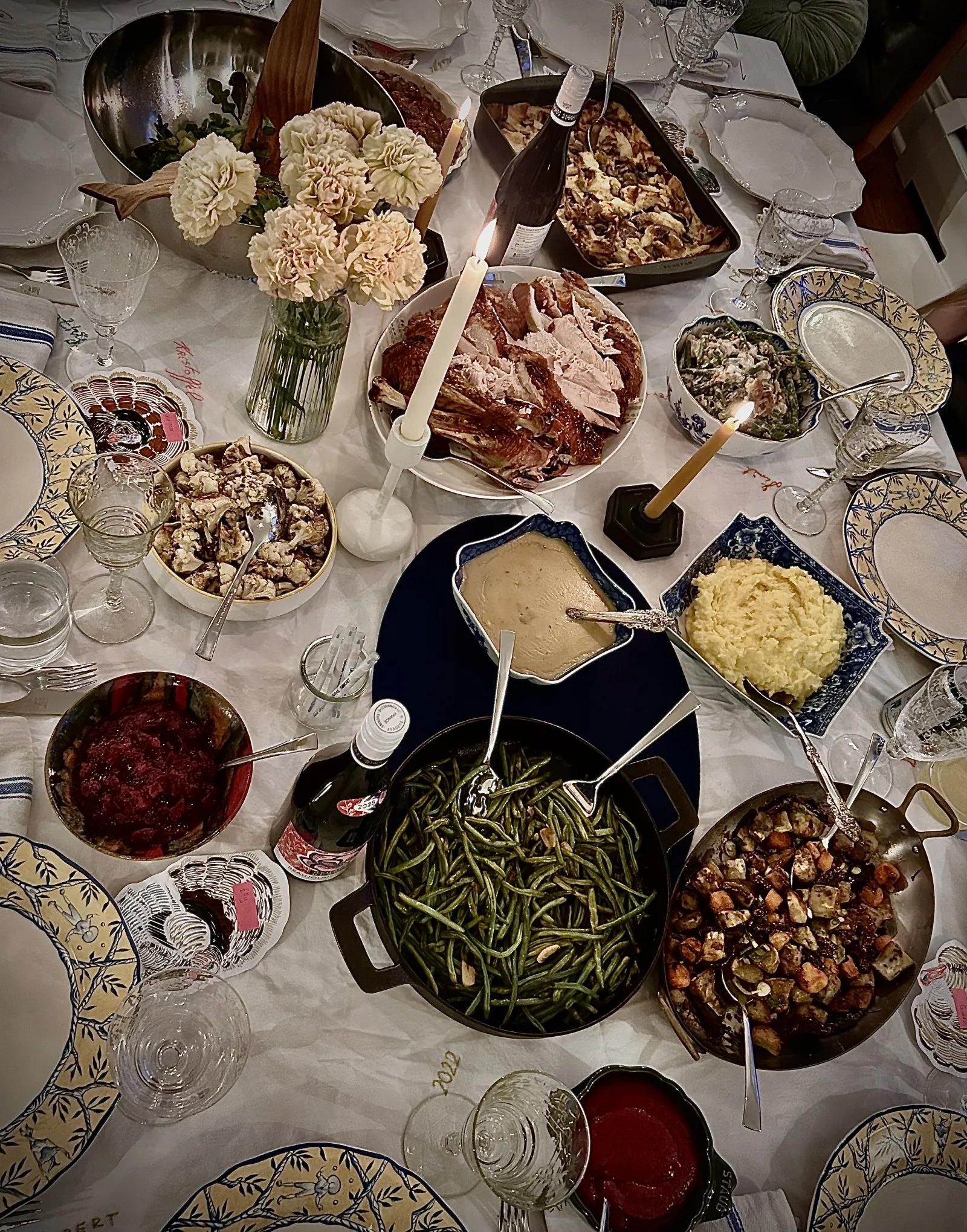
Each year, Kwa also invites students to join her family, medical students from the hospital where her husband works, and a rotating mix of friends for Thanksgiving dinner.
About 10 years ago, she began asking her guests to sign their names on the large sheet that serves as a tablecloth. The next day, Kwa and her daughter embroider the names. Each year, as they spread the tablecloth out, they talk about past guests, wondering what those they haven’t seen for a while are up to and whether returning guests will sit in their usual spots.
“Do I cook ‘Chinese Food’?” she asks in the book. “It depends on what you think Chinese food is. The present-day me thinks that nothing is Chinese food, which admits the possibility that everything I cook is Chinese food…I am fairly confident that my Thanksgiving dinner, Chinese or not, is a delicious meal.”
Shiamin Kwa is a professor of East Asian Languages and Cultures and holds the Catherine Fales Fellowship and the Eugenia Chase Guild Chair in the Humanities.