

On Wednesday, Oct. 28, recipients of the College’s first two rounds of Sustainability Seed Grants will share the latest on their work to advance Bryn Mawr’s sustainability goals, cultivate a broader culture of environmental stewardship, and give students opportunities for sustainability research and work.
Sustainability Strategic Innovation Lunch
Wednesday, Oct. 28
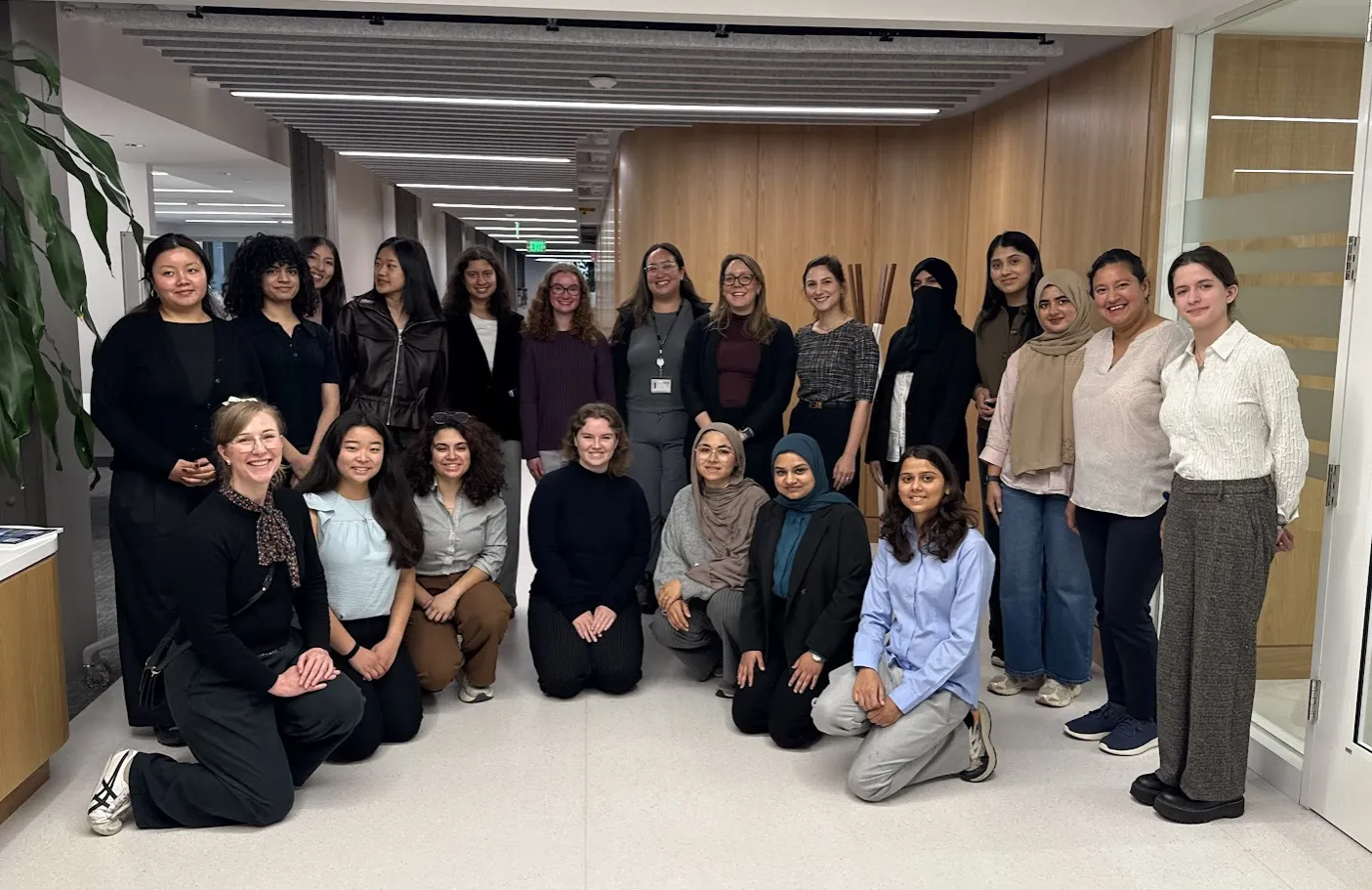
Among the speakers will be students who recently returned from a grant-funded trip to Boston, where they visited organizations with sustainability-related missions to learn more about what they do and what they’re looking for when hiring. They also had a networking event with local alums working in the sector. The trip was a collaboration between the Office of Sustainability and the Career & Civic Engagement Center.
“As a result of this trek, students formed connections, found inspiration through exposure to sustainable innovations, felt empowered by alums' stories, and gained a new understanding of sustainability as a guiding concept,” says Katie Turek, the associate director of experiential education in the Career & Civic Engagement Center who organized the trip.
Organizations students visited included the City of Boston’s Environment Department, where they met with Hannah Payne ’11, director of carbon neutrality for the city; MIT, where they met with Susy Jones ’03, senior project manager in the University’s Office of Sustainability, and Jinane Abounadi ’87, executive director of the MIT Sandbox Innovation Fund Program; and the Stone Living Lab, meeting with senior program manager Adalia Xiony Rodriguez ‘24.
“It really opened my eyes to how many career paths there are in the field of sustainability,” says Yumna Fatima Dar ’29 of the trip. “Most of the alums we met showed the true value of a liberal arts education. They talked about their journeys with experimenting in different career paths and how a liberal arts education prepared them to think outside the box creatively to solve real, pressing issues.”
Dar, who is from Pakistan, says a particular highlight of the trip from her was hearing from Abounadi at MIT.
“She was an international student and a woman in a field dominated by men and not conventionally meant for women, especially in the early 2000s," Dar says. "Hearing how she moved past that marginalization was genuinely so empowering.”
The electrification of the College’s transportation fleet is a major component of Bryn Mawr’s goal to reach carbon neutrality by 2035. While it might not have the impact of a new electric Blue Bus, a seed grant is helping with the effort by paying for the cost to rehab an underutilized electric golf cart previously used by conferences and events for use by Campus Safety.
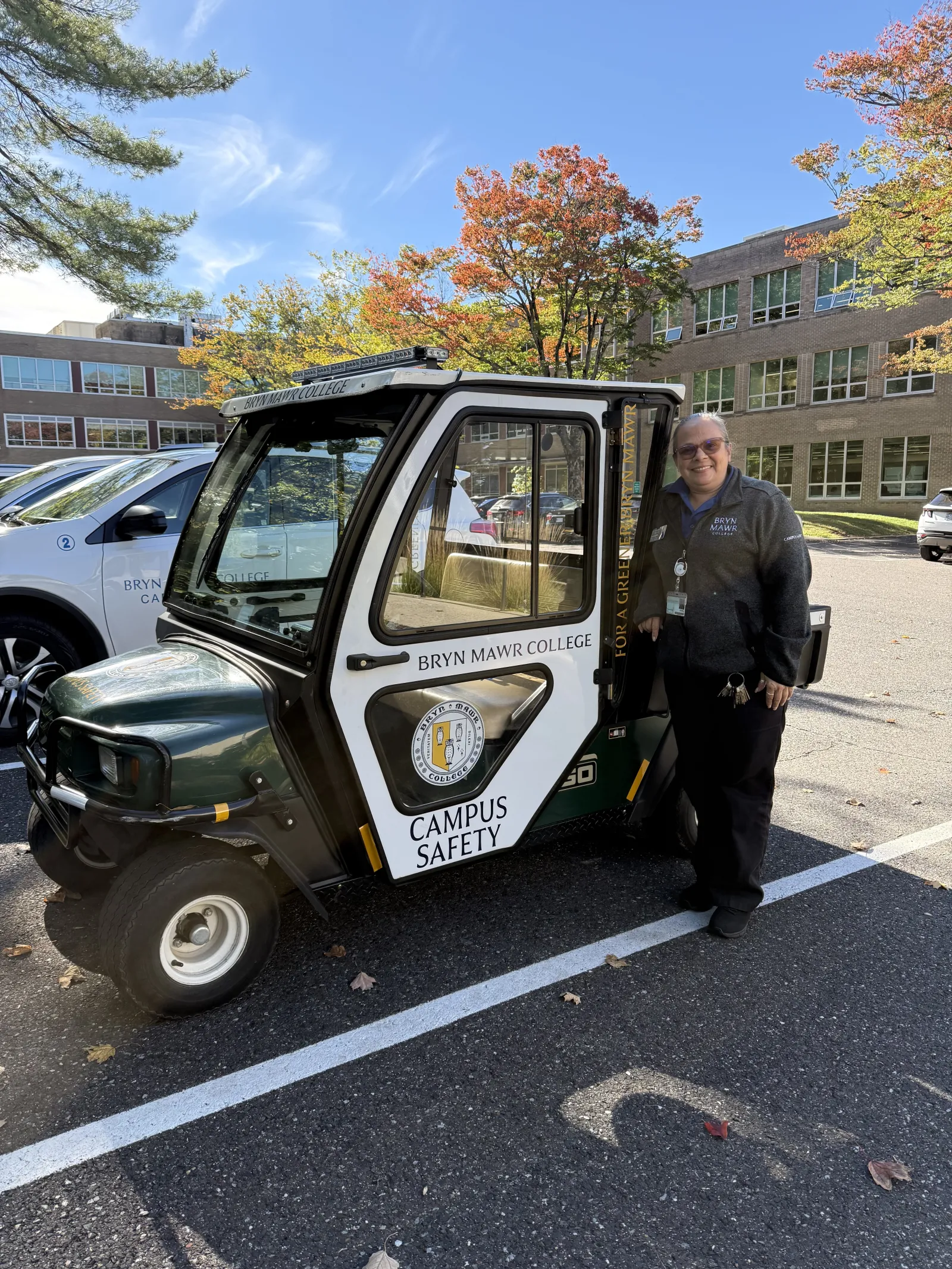
Use of the cart averages about 30 miles per week, miles that would otherwise have been driven in a gas-powered vehicle.
Associate Professor of Computer Science Aline Normoyle is using grant funding to work with Library & Information Technology Services on a program to repair, repurpose, and donate more of the college’s outdated computers and electronic equipment.
Working with the Career & Civic Engagement Center, the group is in conversation with a local non-profit to see what they could use, and a student has been hired to work on repairing equipment and wiping it clean for reuse.
As part of the effort to promote awareness of the beauty of the campus’ natural environment, seed grant funding has been used to purchase borrowable binoculars for use by the student-run birding club, who have already identified 87 species on campus.
In addition to the latest projects, students, faculty, and staff are still implementing and expanding projects from the inaugural round of seed grants. Dining Services is expanding its use of Leanpath, a food waste tracking system introduced at Erdman Dining Hall, to New Dorm Dining Hall. Early results at Erdman showed a 31 percent reduction in food waste compared with baseline levels, preventing roughly 1.5 tons of food waste and generating approximately $6,700 in savings over two months.
The Next Chapter
As part of Bryn Mawr's Next Chapter and the goal of carbon neutrality by 2035, the College will weigh decisions and resource allocations for environmental impact and alignment with climate equity and justice.
The Next Chapter is a ten-year framework of strategic focus and direction, charting a path by which Bryn Mawr will connect the best of its history with the needs and aspirations of future students, preparing the next generation of Mawrters who will change the world.