Share
Firefox does not support native sharing. Use another option.
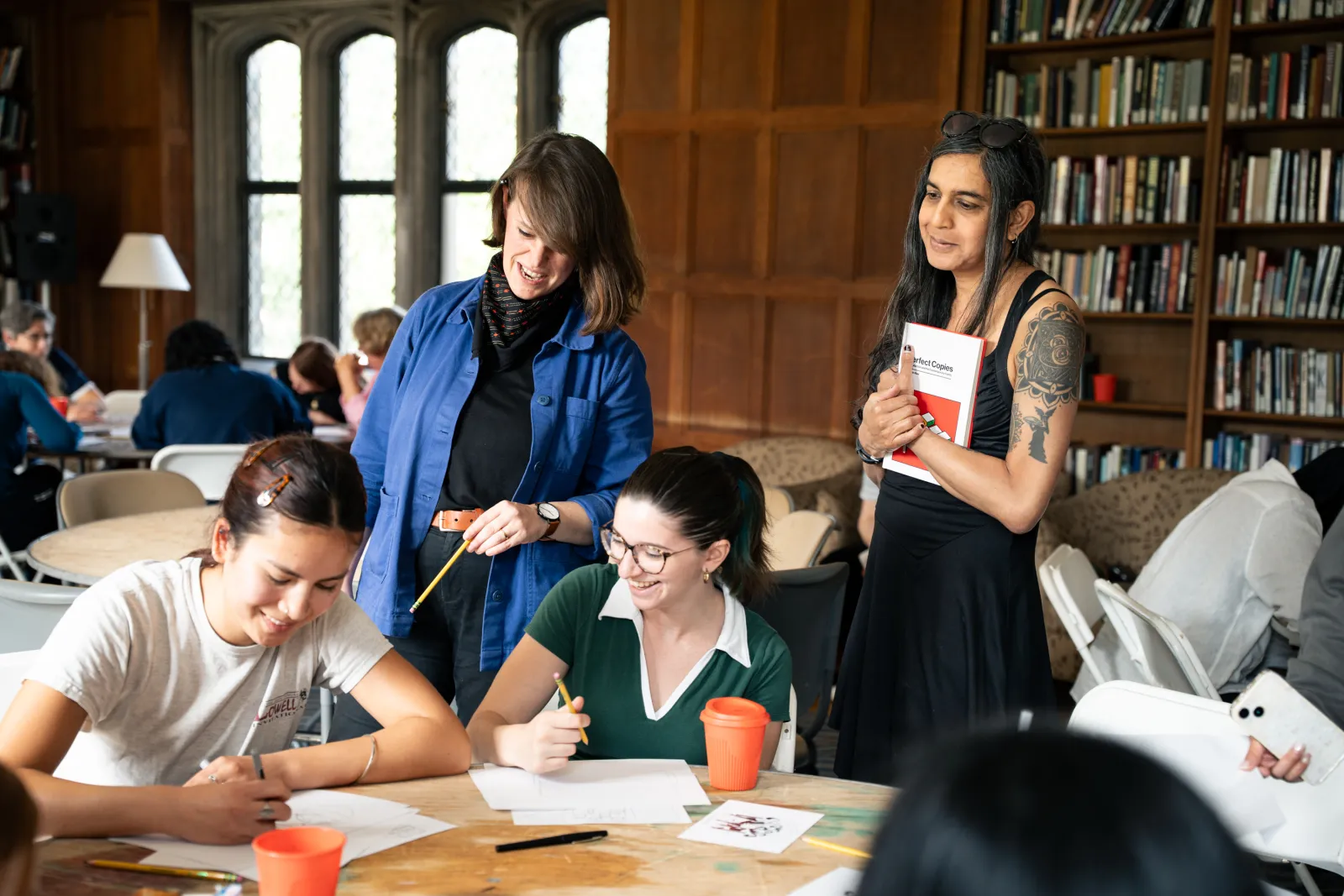
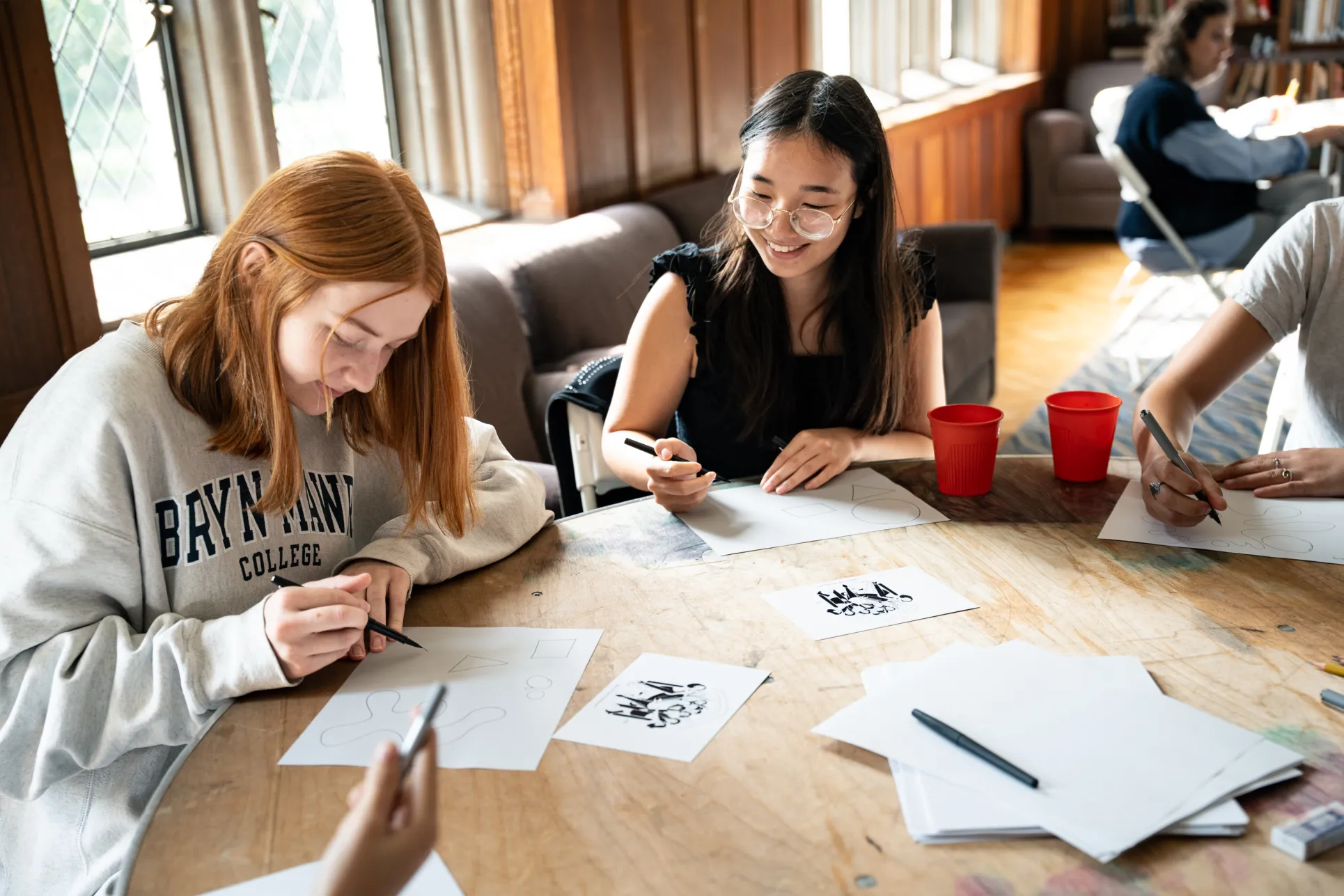
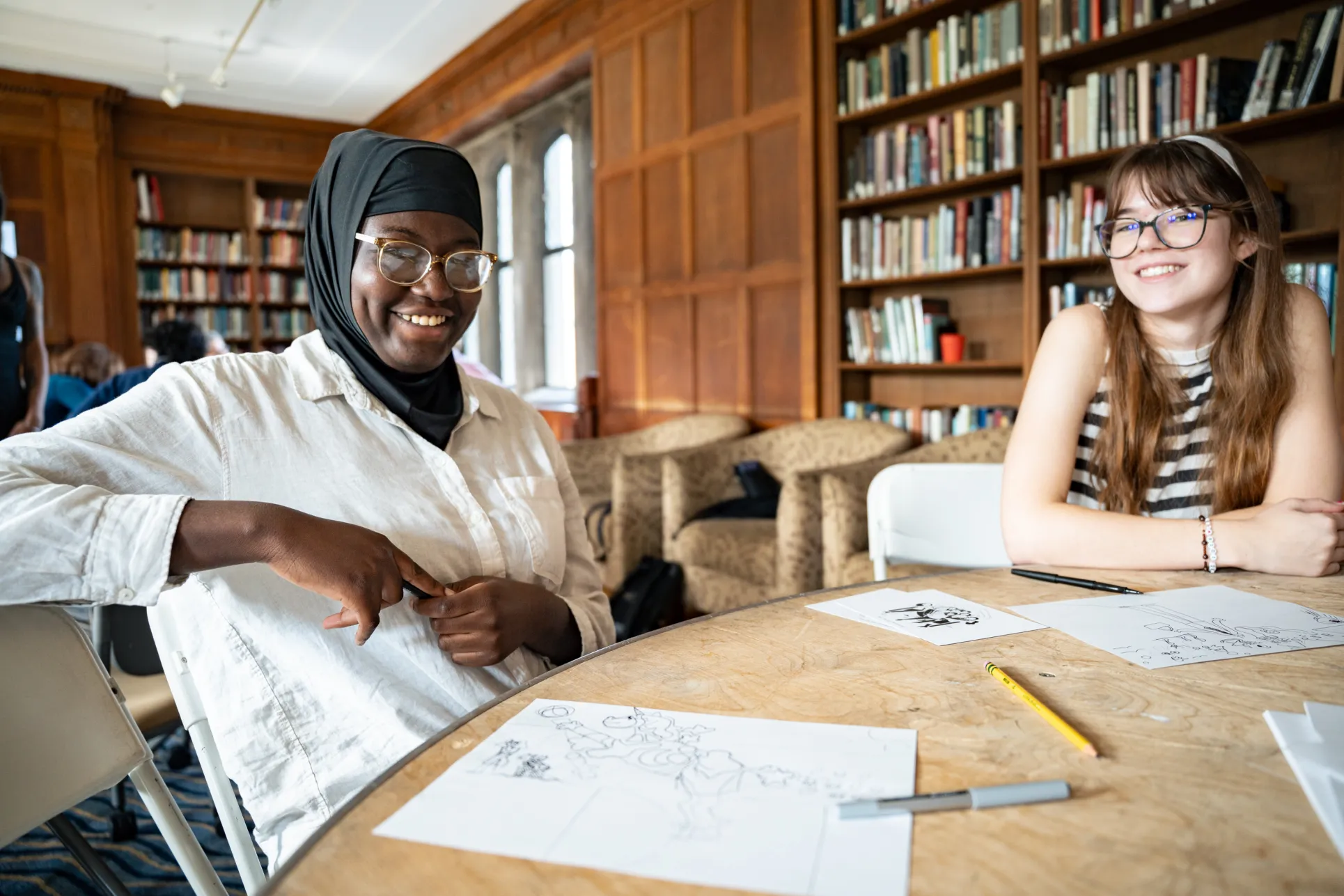
It was a perfect October morning on Bryn Mawr’s campus as 15 students gathered with alumnae, faculty, and guests, the sun streaming through the open windows of the Quita Woodward room as they bent over their pens and paper.
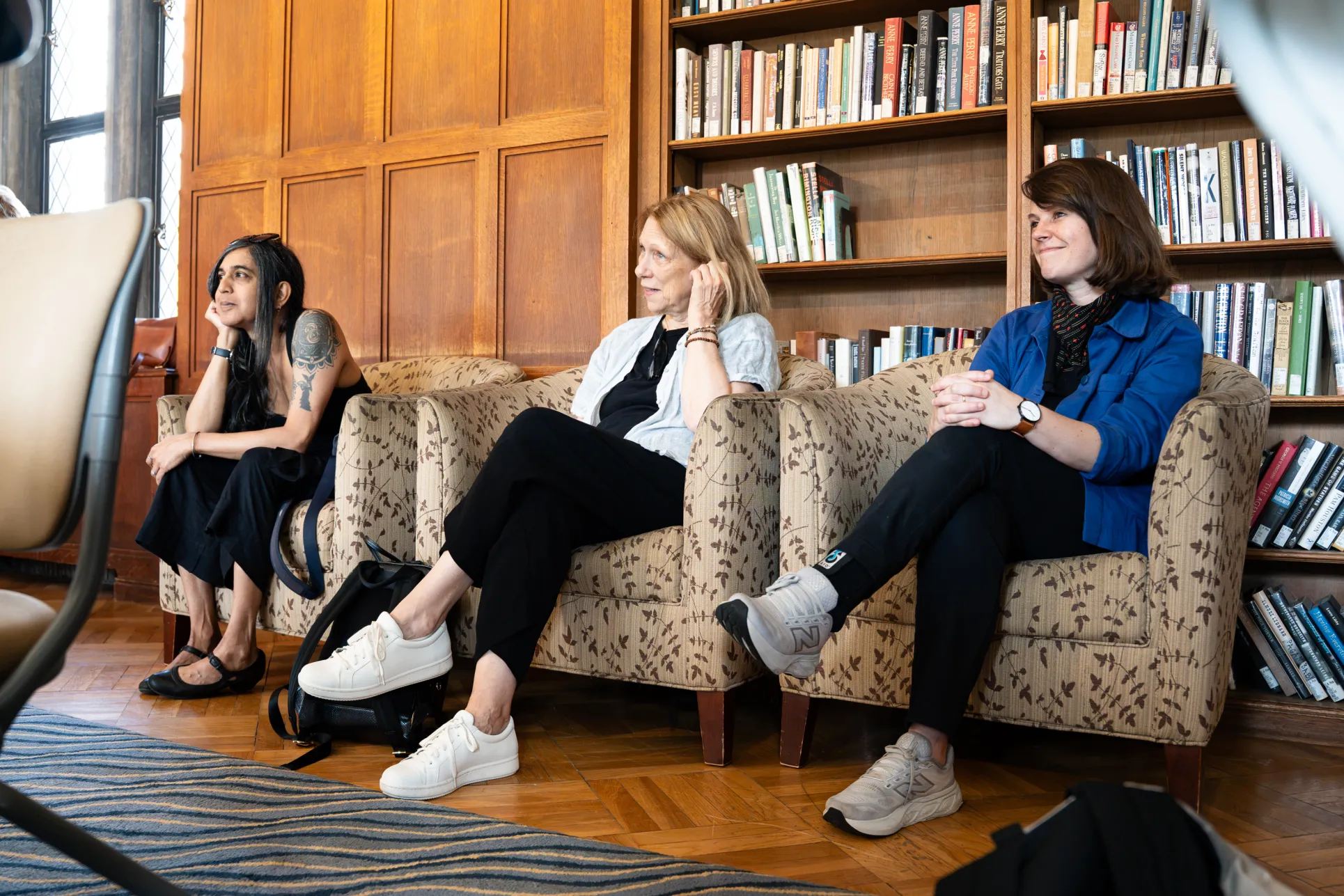
Maggie Larson ’10 and Bishakh (Rani) Som talk to students at the Cartoon Workshop on October 2. Photo by Caroline Bittenbender.
Watching them quietly draw at the round tables called to mind a scene from her documentary, Women Laughing, pointed out New Yorker cartoonist Liza Donnelly. In the film 10 women, all cartoonists for the New Yorker, circle a table at the Algonquin Hotel, drawing together in quiet congregation.
The night before, October 1, was the documentary’s Pennsylvania premiere. Bryn Mawr hosted the screening in Goodhart Hall to an audience of more than 100 alumnae/i, faculty, staff, students, and community members.
“In this moment, I’d say it’s pretty clear that a critical issue is the need to laugh,” said President Wendy Cadge as she welcomed the crowd, “and the importance of celebrating women’s laughter, women’s joy.”
Liana Sterling ’03 had reached out to Lisa Saltzman, history of art professor and dean of the Graduate School of Arts and Sciences, about bringing the documentary to campus after Namita (Nan) Luthra ’91 invited her to a screening in New York City. It was clear to all that Bryn Mawr was the perfect place for Women Laughing.
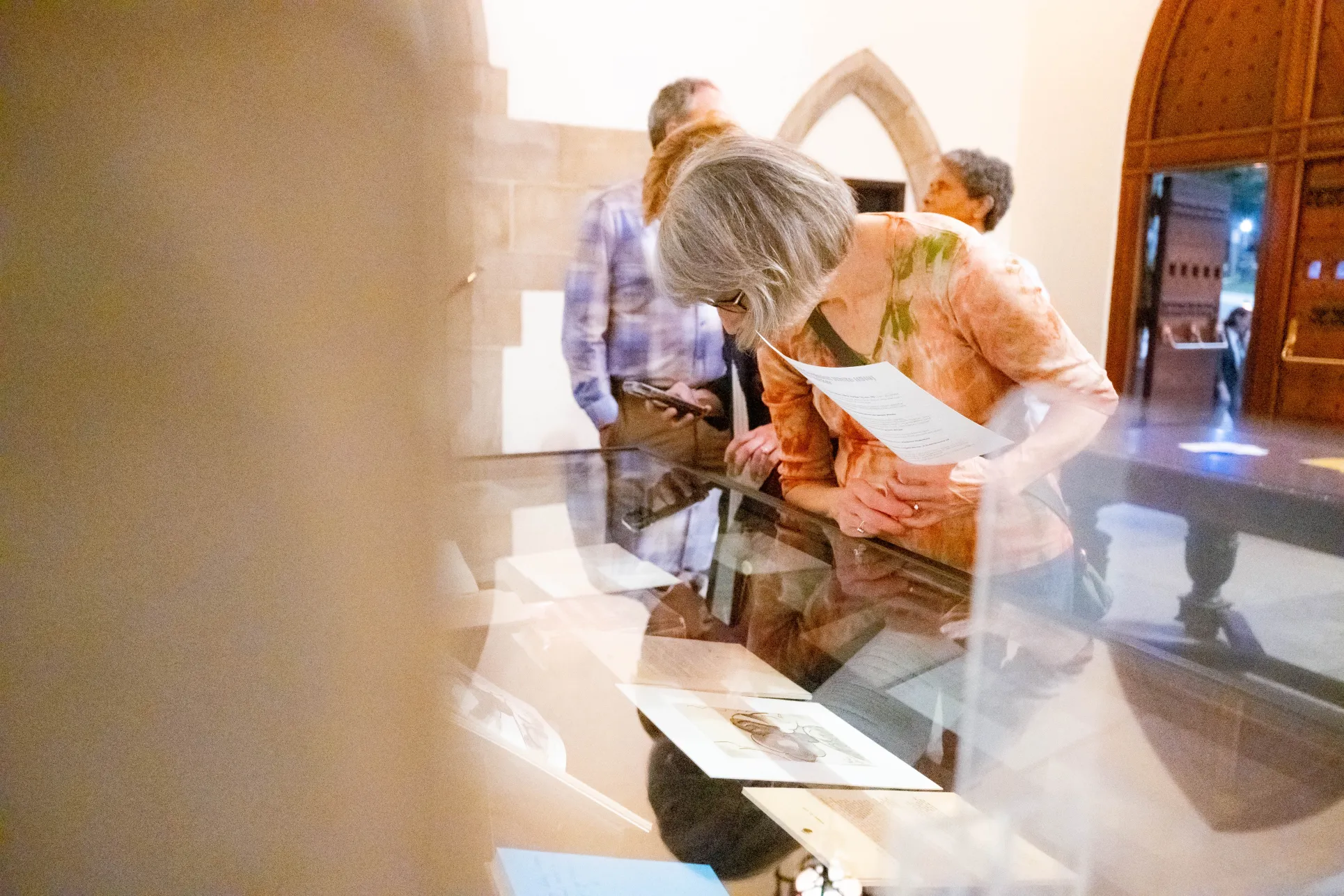
Luthra worked with Special Collections to curate a vitrine of Katharine Sergeant White’s papers, including original New Yorker magazines, in the lobby of Goodhart. White, class of 1914 and longtime literary editor of the New Yorker, is the first and most notable connection the magazine has to Bryn Mawr.
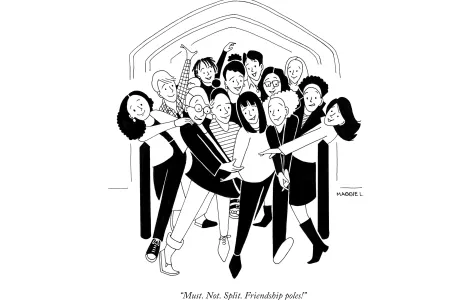
But not the only one. For decades, Mawrters have appeared as characters in its cartoons. Not only was the Bryn Mawr woman — smart, independent, distinctive — a frequent comic device, but in 2017, a Mawrter became a New Yorker cartoonist herself when Maggie Larson ’10 sold her first of many drawings to the publication.
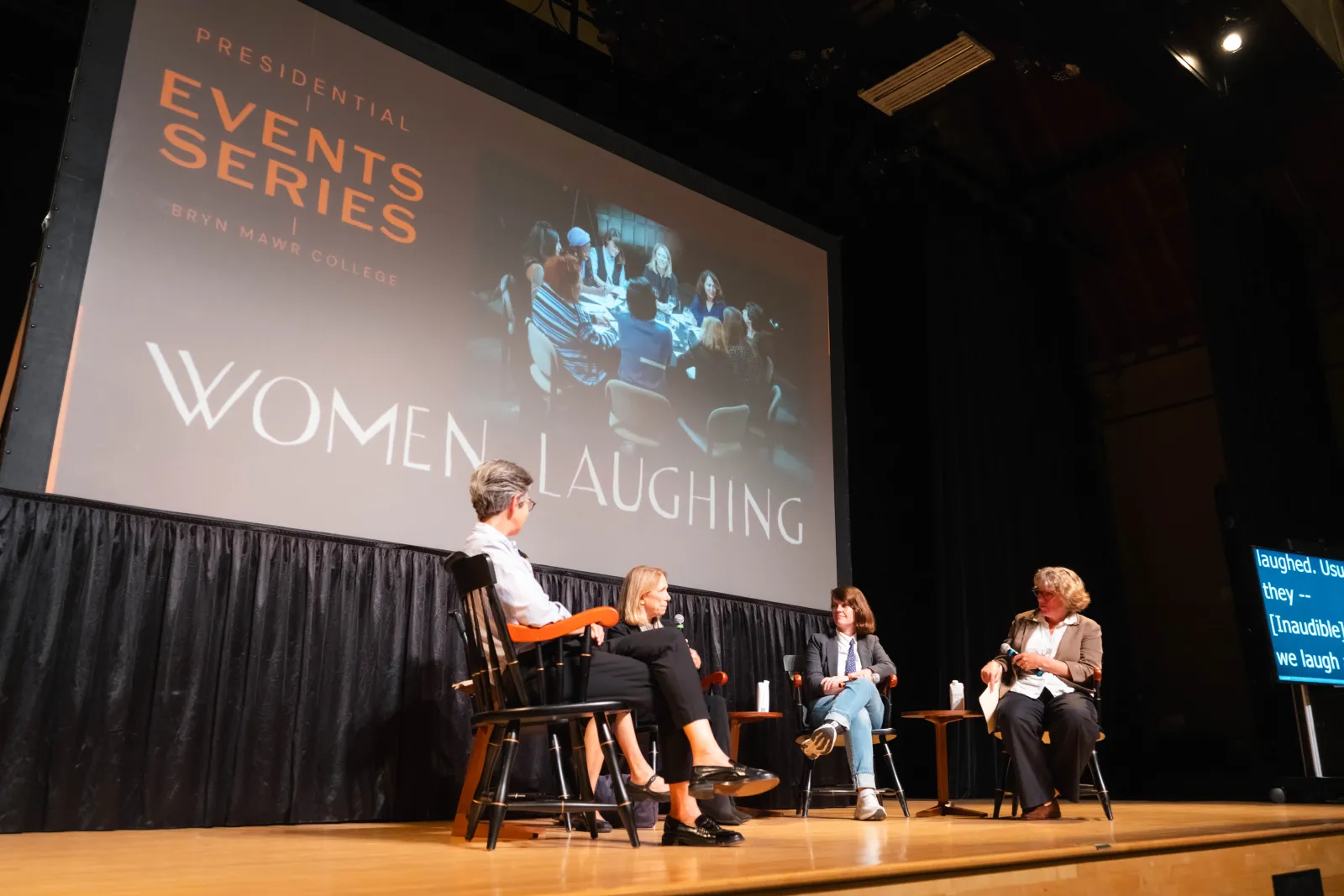
The Women Laughing panel on stage at Goodhart. Photo by Alyson Bostrom ’28.
Larson can still remember buying a stack of the July 10–17, 2017 issue and showing her cartoon to the checkout clerk, who not only did not laugh, but asked her if she had written the article, too.
Even when the cartoonists do get a laugh, the reader is usually laughing from the private comfort of their home. But during Women Laughing, the cartoonists were able to enjoy the audible response from the audience as their works popped up on screen, punctuating their interviews.
“This is why I like to come to screenings — to hear the laughs,” said Donnelly, co-director of the documentary, at the post-screening panel discussion that included Saltzman, Larson, cartoonist and graphic novelist Bishakh (Rani) Som, and moderator Catherine Conybeare, classics professor and author of the 2013 book The Laughter of Sarah: Biblical Exegesis, Feminist Theory, and the Concept of Delight.
“Three cartoonists talking with a Classics professor, Catherine Conybeare, about women’s laughter since antiquity is about as Bryn Mawr as Bryn Mawr gets,” Luthra said in her remarks.
Students reach for pens to begin drawing. Photo by Caroline Bittenbender.
The panel discussion delved into where they find inspiration and the struggle to get a laugh and a sale to the magazine — Larson submitted more than 200 cartoons before her first acceptance. Donnelly shared that when she started publishing her work in the magazine there were only four women cartoonists, and now they represent about 50 percent. They talked about centering women’s humor, life experiences, and bodies, and challenging the idea of men being represented as the default.
Donnelly, Som, and Larson were hosted by the College overnight at Wyndham and came to the Quita Woodward room on Friday morning for the cartooning workshop. While planning the Women Laughing events with the College, Sterling and Luthra felt it was important to tack on a more intimate meeting with students. “We know how valuable it is to hear others’ stories and others’ paths to careers,” Sterling said.
Plus, “getting to draw with three New Yorker cartoonists is bucket-list stuff,” Luthra said.
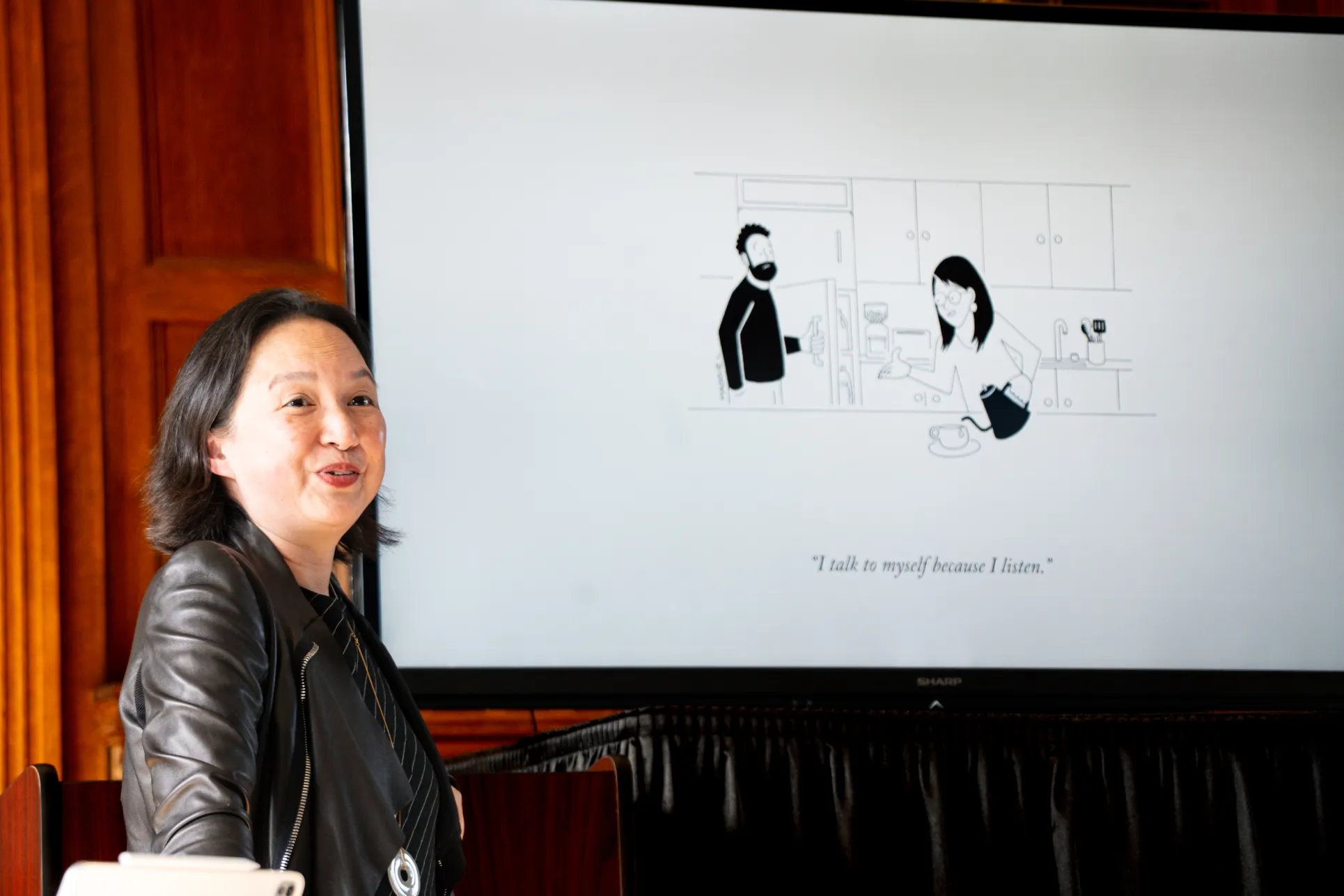
Professor Shiamin Kwa, who studies cartoons and comics, presented to the students, explaining how the word “cartoon” comes from the Italian “cartone,” the under-drawing for tapestries and frescoes. “There’s this idea cartoons are disposable, and preparatory to something else,” Kwa said, “but the thing they are preparatory for is what you are doing with your mind.”
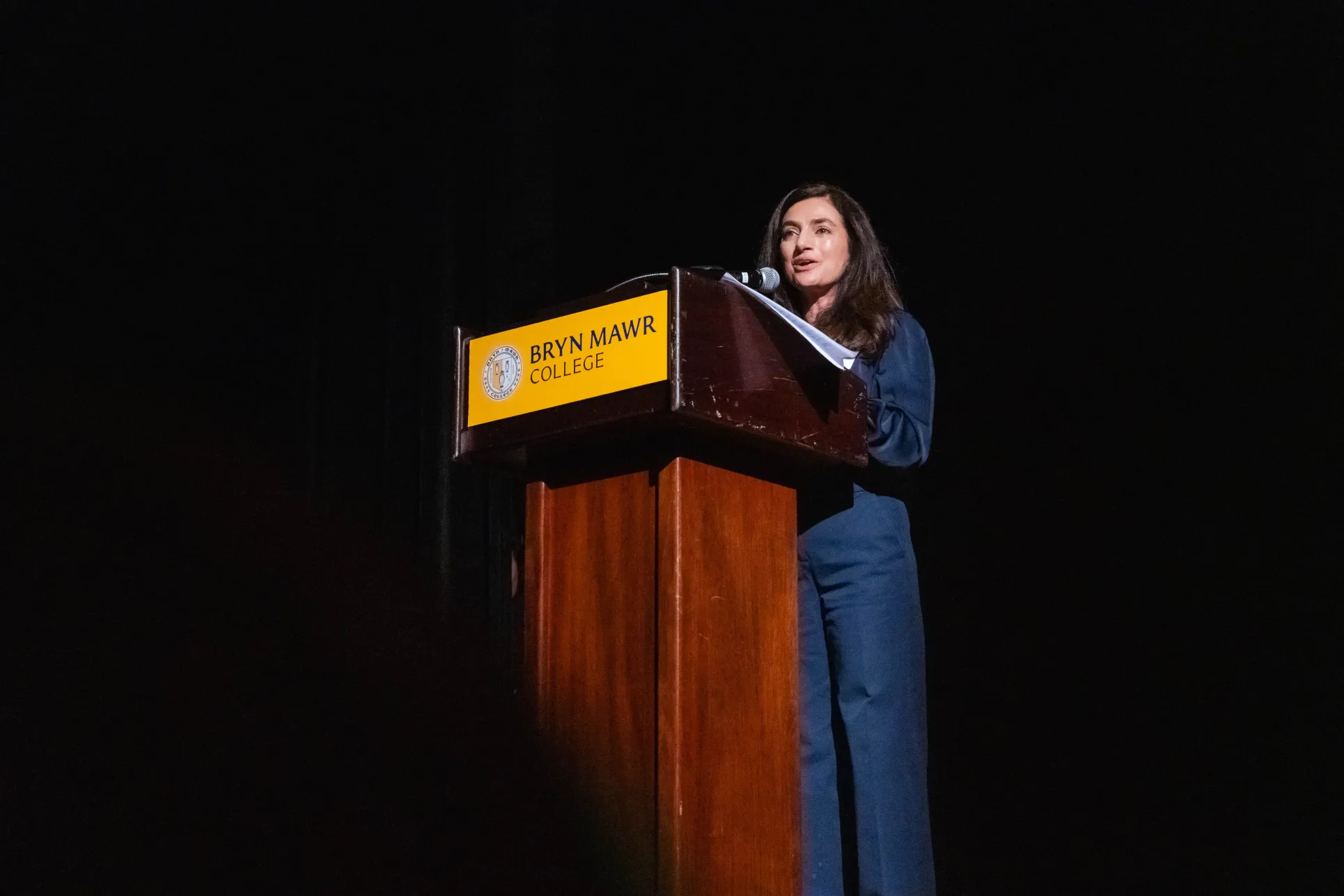
Namita (Nan) Luthra ’91 speaks before the screening of Women Laughing. Photo by Alyson Bostrom ’28.1 / 10
Attendees look at the curated exhibit of Katharine Sergeant White's papers. Photo by Alyson Bostrom ’28.2 / 10
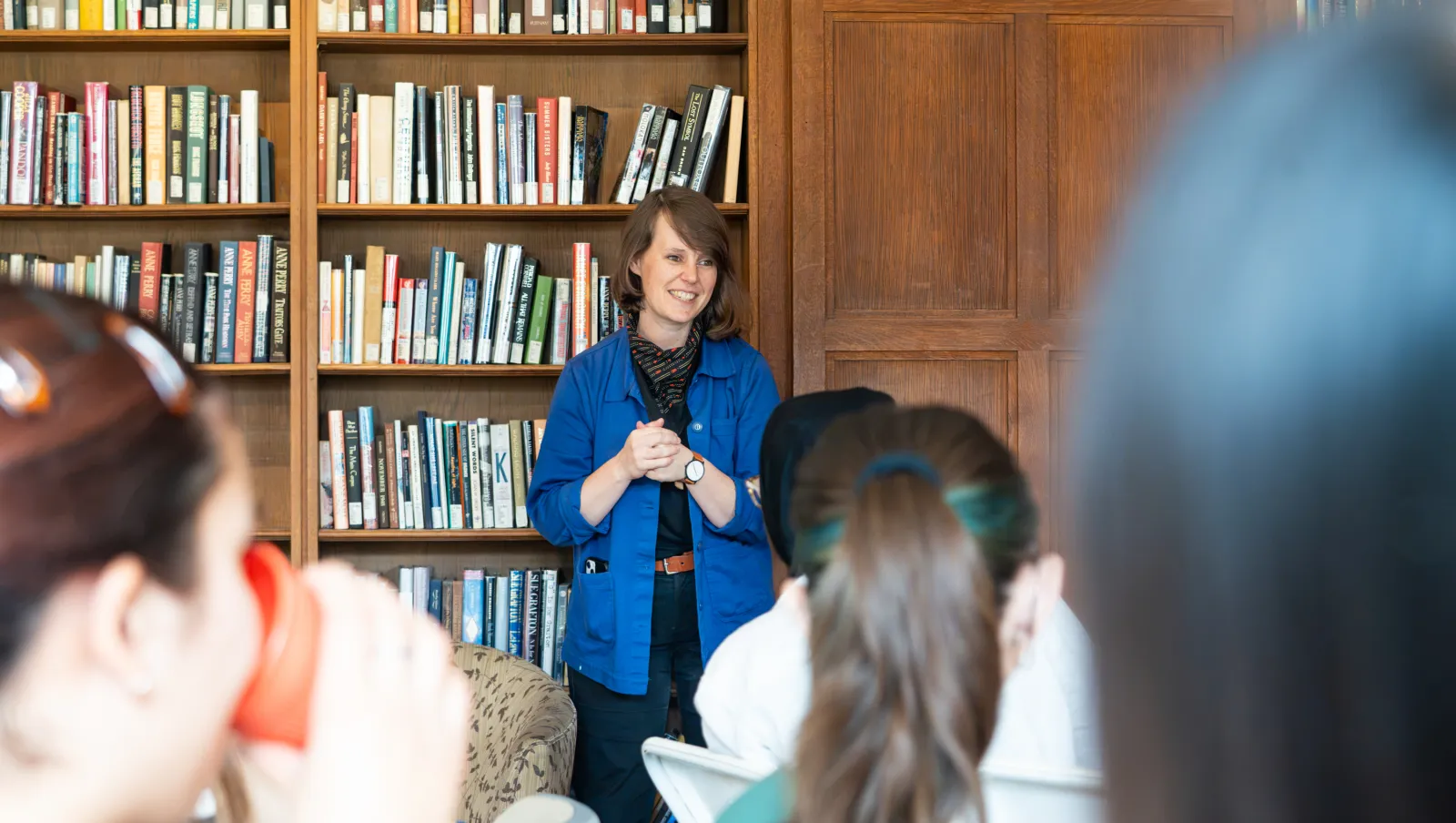
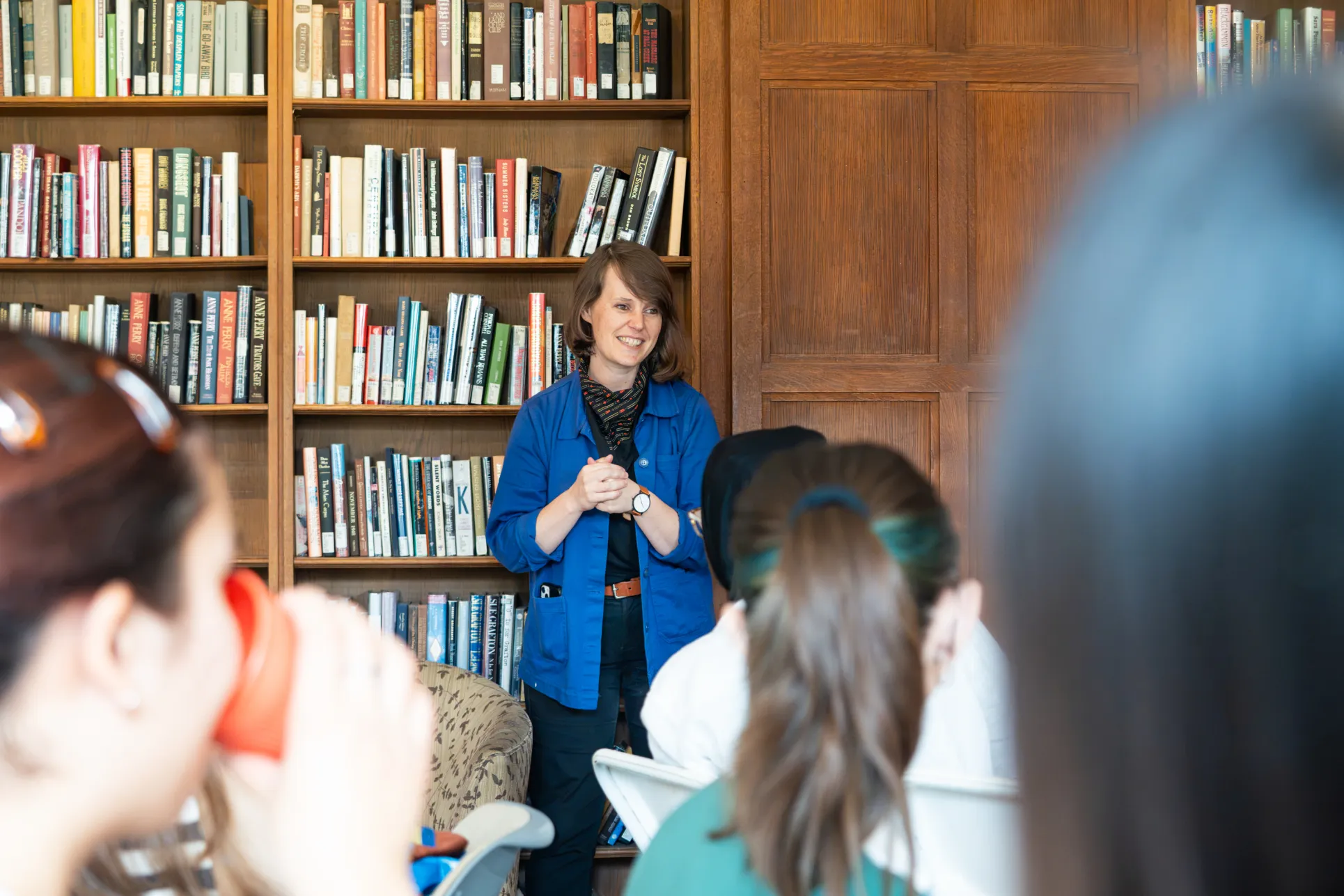
Maggie Larson ’10 at the Cartoon Workshop. Photo by Caroline Bittenbender.3 / 10
Students work on their single-panel cartoons at the Cartoon Workshop. Photo by Caroline BIttenbender.4 / 10
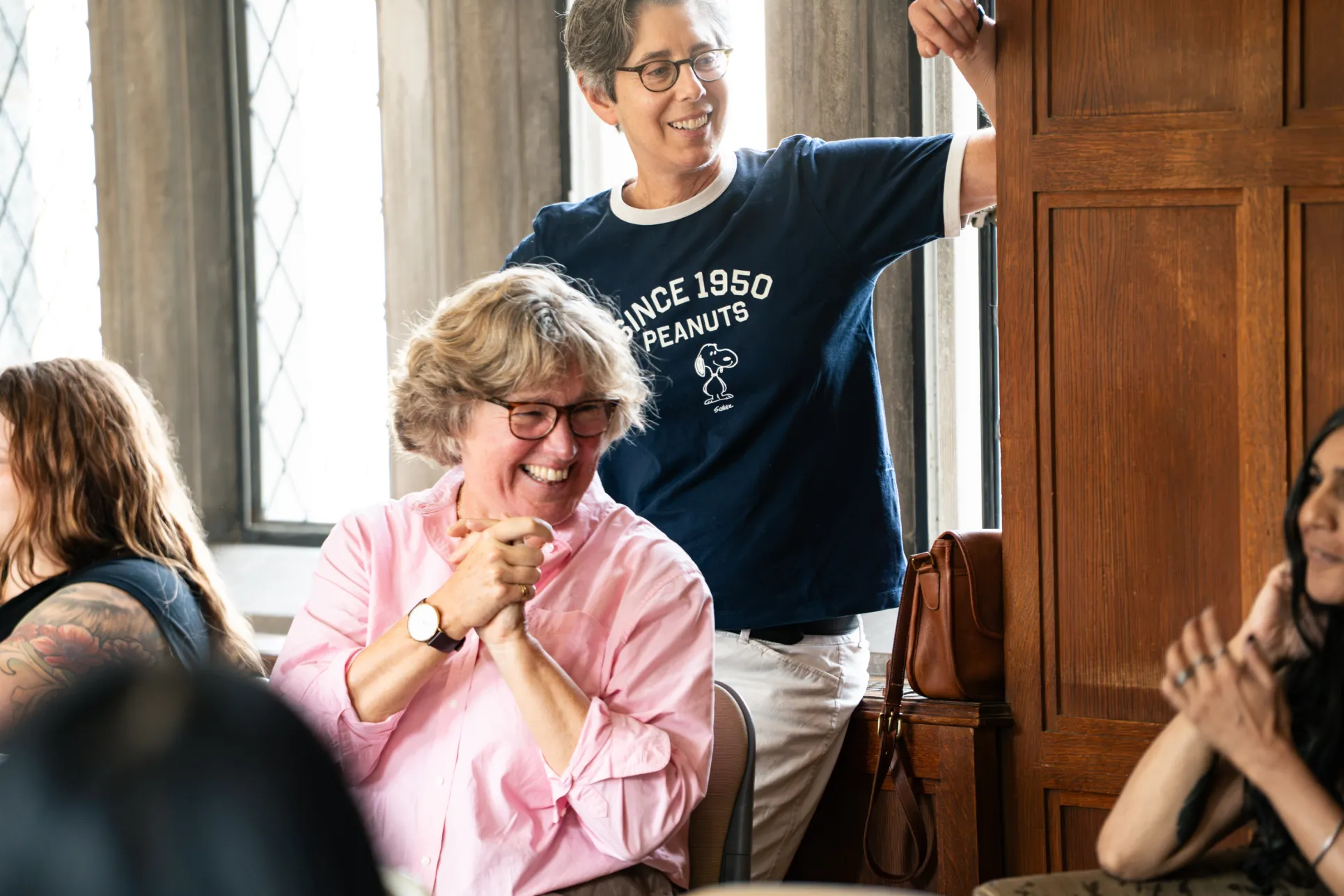
Professors Catherine Conybeare and Liza Salzman at the Cartoon Workshop. Photo by Caroline Bittenbender.5 / 10
Professor Shiamin Kwa presents at the Cartoon Workshop. Photo by Caroline Bittenbender.6 / 10
Hanaan Tawfik ’30 at the Cartoon Workshop. Photo by Caroline Bittenbender.7 / 10
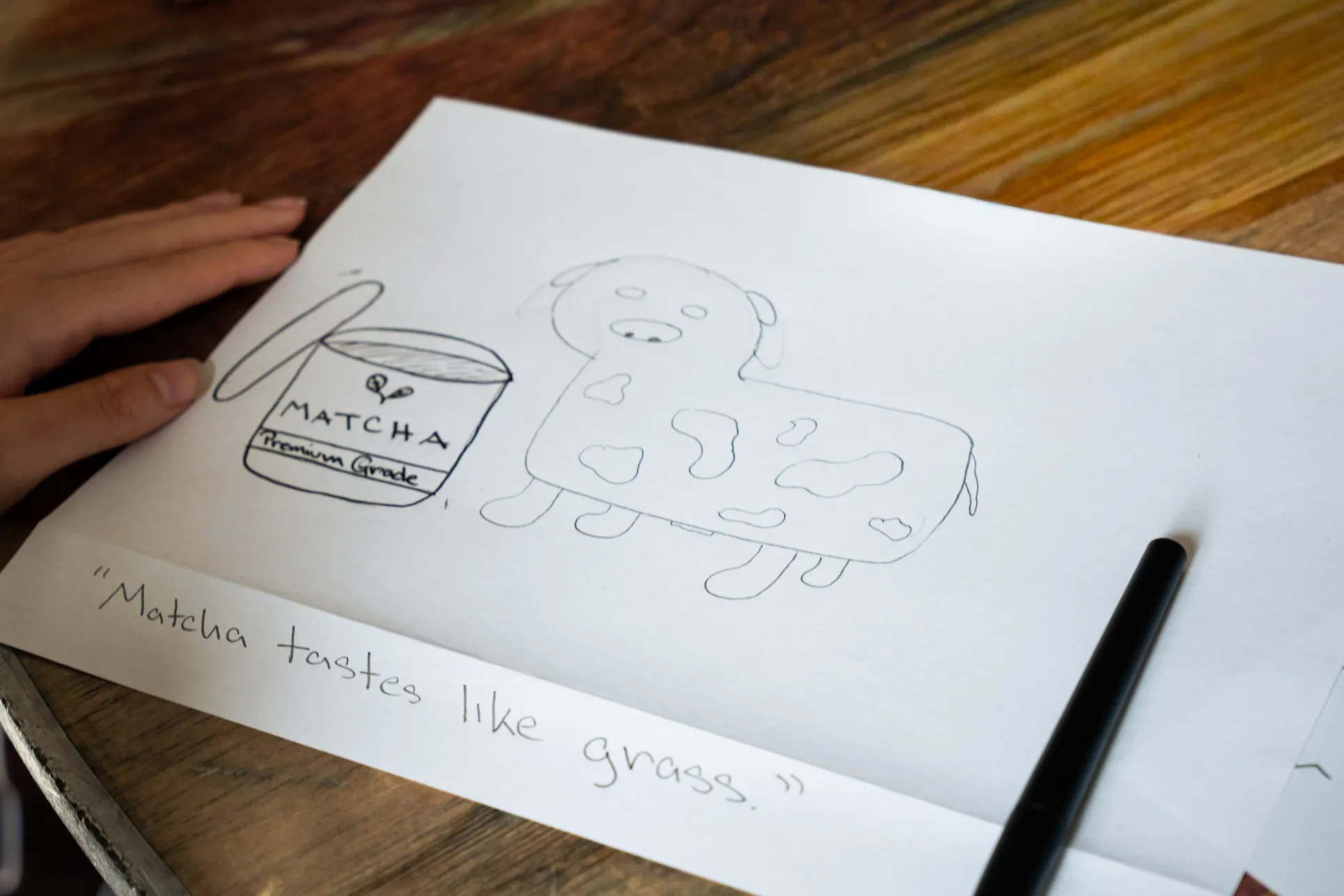
A student-drawn cartoon. Photo by Caroline Bittenbender.8 / 10
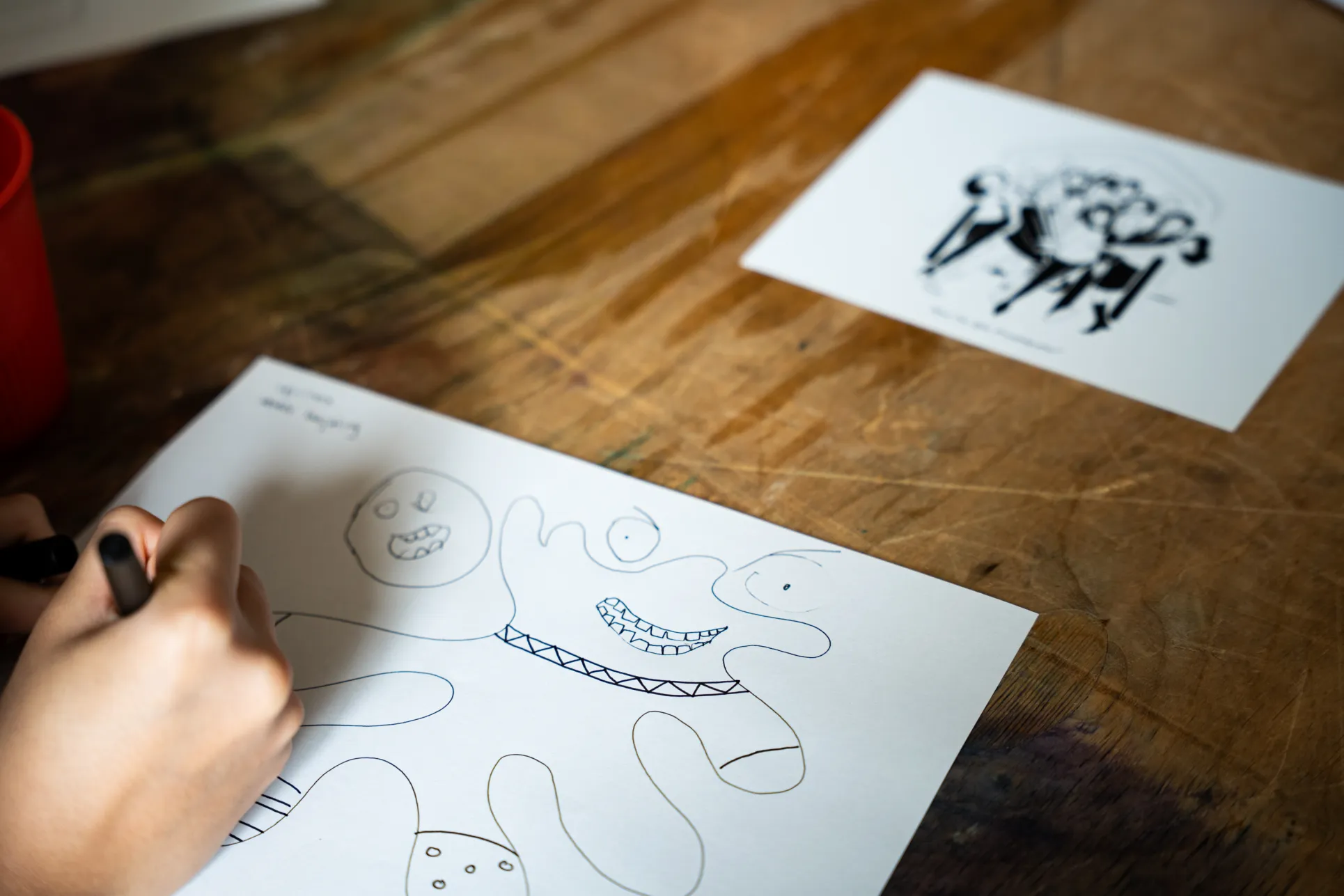
A student draws at the Cartoon Workshop. Photo by Caroline Bittenbender.9 / 10
Som, Donnelly, and Larson at the Cartoon Workshop. Photo by Caroline Bittenbender.10 / 10
Kwa used examples from the guests, as well as other comics like Nancy, to show how they use composition, movement, and other techniques to make laughs and make points. For example, Som’s evocation of climate change and Greta Thunberg in a single-panel cartoon of a little girl pointing out a house fire to two firemen who stand there, calmly smoking. “Look, kid…instead of just complaining, why dontcha do something about it?” the caption reads.
Bishakh (Rani) Som at the Cartoon Workshop. Photo by Caroline Bittenbender.
At the panel discussion, the cartoonists shared that New Yorker co-founder Harold Ross referred to the cartoons as “idea drawings,” a term that resonated with them. Some cartoons rely on visual gags that just wouldn’t work in another medium. Some land the joke in the caption. Some are silly, some are serious.
“It’s not a belly laugh,” Som said. “It’s a kind of knowing recognition.”
For the drawing portion of the workshop, Larson prompted participants to draw shapes on the paper in front of them to get started. “The worst thing in the world is a blank page,” she said. “I’m talking triangles, I’m talking squares, I’m talking circles. Blobs, blobs are good.”
Then they passed the paper along to the person next to them to turn the shapes into things. Animals, people, monsters. A circle became a duck pond.
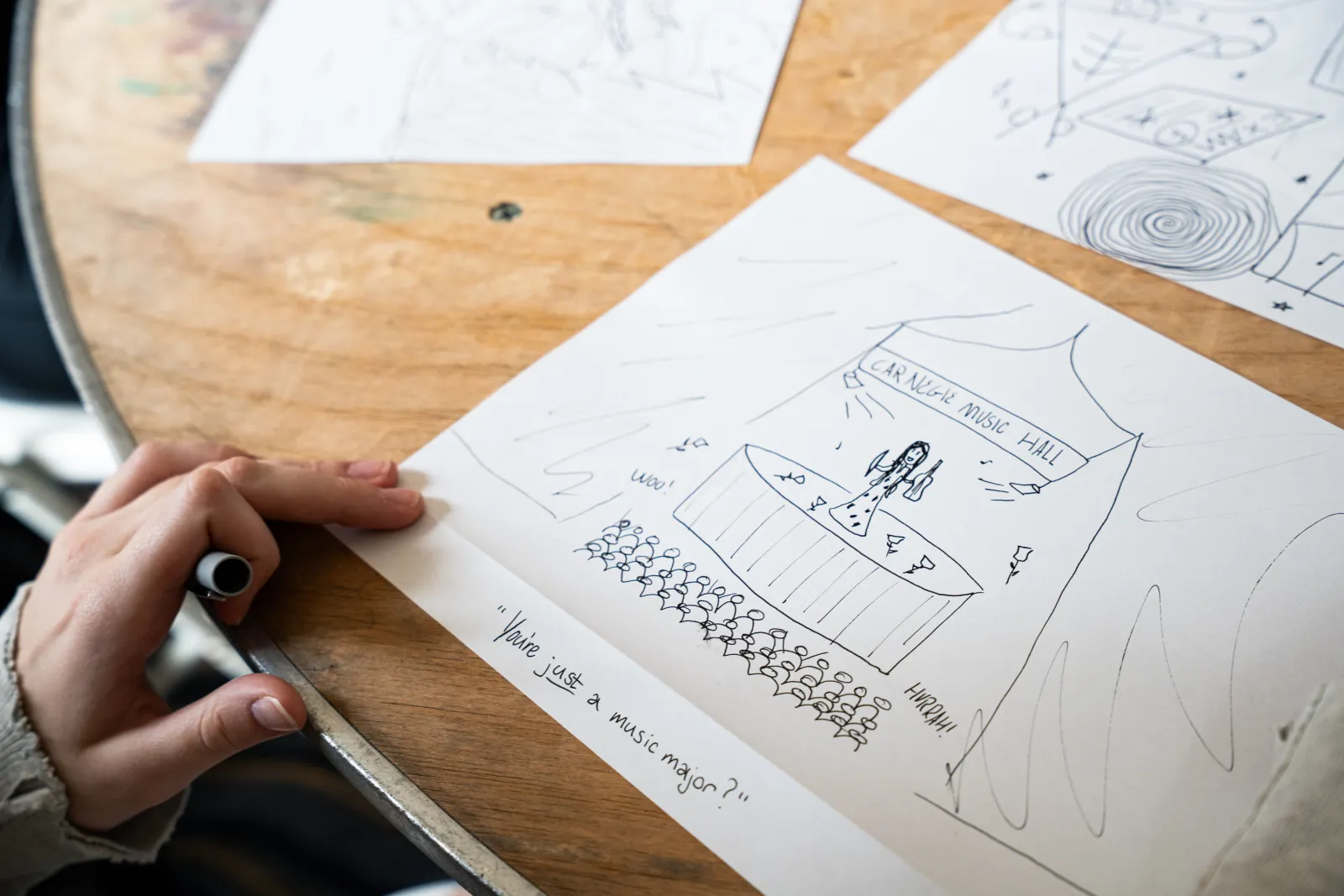
The cartoon by Evan Pineo ’28. Photo by Caroline Bittenbender.
It reminded her of drawing as a kid, said Hanaan Tawfik ’30, and that made her happy. She held up her page: a unicorn playing basketball. “Perfect, no notes,” Larson assessed. Som pointed out that unexpected pairings like Tawfik’s unicorn and basketball can be the making of a great cartoon.
As the students set to work on their own single-panel cartoons, Larson reflected on her visit to her alma mater. “It’s such a delight,” she said. “It’s a true merging of all of these different worlds. And the students are fantastic.”
Evan Pineo ’28 drew a person on stage at Carnegie Hall, facing the audience. “You’re just a music major?” was her caption. As the students passed their cartoons around the table to have someone else interpret it and add their own caption — a twist on the famous New Yorker caption contests — the result was spot-on: “I’d like to thank my parents for discouraging me from studying music…”
Usually, Pineo would be in Kwa’s class that morning, but with Kwa presenting, she and her classmates found themselves at the workshop.
“Pretty awesome day in class,” she said.
Women Laughing was part of the Presidential Events Series. The next event will be on November 10 with Dr. Beverly Tatum. Learn more.