
The legendary origins of our traditions
The stories behind some of Bryn Mawr's most sacred and beloved customs
Bryn Mawr traditions are a sacred foundation of its 140-year history. Many of these, including Lantern Night and May Day, have existed for almost as long as the College itself, but others, such as the “friendship poles,” are newer. Over the years, generations of Mawrters have taken part in — and adapted — these beloved traditions that make Bryn Mawr home.
Lanterns
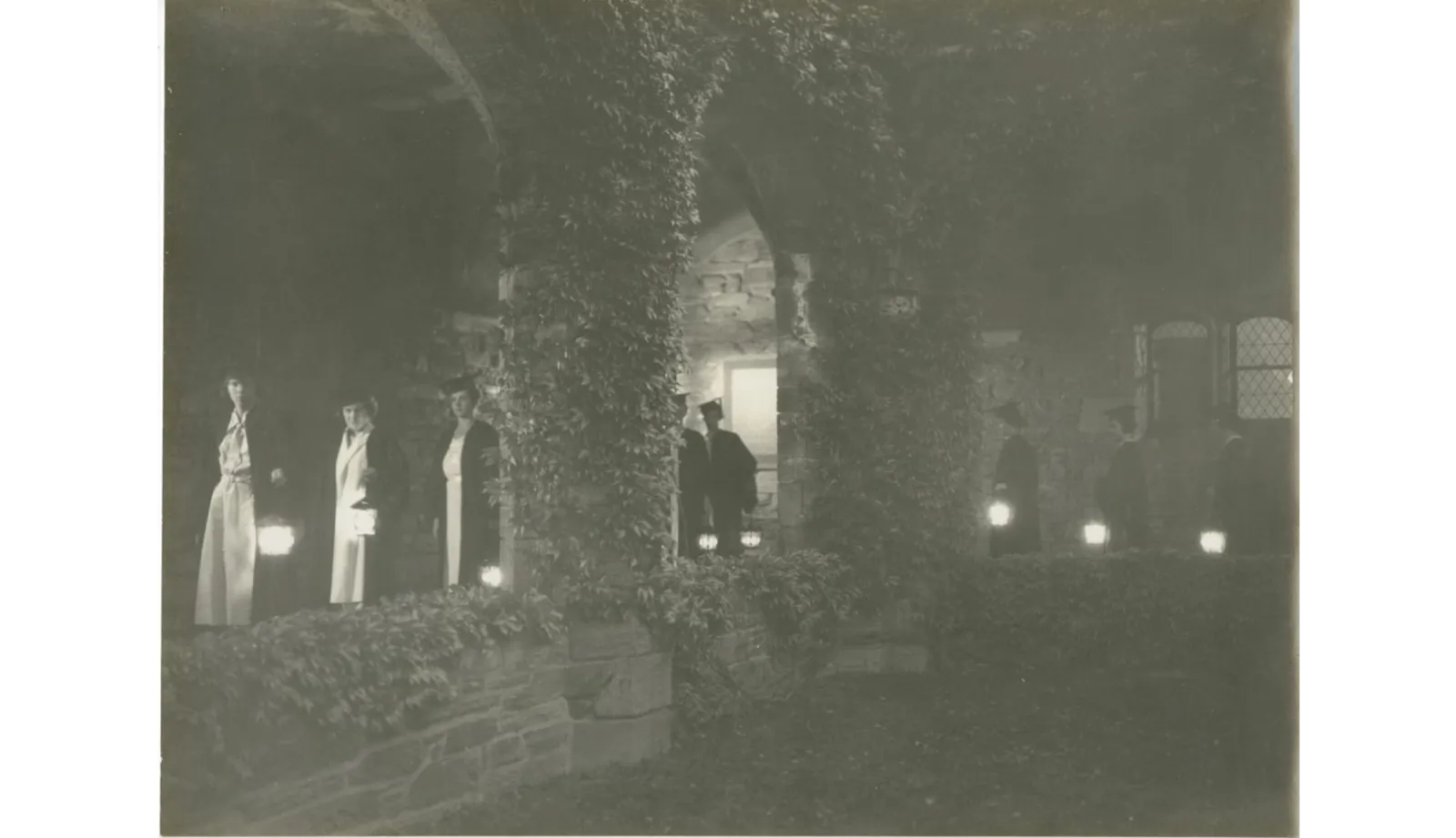
In 1886, the first-ever sophomore class created a way to welcome the incoming class: They would gather the first-years and perform a short play before giving each new student a lantern to “light her way through college.”
Why a lantern? The tradition was inspired by a line, “the only lantern in Bryn Mawr” from the song “The Maid of Bryn Mawr” by E. Washington Hopkins (a professor of Greek at the college). Over the years, additions were made to the tradition, such as the first-years having to pass an oral quiz before receiving the lantern. Later, a card was attached to the lanterns, inviting the student to tea with her “lantern girl” (the sophomore who gave the first-year her lantern). Those cards evolved into the string of “lizards” that are now attached to lanterns to welcome the first-years home.
By 1897, fire hazard laws meant that Lantern Night had to be moved outside, separating it from the sophomore play custom. It was around this time that Lantern Night became an official event occurring in the Cloisters at nightfall every October. The class of 1893 wrote “Pallas Athena Thea,” and the 1920 class adopted “Sophias Philea” to be sung during the tradition, which both continue today.
Lantern designs also went through a number of updates. Frederica De Laguna ’27 wrote that her lantern was made with glass panes — in her class color, too! Sometime in her four years at Bryn Mawr, Elizabeth Shenk Webb ’59 noticed lanterns were not well made. Since her father was in the metalworking business, she asked him to create new ones and helped him design them.
MAY DAY
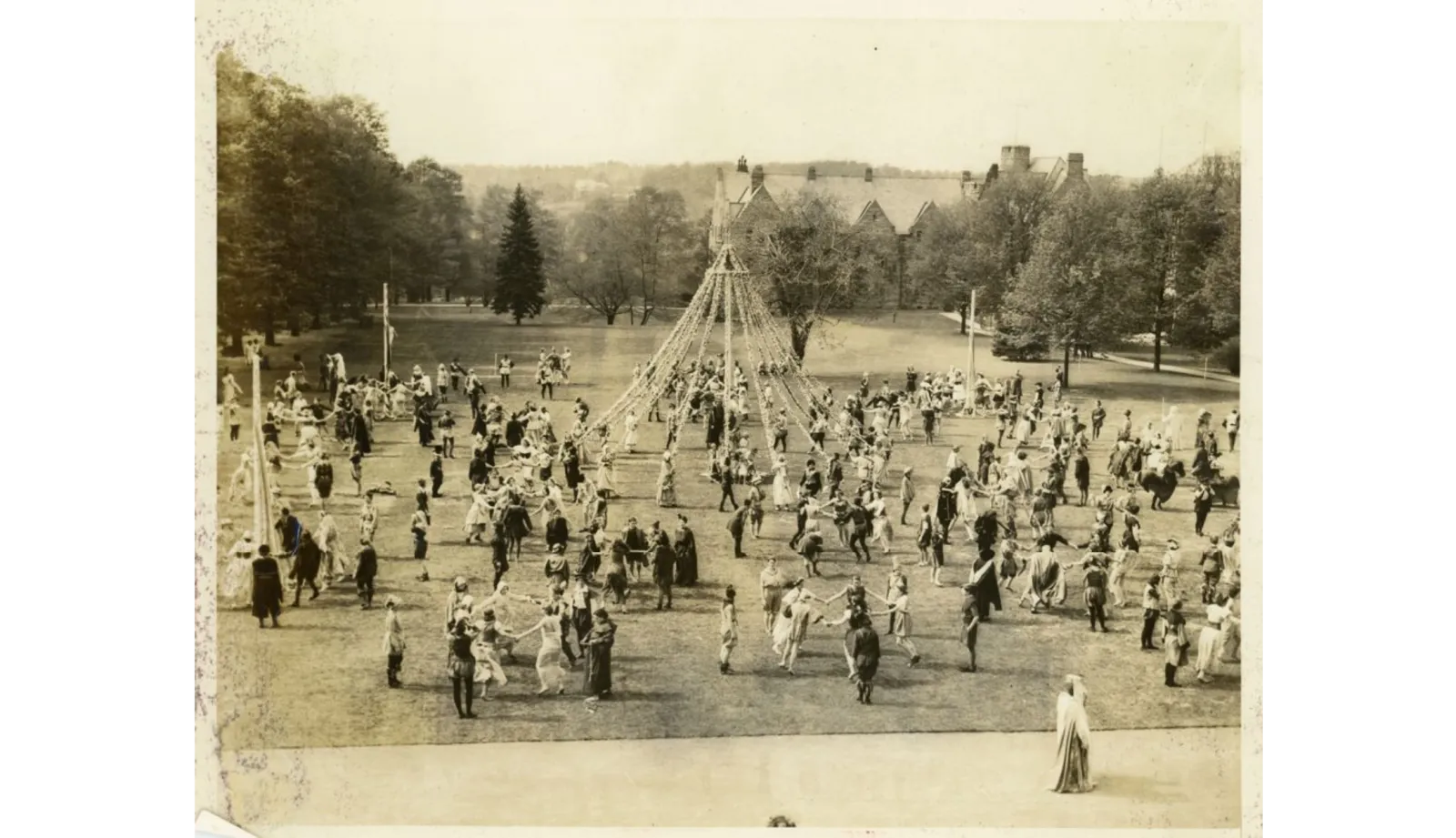
2026 marked another Grand May Day in Bryn Mawr history, a tradition dating back to 1900. The first-ever Grand — or as it was called then, Big — May Day was given in 1900 at the suggestion of an alumna to raise money. Since then, Grand May Day has happened every four years.
May Day was initially considered a problem because its Elizabethan origins were seen as adverse to Quaker traditions. After a period of hesitation, it was adopted and followed Lantern Night as the second official Bryn Mawr tradition.
WELCOME THE FIRST-YEARS (WTF) WEEK
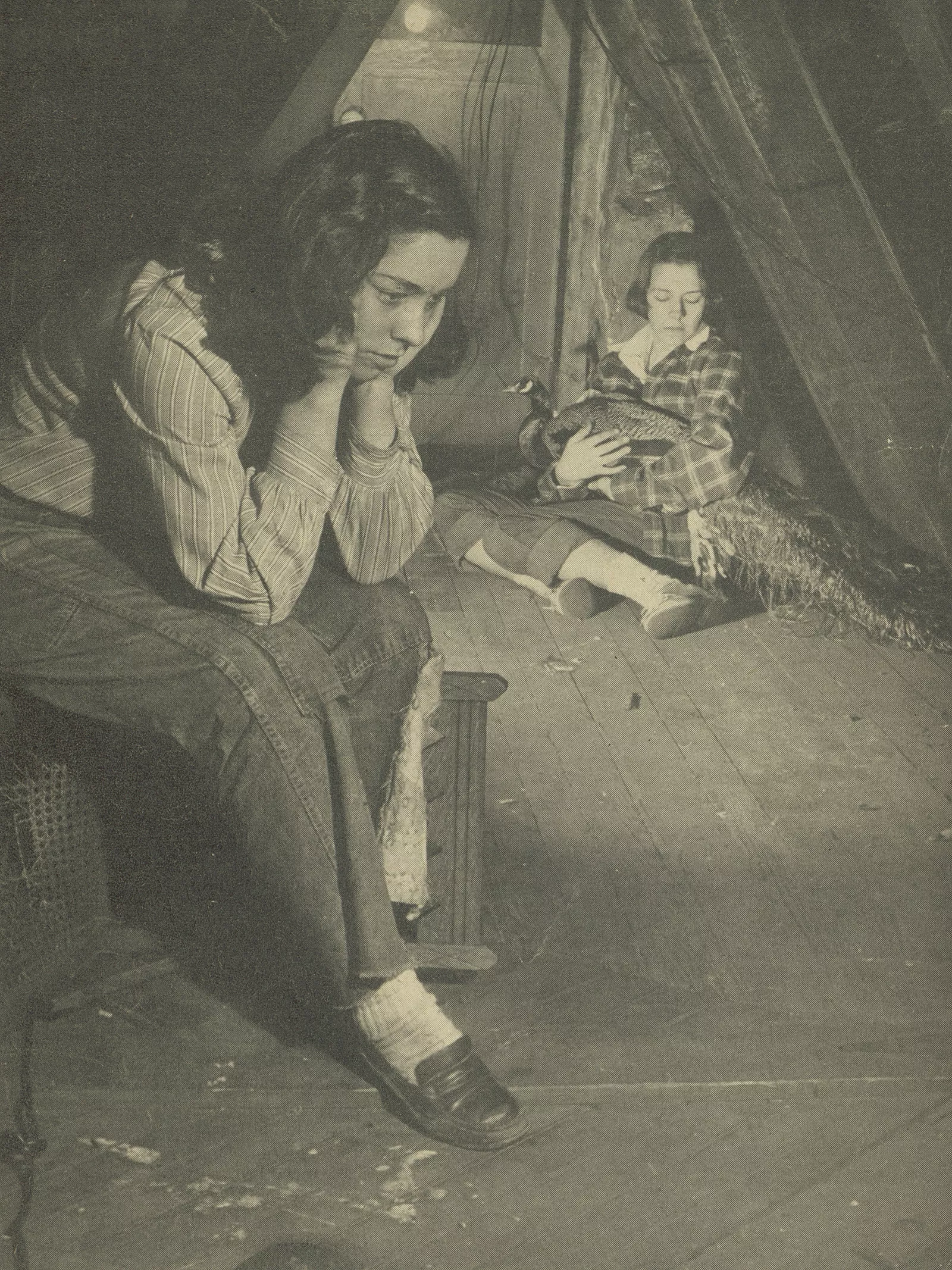
One of the most top-secret traditions is, of course, what used to be called “hell week.” Dating back to the 1940s, it has gone by many names throughout its history, such as WTF Week and the Freshman Show, but has always been followed by the beloved and secretive “flower day.”
In a reversal of the sophomore skit before Lantern Night, the first-years would put on a fabulous performance to entertain the upperclassmen. In the 1970s, performances included “The Wizard of Mawrterdom” and “Alice in Mawrtyrland.” This play was eventually replaced by the traditional Hell Week performances. The occasion was, as it still is, followed by a period of tasks assigned to the first-years. Bedtime stories, running from the duck pond to Haverford and back, and treasure hunts have always been a part of WTF Week, though the treasure used to be something different (and more alive). Instead of finding hidden gifts, the sophomores would search for a class animal hidden by the first-years somewhere on campus. The class of 1952 managed to hide a peacock in Taylor Hall.
FRIENDSHIP POLES
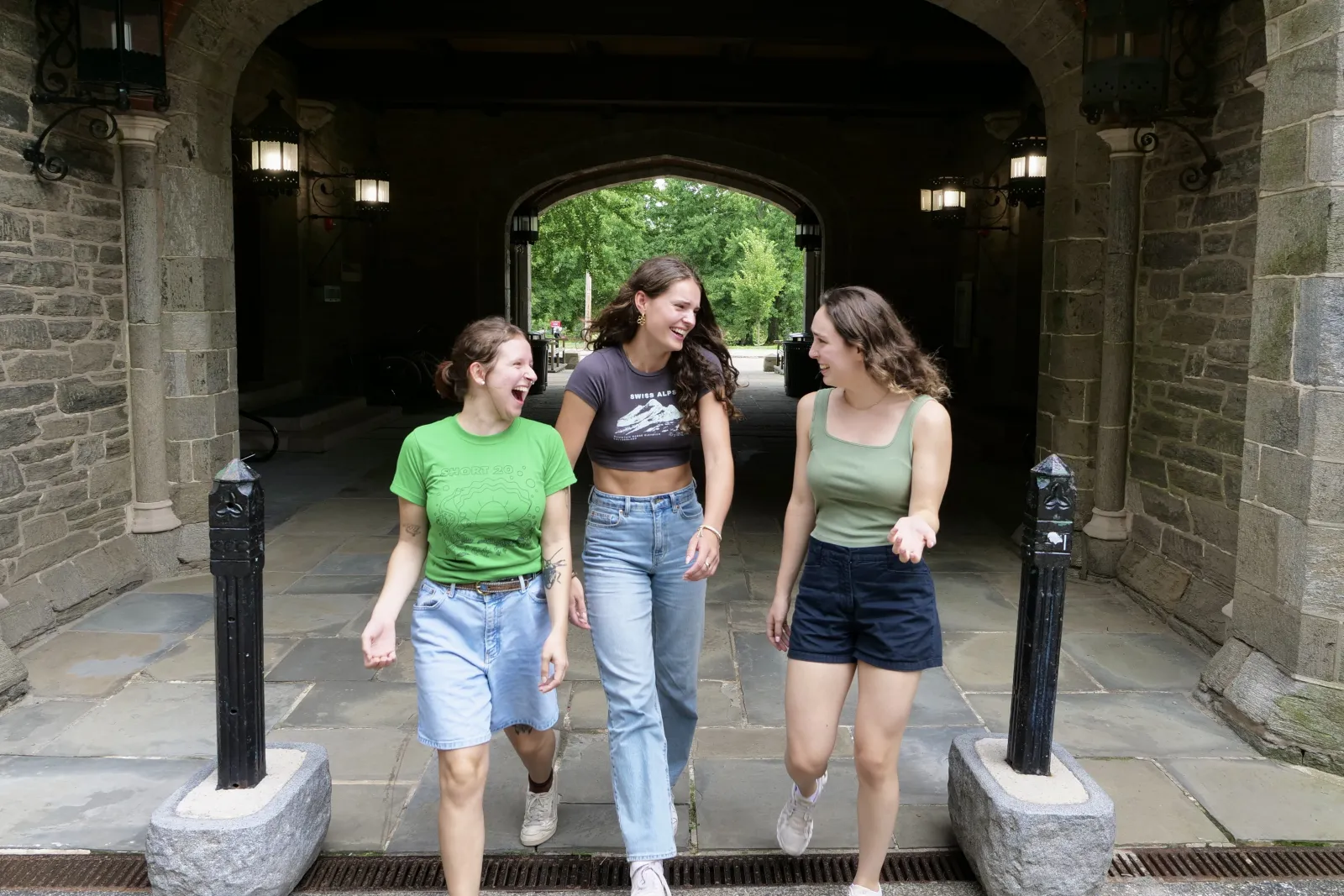
It isn’t just these big traditions that make Bryn Mawr unique. Over the years, Mawrters have developed new mini-traditions and superstitions. One 21st-century example is “splitting the friendship poles.” The superstition goes, if you and a friend walk on opposite sides of the poles stationed inside Pem Arch, you will no longer be friends. During WTF Week, the poles are often moved close together, forcing everyone to squeeze through them.
The tradition was started by Lindsay Hills ’04 when she was a sophomore customs person. While leading her first-years through Pembrook Arch, she made sure never to break the friendship poles. Although it was never officially stated, the habit quickly caught on, and the rule is still widely followed.
Hills was unaware she had created an enduring tradition, now more than two decades old but was ecstatic to hear those she once guided through the poles continued the legacy. “That feels so good to know that something I started stuck!” she says.
Denise L. Hurley ’82, mother of Margaret Hurley ’17, points out that these traditions create a unique bond across generations.
“This may sound strange when talking about ‘traditions,’” Hurley says, “but in my experience, May Day did not look the same for me in 1982 as it did for my daughter in 2017, and neither of us could have predicted what it would look like for the Class of 2020 and beyond. It is fitting that our traditions are, in fact, flexible, because the true constant is the deep connection they create across the years.”
This story is #24 in our "26 Things to Love About Bryn Mawr in 2026" spring issue of the Bulletin.
Published on: 05/18/2026