

History of Art Students Curate Exhibition of Haitian Art at Berman Museum
Haitian Art and the Diaspora
Friday, Nov. 20: C.C. McKee in conversation with Nathalie Joachim of Princeton University and Didier William, of Rutgers University. Join a panel of experts for a conversation about the exhibition Between Archive and Afterlife: Haitian Painting and Politics after the Dictatorship at the Berman Museum.
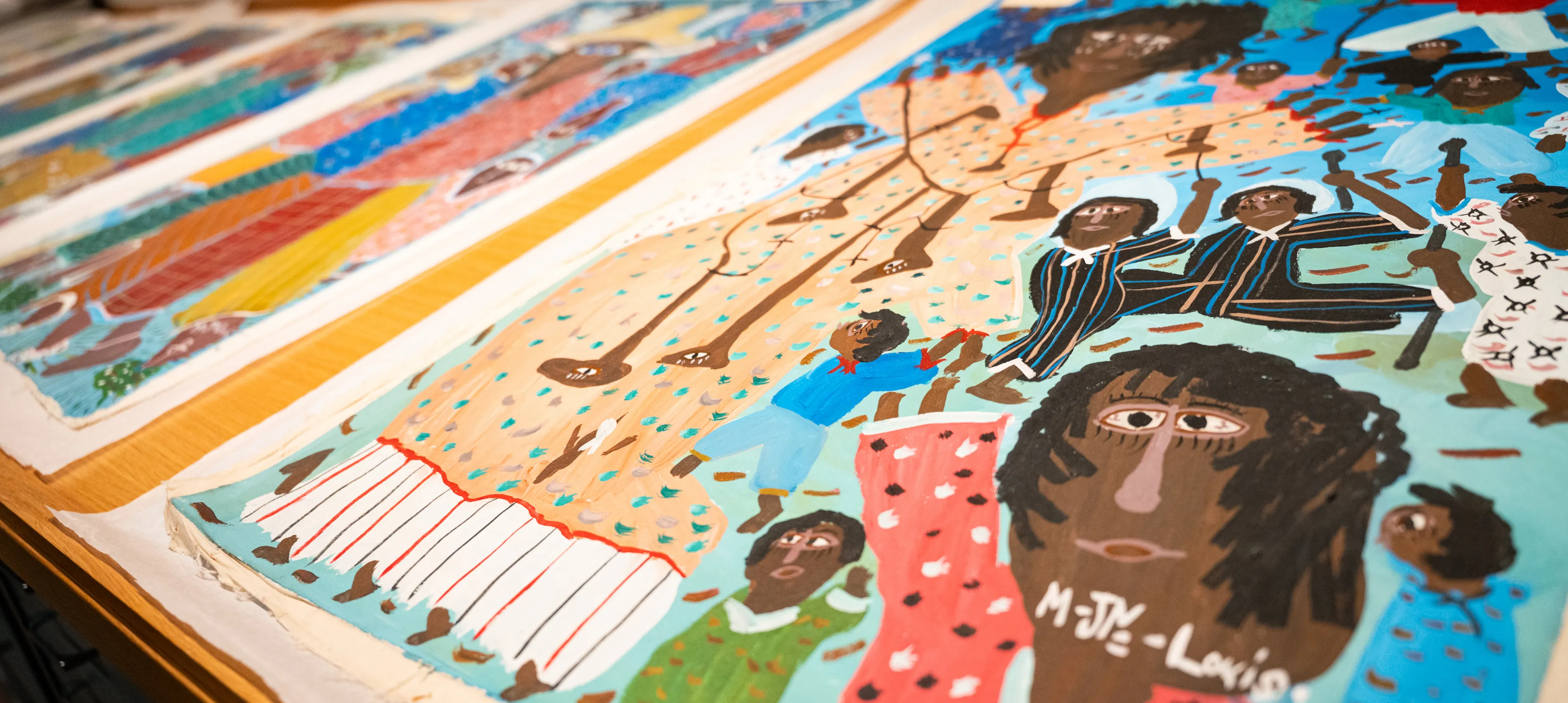
Last year, as Associate Professor of History of Art C.C. McKee was planning to teach their first seminar dedicated to Haitian art, they also got an opportunity to curate an exhibition of a collection of Haitian paintings at the Berman Museum at Ursinus College.
McKee took advantage of the serendipity to create a course in which the nine undergraduate students and one graduate student who enrolled served as co-curators of the exhibition, learning about the art while gaining valuable insight into the process of putting a show together.
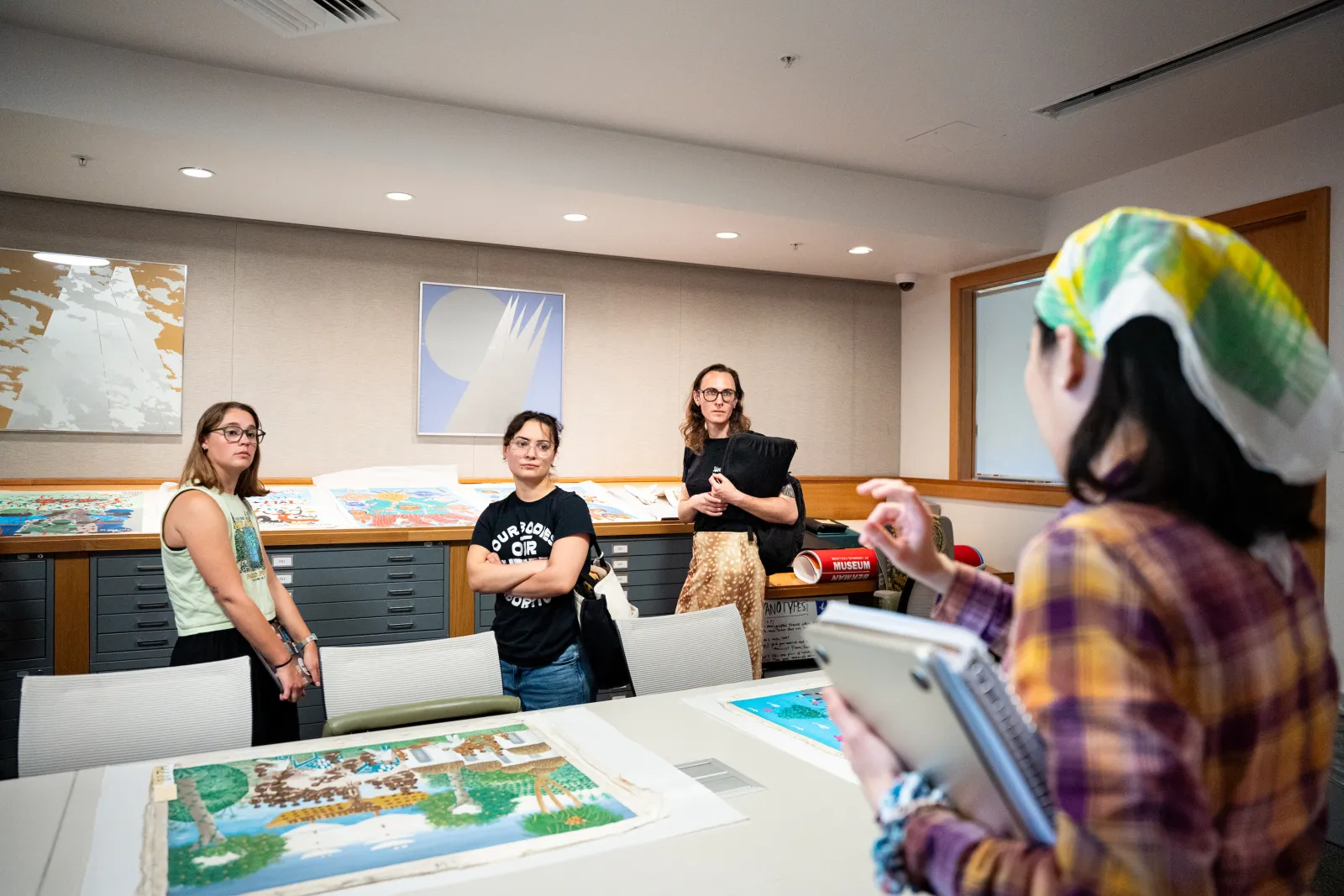
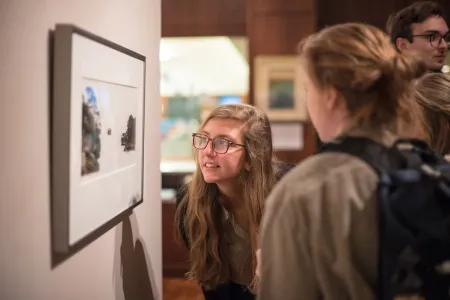
“It was super interesting that we could get a chance to actually be in person with these paintings to really study them on a deeper level instead of just reading someone else's theory work and then discussing in class,” says Isabelle Cervasio-Dyer ’28, a history of art major from Massachusetts.
McKee split the class up into three different tracks; one focused primarily on the scholarship of the works, the other on curatorial duties, and the third focused on the design of the exhibition.
“This seminar provided a unique opportunity to work with understudied artworks and present them to the public,” says McKee. “As such, I sought to design an assignment structure that would incorporate the various types of skills required to mount an exhibition."
The three tracks were structured with interdependent assignments, deadlines, and meetings within and across each team of students.
“With this course design, I hoped to foster a sense of collective responsibility and equitably shared vision for what our exhibition would become,” says McKee.
Cervasio-Dyer was a member of the design team, an experience that made her imagine how visitors interact with an exhibition in ways she says she wouldn’t have thought of through a classroom experience alone.
In her role, she had to think about how to “create something that is welcoming without forcing a perspective onto people,” she says.
Curating the Exhibition
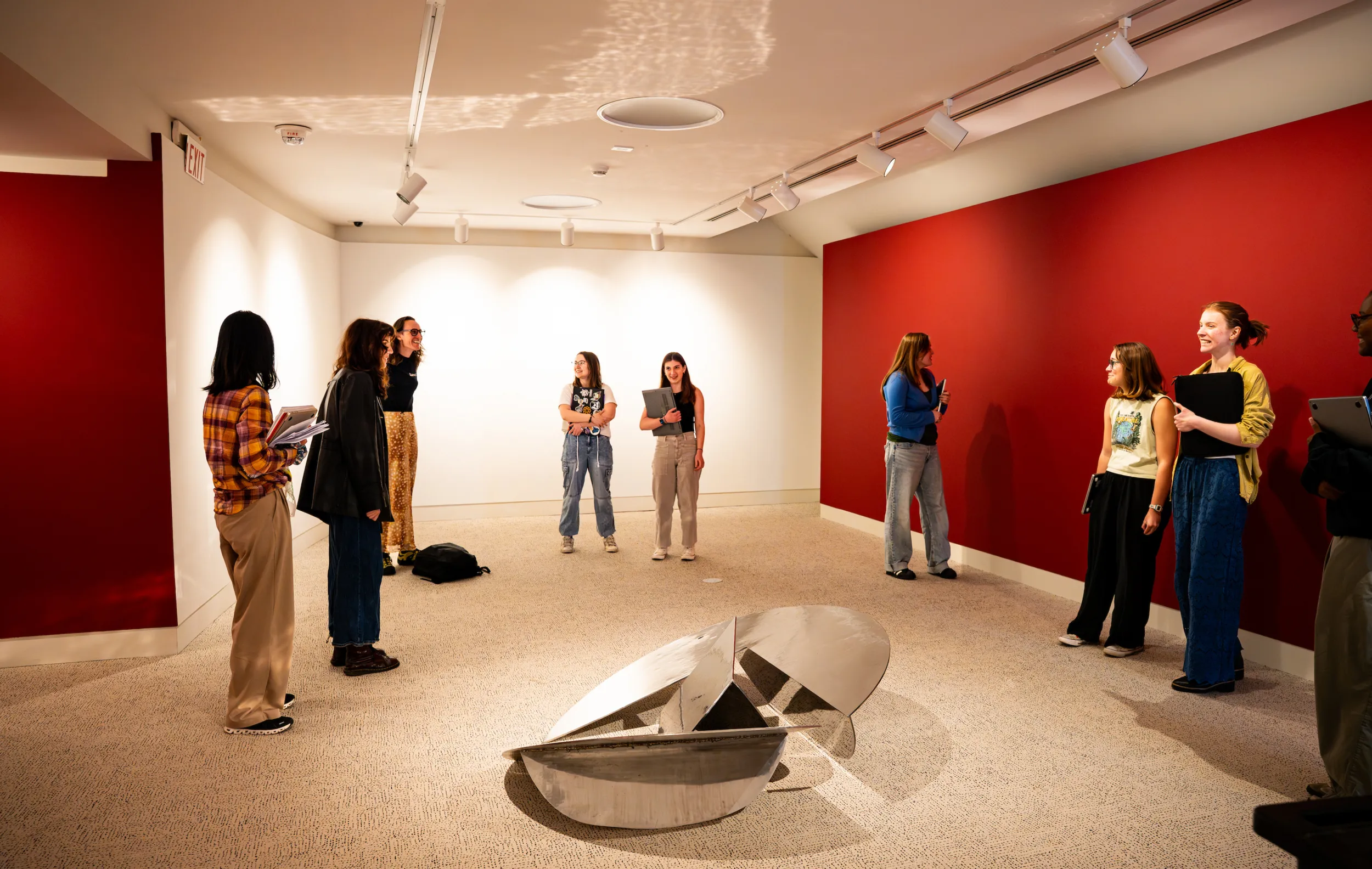
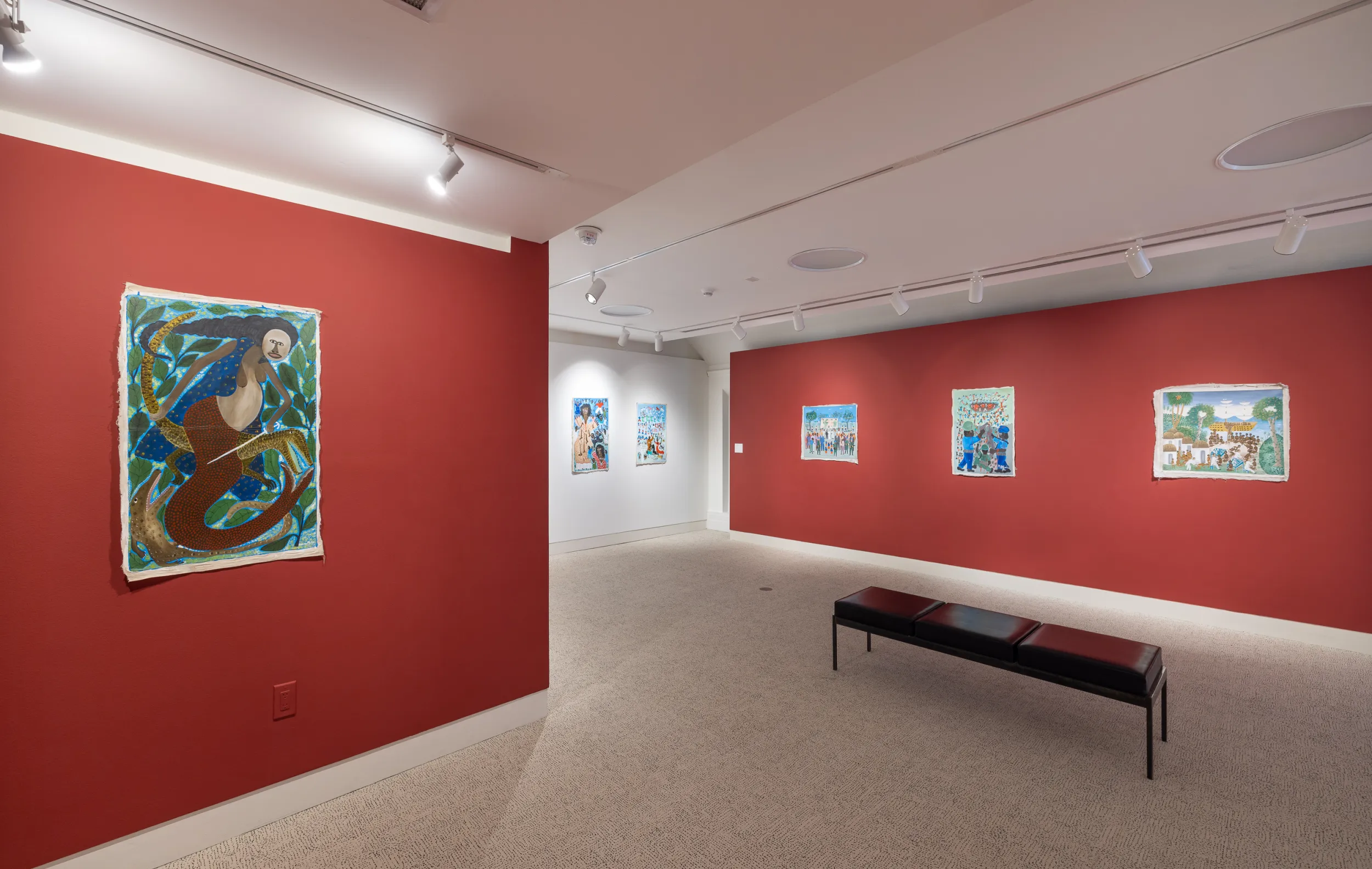
In addition to the more conceptual work, Cervasio-Dyer and other students got hands-on experience using the design software SketchUp, working with lighting, and creating a physical model of the exhibition. The entire class worked together to create a report detailing their processes and the thinking behind their curatorial choices.
Sally Jamrog ’27, a member of the curatorial team, describes the difference between her team's work and the scholarship team's as primarily a matter of scope.
The scholarship team “was kind of providing more background research and original research surrounding aspects and themes of the entire exhibition," while her team "was thinking about and researching the specific symbols or specific ideas that we saw emerging visually in each of the paintings that differentiated them from each other and made the works different from one another.”
A History of Art and Classical and Near Eastern Archaeology double major, Jamrog says the class has strengthened her already existing interest in curation.
“It has also deeply expanded my perspective of what curatorial work can look like and the departments that are involved in curation.”
History of Art at Bryn Mawr
Throughout history, visual and material culture have been central to human expression. The History of Art program teaches you to look at art in context, paying attention to everything from the materials used to the personal, local, and global events and movements that influenced its creation.