Many a parent has turned to a nightlight to help the little one settle for a good night’s sleep. Now, a first-of-its-kind study that Bryn Mawr neuroscience major Rebecca Rothstein-Epp ’27 helped conduct has found that those glowing orbs may actually be doing the opposite and keeping children awake.
The research, published in npj Biological Timing and Sleep, found that nearly half of the commercially available nightlights studied exceeded the light levels thought best for pediatric sleep.
“Light exposure, especially high-frequency blue light, has a lot of effects on our ability to sleep,” says Rothstein-Epp. “We often think of light in terms of vision, but it also affects nonvisual systems such as circadian rhythm.”
Too much light close to bedtime can delay circadian rhythms, a phenomenon known as phase shifting, Rothstein-Epp explains. It also suppresses the high nighttime levels of melatonin, a hormone that helps regulate sleep.
“Children are significantly more sensitive than adults to this evening light exposure,” she added, noting studies suggest as much as five or more times as sensitive.
Measuring Light’s Effect on Sleep
The study is the first to use a relatively new metric — melanopic equivalent daylight illuminance (EDI), which measures the biological impact of light on the circadian system — to measure 25 top-rated nightlights.
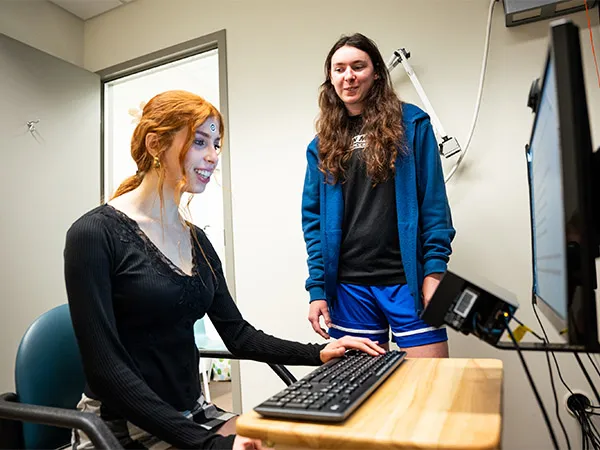
Rothstein-Epp worked on the project at the Uniformed Services University of the Health Sciences in Bethesda, Maryland, as a summer intern under Gena Glickman, director of the Chronobiology, Light and Sleep Lab and an associate professor of psychiatry and neuroscience.
While many nightlights appear dim to the eye, in a typical bedroom-like setting, 56 percent of the nightlights tested produced melanopic EDI levels above the threshold researchers consider appropriate for healthy nighttime sleep, even in adults.
Given how many children sleep with nightlights, and that sleep disturbances are associated with long-term negative effects on health, learning, and development, these findings warrant further investigation, says Rothstein-Epp.
“Overall, ensuring good sleep is essential for better performance in daily life, being more present and aware,” she says.
Redder, Dimmer, Farther Away
The researchers, however, aren’t asking parents to ditch nightlights, Rothstein-Epp says.
They acknowledge that children who fear the dark also are at risk for poor sleep. Instead, the authors intend the findings to serve as guidance for clinicians and parents when selecting products, she says.
The best nightlights emit red or amber light at a dim setting and are out of a child’s direct line of sight, says Rothstein-Epp. “We had a joke,” she says, “make it as demonic as possible.”
From High School Summer Intern to Researcher
Rothstein-Epp joined Glickman’s lab, near her hometown of Bethesda, through a competitive summer internship program out of high school in 2023.
In the lab, she learned how to take photometric and radiometric measurements of nightlights and convert the data to quantify the biological potency of light on circadian rhythms through melanopic EDI, “which places her at the cutting edge of our field,” Glickman says.
“As a testament to her commitment to this work, Rebecca continued to contribute to drafting the results section of the paper with me, even while away at college,” she adds.
Rothstein-Epp also got to show off her creative side while working with Glickman. She made drawings of the retinohypothalamic tract, the neural pathway that light travels from the eye to the brain as well as a diagram of the bedroom-like setup used for the study.
At Bryn Mawr, Rothstein-Epp has also found ample opportunity to hone her research skills.
“The smaller class sizes facilitate connections with professors,” she says. “They get to know you and your strengths, and you get to know their research interests. That sort of connection is very valuable.”
Rothstein-Epp is working in the cognition lab of Professor of Psychology Anjali Thapar, her senior thesis adviser. Currently, she’s helping with an olfaction study examining changes in the ability to smell as a predictor of cognitive decline.
Looking ahead, Rothstein-Epp plans to pursue graduate studies.
“I really want to do research,” she says. “I like the environment and pacing and contributing to a body of knowledge. I love knowing what I’m doing is working toward helping people and improving the quality of life.”