Summer Program Expands Opportunities for Humanities and Social Science Research
September 14, 2026
Unlike biology, chemistry, and other STEM fields where labs regularly require numerous student research assistants to conduct experiments and published research can have double-digit co-authors, research in the humanities and social sciences is often solitary or limited to a handful of collaborators.
But advances in technology are changing that landscape. As large data sets, digital tools, and increasingly sophisticated methods of analysis are applied across a wider range of fields, researchers in the humanities and social sciences have more opportunities to collaborate than ever before.
To prepare students for these opportunities, Bryn Mawr launched the Humanities/Social Science Summer Program in 2025. Students in the program are partnered with faculty from a variety of fields including anthropology, economics, and more.
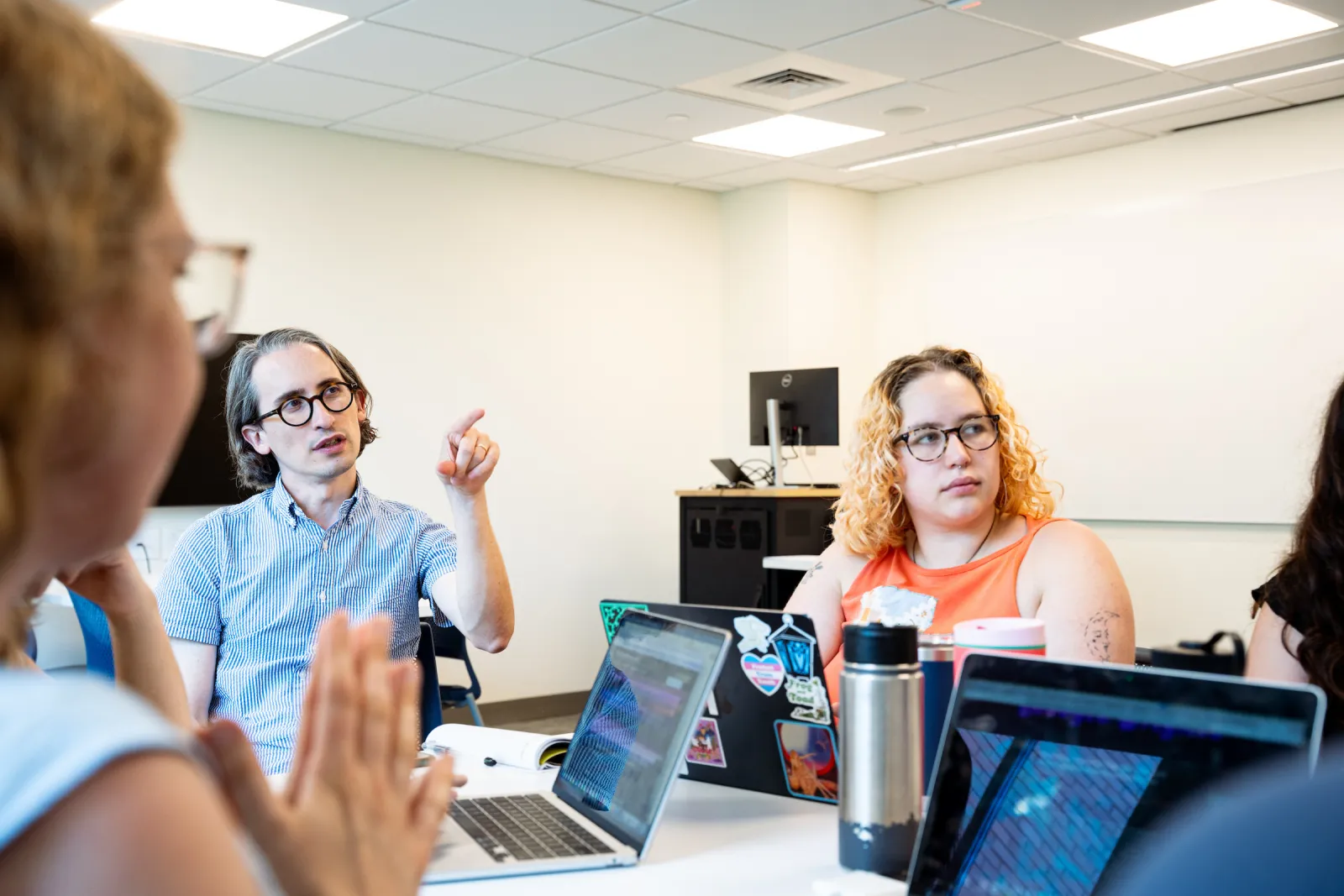
Associate Professor of Russian José Vergara has participated in the program each of the last two summers, having students help him with an online project to annotate the films of Paul Thomas Anderson.
This year, Ada Griffin ’28, an English major and film studies minor, along with four other students participating in the Digital Scholarship Fellows Program, worked with Vergara and Senior Digital Scholarship Specialist Alice McGrath on the project.
Jose Vergara and Ada Giffin '28
Much of Griffin’s work involved time spent in Bryn Mawr’s Special Collections, identifying magazines and books that appear in Anderson’s films, in particular Phantom Thread. Her detailed essay on the topic is already posted on the Paul Thomas Annotated website.
“Getting to work doing truly some of my favorite things (writing, analyzing, and discussing film) is still pretty unreal to me,” says Griffin. “And seeing my work turn into something tangible that pushes this project forward felt so rewarding.”
As an English and film studies major, Griffin was confident in her academic writing coming into the project, but says the work involved in presenting it online added greatly to her existing skills.
“I previously thought of myself as someone who was bad with technology, but this job pushed me to learn so much about the ins and outs of how websites operate. It really showed me that those kinds of digital skills are something I’m capable of, and how important they are to the humanities,” she says.
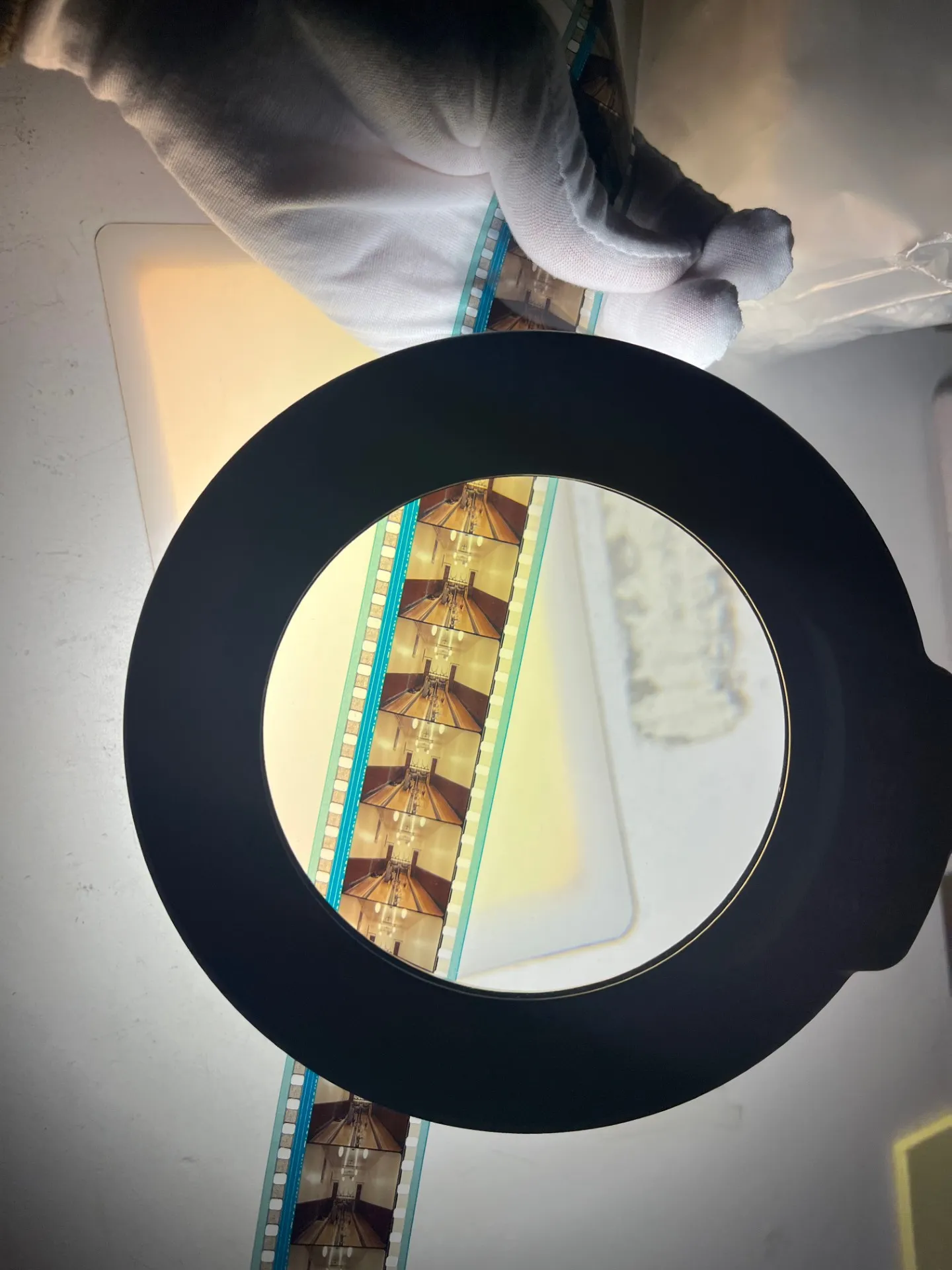
Early in the semester, the research team had a chance to visit the nearby Bryn Mawr Film Institute for a screening of There Will be Blood, which included a visit to the projection room where they got to examine the film strip and some of the individual frames.
“Participating in the program again has underscored for me the value of this brand of work with students,” says Vergara. “Being in close collaboration with them over the summer is wonderful. It provides us with a dedicated time when we can more or less focus on a single project without being distracted by a regular semester’s obligations. This allows so much creativity to flourish.”
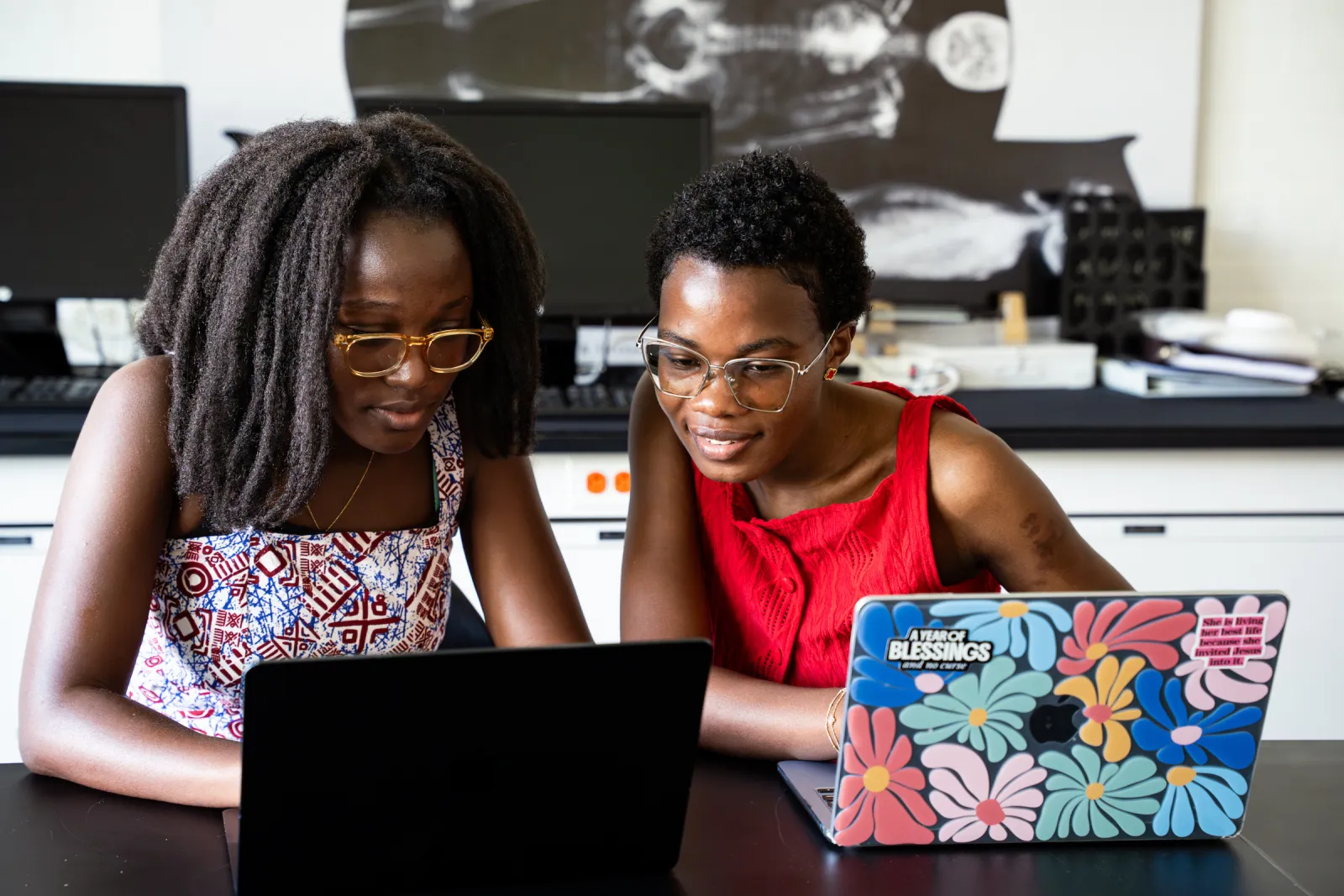
Akosua Boatemaa Sarpong ’27 and Theresah Tawiah ’27 worked with Associate Professor of Anthropology Melissa Pashigian for her research on dizziness, migraines, and concussions that explores how people identify with and mobilize around an invisible illness.
The pair helped find and organize previous research findings and develop interview and survey questions Pashigian will be using in her research.
Akosua Boatemaa Sarpong '27 and Theresah Tawiah '27
“I’m so grateful for the opportunity to participate in this summer research program,” says Tawiah. “It has deepened my understanding and shown me that research is not just about collecting data, it's about understanding people’s stories and using them to make healthcare more thoughtful and inclusive.”
Many students participating in the program worked remotely, collaborating with professors via Zoom.
Willa Romer-Mack ’29 and Cee Jaklevic ‘27 worked with Assistant Professor of Greek, Latin, and Classical Studies Benjamin Eldon Stevens to research how and why video games use markers of classical Greek and Roman myth and society to invoke a sense of antiquity and mythic significance.
“Video games are still a relatively new medium, so exploring the possibilities of telling ancient stories through games is fascinating to me,” says Romer-Mack.
Amina Antora ’28 and Felicia Famularo ‘27 worked with Professor of Social Work Kerry Lee on her research into the effects adverse childhood experiences and intimate partner violence have on Black men and women.
For Antora, the experience gave her a new understanding of what it means to do academic research.
“I used to think research was mostly about finding information and putting it together, but I realized that a lot of it is about slowing down, questioning what you are reading, checking details, and sometimes going back to the same source several times,” she says.
Working with Lee also gave Antora the confidence in her ability to do rigorous academic research.
“It was especially meaningful when Professor Lee trusted me with more responsibility and eventually included me as a co-author on the project,” she says. “Even as an undergraduate, my work can still make a meaningful contribution to a real research project.”