
Study Abroad and Study Away
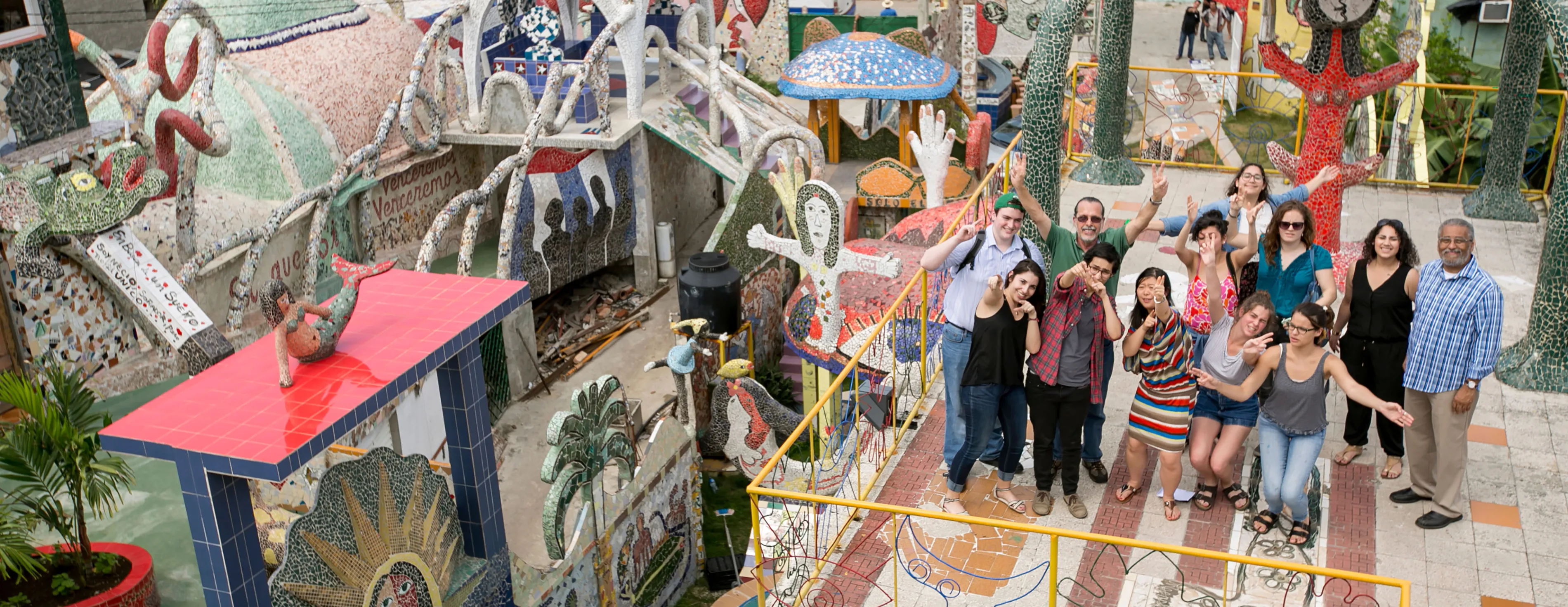
While your studies at Bryn Mawr are the backbone of your education, studying abroad immersed in another culture is an eye-opening, enriching experience.
We encourage all students to spend a semester to a year studying abroad. Living and studying in another place and culture gives you a wider perspective on your academic interests and personal experiences.
We want study abroad to be accessible to anyone who is interested, so you don't have to worry about whether the program you're looking at has affordable tuition. You pay your regular tuition to Bryn Mawr College for the semester(s) you are studying abroad, and we pay the program tuition on your behalf.
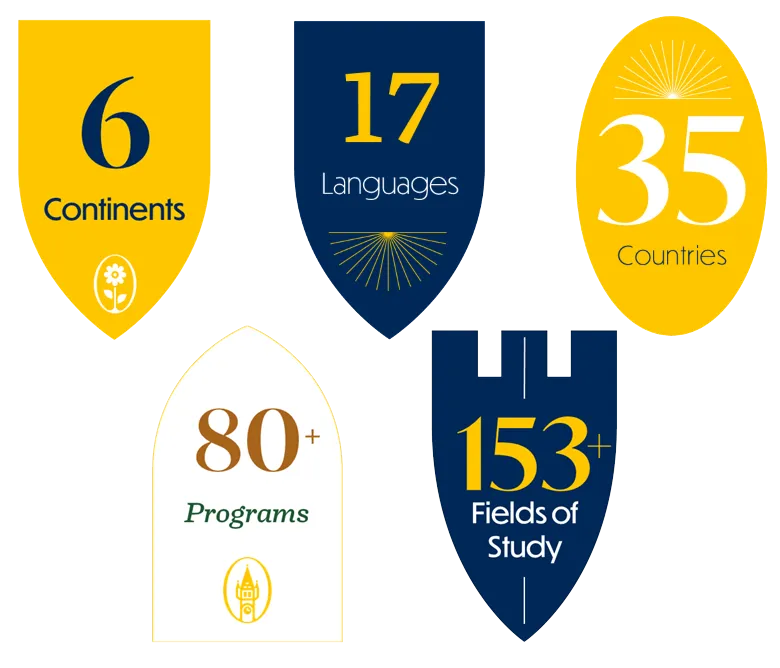
Study Abroad by the Numbers

Study Abroad Options
While most students studying abroad travel during their junior year, that's not the only option available to you. Choose a program that fits your timing and interests.
Junior Year Study Abroad
Studying abroad in your junior year is the most common approach. Choose a program, talk to your major advisor, and apply during your sophomore year. All students with a GPA of 2.5 or more are eligible to study abroad, as long as it doesn't interfere with your major. If your major is a foreign language or you plan to do certain programs, you can study abroad for a full year. If not, you can study abroad in either the fall or the spring semester.
Summer Study Abroad
If you can't find a program that's right for you during the school year, or if it doesn't fit into your academic plan, you can choose to study abroad over the summer. There are programs connected with Bryn Mawr College, or you can choose one you've found yourself. If you do choose an outside program, make sure before you go that you can transfer credits from the program back to Bryn Mawr.
Language Immersion Programs
Bryn Mawr is connected to several foreign-language immersion programs, including our own Institut D'Avignon in France. These programs have intensive summer language courses and provide a great way to advance your skills. If your target language doesn't already have a connected program, you can ask your language professor for advice.
360° Programs
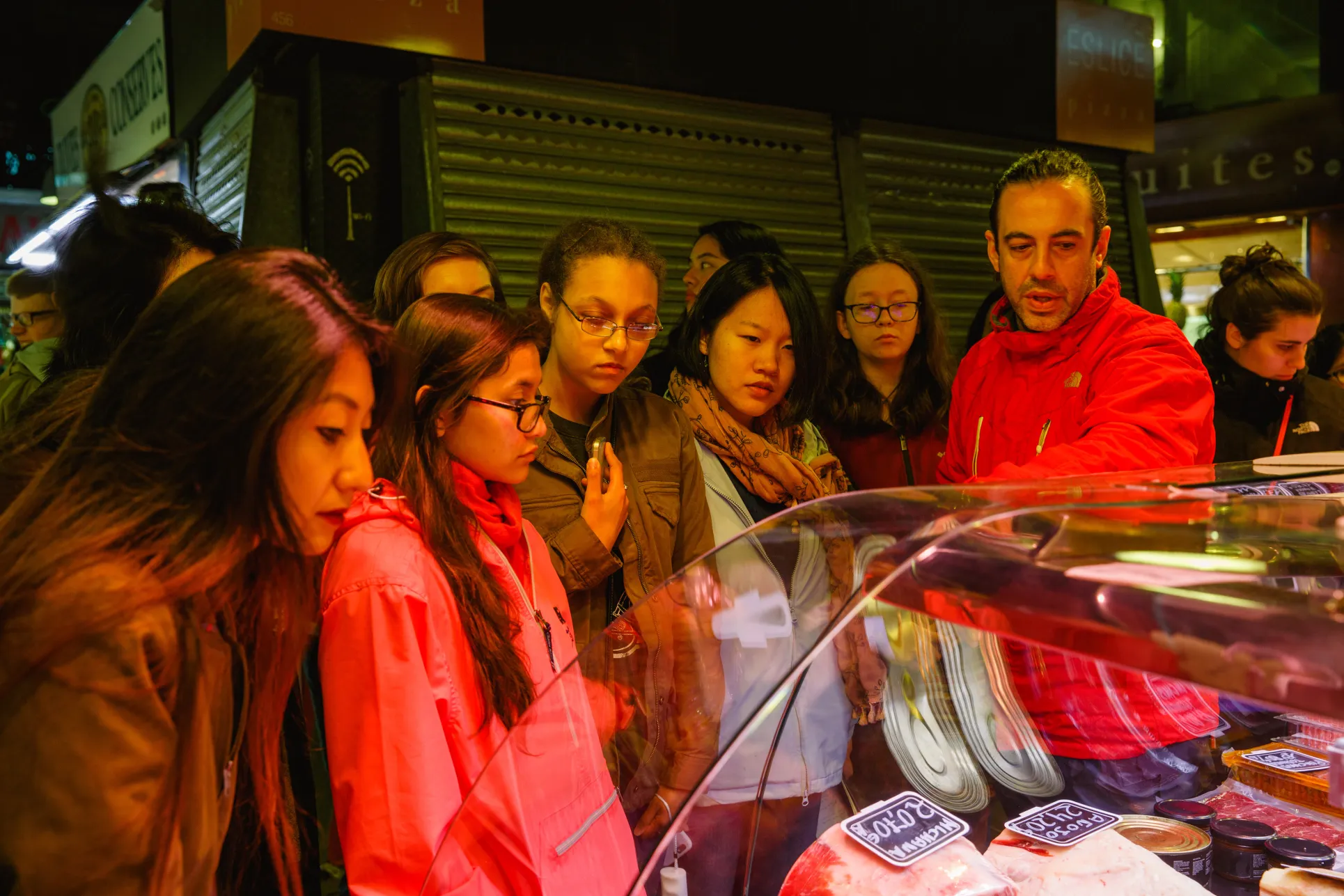
Each semester, Bryn Mawr and Haverford run a course cluster called the 360° Program. Professors from different areas of study work together to create courses around a single topic. You register for all of the courses in the program. Then along with your professors and classmates, you take a fieldwork trip to learn more. In the past, this has included trips to Germany to visit the famous "green city" of Freiburg; to Barcelona, Spain, to learn about food culture; and to Seoul, South Korea, to explore Korean history and culture up close. These are short trips with a group of classmates and professors. This may feel more manageable than a full semester away or traveling alone.
Research Trips
Some disciplines require travel abroad for research, and professors often bring student research assistants with them to help. Geology and Classical and Near Eastern Archaeology make frequent research trips, both in the US and abroad. The Geology program also takes a class research trip during either Spring Break or Fall Break each year. If you're interested in research abroad, talk with your professor.
Internships and Externships Abroad
You can spend a Summer or Winter Break working abroad. Organized through the Career and Civic Engagement office, internships and externships abroad are a valuable experience, and look great on your resume.
Study Abroad Experiences
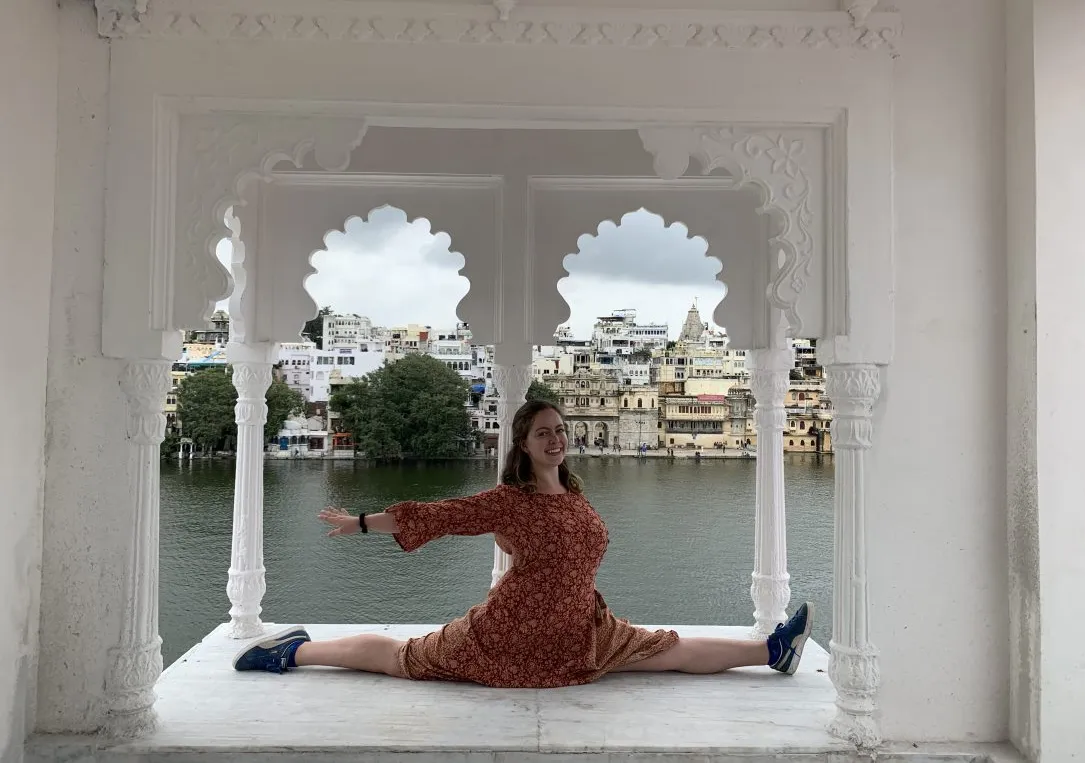
Sonja O’Brien ’21—India
“I had the most wonderful host family who were amazingly kind and were such an essential part of my experience. They made me feel at home, more than 7,400 miles away from where I grew up. We grew very close and I still talk to them almost every day.”
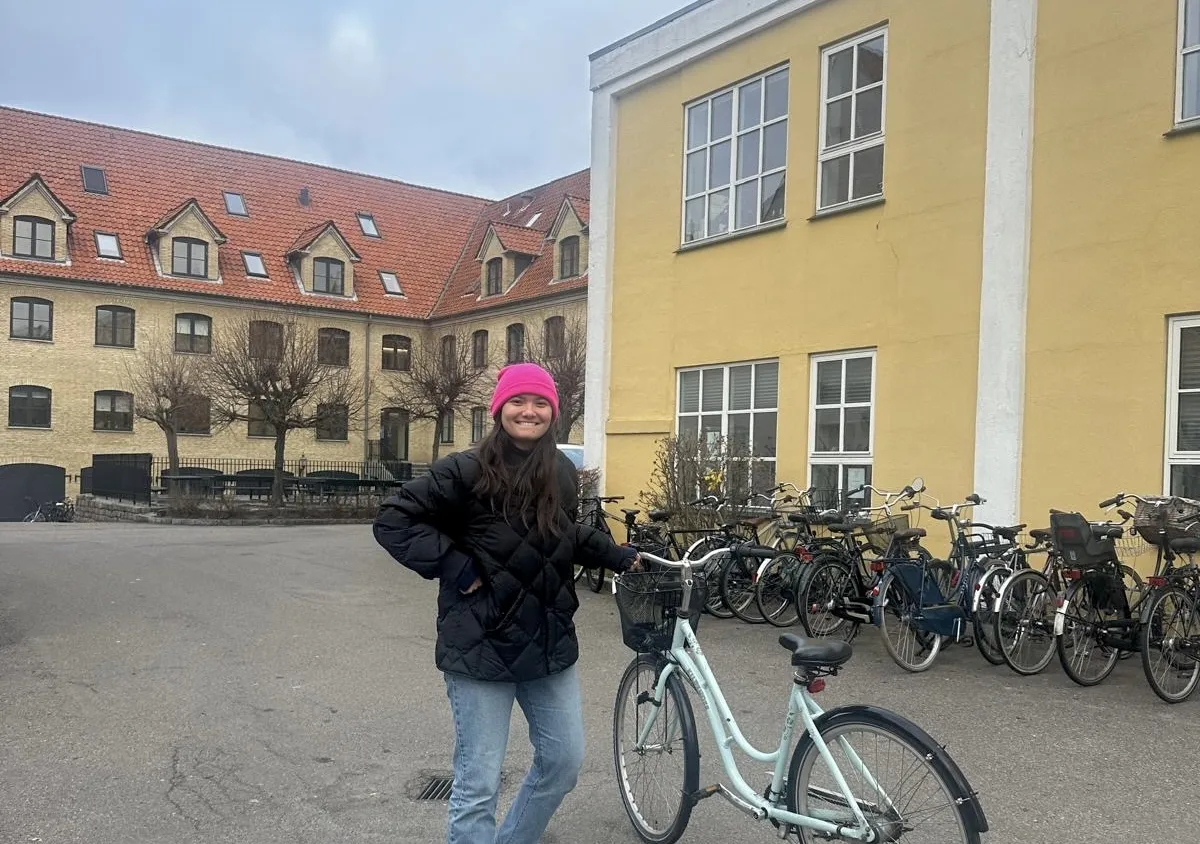
Sara Pratt '26—Denmark
"I loved the opportunity of being able to put myself in new situations. For example, learning how to navigate riding a bike in Copenhagen was intimidating at first, but by the end of my time there, it became the highlight of my day … I think studying abroad inherently requires you to step out of your comfort zone and try new things, and I’m grateful that I was able to practice that skill and remain open to new and exciting opportunities!”

Jackie Araujo '26—Morocco
“Being abroad was a great opportunity to learn Arabic and be able to practice it with the community I was living in, with students I met there, and with my host family… But my ALL-TIME favorite part of my time in Morocco was the FOOD!”




Study Abroad FAQs
Studying abroad is exciting, but it can also feel intimidating. Here are some questions you may be asking, and the answers to go with them.
You may be studying at another school, but you will still be paying Bryn Mawr College tuition. We will pay the tuition to the program you're attending on your behalf. That means that even if the tuition costs more than your typical semester at BMC, your costs will stay the same.
STEM majors are welcome to study abroad. Your major advisor will need to approve your course of study. They may have some rules about what kind of courses you are allowed to take, so be sure to talk to them early in the process.
The program tuition is paid by Bryn Mawr College from your regular tuition payments.
You will also want to budget for:
Pre-departure Expenses
- Application fees
- Admission deposit
- Housing deposit
- Airfare
- Transportation to airport
- Passport application fee
- Visa application fee
- Personal medical insurance
- Personal property insurance
Student Expenses Abroad
- Housing and Meals
- Books and supplies
- Commuting Costs
- Utilities
- Laundry, haircuts, and personal hygiene supplies
- Cell phone
- Dining out and entertainment
- Arrival transportation from airport to program site
- Return transportation from program site to airport
- Miscellaneous Expenses
- Academic programs before or after program ends
- Housing before or after program ends
- Meals before or after program ends
- Vacation travel
- Vacation travel hotels/meals
- Emergency reserve money
- Additional transcripts
- Withdrawal fees imposed by the program
- Money wire transfer fees and excess luggage fees
For most programs you do not need to be fluent in the local language. Many programs offer some or all courses in English. While living and commuting in a place where you don't speak the language is an adventure, you can communicate enough to get by with just a few phrases and gestures. Instant interpretation software is also becoming more reliable, making it easier than ever to live, study, and travel in a country where you do not speak the local language.
Where you will live depends on your program, however, these are some of the most common situations:
- Home Stay
- You live with a family and they provide you with a place to sleep and study, and a certain number of meals per week.
- Dormitory
- You stay in student housing, which may or may not include a meal plan.
- Small apartment
- You are assigned a small apartment, which likely has a kitchenette and a bathroom. You will likely need to provide your own meals.
You should choose a program that offers courses in your major. In special cases we may be able to make an exception, but it should be approved by your advisor. You should have a plan to complete all major coursework before you're scheduled to graduate.
For your health and safety, we don't approve travel to any country with a level 4 travel advisory from the US Department of State or a level 3 or higher travel advisory from the Centers for Disease Control.
We encourage you to apply to study abroad regardless of ability. If you receive accommodations at Bryn Mawr and want to study abroad, you should contact Global Engagement and/or Access Services early in your sophomore year. Our offices will work closely together to support you. Access and accommodations vary a lot from country to country, so you will need to start planning early.
During the school year, you can only study at a program that has been reviewed and approved by the Study Abroad Committee. This restriction does not apply to summer study abroad.
All travelers must have a passport. Your passport is the official ID of your citizenship. You should make sure that your passport is valid for at least six months after your planned return from your study abroad programs. If you are a U.S. citizen, visit the U.S. Department of State passport website.
If you are an International student or a non-U.S. citizen, you should check with the embassy of the country where you are a citizen whether you need to renew your passport.
Some countries require a visa for study abroad. Visa applications can take a long time. You should find out what kind of visa you need for your program and apply for it as soon as you are accepted.
If you are an International student, you may need to have a U.S. visa valid beyond the period of your study abroad program before you apply for a student visa for study abroad. Students on a non-immigrant F-1 Visa should consult The Impact Center to make sure that all their U.S. immigration paperwork is in place for their re-entry to the United States.
It's important to have a plan of action in case of an emergency when you are studying abroad. Here are some steps you should take:
- Follow all travel warnings and safety precautions provided by your program or local authorities.
- Follow any instructions you receive from the on-site program director or relevant university staff. If they are not aware of the emergency, contact the on-site program director or relevant university staff immediately.
- Access wellness resources that are available to you at your program.
- Notify the Deans Office at 610-526-5375 or deansoffice@brynmawr.edu. If the emergency happens outside normal business hours, call BMC Campus Safety at 610-529-7911.
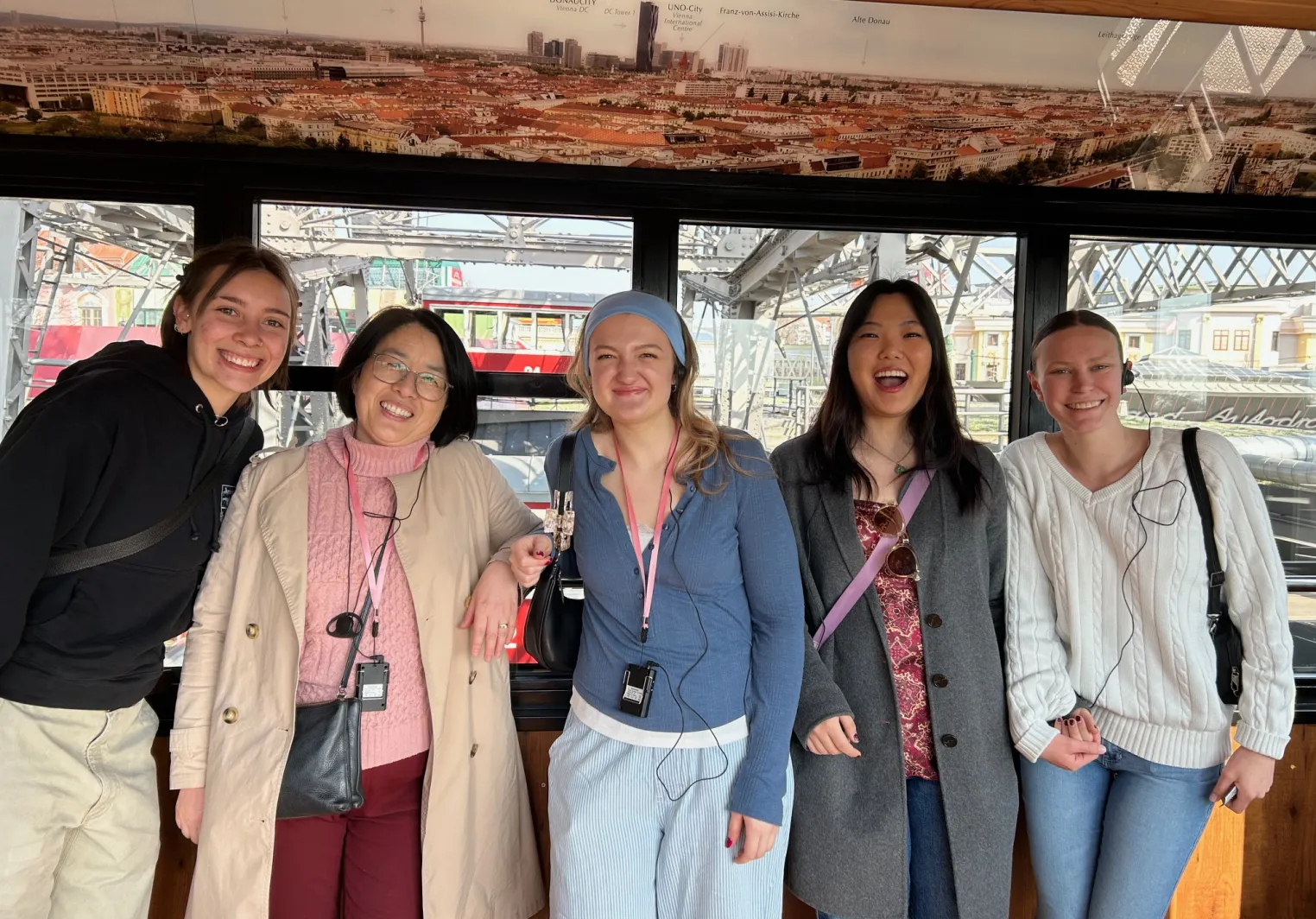
The 360° Program in Vienna: A Fieldwork Experience
In Spring 2026, the 360° cluster Europe from the Margins took a nine-day study trip to Vienna to learn about the history of marginalization and oppression in Europe. Jacquelyn LeBlang '28 reflects on her experience.
Study Away
While the College encourages all eligible students to consider study abroad, it might not be right for you. You may be well-served by a semester as a guest student at another school in the U.S. instead. In recent years, we have had Geology majors study in Hawaii and New Mexico, History of Art majors study in New York City, and Political Science majors study in Washington, D.C. Bryn Mawr also awards credit for SEA Semester, Williams Mystic Maritime Studies, and the Semester in Environmental Science at the Marine Biological Laboratory at Woods Hole, Massachusetts.