


Economics
Why Study Economics at Bryn Mawr College?
Economics is a social science that studies the ways people share scarce resources to better understand how people and communities interact.
The economics program at Bryn Mawr College is a STEM major and minor. Our program gives you a strong grounding in economic theory and methods, and lets you tailor your major to your interests as you choose more advanced courses. We focus on analytical rigor, statistical and empirical evidence, and research. Our program helps you master the methods economists use to analyze issues and assess alternative arguments and policies.
Economics Degree Options
You can major or minor in economics at Bryn Mawr.
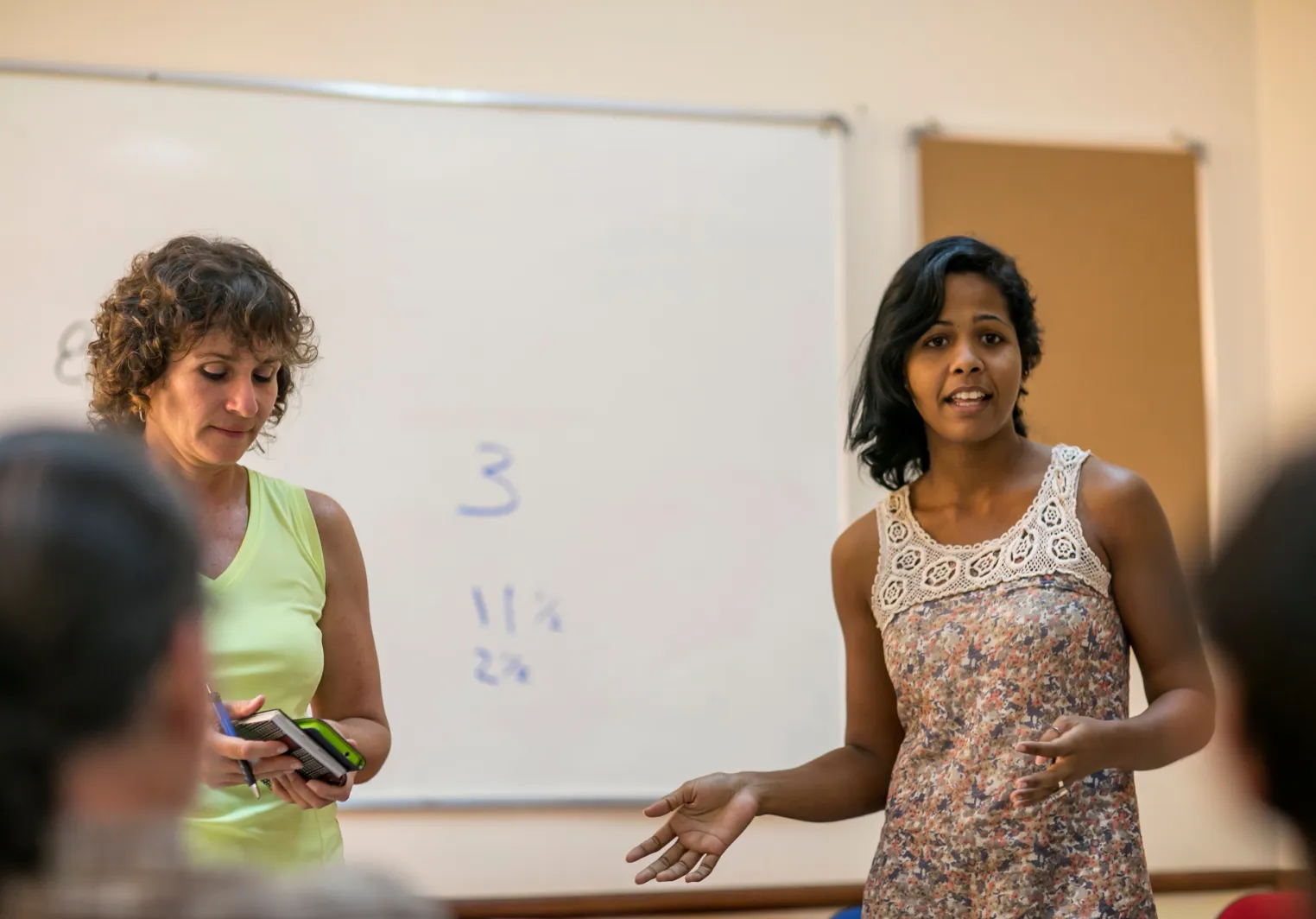
Emma Carney '25"I knew I wanted to study Economics, especially since it’s a field that allows you to study key social and political issues through a quantitative scientific lens."
Economics Course Highlights
ECON B225 Economic Development
Examination of the issues related to and the policies designed to promote economic development in the developing economies of Africa, Asia, Latin America, and the Middle East. Focus is on why some developing economies grow faster than others and why some growth paths are more equitable, poverty reducing, and environmentally sustainable than others. Includes consideration of the impact of international trade and investment policy, macroeconomic policies (exchange rate, monetary and fiscal policy) and sector policies (industry, agriculture, education, population, and environment) on development outcomes in a wide range of political and institutional contexts.
ECON B235 Macroeconomic Challenges in the US Economy
This course will analyze macroeconomic challenges and policy responses in the US, drawing from both recent and historical events. Topics will include the roles of monetary and fiscal policy in stabilizing the economy; the federal budget, government deficits and national debt; inflation and monetary policy; the US trade deficit and global imbalances; long-run economic growth; and the recent economic shocks associated with the 2008-09 financial crisis and Covid-19. The course will build upon the macroeconomic theory from introductory economics and include both theoretical and empirical analysis.
Students' Perspectives
What students are saying about their experience with economics:



Faculty Spotlight

Jiyoon (June) Kim
Associate Professor of Economics on the Clowes Professorship in Science and Public Policy and Director of the Center for Social Sciences
Professor June Kim’s research goal is to understand the causes of health disparity and social inequality faced by vulnerable groups. She hopes to improve health at the individual, community, and societal levels. Under this research theme, she has two strands of research: 1) assessment of government programs and policies to understand their impact on the vulnerable, and 2) study of the broad factors of population health.
Her current research topics include the economic costs of extreme temperatures, the effects of paid family leave, and spillover effects in health.
A Bright Future
How economics grads are lighting their paths

Opportunities for Economics Majors

The 360° Program
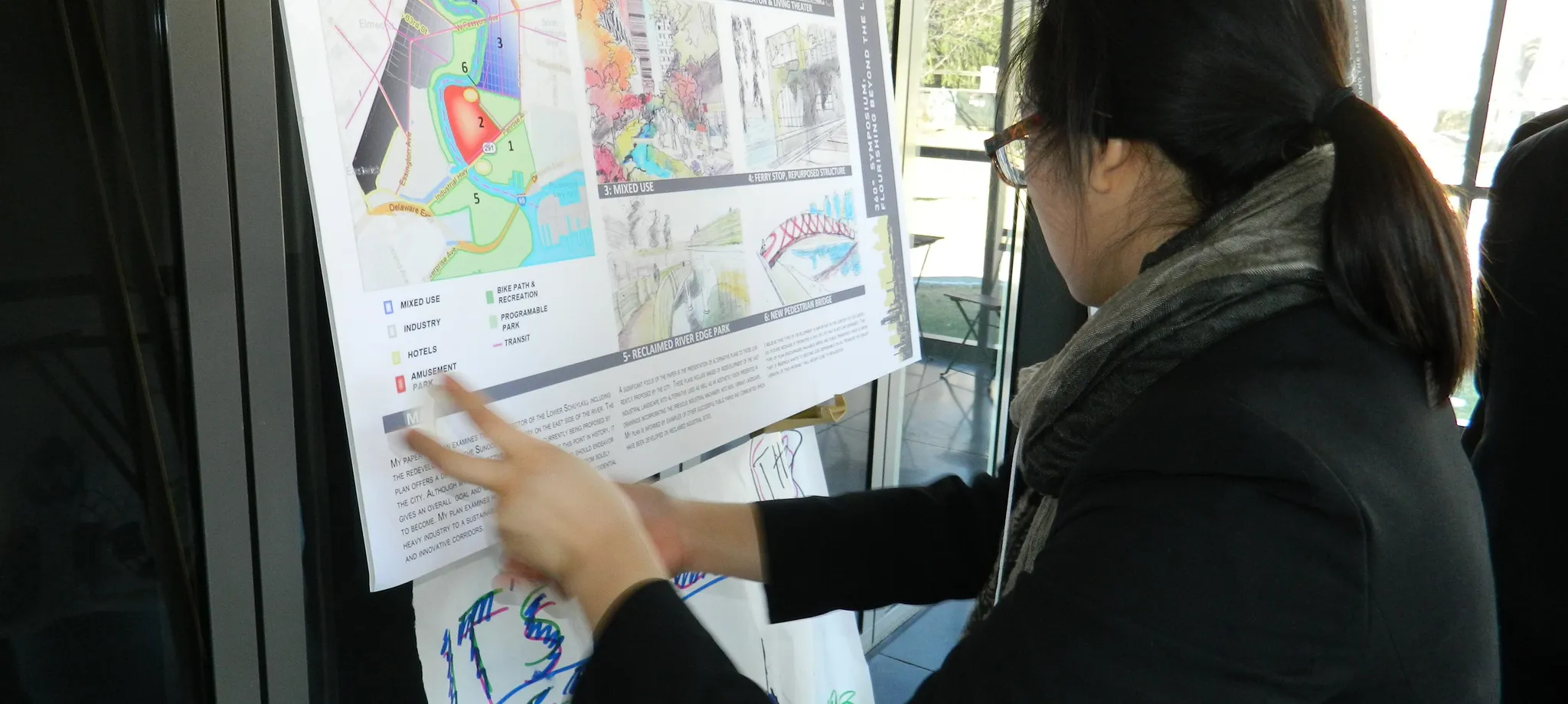
The 360° program lets you take a cluster of courses around one interdisciplinary topic. This model lets you see how economics play a role in other fields, and how it can be applied to complex problems.

Internships
Taking on internships during long breaks in the year lets you experience a professional setting and see how economic principles are applied to real problems in the workplace and the world.

Praxis
Praxis programs offer another opportunity for you to apply your economics study to problems facing local communities. Some recent praxis courses have focused on economics consulting and the unequitable development of Chinatown.
Economics FAQ
Here are some questions you might have about studying Economics at Bryn Mawr, and their answers.
The department will waive the ECON B105 prerequisite for if you scored a 5 on both the Microeconomics and Macroeconomics AP exams or at least a 6 on the Economics Higher Learning Exam of the International Baccalaureate. The waiver does not count as course credit toward the major or minor; you must still take 6 total courses for an economics minor, or 10 total courses for an economics major.
Yes, the economics major at Bryn Mawr has been designated a STEM major since 2022. International students earning a bachelor's degree in fields recognized by the U.S. government as STEM fields may qualify for the STEM OPT extension; a 24-month extension of F-1 Optional Practical Training.
Economics is a social science that studies the allocation of scarce resources as a way to understand many types of human interaction. Professional training in business involves learning specialized techniques and skills in order to pursue the specific goals of businesses. Training in economics is not the same thing as training in business. Our economics courses do not focus on these specialized business skills and techniques. If you major in economics because you think it is the subject “closest to business,” you may be unhappy in your economics courses. We advise you to get broad exposure to the humanities, social sciences, and natural sciences and to major in the subject that most engages you.
Economics is the most quantitative social science and a solid knowledge of math is essential for understanding economic theory. At least one semester of calculus (Math 101) is a prerequisite for Econ B200, B202, and B304.
If you want to pursue graduate studies in economics, you will need to master more advanced mathematics.
Math courses that are particularly appropriate for Ph.D. study in economics include Math 101 and 102, Calculus with Analytical Geometry; Math 201, Multivariable Calculus, Math 203, Linear Algebra; Math 205, Theory of Probability and Applications; Math 210, Differential Equations with Applications; and Math 301 and 302, Introduction to Real Analysis.
You should also plan to complete Econ B304 Econometrics as part of your degree program.
Yes, but if you are planning to pursue an advanced degree, you may want to reconsider. Graduate programs in economics are very competitive, and require recommendations from your professors. For your professors to feel confident in giving those recommendations, they need to know you and your abilities well. Taking a semester or a year to study away from campus might make it more difficult to grow those relationships.
The core courses of ECON B200, ECON B202, and ECON B253 must be taken at Bryn Mawr.
Most electives offered by the Haverford economics department may be counted toward the Bryn Mawr economics minor and major.
Not all Haverford 200-level courses are the equivalent of Bryn Mawr's 200-level electives. The following Haverford courses do NOT count towards the BMC major or minor, nor do they fulfill the "elective" prerequisite for the three BMC core economics courses:
- Economics H201 (Analytical Methods in Economics)
- Economics H210 (Linear Opitimization)
- Economics H243 (Debt, Justice, and Sovereignty)
- Economics H247 (Financial Accounting)
- Economics H277 (Ethical Leadership in Business and the Professions)
Only ONE of the following two Haverford electives can count towards the BMC major of minor (i.e. if you take both, you only get credit towards the BMC major or minor for one of them), and neither fulfill the "elective" prerequisite for the three BMC core economics courses:
- Economics H205 (Corporate Finance)
- Economics H206 (Microfinance)
Writing intensive courses in Economics are only offered at Bryn Mawr.
The Econ B39x and H396 research seminars are open only to Bryn Mawr and Haverford economics majors respectively. The desire to write your senior research paper in a specific subfield of economics and to work with a specific faculty advisor is an important consideration in choosing whether to major at Bryn Mawr or Haverford.
In most cases, yes. An exception is Swarthmore’s financial accounting course (Econ SW033), which cannot be used to satisfy major or minor requirements at Bryn Mawr. When in doubt, ask your major advisor.
Remembering Trailblazing Economist Alice Rivlin '52
Alice Rivlin's incredible career spanned decades, leading the congressional budget office as its first director, and serving as vice chair of the federal reserve under Alan Greenspan during the Clinton administration.

STEM News
Economics at Bryn Mawr is structured as a STEM program, one of a field of dedicated research programs. Here's what's new:




Contact Us
Economics
114 Dalton Hall
Bryn Mawr College
101 N. Merion Avenue
Bryn Mawr, PA 19010
Phone: 610-526-5030 or 610-526-5331
Dawn Lord, Administrative Assistant
dlord@brynmawr.edu