Campus as Classroom Drives Sustainability Progress at Bryn Mawr
April 29, 2026
Campus as a Living Lab
From reducing food waste in dining services to studying the health of Lake Vickers to working toward having the campus recognized as an arboretum, students, faculty, and staff are using Bryn Mawr as a place where sustainability ideas and methods are tested, refined, and put into practice.
As the spring semester comes to a close, the findings of many sustainability projects funded by internal grants are coming into focus, including recommendations for moving forward. Representatives from teams involved in several projects were at this year’s Earth Day picnic, the first to feature only reusable and compostable materials.
“We fed a thousand people and didn’t send any post-consumer waste to the landfill,” says Director of Sustainability and Environmental Action Neha Sood.
One grant helped Dining Services implement Leanpath, a food waste tracking system at Erdman Dining Hall. Early results have shown a 24 percent reduction in food waste compared with baseline levels, preventing roughly 1.5 tons of food waste and generating approximately $6,700 in savings over two months.
"I love this thing! It’s helping me be more aware of how much I cook and it’s changing how I prepare food," says John Natale, a cook at Erdman Dining Hall.
Another grant supported the revitalization of Bryn Mawr’s Community Garden, where raised beds were rebuilt, soil was refreshed, and new signage and plantings are helping restore the space as a site for learning and connection.
Professor of Biology Thomas Mozdzer and Visiting Assistant Professor of Growth and Structure of Cities Dirk Kinsey received a grant to help expand Bryn Mawr’s vision of campus as a living lab.
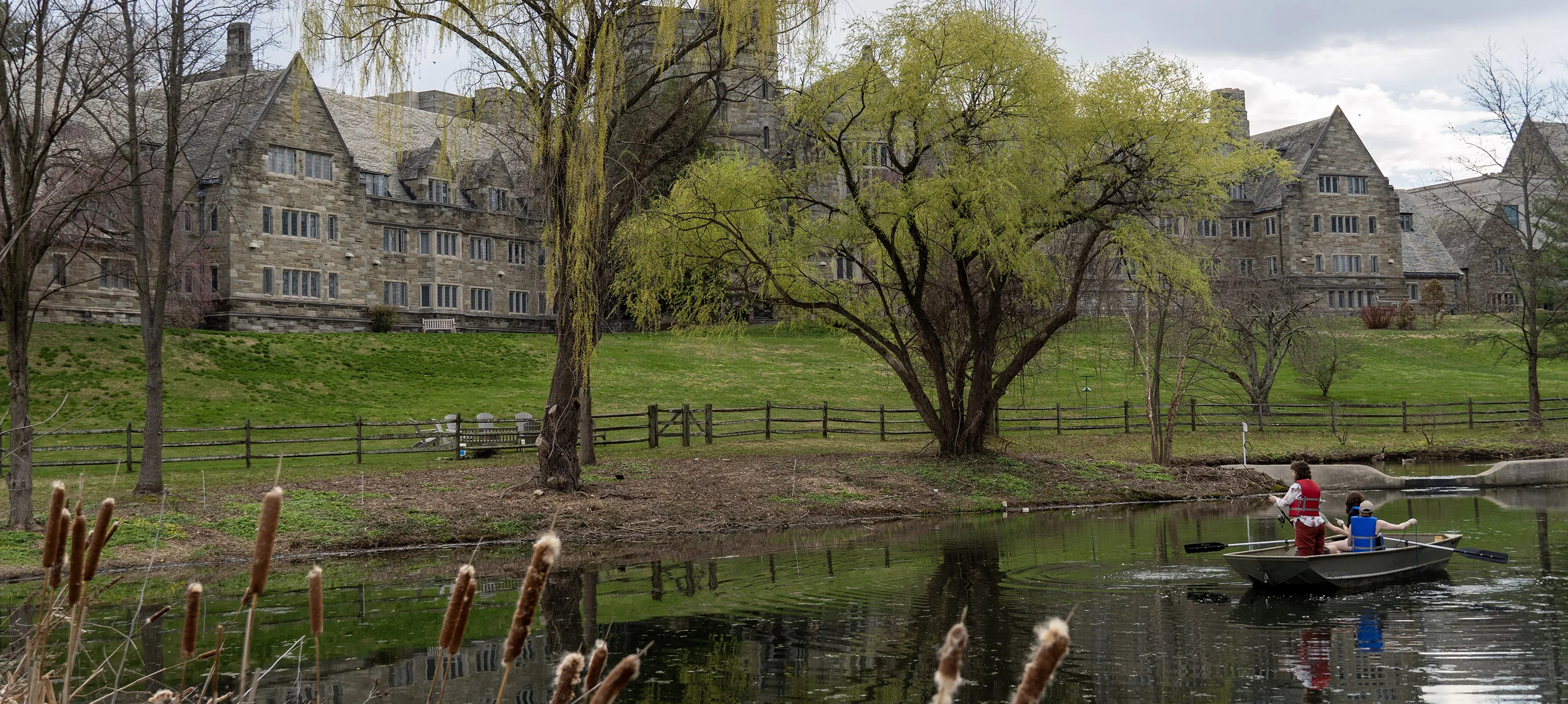
Students studied Lake Vickers, the stormwater pond near the athletic facilities, and recently completed a detailed restoration proposal that examined water quality, sediment buildup, invasive plants, and seasonal salinity changes.
Their recommendations included native shoreline plantings, lantern shaped floating wetlands, improved aeration, habitat restoration, and long-term environmental monitoring.
"As students, we interact with overlooked parts of the campus like the pond every day," says Max Monks '26. "It has been really rewarding to have our observations and ideas have a lasting impact on not only the culture of sustainability at Bryn Mawr, but also on the physical landscape of our campus."
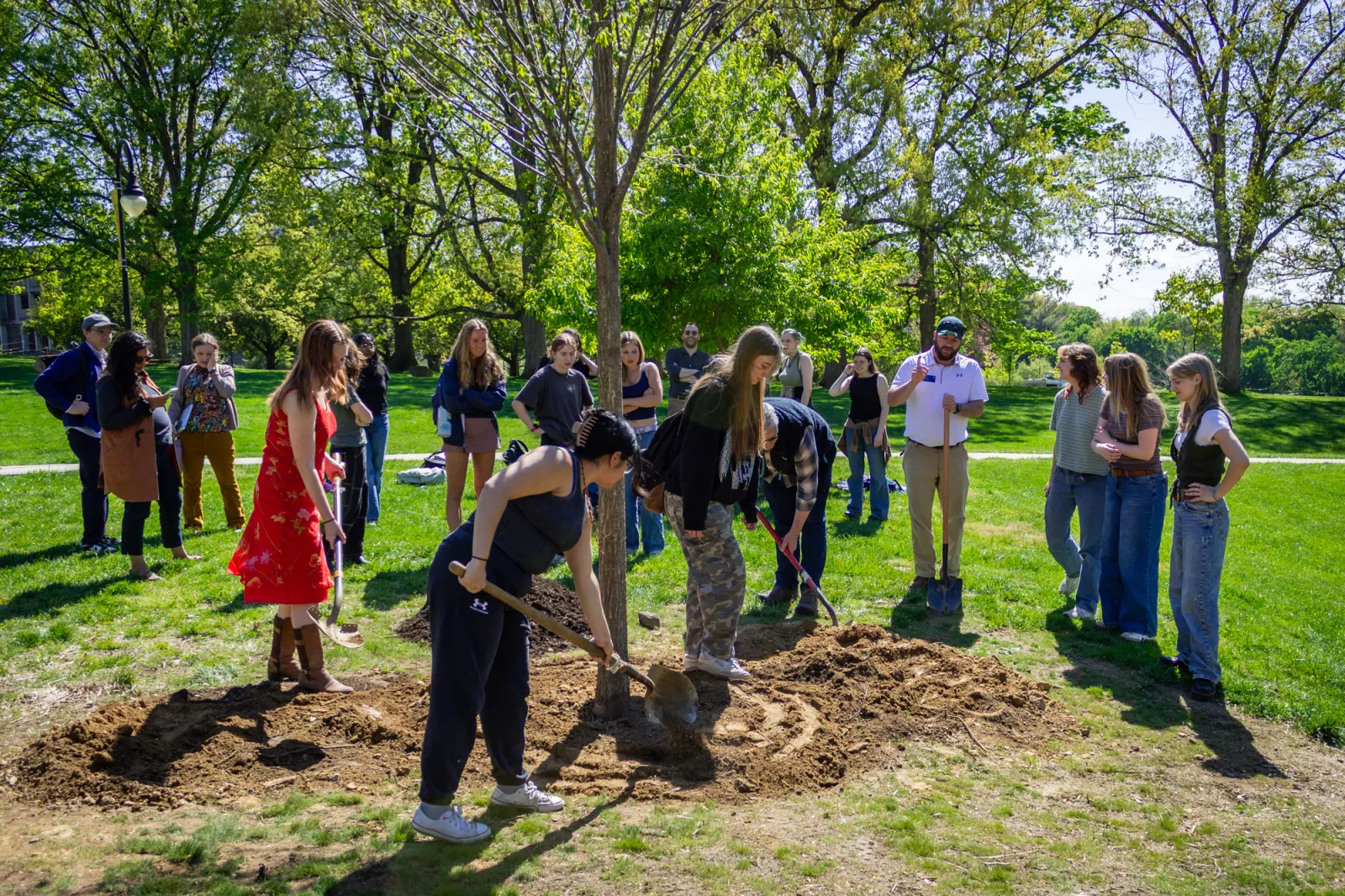
Students in the Biology 380 Ecological Restoration and Sustainability course. along with campus partners in Facilities and Sustainability, planted a tree after students presented a plan to restore Bryn Mawr's status as an arboretum.
Another student group focused on restoring Bryn Mawr’s status as an arboretum.
“Attaining arboretum status checks a lot of boxes,” says Sood. “It will make more people aware of the natural assets of our campus and inspire them to visit our campus. The maintenance of the arboretum status will provide ongoing opportunities for students to use the campus as a living lab.”
Their work included proposals for interactive tree maps, labeled specimens, expanded data collection, GIS Story Maps, and long-term planning that could support future accreditation efforts.
Together, the projects reflect a broader philosophy: sustainability work can improve campus systems while enriching academic life.
That mindset is shaping other initiatives connected to Bryn Mawr’s goal of being carbon neutral by 2035.
Bryn Mawr has expanded clothing reuse and donation options, piloted updated waste stations in campus buildings, implemented reusable container use at Uncommon Grounds, and, in addition to the ongoing electrification of its transportation fleet, began transitioning to more electric landscaping equipment, including Lawnda, the robot lawnmower that calls the Cloisters home.
The College has been purchasing its electricity with Renewable Energy Certificates from wind power since 2014. It started with 50 percent of electric usage and increased to 100 percent the following year.
Sood is now turning her attention to exploring ways the college can further reduce its carbon footprint, procure green energy from more local sources, or even generate its own energy through technologies such as solar panels and geothermal systems.
Future plans also include expanding the LeanPath program and reviewing this year’s grant results to determine what the college can act on and which areas may need further research.
"Bryn Mawr College has long been committed to sustainability, building on a strong foundation laid by students, faculty, and staff who came before us," Sood says. "Together, our campus community continues to model sustainable practices — while having fun along the way — and I’m deeply excited for what's yet to come."