Campus Community Hears Stark Warning on Federal Higher‑Ed Policy Shifts
March 5, 2026
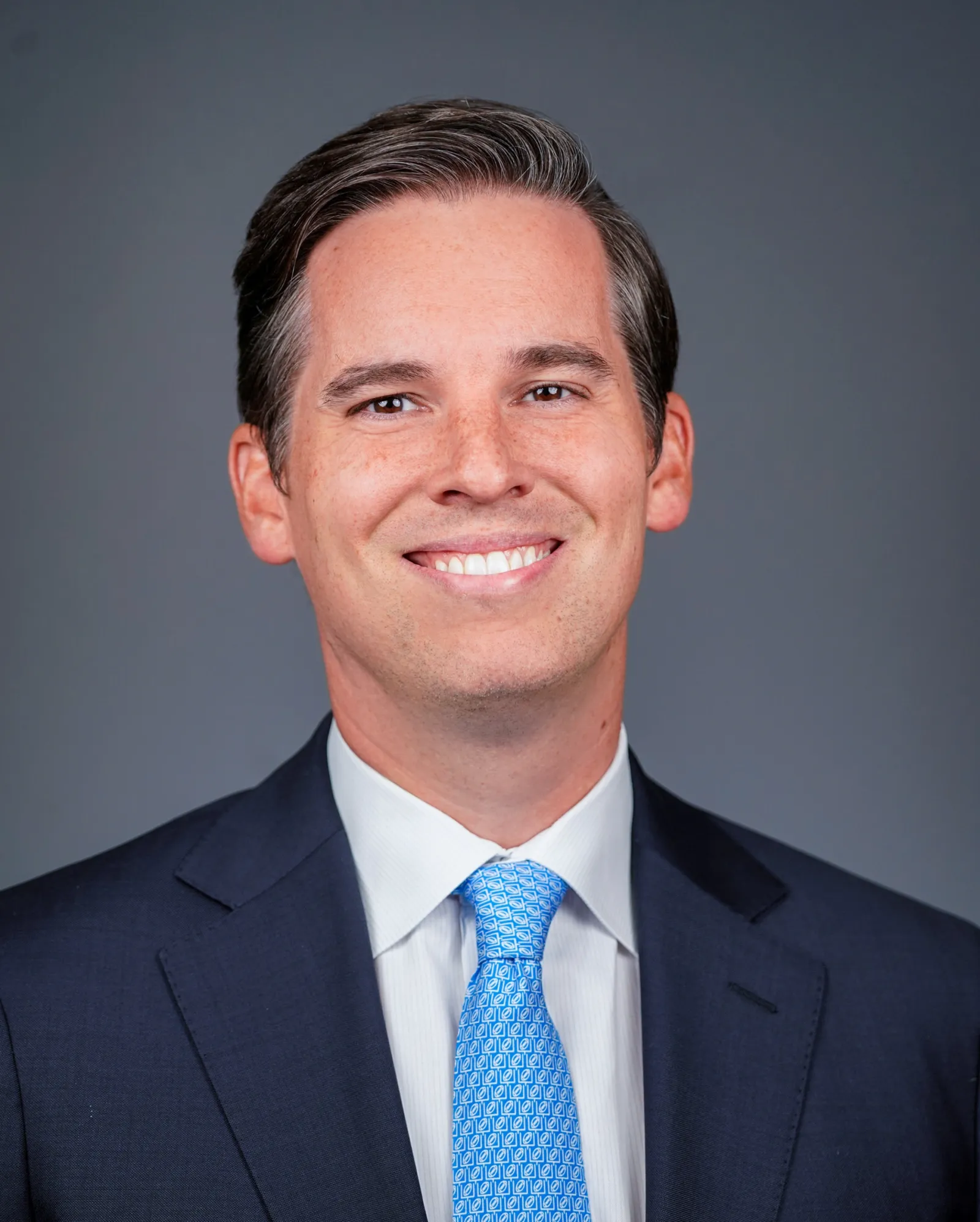
Tim Powers, vice president for government relations and policy development at the National Association of Independent Colleges and Universities
Federal higher‑education policy is undergoing its most dramatic transformation in decades, with changes coming July 1 that will evaluate specific programs solely by their graduates' earnings and institute caps on graduate-student borrowing using federal loans.
"The sole metric on whether a program is deemed worthy of federal investment [will be] earnings," Tim Powers, vice president for government relations and policy development at the National Association of Independent Colleges and Universities (NAICU), told a near-capacity audience gathered in Old Library on Tuesday, March 3. "Not whether students are paying back loans, not whether they're gainfully employed, not whether they had a wonderful academic experience — just how much money they make."
He then added: "You’re a women’s college. Is there a wage gap in this country? Yes. That's not accounted for in this metric."
Powers' appearance was part of the series, Current Topics in Higher Education, organized by the president’s office. In her introduction, President Wendy Cadge described NAICU as "our eyes, ears, and voices in Congress." She noted that Powers brings "a wealth of experience in government relations, policy development, and strategic advocacy."
Here are some of Powers' key points:
New approach to federal oversight
In a change that Powers called "the great unbundling," federal oversight will no longer evaluate institutions holistically. Instead, it will focus on program-level accountability, judging each undergraduate major and each graduate program separately. And those assessments will be based solely on graduates' earnings.
For bachelor's programs, the earnings of graduates four years after completion will be compared to the earnings of 25‑ to 34‑year‑olds in the same state who do not hold a college degree. Powers noted the obvious challenges: early‑career earnings are volatile, vary by geography, and do not reflect the long‑term value of a degree.
Graduate programs face a different comparison group: bachelor's degree holders in the same field. This, he warned, disadvantages fields where graduate study is a stepping‑stone to long‑term careers with delayed earnings.
If a major or program fails the earnings test for two out of three years, it loses access to federal loans.
"About 90% of all graduate programs are not considered professional degrees in the eyes of the federal government," Powers said. "For Bryn Mawr, according to federal data, not a single one of your 15 graduate programs qualifies [as professional]."
Graduate students in professional programs will be allowed to borrow up to $50,000 per year and $200,000 total; non‑professional programs will be capped at $20,500 per year and $100,000 total. Powers warned that this could reduce access for students without strong credit histories and may force institutions to seek state‑level lending solutions.
Changes in policymaking
In an earlier world, Powers said, Congress would debate higher‑education policy holistically, considering how changes affect different types of institutions. Instead, most major policy shifts now arrive through massive, last‑minute spending bills.
Because these provisions are inserted into trillion‑dollar budget bills, the Department of Education is left to interpret and implement vague statutory language via a negotiated rulemaking process. "There is no blueprint," Powers said. "The policy doesn’t make a whole lot of sense because they just passed it as part of this big bill."
This dynamic, he argued, has produced sweeping changes without debate, consultation, or clarity — changes that will reshape how colleges operate and how students finance their education.
Colleges need to be proactive
Powers urged institutions to prepare proactively. His recommendations included:
Conducting program‑level earnings stress tests to identify vulnerabilities.
Auditing enrollment elasticity, anticipating how families may react to new borrowing limits.
Exploring state‑based lending partnerships to fill financing gaps.
Developing program‑level dashboards for boards and department chairs to monitor risk.
"These changes are moving very quickly," Powers said. "We are in a data vacuum, and we need to be ready."
Related News
GSSWSR Dean Submits Comment on Federal Loan Rules Affecting Social Work Students
As the Trump Administration seeks to cap social work students' access to federal loan programs, Bryn Mawr has joined advocacy efforts to affirm social work as a professional field and that restricting access to federal loan options will further deter prospective students from entering an already strained workforce pipeline.