From Helen Keller to Skibidi Toilet: What is 'text?'
April 8, 2026
Some three dozen scholars from Bryn Mawr, Penn, Clemson, and elsewhere met on campus recently to explore what constitutes "text," from textiles and ink to bits and bytes, and from hand-scribed scrolls and printed books to the internet sensation Skibidi Toilet, something that only Gen Alpha can truly appreciate.
So, just how does one describe the Text and Textuality Symposium?
"Epistemologically expansive?" suggested Jamie Taylor, professor of literatures in English and convener of the two-day gathering.
"Bryn Mawr was founded for women to conduct creative and intellectual work unfettered by the intellectual and social constraints operative elsewhere," she added. "There's no 'textual studies' program at Bryn Mawr, but we showed how 'text' brings together a huge range of scholars, artists, and educators."
Presenters included a curator of printed books and bindings who proposed a "Unified Theory of Scriniumatics" (more on that later); a Bryn Mawr assistant professor of literatures in English, Alex Alston, who drew conceptual parallels between property fences and the organization of books into chapters; and Bryn Mawr art historian Sylvia Houghteling, who shared research on the physical relationship between texts and textiles, including applying turmeric's anti-microbial and anti-fungal properties to preserving manuscript pages.
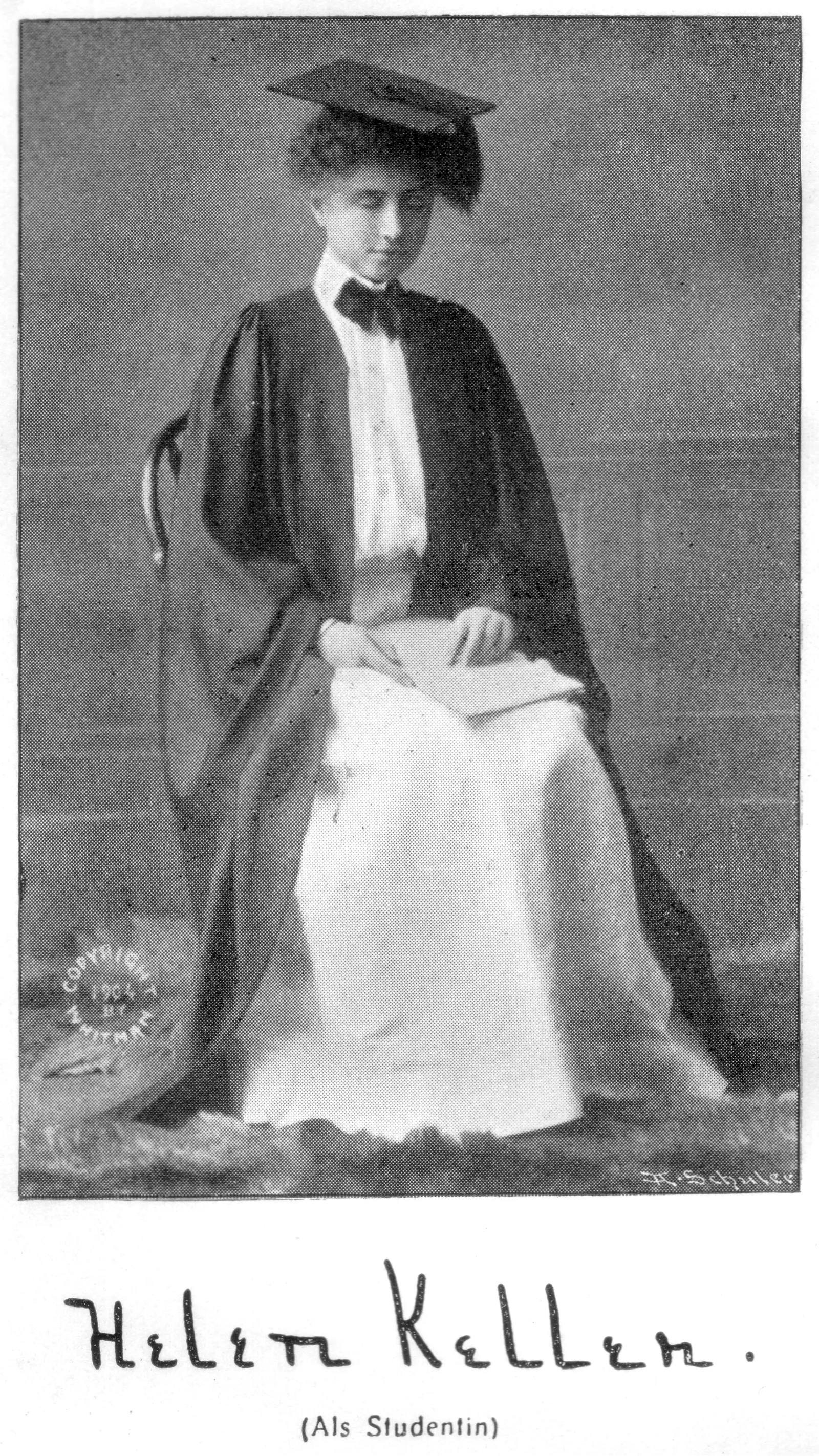
Photographer Whitman, Public domain, via Wikimedia Commons
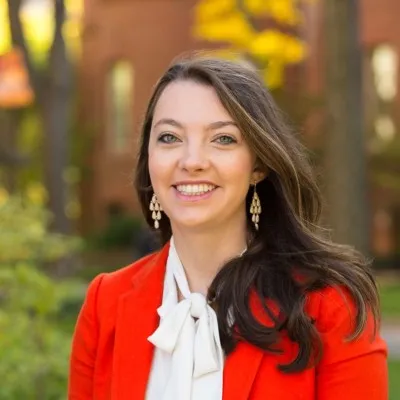
Clare Mullaney '11, now an assistant professor of disability rhetorics at Clemson, talked about how an ignorance of how text was created in the pre-digital world contributed to the #HelenKellerWasntReal and #HelenKellerWasFake trending topic on TikTok in 2020.
"Hearing and sighted teenagers were incapable of understanding that a deaf and blind woman could be capable of communication," Mullaney said. "These 30-second videos supplanted years of archival documents that lay testament to Keller's literary career — hand-written letters made with a writing plate, typescripts marked with her teacher Anne Sullivan's hand, and Braille notations taped over ink print."
But all may not be lost. Literary proficiency and critical engagement are surviving the digital revolution, claimed Jesse Erickson, curator at The Morgan Library & Museum in Manhattan. Erickson argued for his theory of "scriniumatics" -- from the Latin "scrinium" (a cylindrical container used in ancient Rome to hold papyrus rolls) and "matic" (action).
According to Erickson, Gen Alpha is applying the same skills to the digital world as earlier generations did to print. When his son came home from school one day complaining about the length of a reading assignment, Erickson asked him about the lore of his favorite internet meme. Erickson's son then gave him "an incredibly long recitation" of the character’s backstory.
Among Erickson's examples was "Skibidi Toilet," an animated YouTube series featuring singing human heads emerging from toilet bowls. YouTube comments include "You have set humanity back nearly 50 years" and "Good luck, future historians," but Erickson said he is skeptical of the current discourse that things like Skibidi contribute to a decline in literacy and critical thinking among young adults.
"We do not need to toss away the digital experiences but instead encourage kids to apply the skills they are using online to print," Erickson said.
While Erickson explored contemporary models of engagement (including the lowbrow and ludicrous), Whitney Trettien, an associate professor of English at Penn, turned to 18th-century technologies in her closing keynote, "Punched Holes & Piano Keyboards at the Origins of Digital Text."
Trettien focused on Friedrich von Knauss' 18th-century writing automata, which used clock mechanics to dip a device into ink and "write" a message. While it was an exciting performance piece for an 18th-century audience, Trettien sees it as the beginning of our own interfaces between handwriting and text, such as computer keyboards or texting features on a cell phone. Her question: "What are we making invisible in our own systems of textual production?"
"The vibrant conversations and relentless, caring mentorship I experienced as a student at Bryn Mawr have shaped and sustained so much of who I am and how I teach."
–Clare Mullaney '11, Assistant Professor of Disability Rhetorics at Clemson University
After the symposium, Mullaney, the Clemson professor and Bryn Mawr graduate, said: "It was an honor to be invited back to campus to present at the symposium. The vibrant conversations and relentless, caring mentorship I experienced as a student at Bryn Mawr have shaped and sustained so much of who I am and how I teach. I don't know what drew the 17-year-old me to the magical place that is Bryn Mawr, but I do know I couldn't have seen an academic path for myself had I not encountered the brilliance of fellow students and faculty."
Added Taylor, the symposium convenor: "We tend to work within our own areas of expertise, but to have an opportunity to think across areas of specialization is vital for scholarly innovation. Dismantling boundaries between scholarly and practical knowledge almost never happens on college campuses. But working with folks to understand an object of analysis from different perspectives energizes and revises how we think about the things we know so well."