From Joyce to Alaska: A Russian Scholar’s Expanding Inquiry
April 15, 2026Lini S. Kadaba
Bryn Mawr College Russian scholar José Vergara tried to read James Joyce’s tour de force Ulysses in high school and gave up. Luckily for his field, he had another go in college and made it through, eventually focusing his doctoral dissertation at the University of Wisconsin on the influence of Joyce on Russian writers.
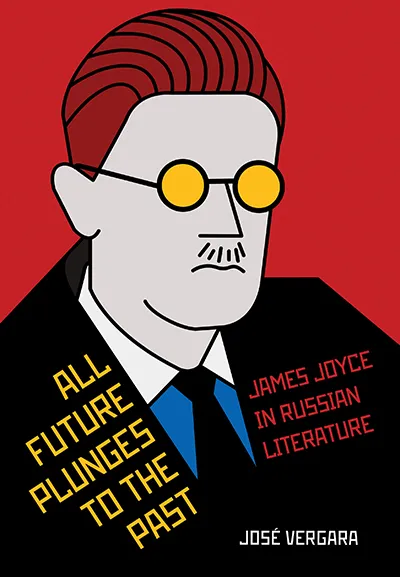
“I’ve read it several times,” says Vergara, chair of Russian who authored the 2021 book All Future Plunges to the Past: James Joyce in Russian Literature. “I came to appreciate it more and more. Ulysses is most fun, at least for me, in dialogue with someone else.”
His undergraduate read at the University of Missouri, he notes, was part of an independent study in which the Russian studies major compared Joyce’s Dublin-set work to Russian novelist Andrei Bely’s Petersburg. Several years later in his book, Vergara illuminates the appeal of the Irishman — especially his ideas on lineage and belonging and his use of language — to Vladimir Nabokov, Sasha Sokolov and other Russian novelists.
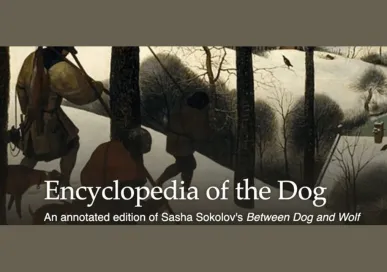
Since then, the associate professor of Russian on the Myra T. Cooley Lectureship in Russian Studieshas expanded his research to take in contemporary Russian prison writing; a digital annotatededition of Sokolov’s second novel Between Dog and Wolf; and the continued influence on culture and literature of mostly 19th-Century Russian colonialism in Alaska.
The talk, Vergara says, is based on his still early days investigation of different Russian texts and artworks and the ways they represent Alaska.
One example Vergara points to is a 1799 song by the colonial governor of Alaska, depicting the territory as untamed, a wild west for Russia to conquer and reap the benefits of, while giving glory to the Russian state and its tsar.
That same idea, Vergara says, continues as a theme in more modern works. Inthe 1988 bookDivided Twins: Alaska and Siberia, author Yevgeny Yevtushenkoargues that Alaska and Russia are divided parts of a whole that should be united. “The book flattens differences,” he says. “It suggests thatAlaska is part of Russia. That message is still being conveyed more than a century after that song.”
It is a message with parallels to Russia’s justification for invading Ukraine, making this historical understanding ever more crucial, Vergara adds.
“The logic, the framing, the aesthetics of that song, the Divided Twins book, a number of texts I’m looking at are so similar to what is said today by Russian nationalists,” he says, “that Ukraine is the brother of Russia. They belong together. Again, it’s flattening differences, the nuances, the individuality of different people and communities. It is part of this very long, unfortunate tradition of Russian colonialism.”
Besides his interest in Russia’s ties to Alaska, Vergara is currently busy with a manuscript on post-Soviet works with carceral themes. His project was inspired by a course he developed at Swarthmore, where he was a visiting professor before joining Bryn Mawr in 2021. It focused on “how writers have grappled with the experience of being incarcerated or living in a society that has this tragic history of incarceration.” Alongside that, he and his students at both Swarthmore and Bryn Mawr have participated in the Inside-Out Prison Exchange Program, which was started in 1997 to create transformative learning experiences for people inside and outside of jail through collaboration and dialogue.
Sibelan Forrester, a professor of Russian at Swarthmore College and a colleague of Vergara, says he has a knack for “seeing patterns and then seeking out information about places and phenomena that at first might not seem to be connected. There’s a ‘hard’ sociological and political value to knowing more about cultural differences and habits of self-definition and understanding.”
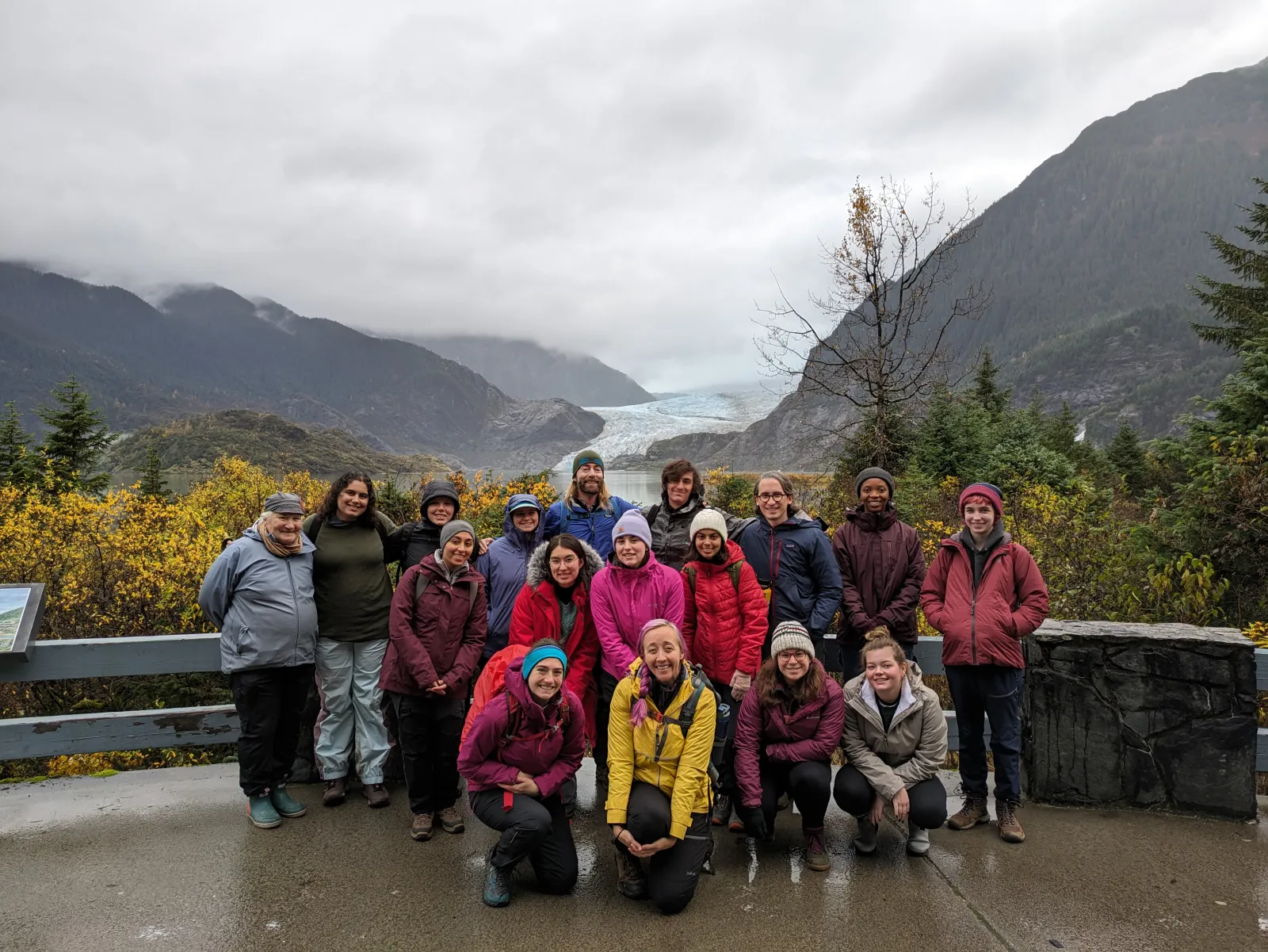
In 2023, Vergara and other faculty members took 15 students on a nine-day trip over fall break to Alaska as part of Bryn Mawr’s interdisciplinary 360⁰ Program.Energy Afterlives, is a cluster of three courses that examines the impact of extracting coal and oil and producing nuclear energy through the lenses of the arts, political science and earth science.
Students and faculty from the Energy Afterlives 360 in Sitka, Alaska.
Vergara, who taught the arts course, explored the ways the three energy sources are represented in literature, music, photography, creative nonfiction and art—the narrative afterlife. As part of the other classes, the Marwters also collected and analyzed geologic samples and examined how Alaskan communities, such as Sitka and Juneau, have responded to the aftereffects of energy extraction.
“We’re covering how these energy sources, these extractions affect us in so many ways, how they influence art, the production, the concepts and ideas,” says Vergara, who will teach in the 360⁰ again this fall. A central theme, he adds, is colonization and “where Alaska fits into the Russian cultural imagination.”
Emma Rideout-Mann’25 of Long Island, N.Y., who went to Alaska as a junior, says the experience profoundly impacted her, especially Vergara’s class that included close examination of art and literature and analysis of the emotions the artists or writers expressed.
"I think about my time in that 360⁰ class in Alaska all the time,” says the full-time lifeguard headed to the Vermont Law and Graduate School to study law. “I was definitely raised in a community on Long Island built to hold up a system that benefits you and a select group of people around you. This 360⁰ and the material we interacted with in José's class forced me to step down from that pedestal … and really see myself within the environment I was in and to consider myself as on the same level as all that which is around me. I never thought about life in that way. It really matters to me now, moving forward as an adult in this world.”
Rideout-Mann, who also took Russian language and the Inside-Out classwith Vergara, says he’s a favorite professor. “I really enjoyed how he speaks to his students as equals,” she says. “He’s José, and I’m Emma. We were able to have the ideal Socratic classroom.”
Similarly, Vergara says he hopes to stimulate students and others attending his lecture to think critically about Russia and Alaska’s history, a history many may not know much about but that carries significance for the world today.
“It’s important to think wider and dig deeper,” he says. “The stories and myths and conspiracies about Alaska are not going away. They are still part of the fabric of certain parts of the Russian cultural imagination and the political geography of Russia.”