

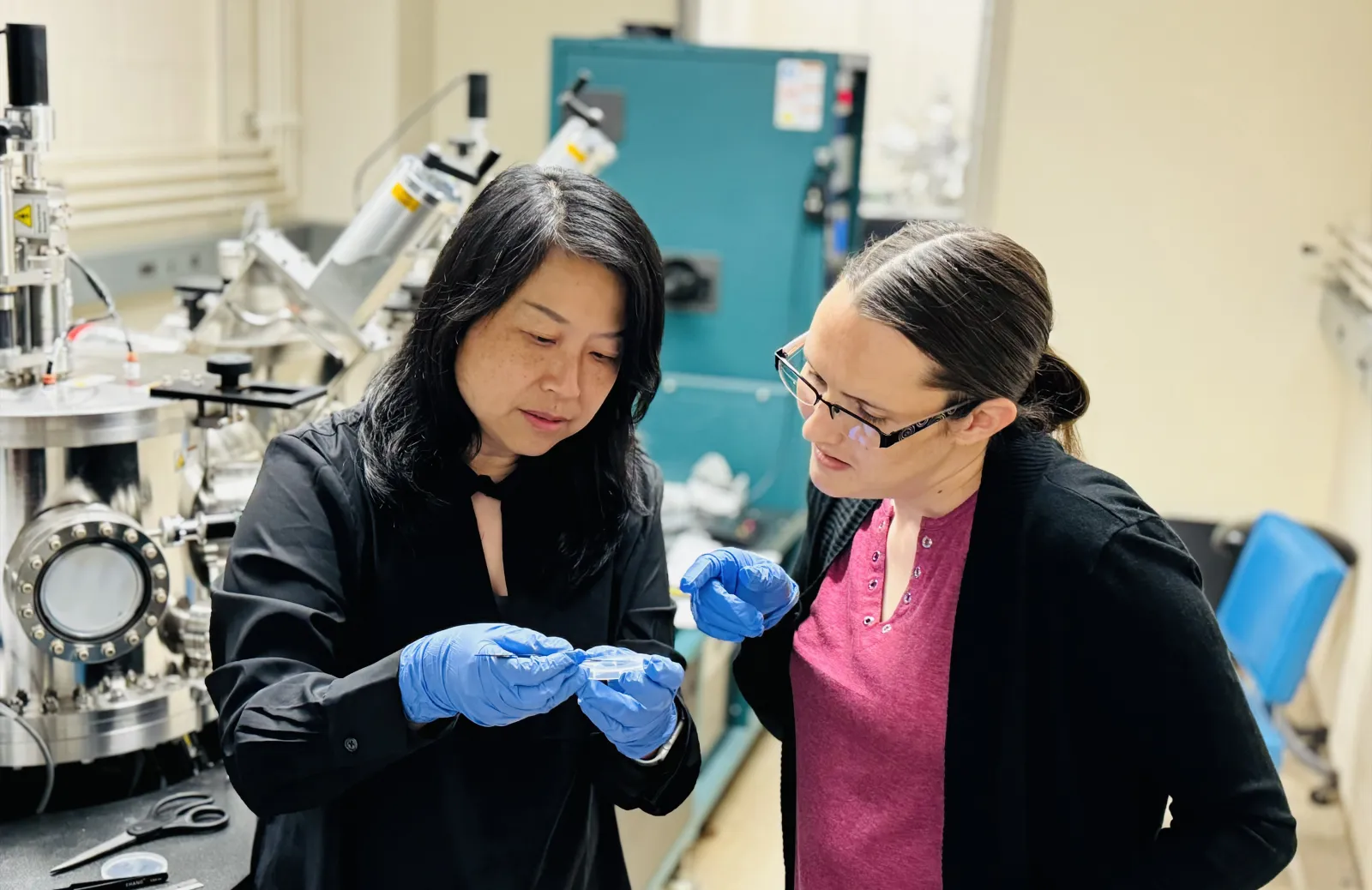
Professor of Physics Xuemei May Cheng has been named a 2025 American Physical Society (APS) Fellow. The APS Fellowship recognizes excellence in physics and exceptional service to the physics community.
Cheng was selected as a fellow "for broad contributions to magnetism and spintronics in nanoscale, soft, and bio-inspired materials; for advancing synchrotron-based techniques; and for exceptional commitment to undergraduate education and mentorship and broadening participation in physics."
She was recommended for this prestigious recognition by the American Physical Society’s Topical Group on Magnetism and its Applications. This honor recognizes an exceptionally small number of nominees, no more than one-half percent of the Society’s current membership, excluding student members. The award reflects the esteem of Cheng’s peer physicists and acknowledges her outstanding contributions to physics.
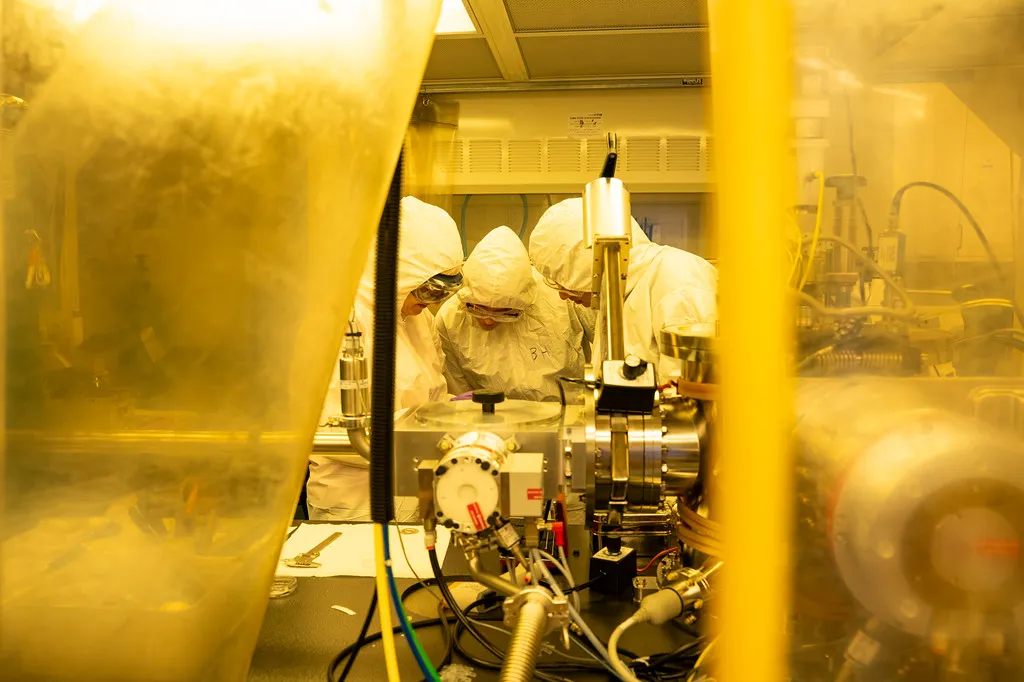
Cheng has made significant contributions to nanomaterials and spintronics, spanning interface magnetism, topological spin textures, synchrotron x-ray applications in materials science, and advanced materials for biomedical and mechanical engineering. Recently, she has expanded her research into quantum materials and quantum sensing. She has published approximately 80 research articles in peer-reviewed journals, such as Science, Nature Physics, Advanced Materials, Nano Letters, and Physical Review Letters. Her research has garnered ~5,600 5700 citations and an h-index of 29 (based on Google Scholar as of 12/10/25), invited talks, editorial invitations, and election to the Advanced Photon Source Users Organization Steering Committee. She has established a robust and well-resourced research program at Bryn Mawr with support from the College and external grants. She has received more than $6.5M from the National Science Foundation (NSF) to fund her research, including an NSF CAREER award during her second year at the College.
She has engaged about 50 undergraduate and eight graduate students in her research. Undergraduate and graduate students collaborate as dynamic partners in her lab and often participate as co-authors of her publications. Among her undergraduate thesis advisees, 83% have pursued graduate studies at top-tier research universities, with one recognized as a finalist for the prestigious 2018 Apker Award.
QMSEC Center Physics at Bryn Mawr