


Major Moment: Krista Chan '26
"The cities major has allowed me to continue taking classes in subjects that I knew I was interested in but has also pushed me to take classes that I would have never considered taking otherwise."
"The cities major has allowed me to continue taking classes in subjects that I knew I was interested in but has also pushed me to take classes that I would have never considered taking otherwise."
Krista Chan '26 is a senior Tour Guide, a member of the Dorm Leadership Team, a teaching assistant, and a cartoonist for the Bi-College Newspaper. In a new Major Moment, she tells us about her academic journey to declaring a major in Growth & Structure of Cities.

What is your major(s), and how did you discover it at Bryn Mawr?
My major is called the Growth and Structure of Cities, a major that is quite unique to Bryn Mawr. I discovered the major by taking an introduction class during the spring of my freshman year. I did not really know much about the department or the content that I would be learning, but I had a lot of friends who took Cities classes and really enjoyed them; some who wanted to pursue architecture, others who wanted to work in affordable housing or as urban planners. While I was unsure what I wanted to do, I decided to try a cities class out myself and ended up loving the content.
Did you enter college knowing what you wanted to major in? How have the classes you’ve taken at BMC either confirmed your interest in the major or surprised you with a new interest?
I entered college thinking that I wanted to major in either economics or history. While I obviously did not end up majoring in either of those, the cities major has allowed me to combine these interests and utilize both disciplines for my studies as a cities student. Despite not majoring in economics, I have been able to take many economics courses, like public finance and behavioral economics, that are able count towards my cities major. The cities major has allowed me to continue taking classes in subjects that I knew I was interested in but has also pushed me to take classes that I would have never considered taking otherwise. Courses like “The History of Modern Architecture” surprised me with a new interest in architecture and the intersection of art, culture, and the built environment.
"Despite not majoring in economics, I have been able to take many economics courses, like public finance and behavioral economics, that are able count towards my cities major."
Favorite class you’ve taken for your majors?
While I have enjoyed many of the classes I have taken for my major, one of my favorite classes has been “Finance, Race, and Space”. It was a smaller, discussion-based class where we examined the intersection between financial systems, the afterlives of slavery, and real estate. This course forced me to reexamine economic systems and their impact on urban environments and introduced me to many new concepts, theories, and academic scholarship that fell under the discipline of Black studies. One of my favorite aspects of the class was getting to know my classmates and my professor through seminar-based discussions. By the end of the course, I felt I had gotten closer to many of my peers, and we were able to plan an end of the semester breakfast potluck.
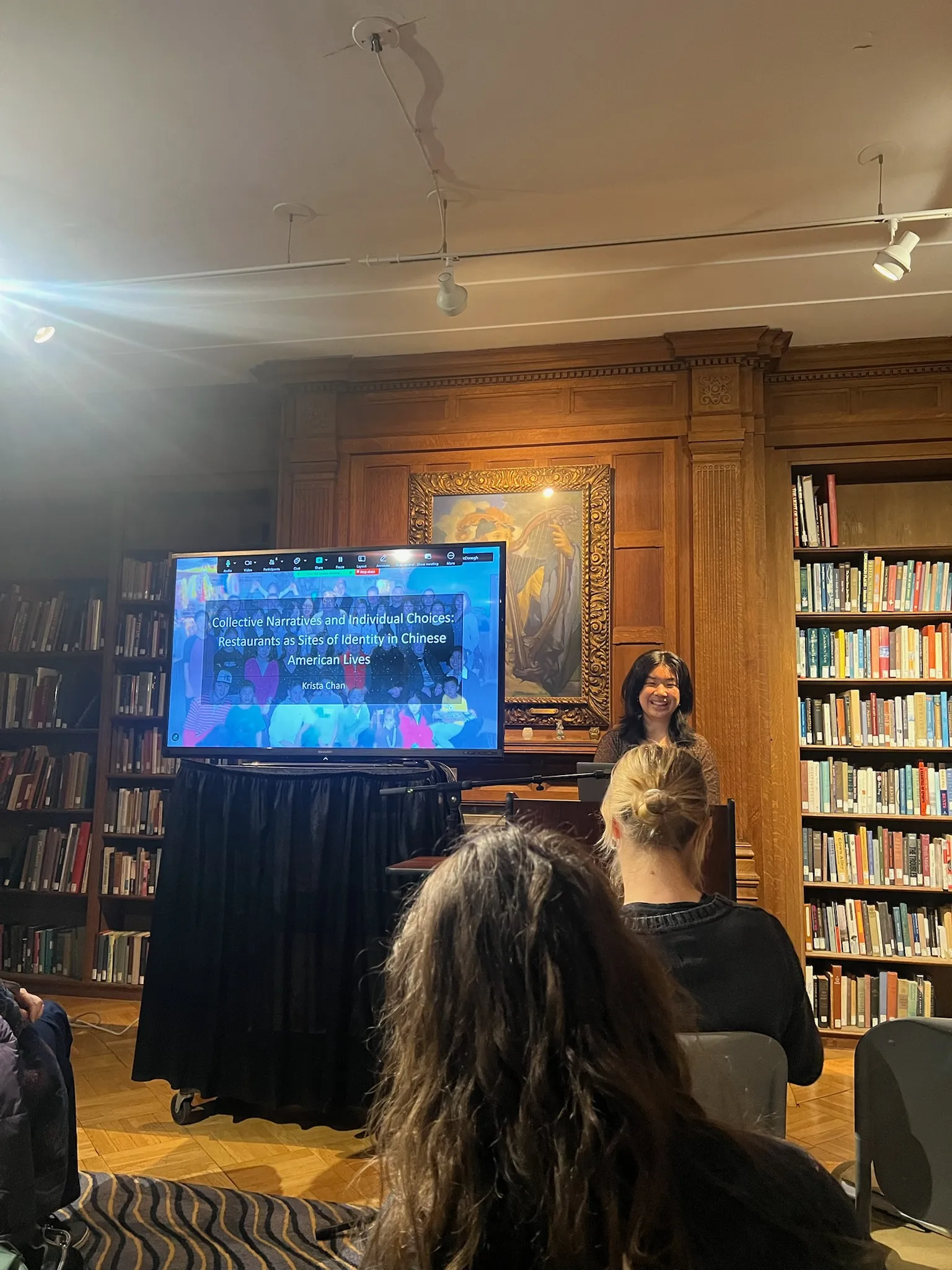
What experiential learning opportunities have you had connected to your academic interests?
I have had the opportunity to apply the knowledge that I have gained from my cities courses at two different summer internships at organizations in Boston’s Chinatown. In the summer of 2024, I was able to work at the Chinatown Community Land Trust with support from Bryn Mawr’s Summer Internship Funding Program. I helped plan out different events and projects that dealt with placemaking in Chinatown. This past summer, I worked at the Asian Community Development Corporation developing and teaching curriculum and activities under the theme of community safety and urban to high school students. My interdisciplinary background allowed me to pull knowledge from all different disciplines like history, fine arts, and anthropology, in addition to urban studies.
What advice would you give to a first year in the process of declaring a major(s)
Some advice I would give to a first year in the process of declaring a major is to take your time and explore as many different classes as you can. The beauty of a liberal arts education is gaining knowledge in all sorts of disciplines and learning how to utilize this vast array of understandings to different courses and life beyond Bryn Mawr. And once you declare your major, continue exploring all the different courses Bryn Mawr has to offer!

Chat with a Current Student
Questions only a Bryn Mawr student can answer? Connecting with current students is one of the best ways to learn more about classes, student life, and all the fun things to do around campus. Send your first message to any of our students through our chat platform below—they are excited to speak with you!