

Chemistry
Why Study Chemistry at Bryn Mawr College?
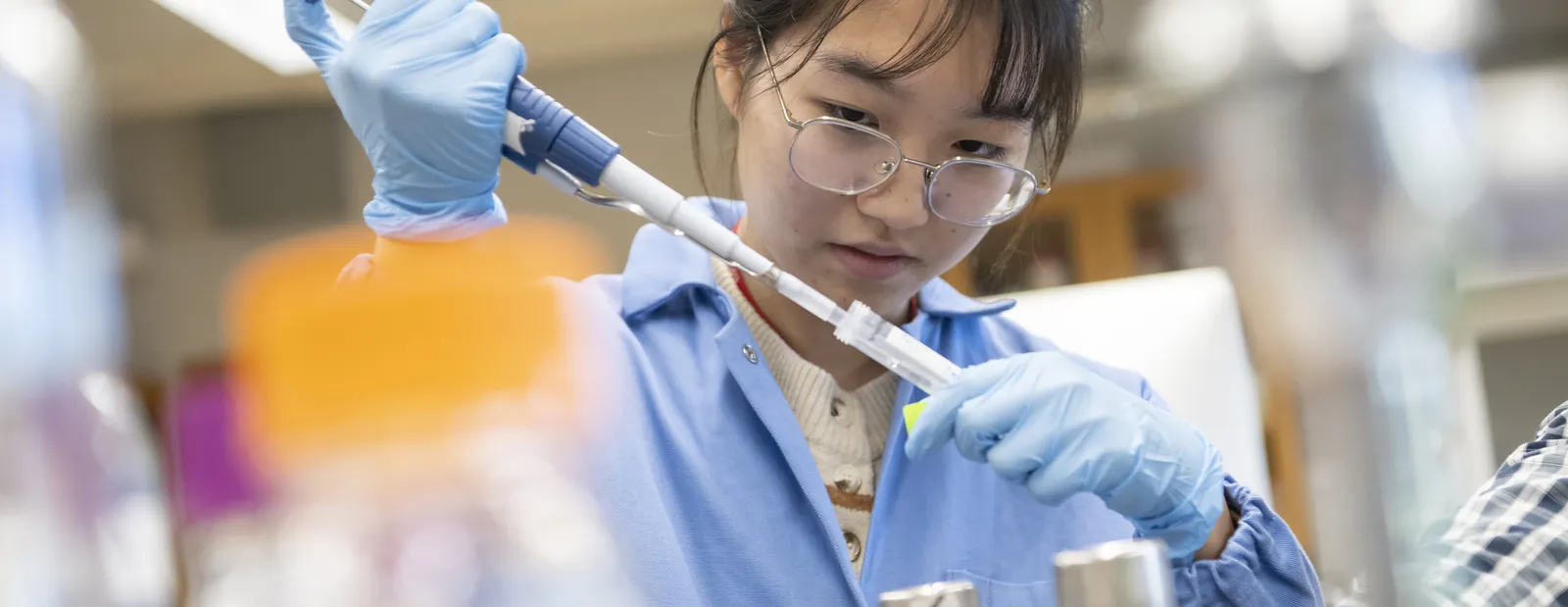
Our goal in the chemistry department is to train you to be a successful scientist. You will learn to understand and explain chemical reactions, structures, and behaviors. We believe that applying chemistry provides practical solutions to real world problems.
Courses of Study
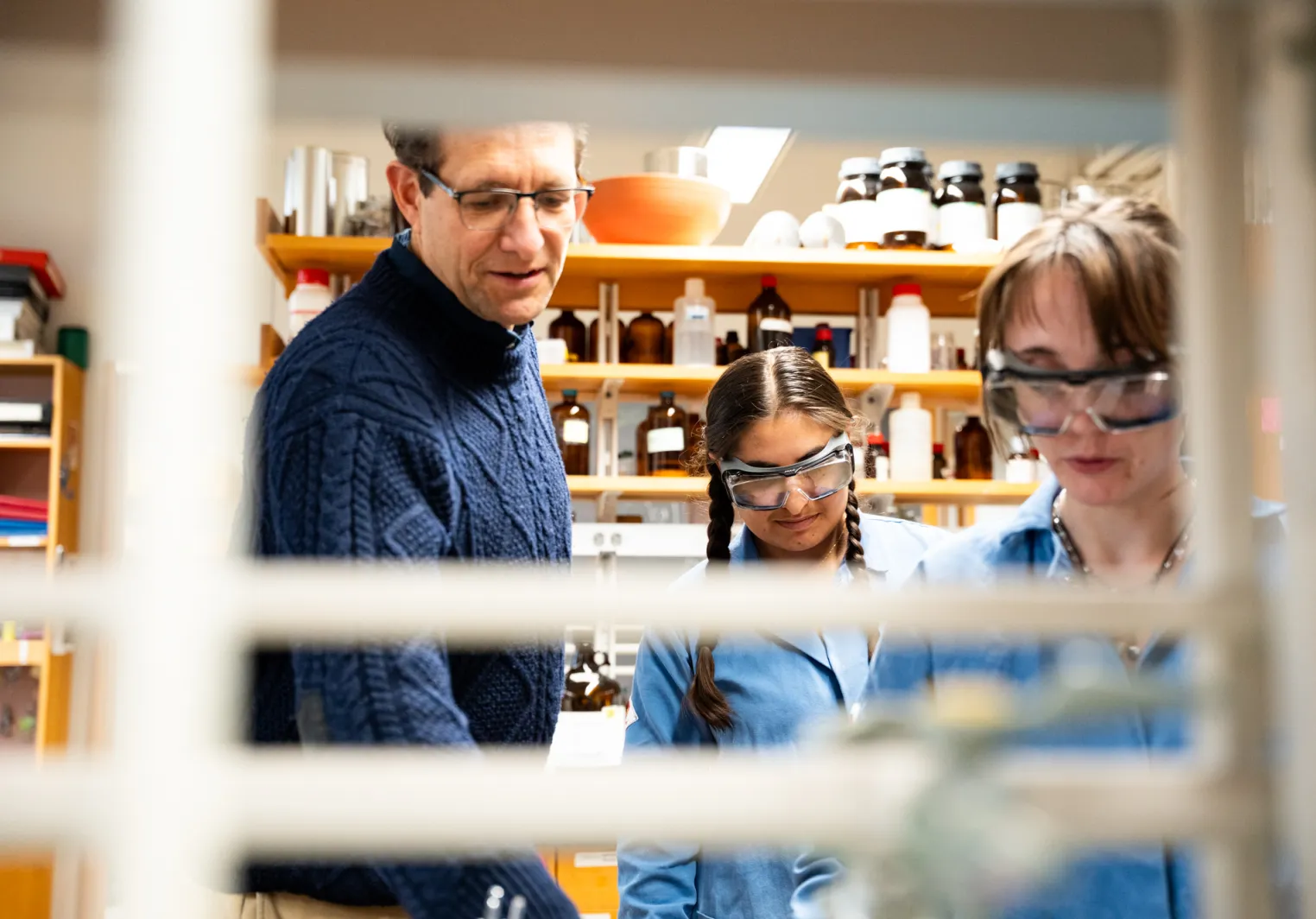
There are several options for majors, minors, and concentrations in the Chemistry program at Bryn Mawr College.
Chemistry Majors With Concentrations
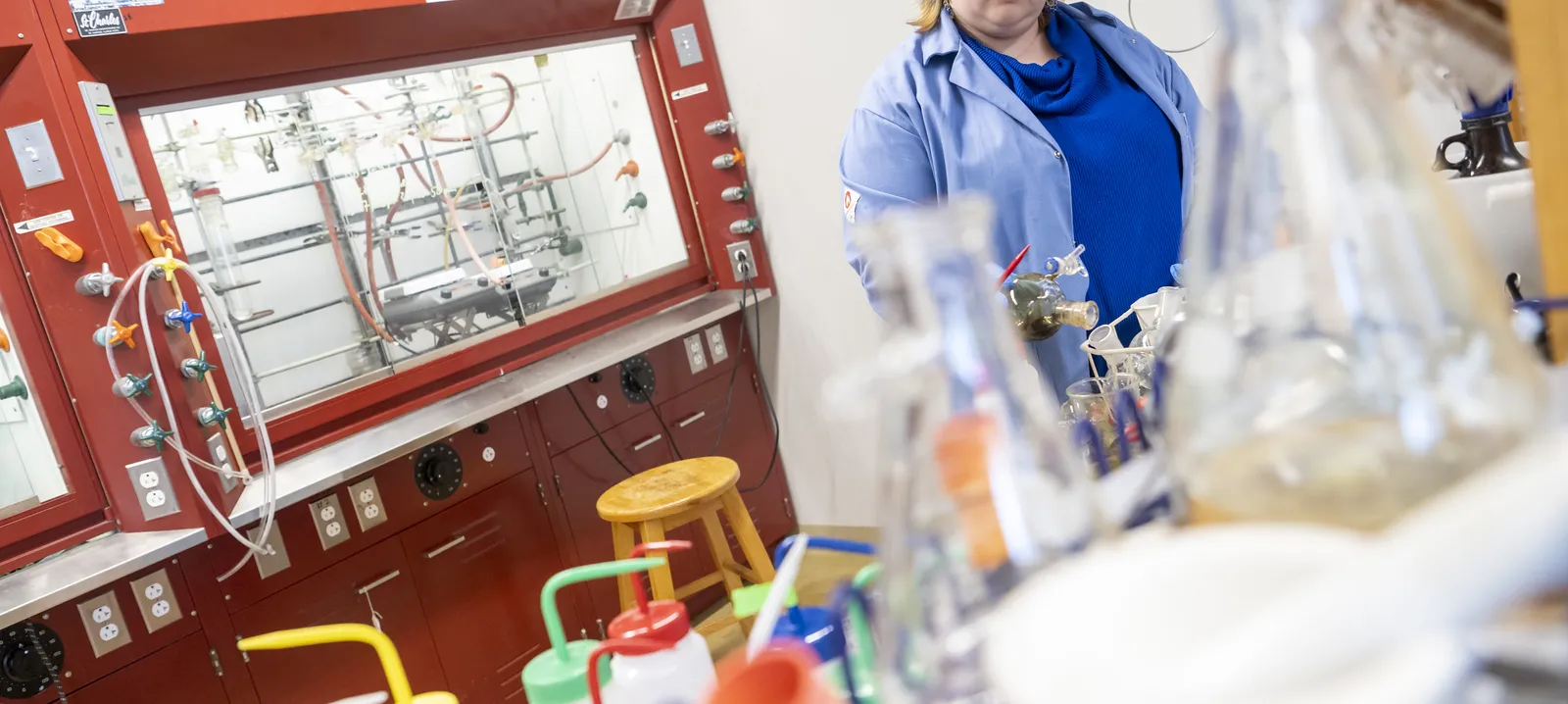
Juanita Beenyi '26"It's one thing for professors to teach you. It’s another thing for them to actually believe in you."
Course Highlights
CHEM B103 General Chemistry I
This is an introductory course in chemistry, open to students with no previous chemistry experience. Topics include aqueous solutions and solubility; the electronic structure of atoms and molecules; chemical reactions and energy; intermolecular forces. Examples discussed in lecture and laboratory include applications of the material to environmental sciences, material science and biological chemistry.
CHEM B211 Organic Chemistry I
An introduction to the basic concepts of organic chemistry, including acid-base principles; functional groups; alkane and cycloalkane structures; alkene reactions; alkynes; dienes and aromatic structures; substitution and elimination reactions; alcohol reactivity; and radical reactions. Lecture three hours, recitation one hour a week.
Students' Perspectives
What students are saying about their experience with Chemistry



Faculty Spotlight

Bill Malachowski
Barbara Ramsay 1965 and Robert Ramsay Professor of Chemistry
Professor Malachowski's research interests stretch from traditional areas to bioorganic chemistry. His primary laboratory activities involve building molecules. The goal of his projects is to develop new treatments for cancer and infectious diseases.
A Bright Future for Chemistry Majors
How Chemistry grads are lighting their paths
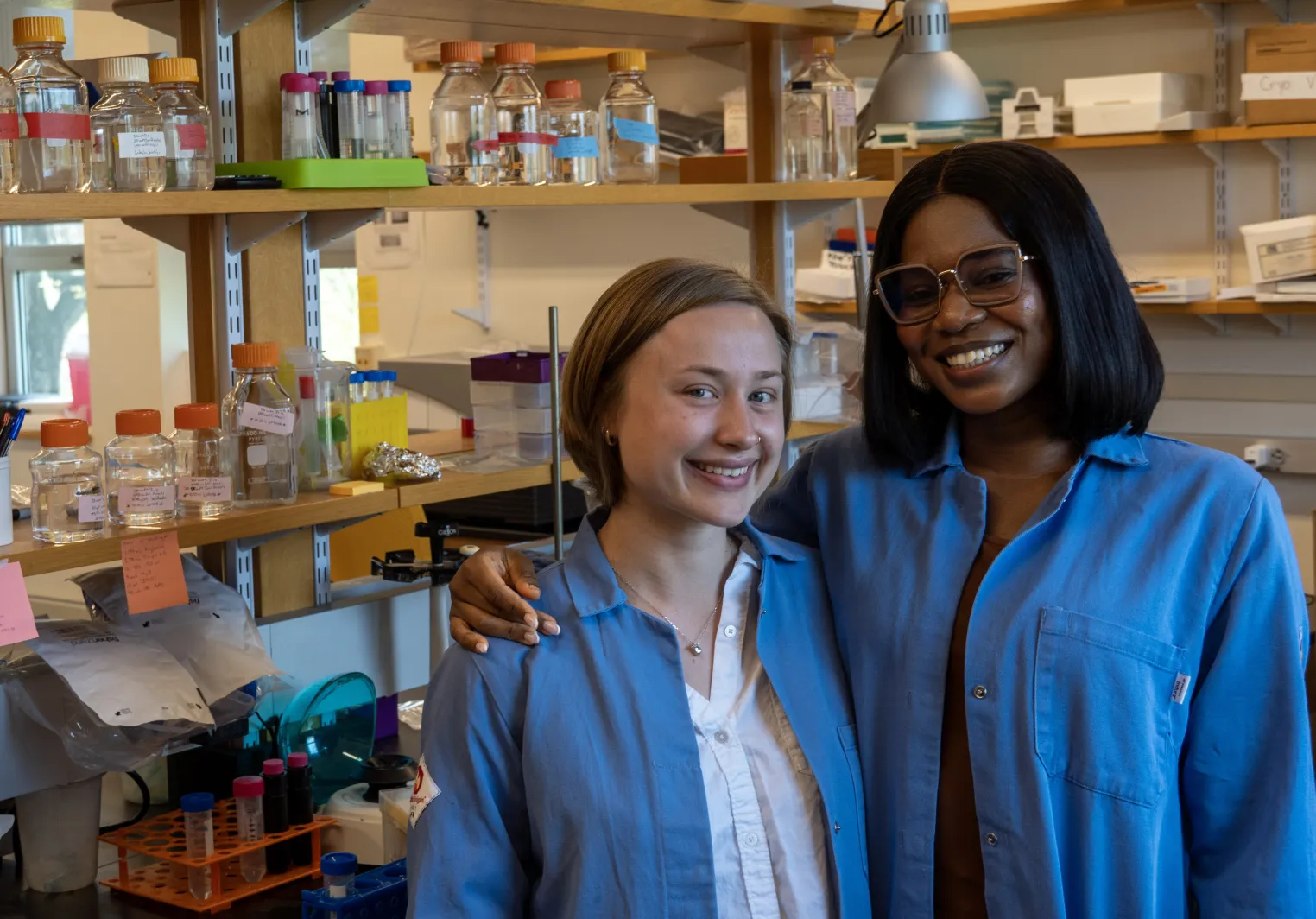
Suli Kamholtz-Roberts '26"Dr. Plummer believes in all of us so deeply. She makes you think you can do anything."
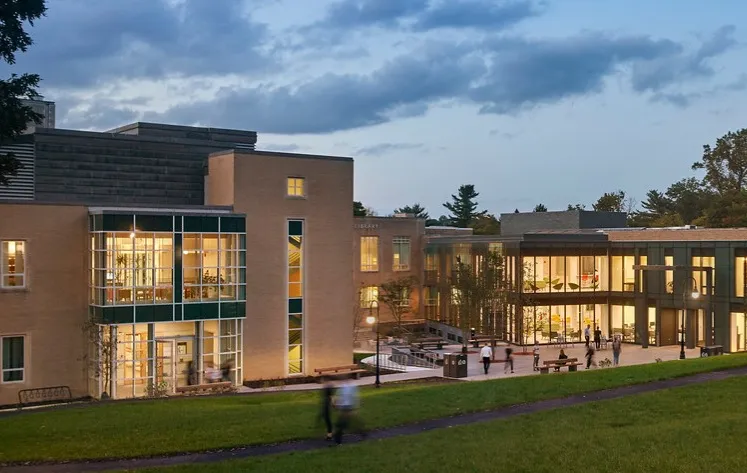
Chemistry Facilities
Research Opportunities
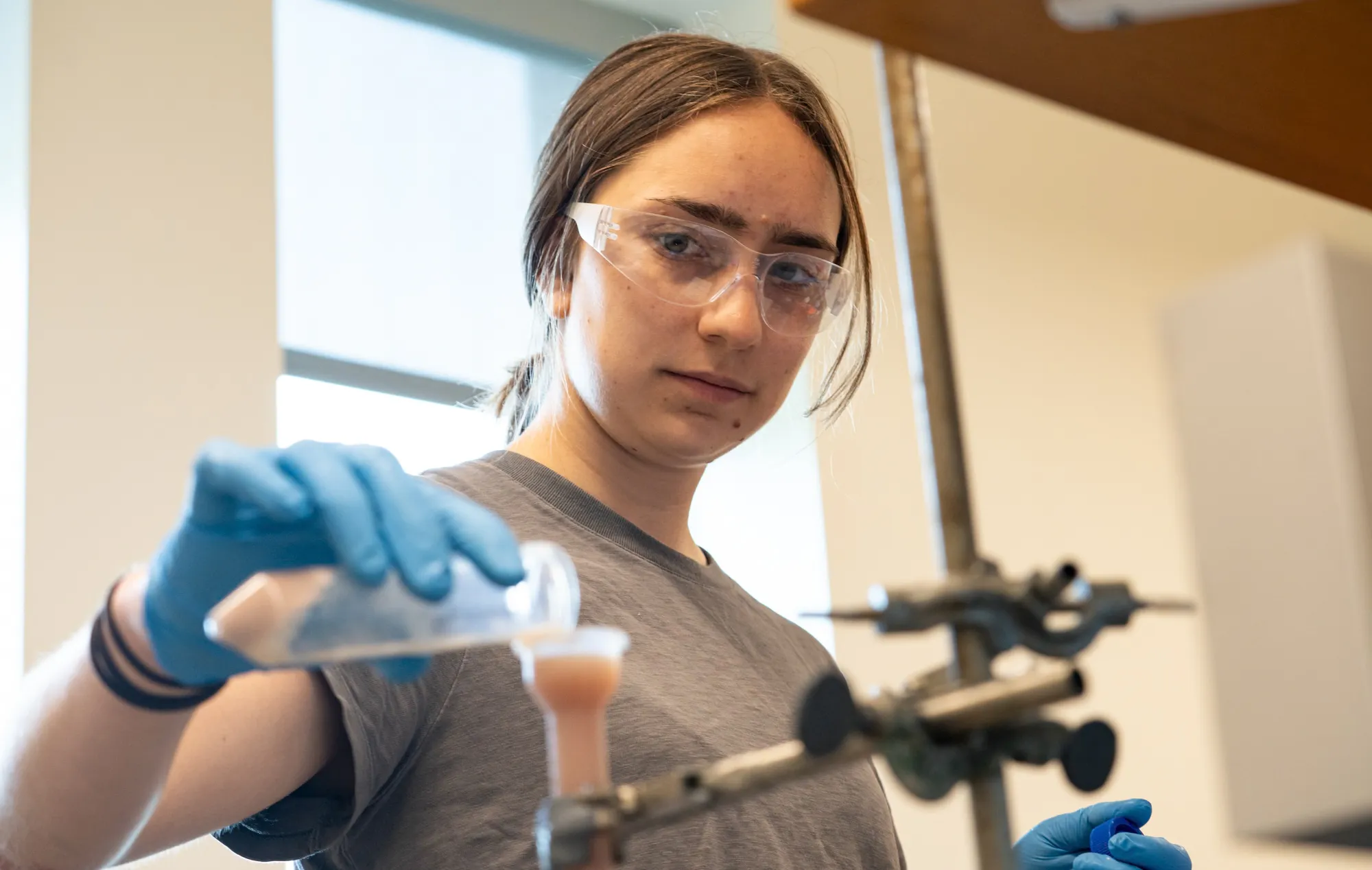
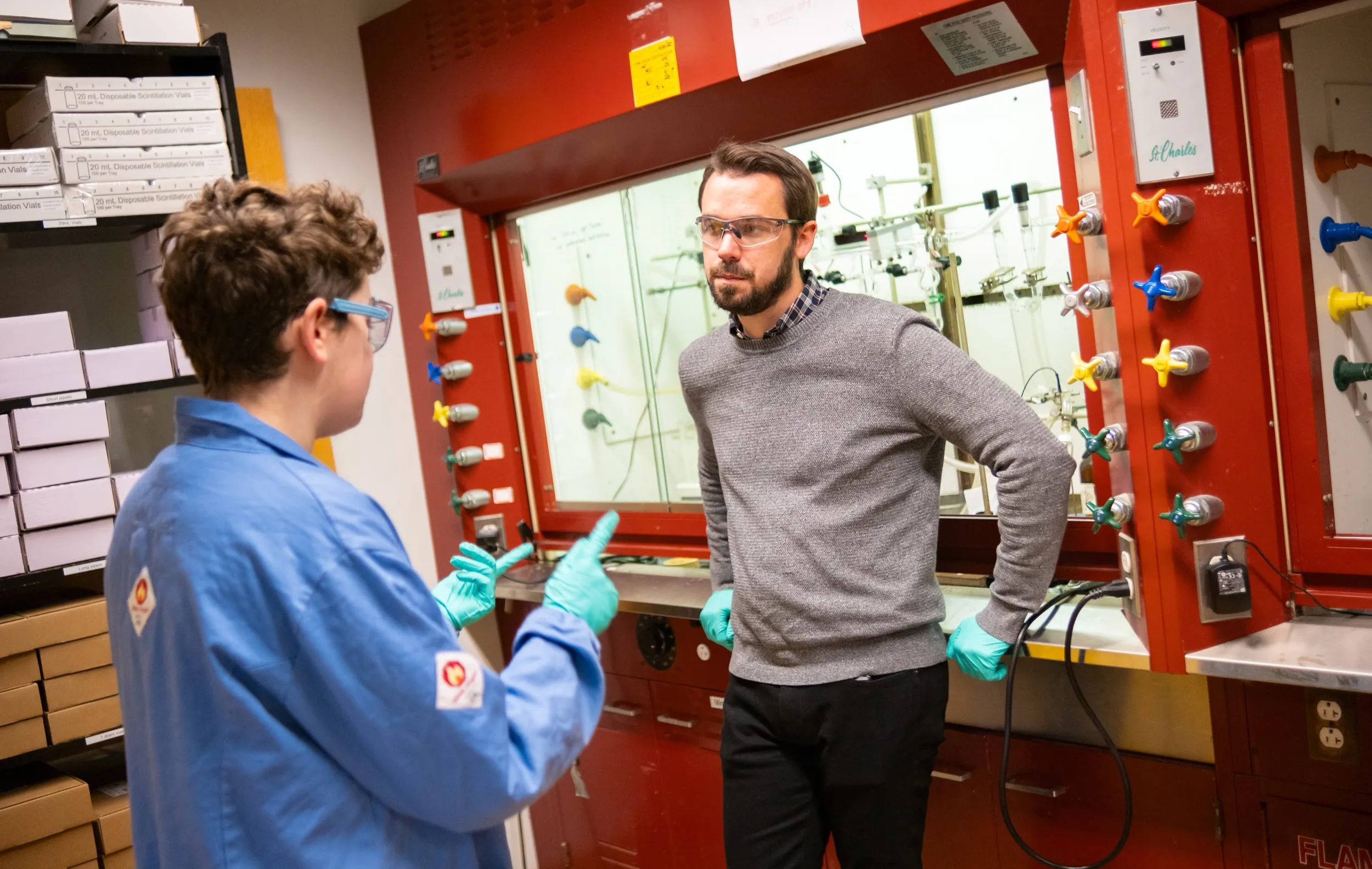
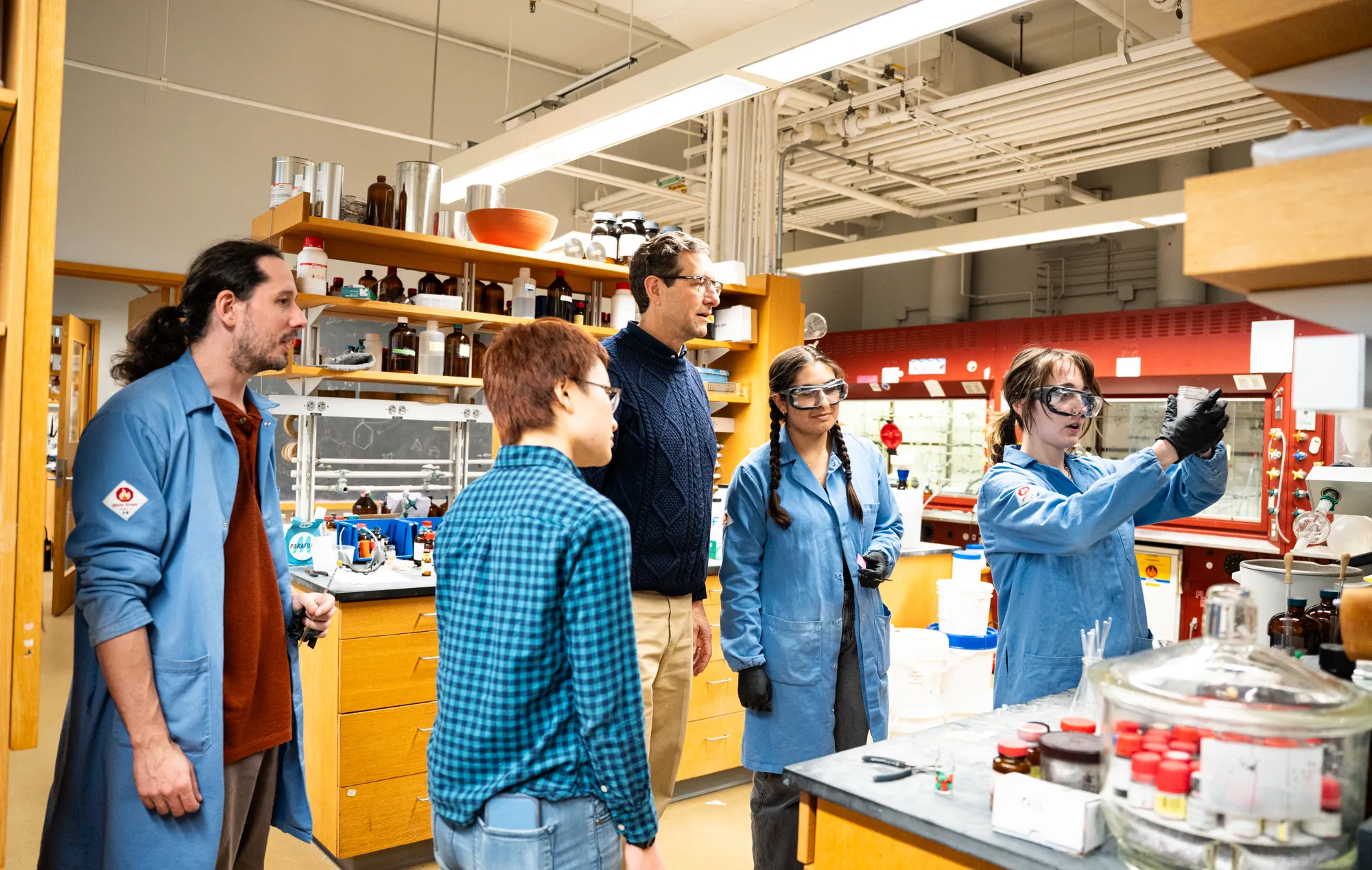
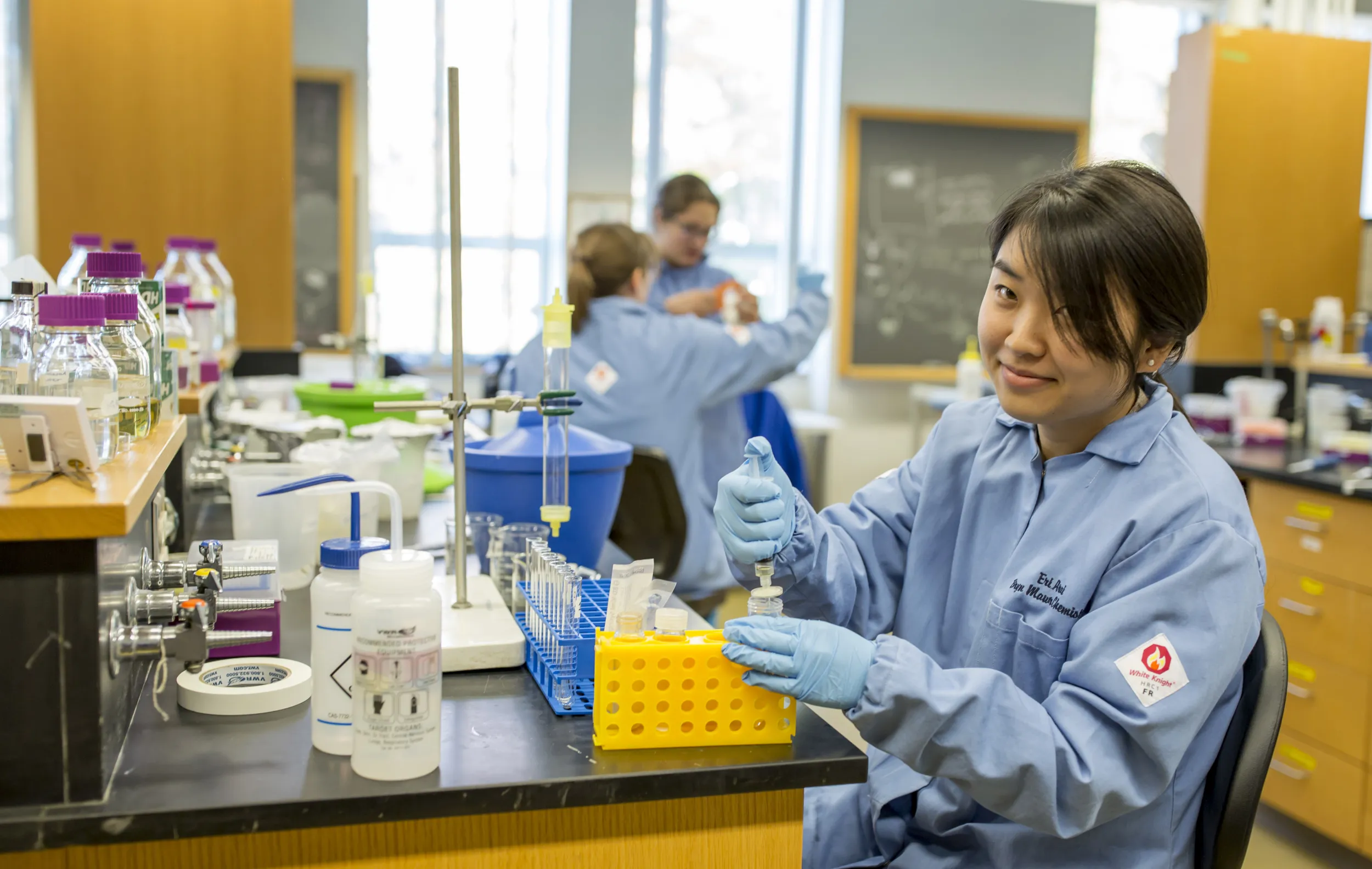
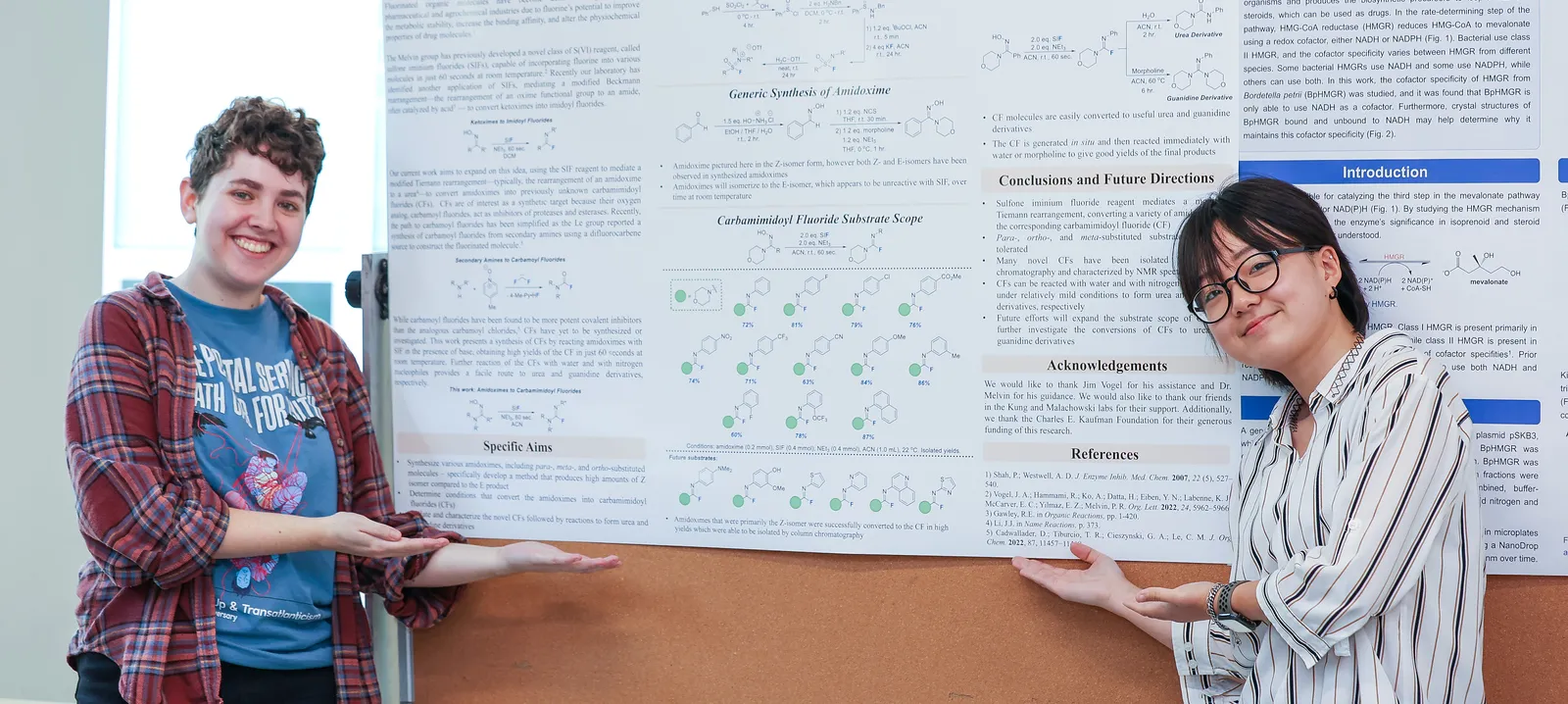
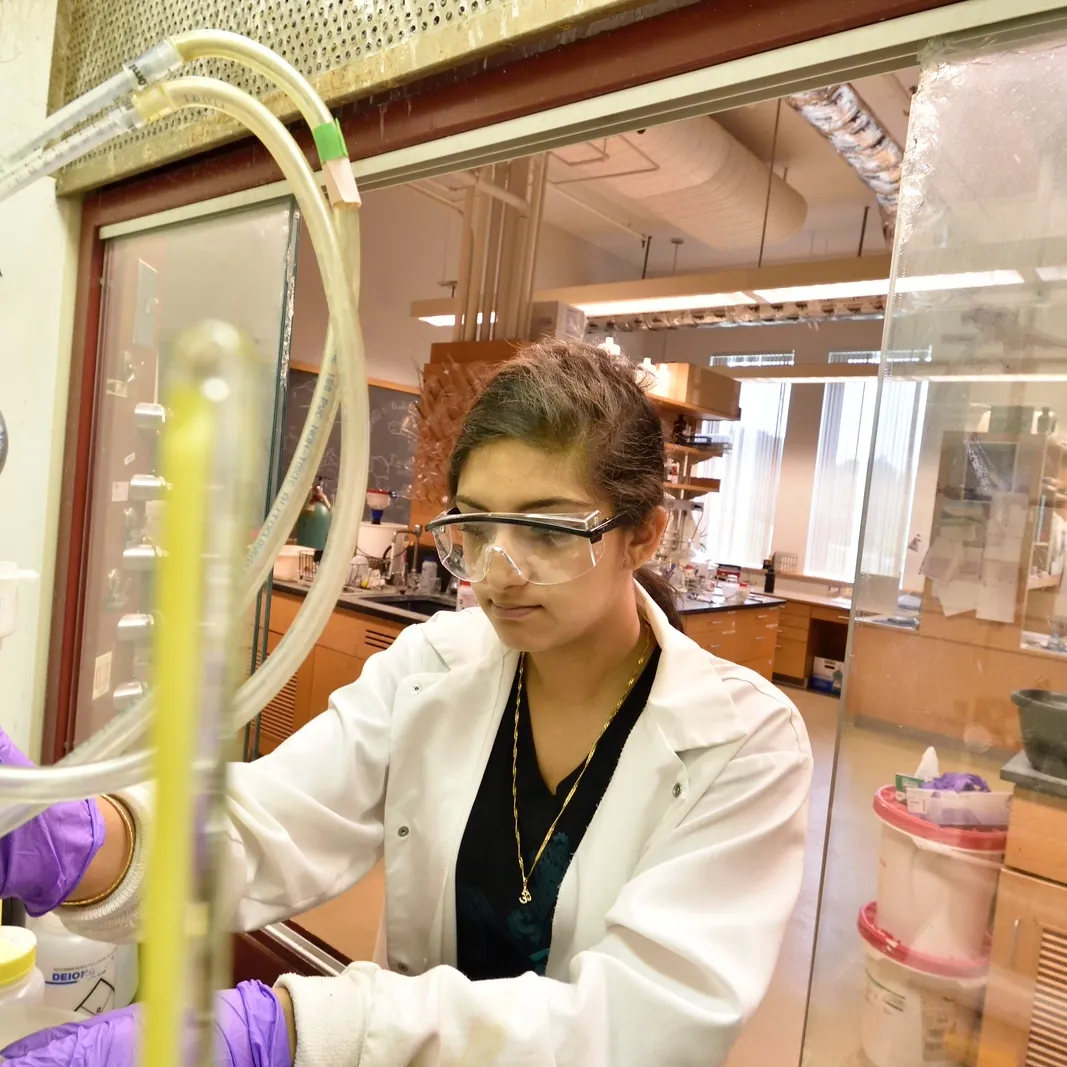
As a chemistry major at Bryn Mawr College, you have the incredible opportunity to do real scientific research while still in undergrad. Our professors and their teams are constantly publishing new research and developing new materials.
The science labs at Bryn Mawr operate year round, and if you're interested in participating in research, talk the professors working on your top interests as early as possible. Summer research grants are each year let students to work on supervised independent research. During the school year, professors take on student lab assistants for their current research projects.
Chemistry Degree FAQ
We find that new chemistry students have lots of questions. Here are the answers to some that we hear frequently:
You must have either completed QSem or met the Quantitative Readiness Benchmark before enrolling in Chemistry classes.
The best person to talk to is Prof. Lisa Watkins, who is the undergraduate advisor for chemistry majors. You can also reach out to other professors to ask questions and discuss your interests.
Most students start research either junior or senior year, but if you're excited to get started and your grades are in good shape, your professors may have a space in the lab for you before that. Summer research stipends are awarded in March, so if you want to do a Summer Science research, talk with your professor early in the semester.
While there isn't an engineering program at Bryn Mawr itself, we partner with several other schools to let you earn a combined Chemistry and Engineering degree. You can participate in the 3/2 program offered in conjunction with the California Institute of Technology. In this program, students complete three years at BMC and then two at Cal Tech, receiving both an A.B. in chemistry from BMC and a B.S. in chemical engineering (or some other engineering field) from Cal Tech. There are other routes to engineering that the major adviser will be happy to discuss with you.
Yes! Check out our biochemistry page here.
Technically, yes. If studying abroad is important to you, we recommend talking about it with your advisor well in advance. Because of the differences in course content between chemistry programs, Bryn Mawr does not accept chemistry transfer credits. This means that your study abroad will not count towards the major. Chemistry majors who study abroad also sometimes miss out on research opportunities because they're not around to apply for them.
For these reasons, we recommend you consider carefully what aligns most with your future goals. If you do decide to study abroad, you will need to make a detailed plan for how you will complete all major requirements at Bryn Mawr.
It depends what your goals for your future are. If you intend to become a chemist or chemical engineer, graduate programs and employers will look more favorably on a deep understanding of multiple branches of chemistry than on completing the basic requirements of two degrees. If you're interested in a career in healthcare, it may be beneficial to complete a double major with biology or biochemistry, or to minor in health studies. It's best to talk with your advisor about your goals before making a decision about the best route for you.
Getting Steamed With Professor Emeritus Michelle Francl
Bryn Mawr Chemistry hit the global stage, getting some folks oversees steamed about how Professor Francl likes her tea. Now Professor Emeritus of Chemistry, Francl's book rankled so many nerves that the US Embassy in London had to join the conversation.

STEM News
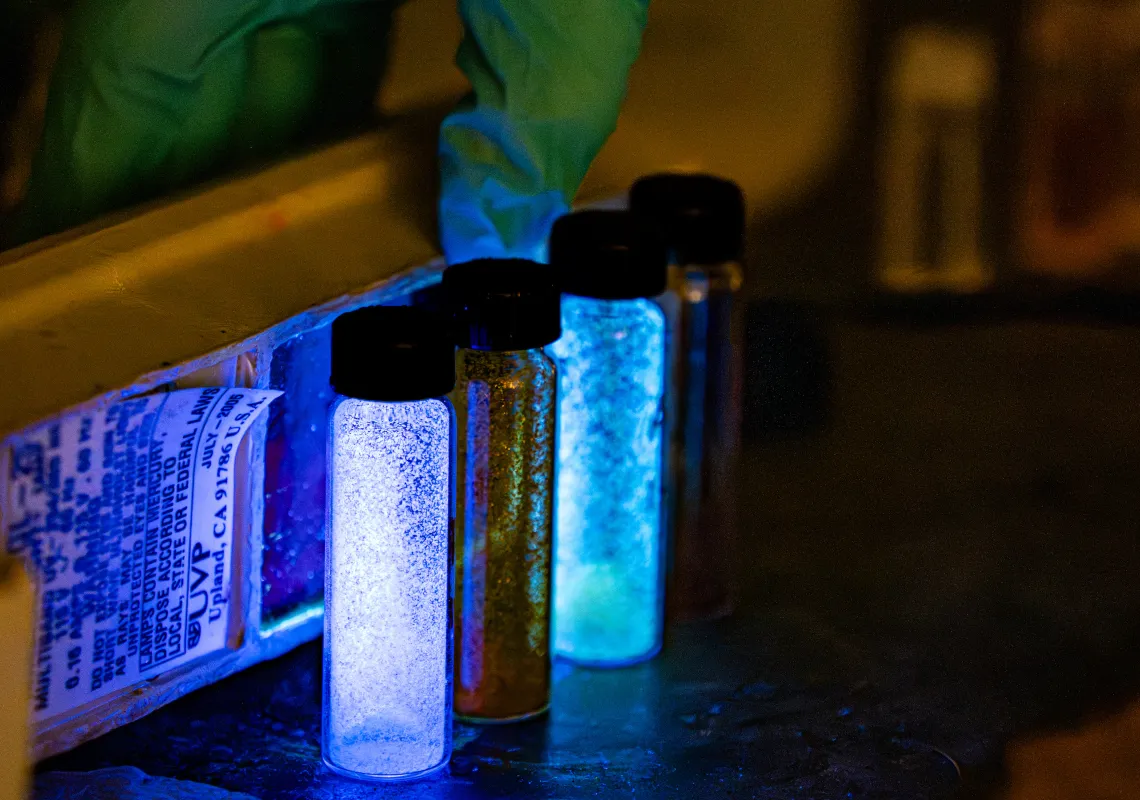
Chemistry is part of an active STEM research community at Bryn Mawr College. Check out what else is going on:

Contact Us
Chemistry
Park Science Building
Bryn Mawr College
101 N. Merion Avenue
Bryn Mawr, Pennsylvania 19101
Phone: 610-526-7374
Fax: 610-526-5086