Creating Tomorrow’s Scientists: Bryn Mawr’s Summer Science Research 2026
September 2, 2026
This summer, Bryn Mawr provided 92 students with 10-week research stipends to conduct independent research under the guidance of Bryn Mawr faculty members in the sciences and mathematics. Below are just a few of the opportunities students had to do research this summer.
The Science of Clean Energy
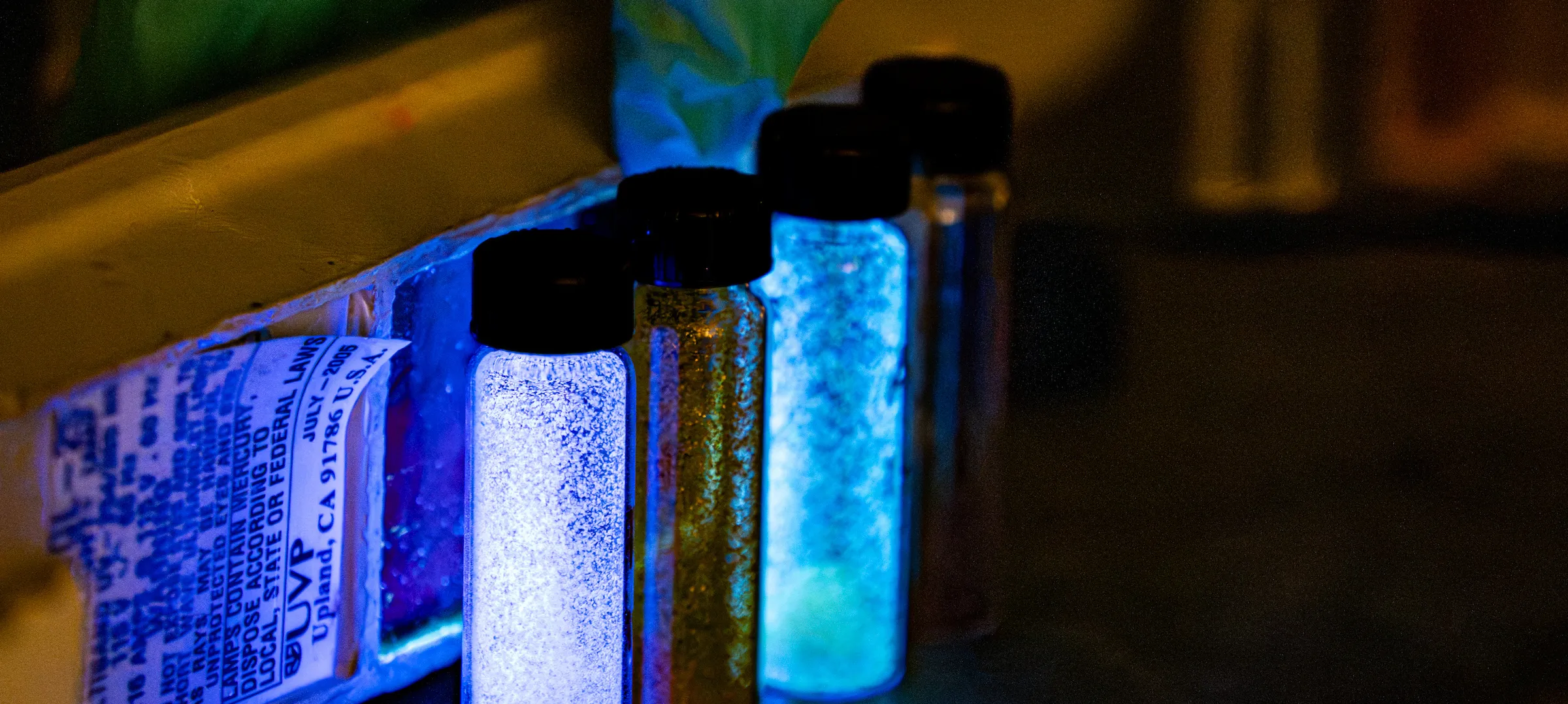
Novel light-emitting compounds developed in the Vasileiadou lab are being studied for potential use in solar cells.
Assistant Professor of Chemistry Eugenia Vasileiadou is synthesizing new materials that are contributing to making clean energy technologies more efficient and affordable. Her research focuses on designing materials at the atomic and structural level to better capture, store, and use energy. By studying how a material's structure affects its performance, Vasileiadou's lab aims to create improved solar cells, batteries, and LED lighting, while also exploring materials that can be used in medical imaging. Students in the lab learn how to design, synthesize, and evaluate these materials using a combination of chemistry and advanced analytical techniques.
Lucie Burgess '28, a chemistry major with a concentration in biochemistry, is among the students who were members of the lab this summer. Burgess came to Bryn Mawr with an interest in engineering and plans to apply to Bryn Mawr's 4+1 bioengineering program with the University of Pennsylvania in the fall. She did research on fluoride-ion batteries and optimizing the specific components in the batteries.
"I was talking to a professor about my interests, and they told me about Professor Vasileiadou's new lab. Then I talked to her, and she told me about her research and how she thought it would be a really good pathway to help prepare me for the kind of research I'd be doing in that program," she says. "I definitely wanted to find a school that had undergraduate research opportunities, and this experience had been exactly what I was looking for."
Leena Dzemaili '28 also worked in the lab. She researched silver telluride quantum dots to identify better ways to synthesize them for potential biomedical imaging applications.
"What you learn in the classroom doesn't always exactly translate to what happens in a lab," she says. "It's good to get that experience. Dr. Vasileiadou has been really supportive, and it's an environment where you can ask lots of questions."
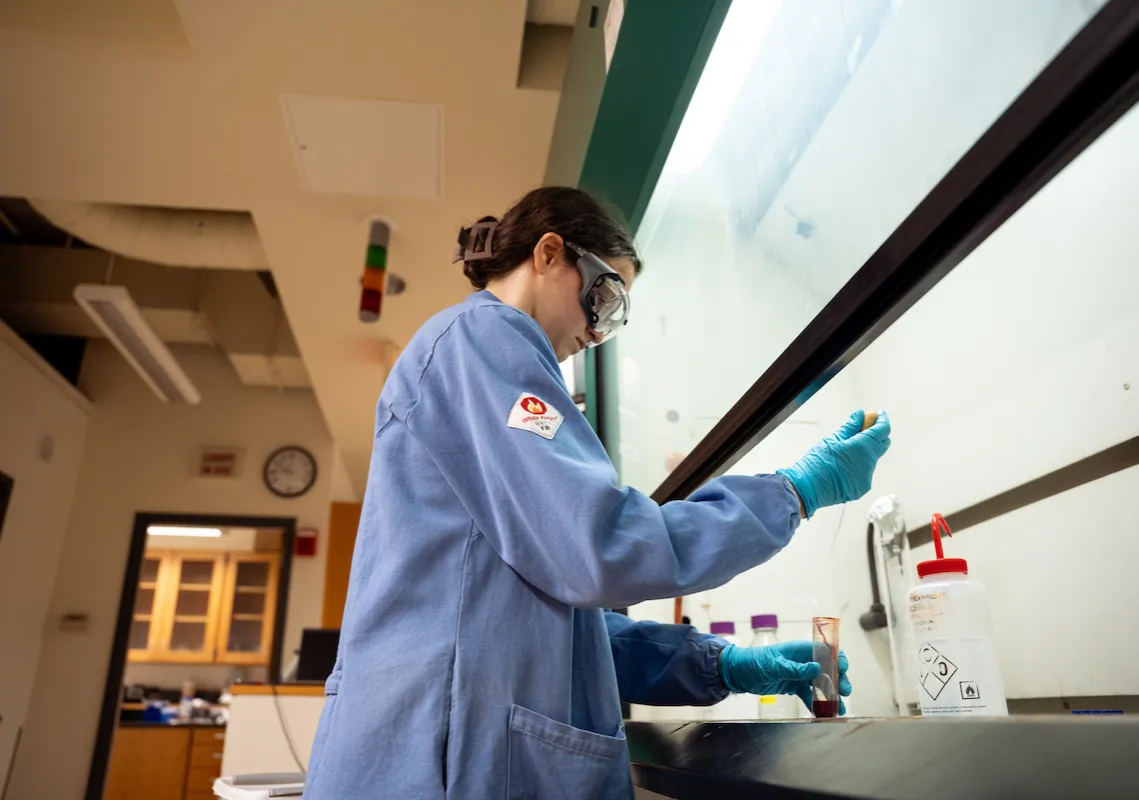
Monica Anderson ’27 prepares her colloidal quantum dot sample for measurements of its luminescent properties.
From the lab
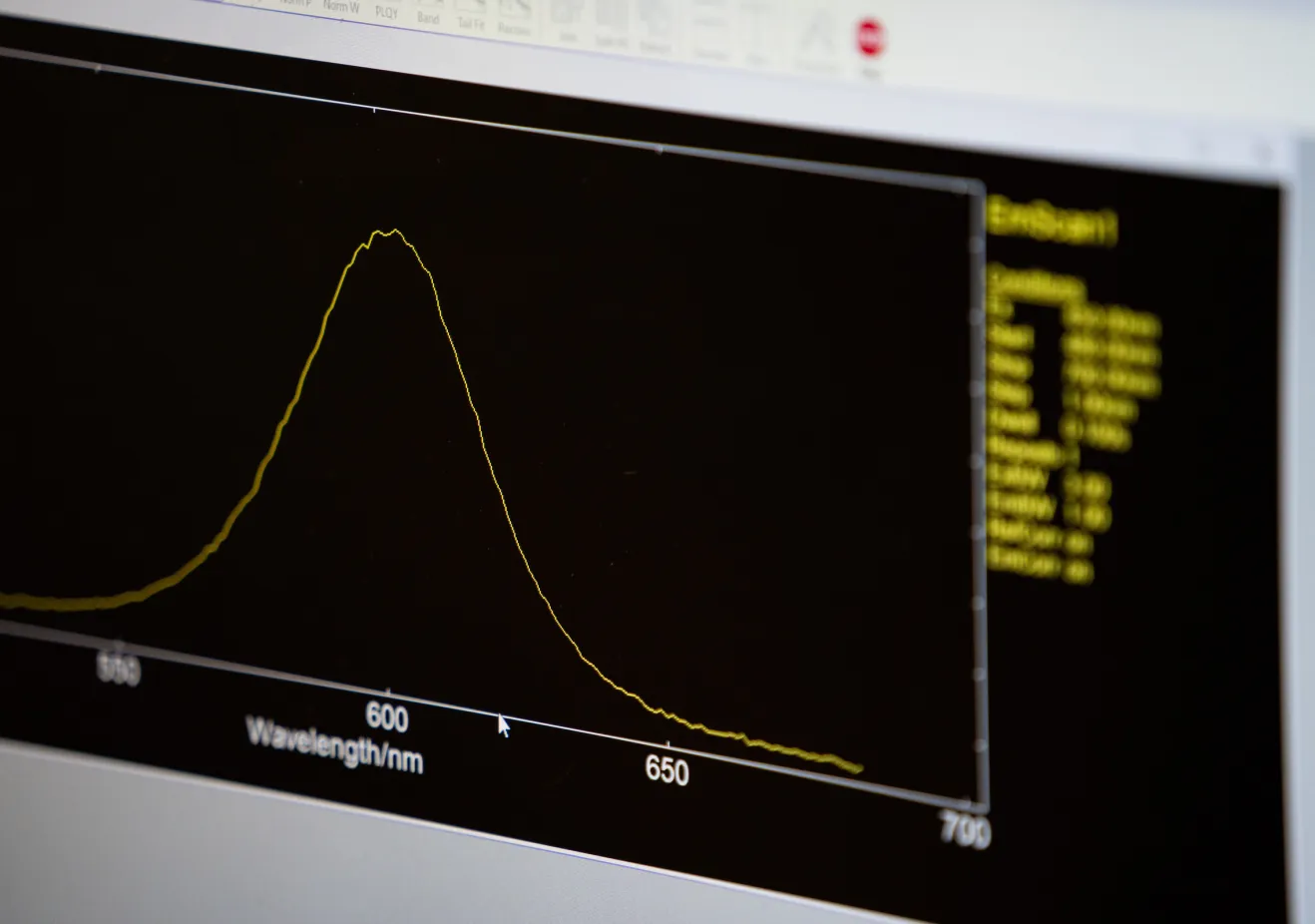
Data of Anderson’s luminescent measurement taken on the new fluorimeter instrument (in the Vasileiadou lab and the chemistry department) that can measure luminescence up to the near-infrared spectral region.
From the lab
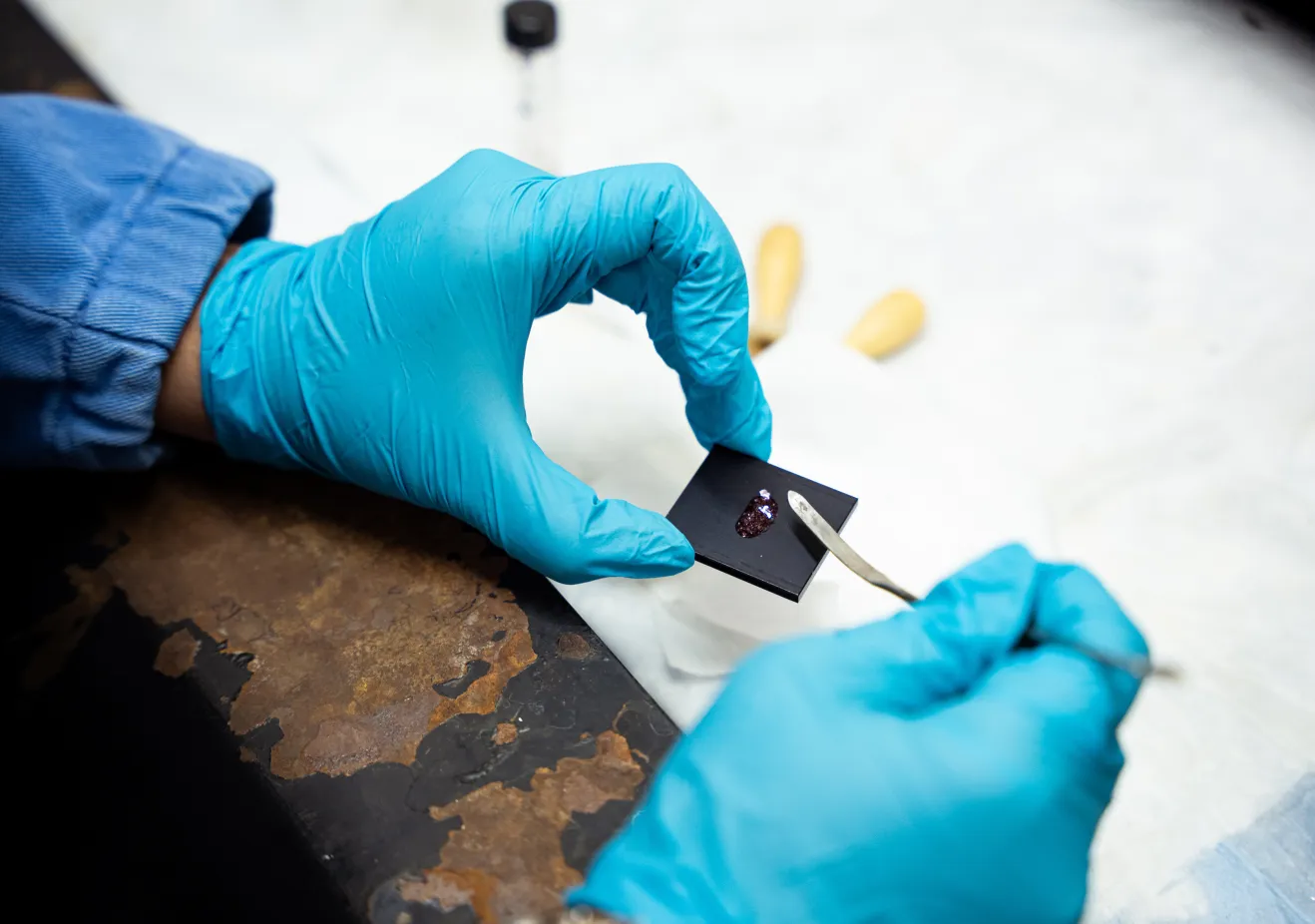
Aden Noor '27 prepares her perovskite crystals for luminescent measurements using the fluorimeter's solid-state sample holder.
Geology Field Work in the Rocky Mountains of Utah
Looking back in time to see how the mountains were formed.
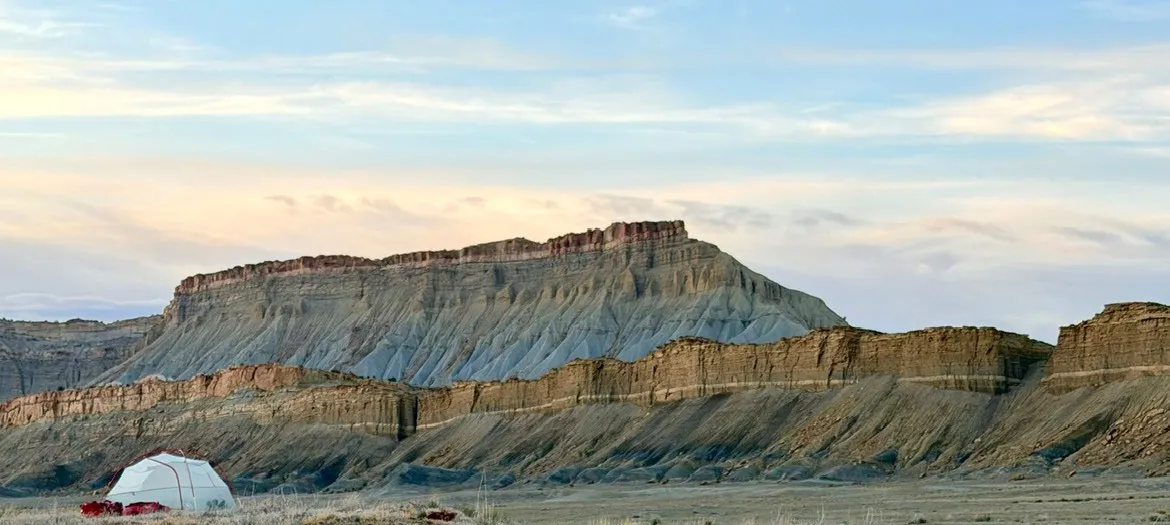
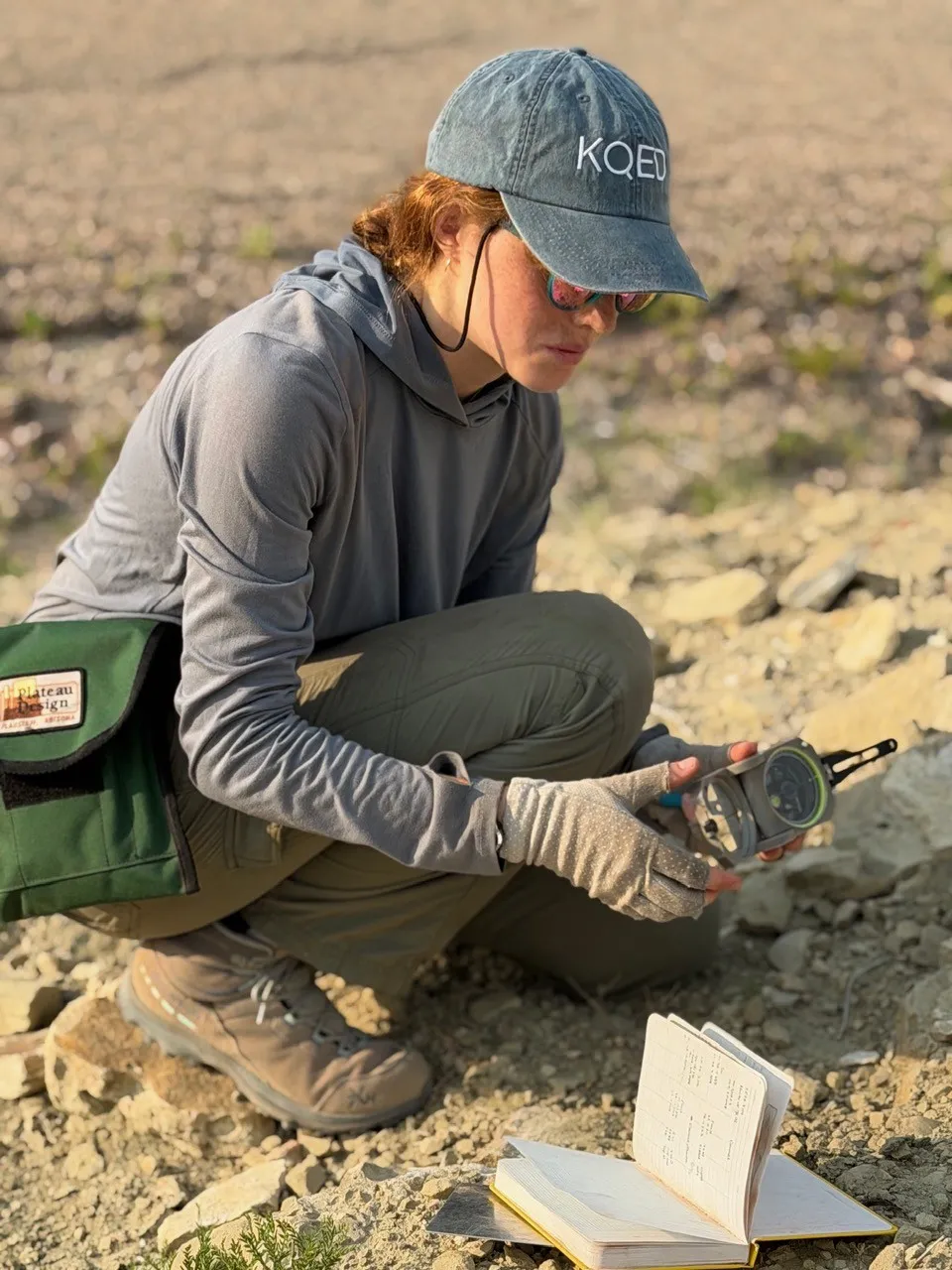
Professor of Geology Arlo Weil and Ava Purser '28 spent two weeks in the Utah desert sampling Triassic red sandstones and Jurassic limestones to better understand the deformation history of the greater Rocky Mountains.
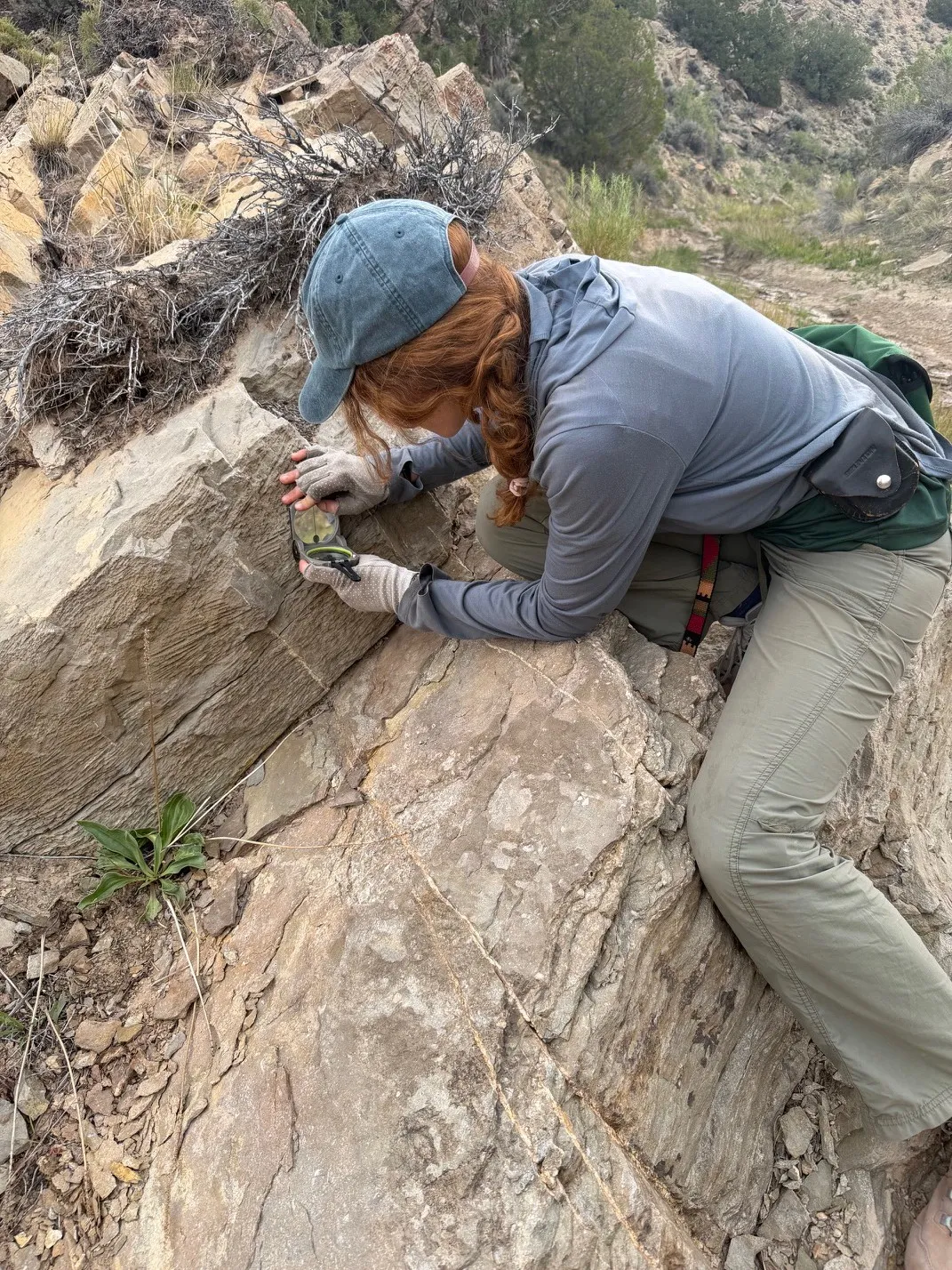
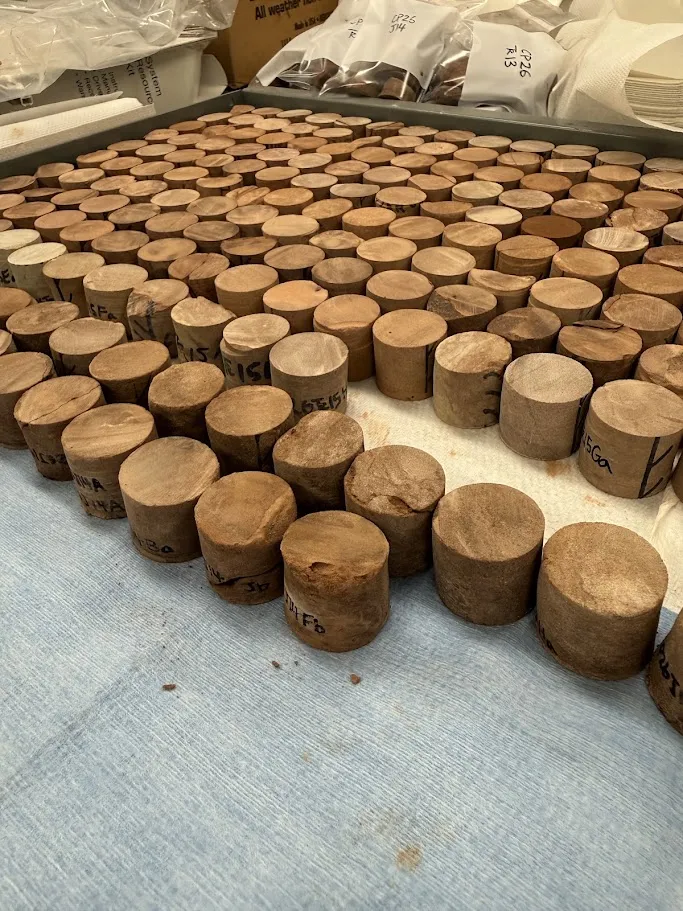
In the field, they measured minor features in the rock that indicate the direction of tectonic forces at that location 70 million years ago. They also collected core samples to analyze in the lab to determine paleo-tectonic shortening directions and whether the rocks or the mountains they were sampled from experienced rotation around a vertical axis as they were forming. Eventually, the data will be part of a series of papers that explores the geologic and tectonic history of the greater Rocky Mountain four-corners region.
Ava Purser '28 measures the angle of stress lines in the rock to understand the forces that formed them nearly a hundreds million years ago.
"Having opportunities like this, where you're able to work with a professor and research things that interest you, was something that I wanted and that I felt like I'd be able to get more easily from a school like Bryn Mawr,” says Purser. “I have friends at big state schools where they’re not even able to get into the classes they need to graduate.”
In October, Purser will attend the University of Oxford for a year-long study abroad experience through a partnership between Bryn Mawr and the school.
Bryn Mawr's Geology program offers a well-rounded Earth science education, balancing fundamental geologic knowledge with problem-solving and communication skills. Field and lab experiences are essential parts of geology training. Field trips and lab work are part of the geology program from introductory programs through advanced independent research.
Core samples from the trip made ready for lab testing.
Neuroscience Students Shape Their Own Research Projects
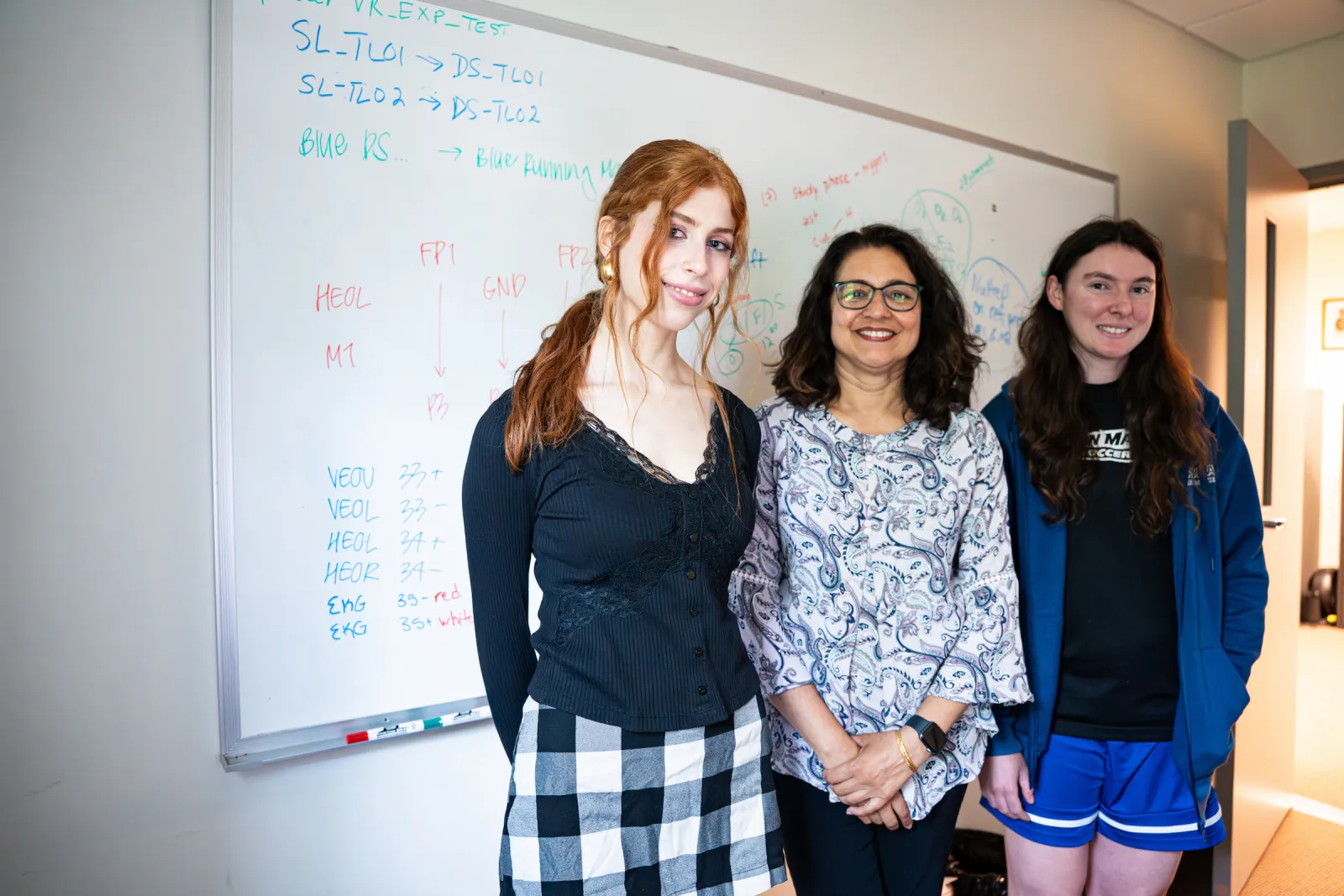
Ciara Grimes '27 and Rebecca Rothstein-Epp '27 worked in the lab with Professor Anjali Thapar.
Professor of Psychology and Chair of the Bi-Co Neuroscience Program Anjali Thapar has worked with students for more than 20 summers, giving them opportunities to make meaningful contributions to the development and execution of research projects. That has certainly been the case this summer for Ciara Grimes '27 and Rebecca Rothstein-Epp '27.
"Ciara has helped move our eye-tracking research from a theoretical possibility to an actual experimental paradigm that we will be able to use for her senior thesis during the academic year," says Thapar. "Rebecca has worked hard to develop her understanding of age-related differences in emotion recognition and the potential relationship between olfactory function and cognitive aging, while also learning how to process and analyze EEG data"
Rebecca Rothstein-Epp '27 wears a sensor for an experiment conducted by Ciara Grimes '27.
For Grimes, this is her second summer working with Thapar as she builds upon research she did last year using EEG to examinebrain activityassociated with lying.
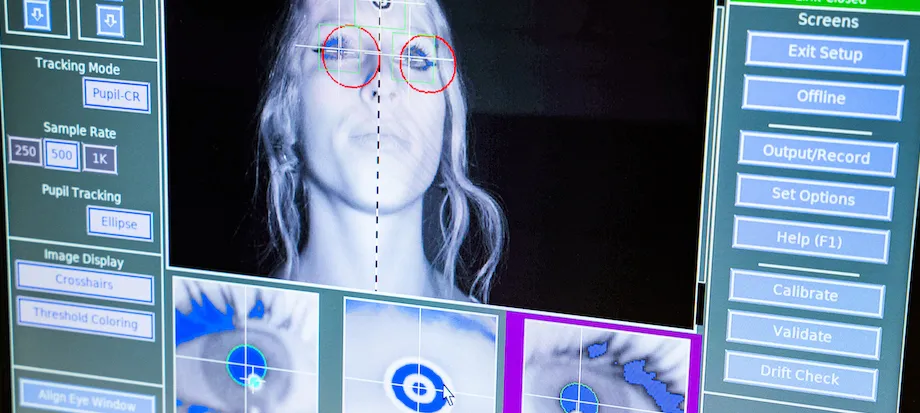
The findings from that research raised new questions about how deception might be detected using other physiological measures, including eye-tracking technology. This led Grimes to look into how some researchers use eye-tracking technology to indicate when someone is being truthful.
"With eye tracking equipment in Professor Cora Mukerji's lab next door, we saw this as an opportunity to explore new technology and see if it could provide valuable insight into deception," says Grimes, who spent last academic year learning how to operate the equipment and this summer running experiments with it that will be the basis of her senior thesis.
Rebecca Rothstein-Epp '27, Professor Anjali Thapar, and Ciara Grimes '27
"My first summer in the lab, I was getting used to the procedures, working with others, collecting data, and analyzing it," she adds. "Now that I've done almost two years of research, I can work more independently and take on more responsibility."
Rothstein-Epp is looking at data comparing the brain activity of older and younger adults using EEG. Specifically, she's looking at the two groups' responses to certain sounds and smells and whether those responses could serve as a biomarker for cognitive decline.
"Professor Thapar is very interested in allowing students to develop their own projects and experiments and explore their own interests," says Rothsein-Epp, who experienced her grandmother dealing with cognitive decline and hopes to continue as a researcher working on issues related to cognitive aging.
"Students begin to see themselves as people who can contribute ideas and solve problems rather than simply follow instructions," says Thapar of the Summer Science Program. "For me, mentoring students through that process is one of the most rewarding parts of being a faculty member at Bryn Mawr. Ultimately, I hope students leave the program not only with stronger research skills, but also with greater confidence in their ability to ask questions, tackle difficult problems, and contribute meaningfully to the scientific process."
The Neuroscience Program is a collaboration between Bryn Mawr and Haverford colleges.
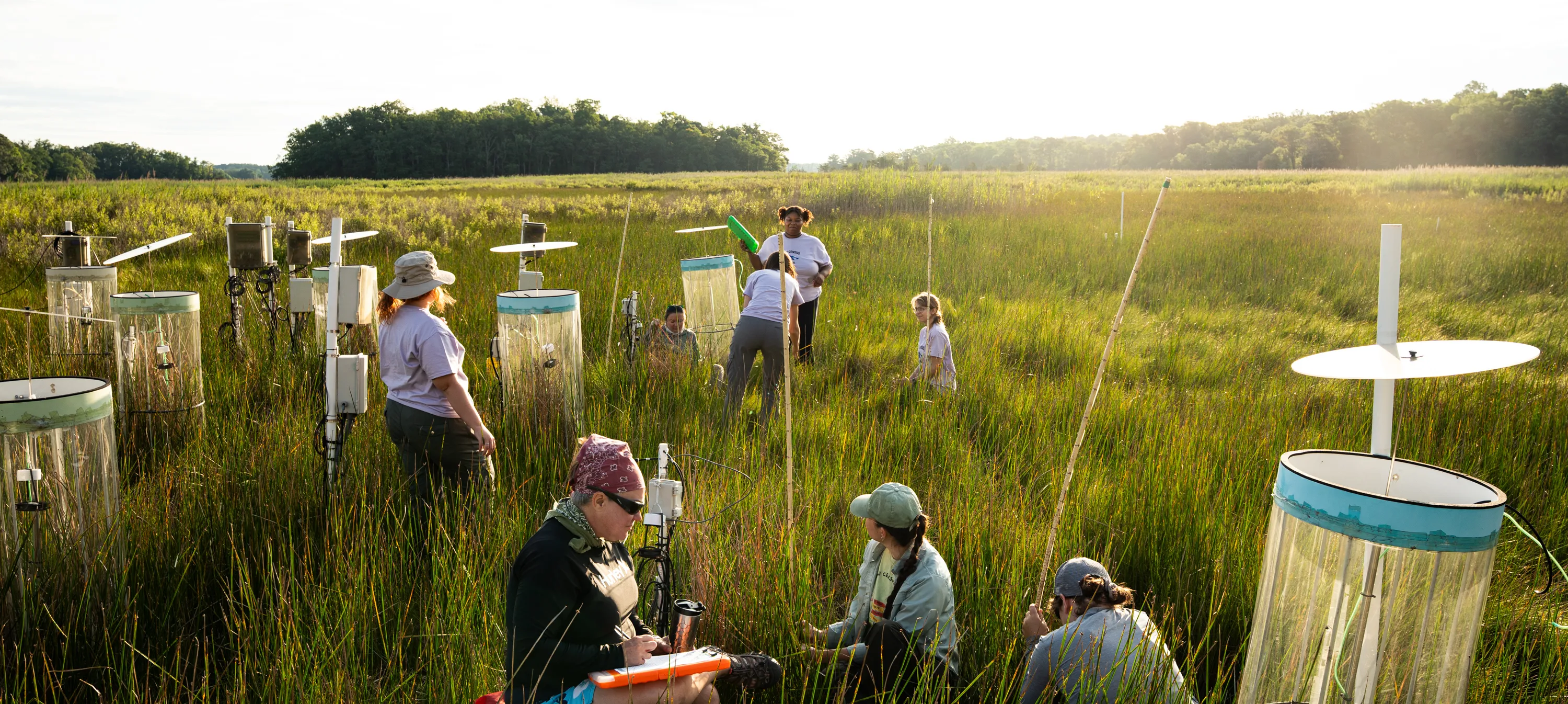
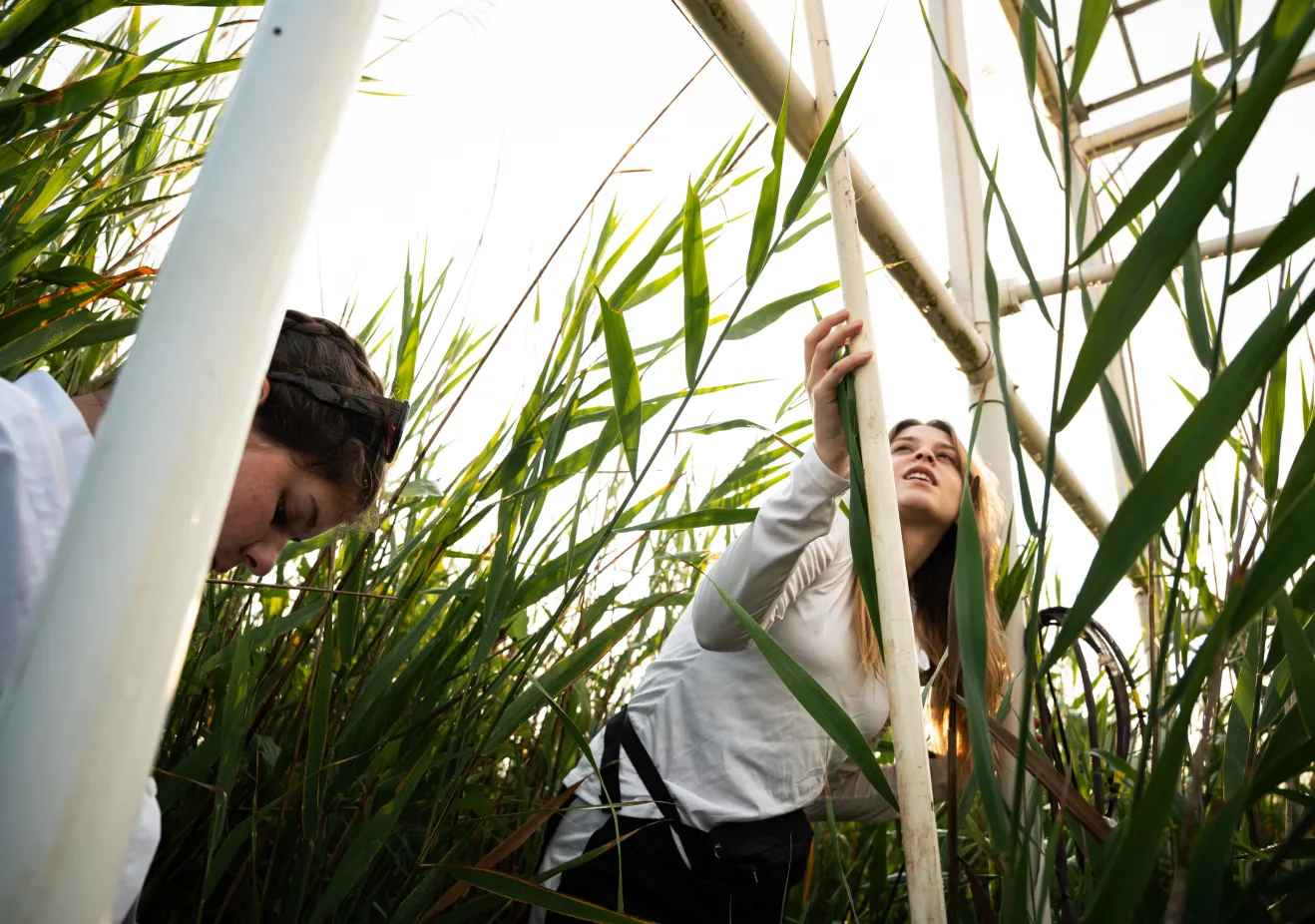
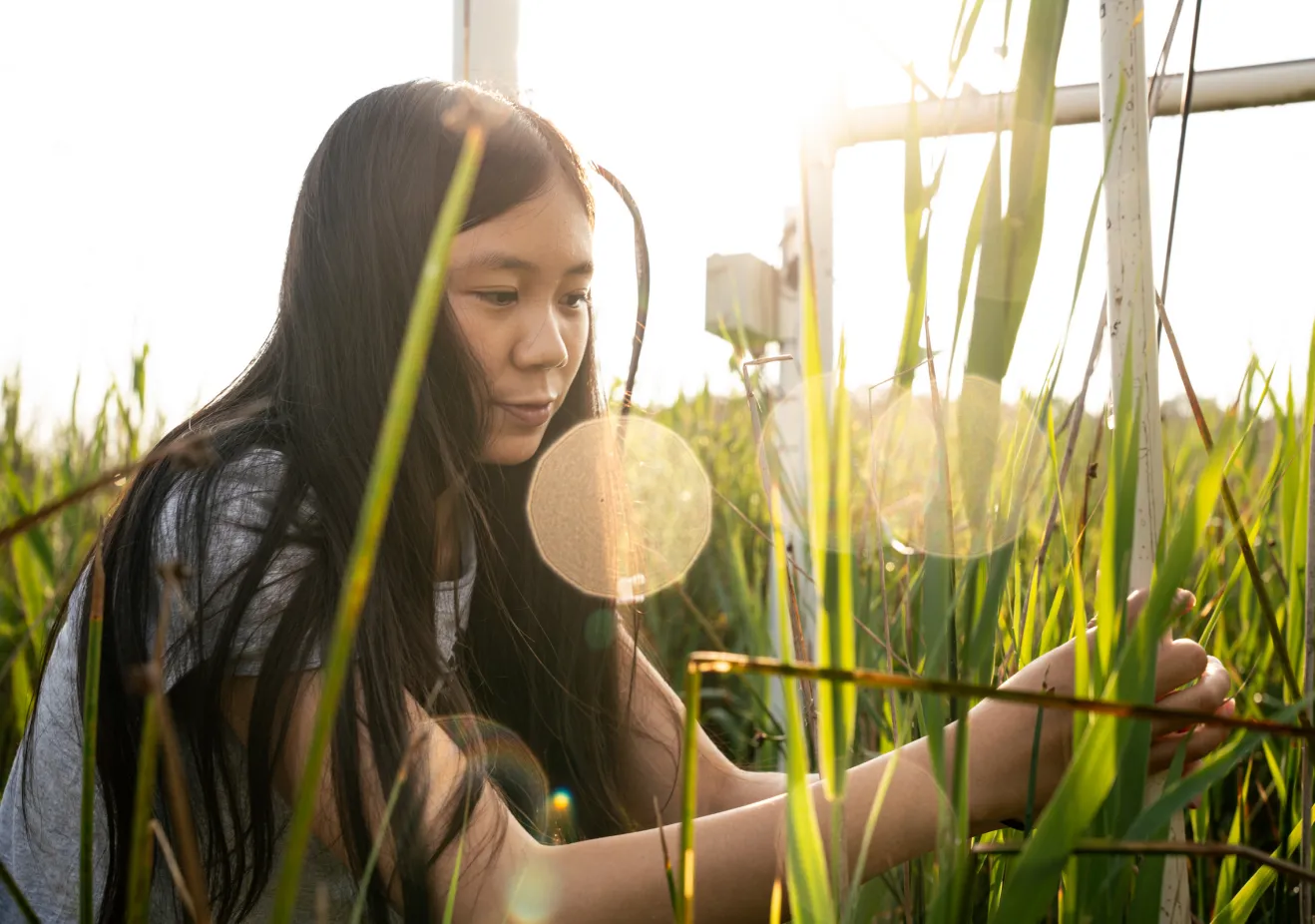
The GCREW site is home to the world's longest-running elevated atmospheric CO2 experiment, along with a suite of other experiments investigating how coastal wetlands will respond to climate change, sea-level rise, nutrient enrichment, and warming. Mozdzer was a postdoctoral researcher at the Smithsonian and initiated an experiment there in 2011 examining how the invasive common reed,Phragmites australis, responds to global environmental change. That experiment is still running today and is the only experiment in the world simultaneously examining the effects of elevated atmospheric CO2 and nutrient enrichment onPhragmitesin a field setting.
Since he started at Bryn Mawr in 2012, Mozdzer has had dozens of Bryn Mawr students join him to conduct field research at GCREW, and some even spend their entire summer at SERC through the SERC-Bryn Mawr Partnership. This year, five students participating in the Summer Science Program spent several days there with Mozdzer, measuring plants, recording trait characteristics (e.g., height, stem diameter, herbivory), and collecting leaves from individual plants so Mozdzer and his student researcher can track genotypes through time to evaluate the evolution of ecosystems to global change.
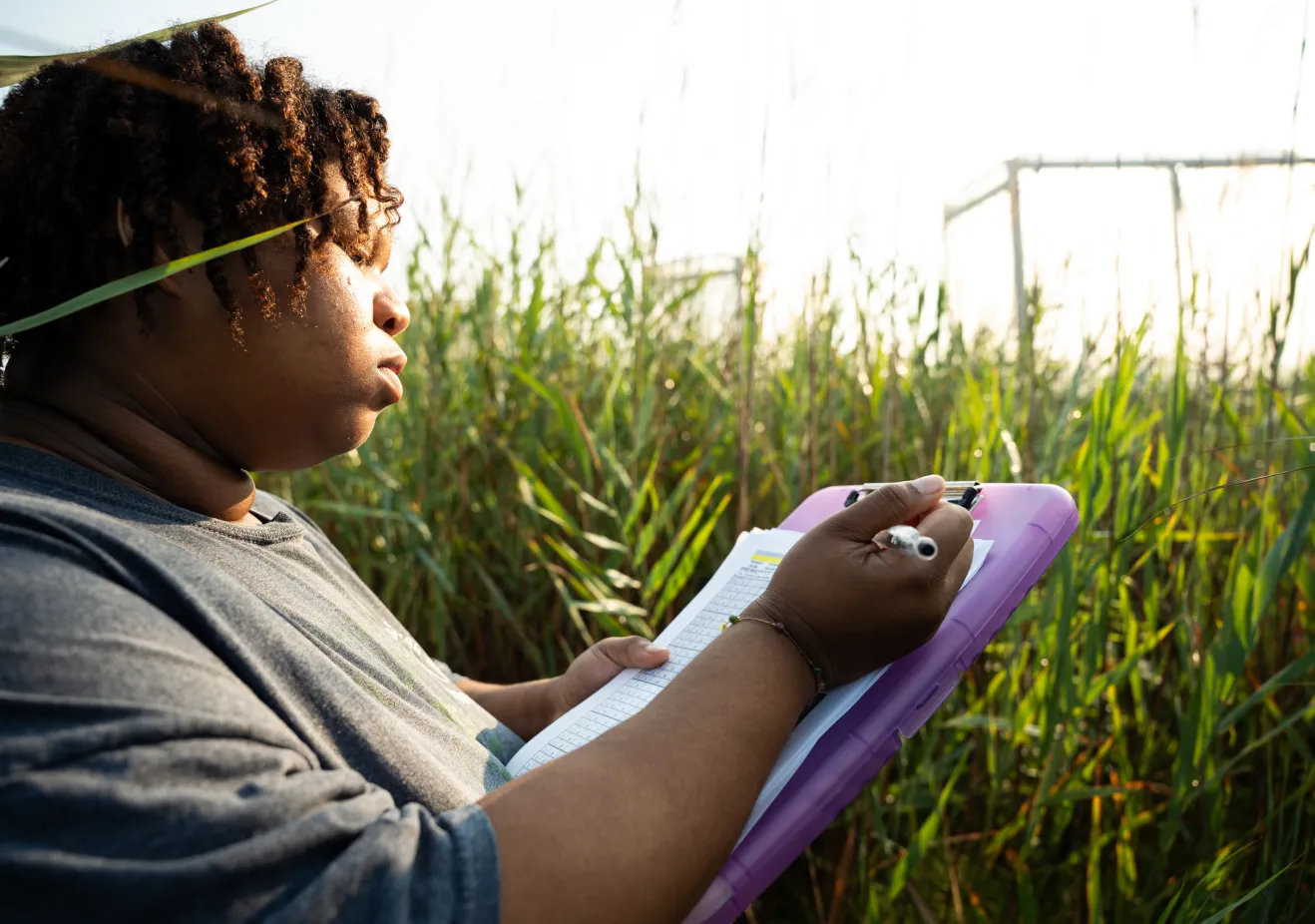
“Growing up in the New York City public school system, I often heard that I wasn’t 'made for science' and overlooked my curiosity, hesitant to risk it," says Dakarai Lindsay, HC '27. "As a senior, this summer opened many doors and nurtured a growing passion for evolutionary biology. With the knowledge I learned this summer, I can't wait to pursue a career in environmental and conservation research after college.”
Summer Science Students at the Smithsonian Global Change Research Wetland
Dakarai Lindsay (HC '27)
Emma Loller '27 and Hannah Jensen-Sizelove (HC '27)
Catherine Chang '28
The Summer Science Research program also includes professional development workshops and a poster session where students present their research to the college community. Each faculty member guiding full-time summer research experiences receives a stipend, acknowledging the time and energy required to provide close, high-impact mentorship.