

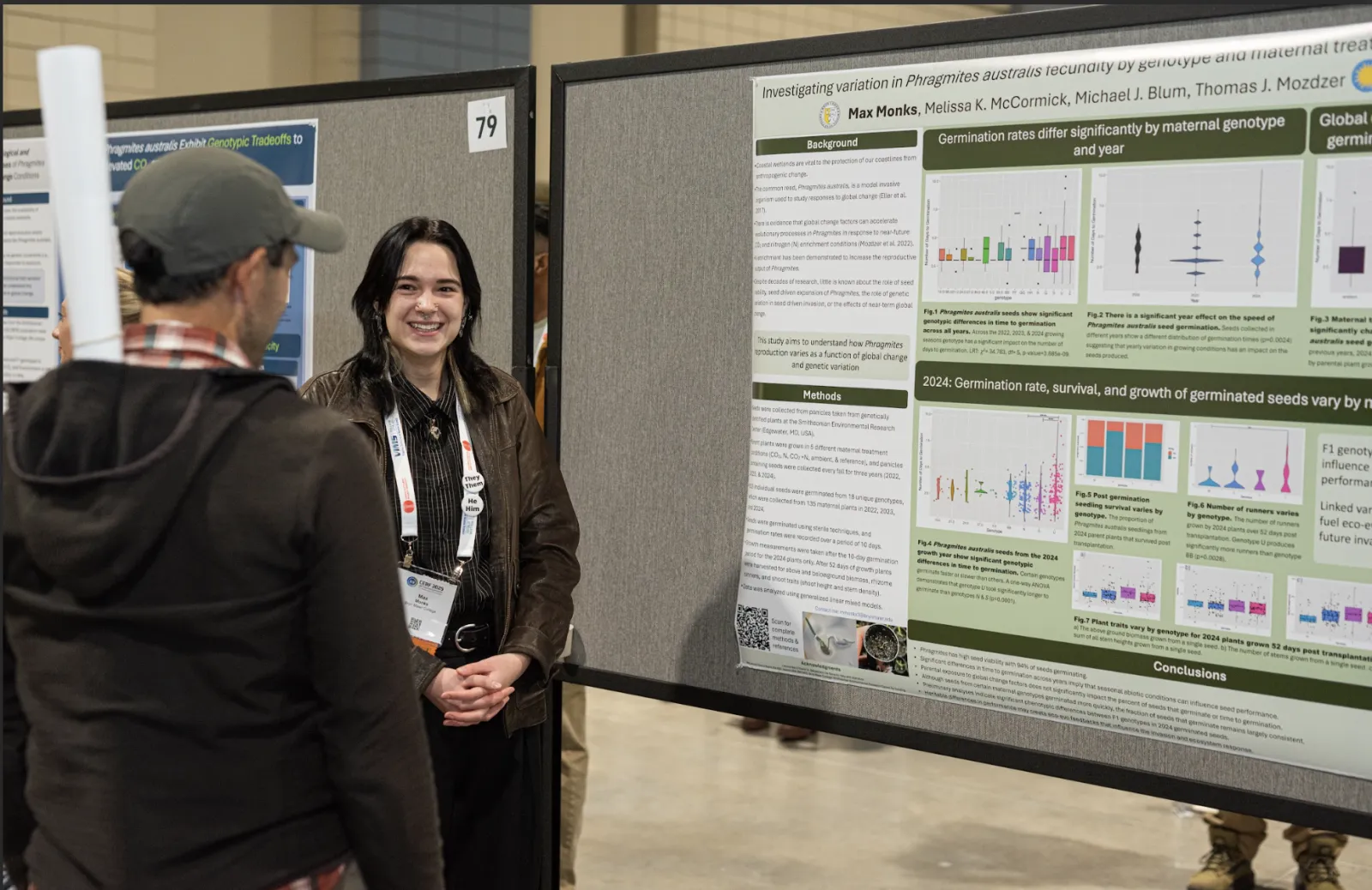
In early November, Max Monks '26, a biology major, presented their research at the Biennial Coastal and Estuarine Research Federation (CERF) Conference in Richmond, Va. Monks' project, titled "Investigating Variation in Phragmites australis Fecundity by Genotype and Maternal Treatment Condition" won the Best Undergraduate Poster Presentation award, making it one of the three highest-ranking student presentations for that category.
Monks came to Bryn Mawr with a love of plants and a desire to do field work. Freshman year they started working in Professor of Biology Thomas Mozdzer’s lab studying how coastal wetlands will change in the face of global climate change and that is where they discovered their passion for ecology.
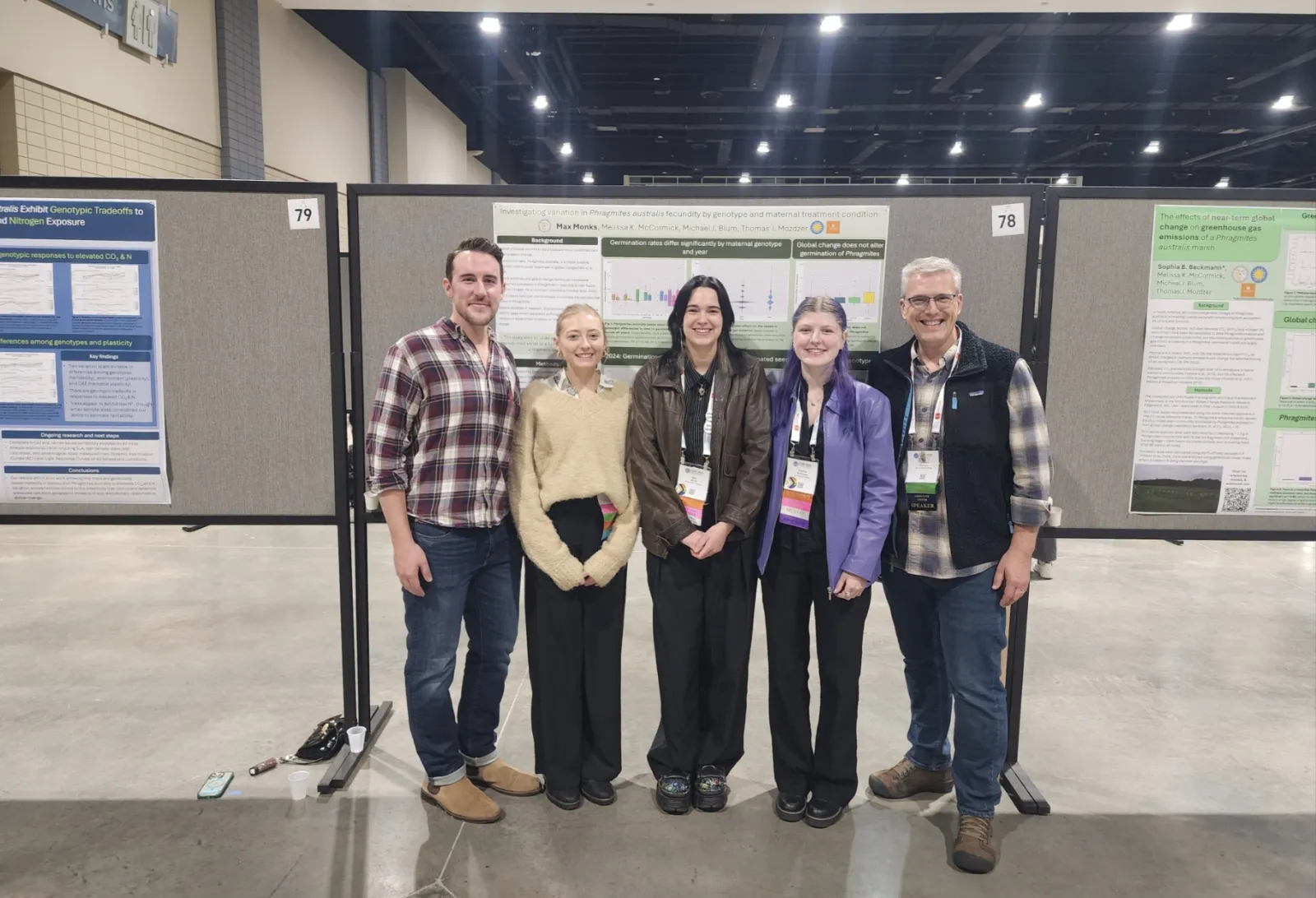
"Professor Mozdzer has been incredibly encouraging and has helped me go from a terrified freshman who only knew they wanted to work with plants to having an independent research project based on my own interests and experimental design," says Monks, who has continued to work in Mozdzer's lab throughout their time at Bryn Mawr.
Monks' research focuses on a model invasive organism, Phragmites australis, which is also known as the common reed, and how its reproduction will change in future climate conditions, helping understand how well wetlands will protect coastlines in the future as sea levels rise and threats like hurricanes become more common.
At the conference, they got the opportunity to connect with others doing similar work.
"It was fun to get to talk to so many people who have the same excitement about the work as I do. I got to talk to other people doing seed-based projects, or working with the same model organism, and I got to discuss my methods with them and pick their brains about next steps and future projects. It was so overwhelming to be in a room with all of these experienced professionals, but they were all so nice and it was amazing to connect with them about their work and see some possibilities for future research," says Monks, who plans to stay in climate change research in some form in the future.
Studying Biology at Bryn Mawr
The Department of Biology is an interactive community of undergraduates, faculty, and staff who share a common commitment both to biology as a scientific discipline and to the importance of biology in broader social and cultural contexts.