Over the past three months, Bryn Mawr has awarded a number of competitive internal grants to teams comprising more than 30 faculty, staff, and students to advance sustainability initiatives, expand interdisciplinary academic pathways, and strengthen collaboration across the Bi-Co.
The awards include funding from Sustainability Seed Grants, Strategic Innovation Pilot Grants, Bi-Co Grants, and Interdisciplinary Innovation Grants.
“Building the Next Chapter outlines five priorities — academic excellence, holistic student support, access and inclusion, institutional visibility, and modernizing our infrastructure,” says President Wendy Cadge. “These grants put those priorities into practice across the College and the Bi-Co.”
The funded projects span the priorities identified in Building the Next Chapter. Academic initiatives deepen Bryn Mawr’s commitment to excellence and distinction, while sustainability efforts contribute to modernizing campus infrastructure and operations. Bi-Co collaborations advance a community-based approach to access and inclusion, and student-facing initiatives reinforce the College’s commitment to holistic support.
Sustainability and Campus Operations
Several of the awarded grants position sustainability not only as an operational priority, but as a framework for teaching, research, and campus engagement. They will also contribute to the work being done as part of the Comprehensive Campus Plan and the work of Director of Sustainability and Environmental Action Neha Sood.
A Strategic Innovation Pilot grant titled Mapping a Sustainable Future will integrate restoration ecology, Geographic Information Systems (GIS), and experiential learning to transform Bryn Mawr’s campus into a living laboratory. The interdisciplinary team — including Dirk Kinsey, Thomas Mozdzer, Neha Sood, Sarah Theobald, and Wayne Troop — bridges academic departments, sustainability leadership, and facilities operations.
“Our project gives students the opportunity not only to learn two different and complementary skill sets, but also to learn how to think about a single question across disciplinary boundaries,” Kinsey says. “A lot of the real-world issues that students are learning to address are extremely complex and require the integration of different ways of thinking about and approaching an issue.”
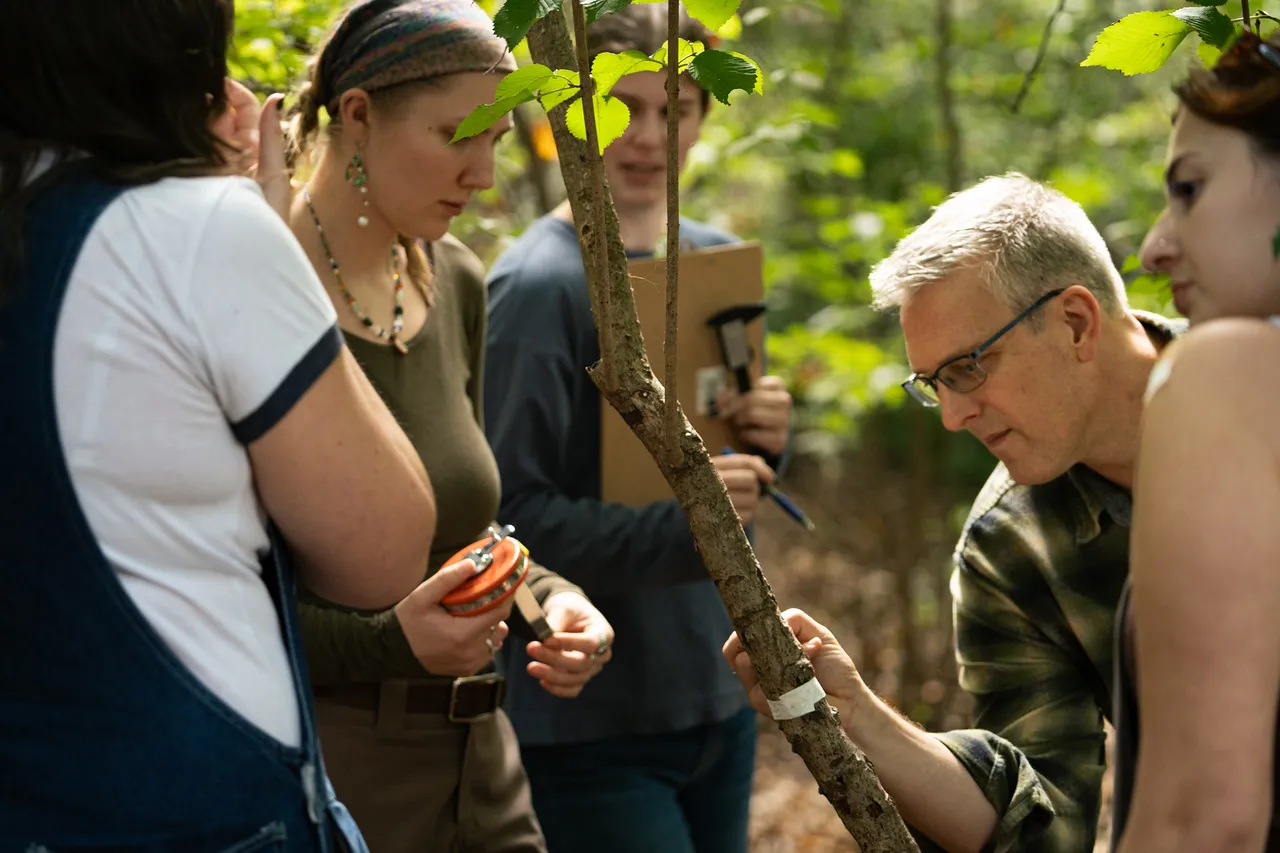
Professor of Biology Thomas Mozdzer and students conduct research on campus.
Adds Professor of Biology Thomas Mozdzer, "I’m really excited about this grant because it gives our students an opportunity to translate our coursework into tangible, student-designed projects aimed at improving the ecological function of Lake Vickers, and to help chart a path toward regaining arboretum status at Bryn Mawr College."
In Dining Services, a Sustainability Seed Grant will expand the Leanpath food waste tracking system currently used at Erdman Dining Hall. Led by Associate Director Richard Clow, the initiative aims to decrease the College’s environmental footprint and strategically reinvest cost savings back into its dining programs.
“Success means scaling our waste tracking from Erdman Dining Hall to other campus dining facilities,” Clow says. “This expansion will drive a campus-wide reduction in both pre-consumer and post-consumer food waste.”
The project integrates students into data-driven sustainability work, creating roles focused on analyzing waste patterns and refining strategies. It deliberately aligns operational improvements with hands-on student learning.
Additional Sustainability Seed Grants support greener lab practices in the Biology Department, revitalization of the Community Garden through student-staff collaboration, sustainability-focused enhancements to campus traditions, and environmental programming at The Thorne School.
Redoubling Commitment to Academic Excellence
Several Interdisciplinary Innovation Grants, which were selected by the Committee on Academic Priorities and the Curriculum Committee, support new and evolving academic programs that respond to student interests and contemporary social questions.
One supports the development of a Carceral Studies Certificate, led by Associate Professor José Vergara and collaborators across Sociology, Growth and Structure of Cities, Africana Studies, Anthropology, Political Science, Biology, Praxis, and other departments.
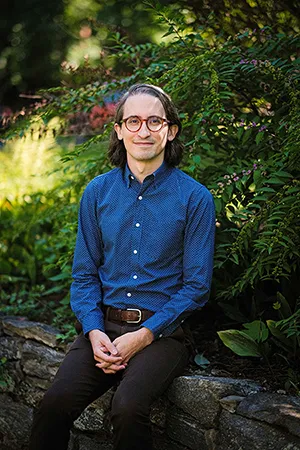
Associate Professor José Vergara
“We want to develop coursework, off-campus internships, community partnerships, and other opportunities to think about carcerality and its effects both in the present moment and throughout history,” says Vergara.
The initiative builds on existing courses and faculty expertise while creating a more cohesive interdisciplinary framework for students engaging critically with carceral systems.
Another CAP grant, GIS Across Disciplines, led by Min Kyung Lee and Nora Taplin-Kaguru, expands the use of geospatial analysis across fields, including Environmental Studies, Anthropology, Archaeology, Biology, Data Science, and Psychology, equipping students with analytical tools increasingly central to research and public policy.
Strengthening the Bi-Co
Several grants reinforce Bryn Mawr’s commitment to collaboration with Haverford through initiatives designed to deepen shared academic programming.
A Bi-Co grant will support Reinvigorating Black Studies Collaboration in the Bi-Co, bringing together faculty across Africana and African & Africana Studies and Educational Studies to strengthen cross-campus partnerships.
Another Bi-Co initiative, Narrative Matters: A Bi-Co East Asian Languages and Cultures Planning Initiative, seeks to integrate programming and curriculum across languages and disciplines.
Professor Shiamin Kwa
“We noticed over the years that we often host events and workshops that have overlapping features, so we decided to prioritize building these into our curriculum across both campuses,” says Professor Shiamin Kwa. “We want to reinforce our students’ understanding that a liberal arts education is as much about the content gained from experts in specific fields as it is about the ability to make surprising and meaningful connections across those fields.”
Two additional grants focus on building new interdisciplinary structures. A Bi-Co Developmental Science initiative will lay the groundwork for coordinated training and community partnerships, while a Bi-Co collaborative planning effort for a formal Bi-Co Jewish Studies program seeks to create greater curricular coherence and strengthen advising across campuses.
Continuing the Work of Building the Next Chapter
Together, the awards advance goals identified in Building the Next Chapter, particularly around sustainability, interdisciplinary work, and student engagement.
The latest round of grants represents one phase of a broader effort to support innovation across campus. Additional funding opportunities are already underway: Strategic Innovation Grant proposals are due March 31, 2026, and Sustainability Seed Grant proposals are due March 15 and April 15.