

Student-Athlete Sophie Fenster '26 Presents Neuroscience Research at Conference
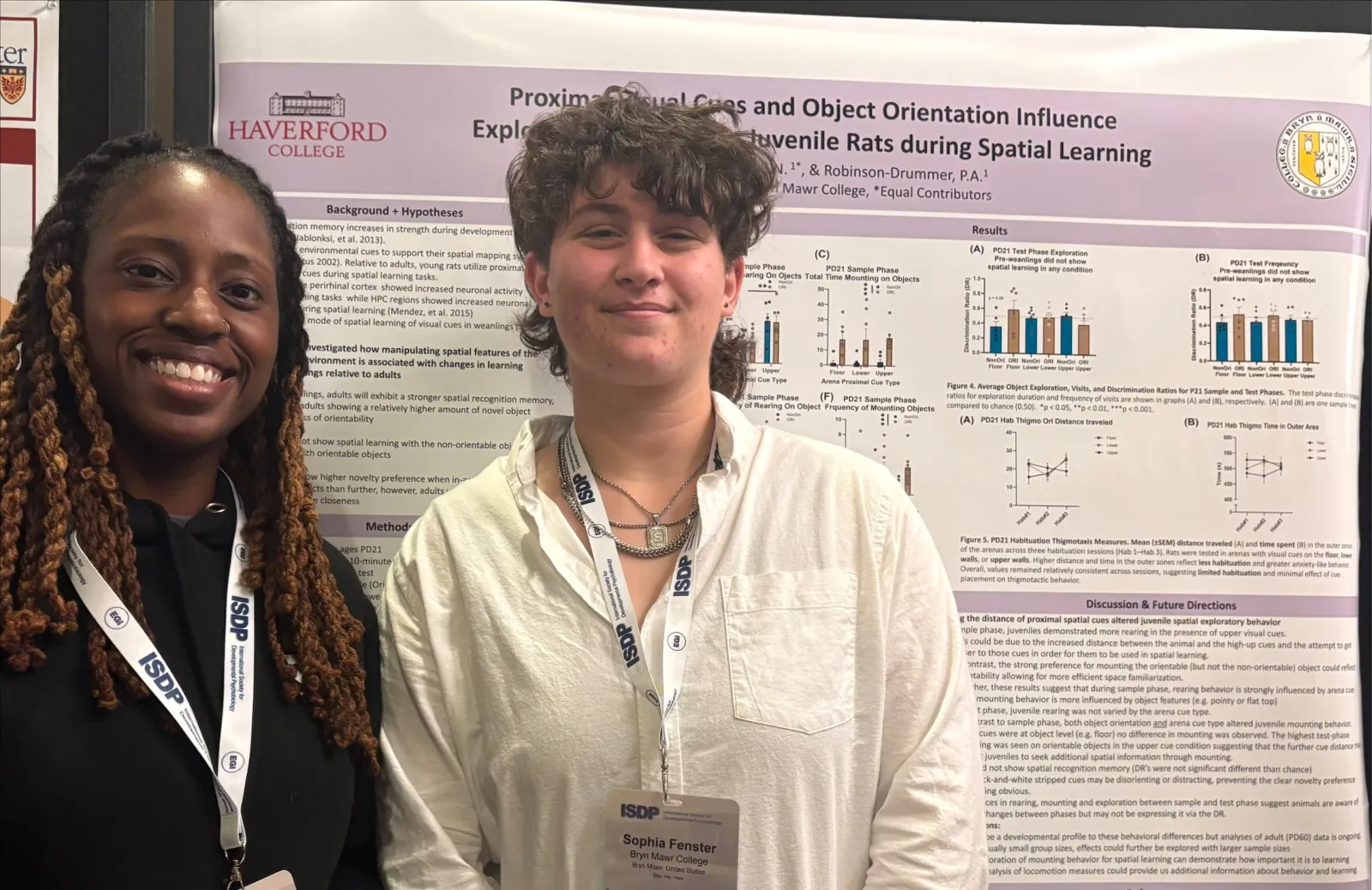
In mid-November, Bryn Mawr tennis student-athlete Sophie Fenster '26 took her passion for neuroscience across the country, presenting her original research at the annual meeting of the International Society for Developmental Psychobiology in San Diego, Calif. One of only a handful of undergraduate students in attendance, Fenster shared the results of a year-long project she conducted under the mentorship of Assistant Professor of Neuroscience at Haverford Patrese Robinson-Drummer, whose introductory neuroscience course first sparked her interest in the field. Read more about Fenster's research in the following Q&A.
What is the title of your research, and can you provide a brief overview of the project?
My project is titled "Proximal Visual Cues and Object Orientation Influence Exploratory Behavior in Juvenile Rats during Spatial Learning." It examines how developing brain systems shape spatial learning in young versus adult rats. Spatial recognition memory strengthens with age due to the maturation of brain regions like the hippocampus, which supports spatial mapping, and the medial prefrontal cortex, which helps animals focus on relevant cues. The nucleus accumbens — important for motivation and novelty seeking — may also influence how strongly each age group explores new objects.
Because weanlings rely more heavily on proximal visual cues and behaviors like rearing to gather spatial information, my study tests how object orientability and cue placement affect learning. We compare whether adults show stronger spatial recognition overall, whether weanlings learn only from orientable objects, and whether closer cues disproportionately support weanling performance. Ultimately, the project highlights how maturing neural circuits and environmental features interact to shape the development of spatial memory.
What class was this research for?
It wasn't for a class—this is my own independent research!
How did you come to present your work in San Diego?
I fell in love with neuroscience after taking introductory neuroscience with Assistant Professor of Neuroscience Patrese Robinson-Drummer. I’ve now spent two years working with her on novelty recognition in the developing brain. This particular project, which I’ve been developing over the past year, caught the attention of the International Society for Developmental Psychobiology. They invited me — and flew me out — to present my work at their annual conference in San Diego.
Who was the audience, and how did it feel to present your research?
The audience was made up mostly of leading researchers in developmental psychobiology, along with Ph.D. students from across the country. Being one of the only undergraduates there was definitely nerve-wracking — presenting to some of the smartest people in the field felt surreal. But I learned so much and I felt incredibly lucky to meet and talk with so many amazing scientists.
How does this research connect to your future academic or career goals?
I hope to become a doctor one day, possibly a neurologist working with epilepsy, which primarily affects the hippocampus — the same brain region central to my research. This work has shown me just how incredible the human brain is and has pushed me to develop a strong work ethic.
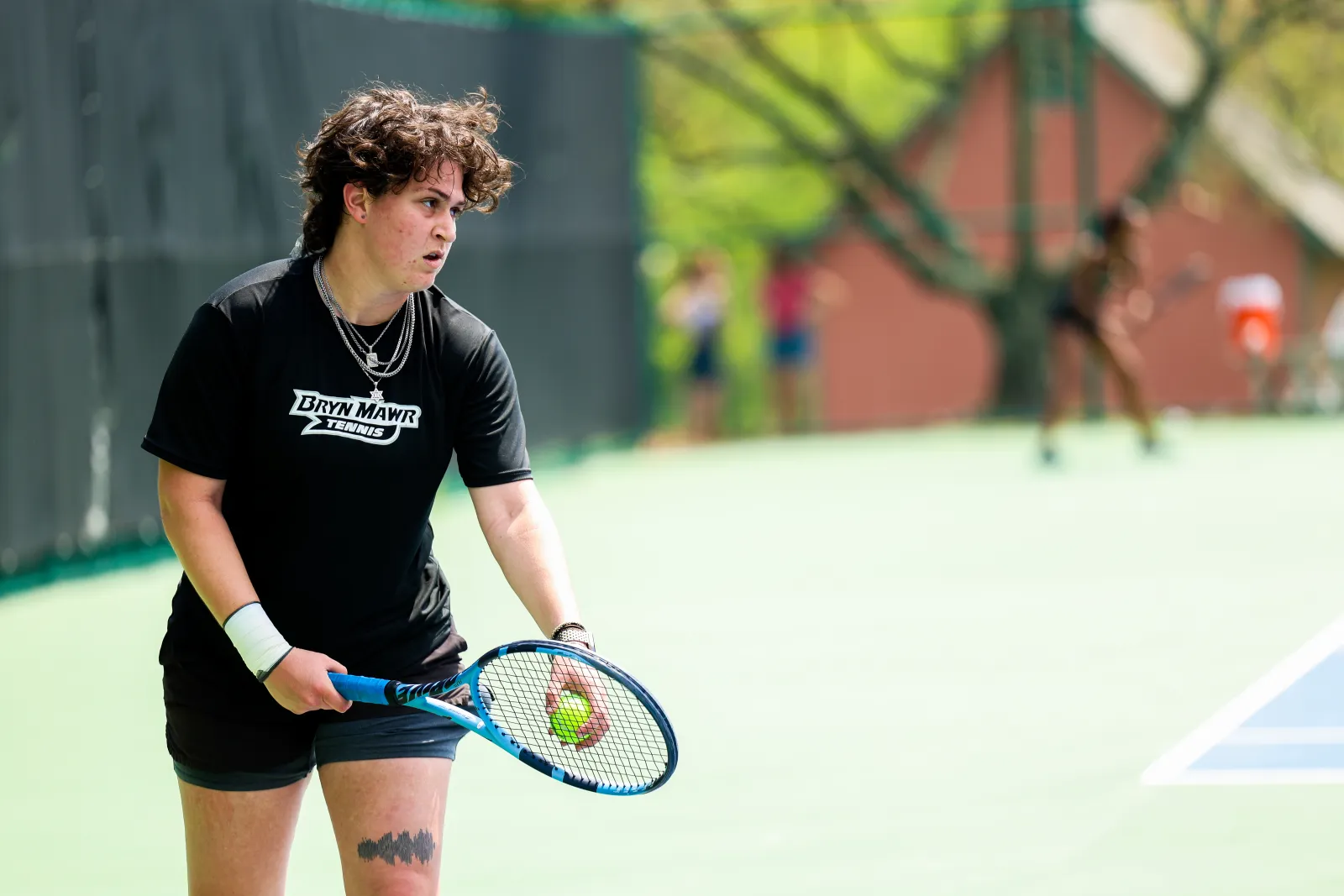
How does your student-athlete experience influence your research work and vice versa? What values from athletics do you hope to carry with you into your future career in medicine or research?
My approach to conducting behavioral experiments and troubleshooting in the lab is similar to what I learned on the court: to break down obstacles, remain patient in the face of failure, and dedicate myself to continuous improvement. My work in neuroscience research has also reinforced the value of planning and accuracy, which has helped me become a more deliberate and focused athlete. I can evaluate my performance more objectively and make deliberate changes thanks to the attention to detail I've honed in the lab. Resilience, teamwork, and a dedication to ongoing development are the values I hope to carry with me into a future career in research or medicine. In the end, sports have molded me into a person who is driven by long-term objectives and loves to work in challenging settings.
Is there anything upcoming with this project, or anything else you’d like people to know?
I'm now completing my thesis with Professor Robinson-Drummer on a related topic. Instead of focusing on spatial learning, I'm studying category learning and the brain regions responsible for how animals classify objects and other stimuli into categories. It's exciting to build on what I've learned and take this research in a new direction.
Whether on the court or in the lab, Sophie continues to embody the curiosity, discipline, and ambition that define Bryn Mawr student-athletes — a combination that has carried her from the classroom to a national research stage, with much more ahead.
Learn more about the Bi-Co Neuroscience Program