
Transnational Italian Faculty and Students Create Engaging Educational Resources
“I think that my four project assistants of this semester went above and beyond my expectations because I ended up reaching myself a better understanding of my own scholarship through their independent discoveries, research, and insights.” — Luca Zipoli, Assistant Professor of Transnational Italian Studies
“I think that my four project assistants of this semester went above and beyond my expectations because I ended up reaching myself a better understanding of my own scholarship through their independent discoveries, research, and insights.” — Luca Zipoli, Assistant Professor of Transnational Italian Studies
As the Spring 2026 semester closes, the Transnational Italian Department is finishing work on new educational resources that will help the Bryn Mawr community and wider public better understand the language and its cultural impact. Luca Zipoli, Assistant Professor of Transnational Italian Studies, has led the three projects, which have been a collaboration between Bi-Co faculty members, LITS employees, and four student workers hired as Digital Scholarship Project Assistants (DSPAs) through the Digital Bryn Mawr grant program. “As soon as I moved from Italy to Bryn Mawr College in 2022, I have been struck not only by the remarkable academic preparation and intellectual curiosity that distinguish our students but also by their rigorous professionalism and their eagerness to engage with current and new technologies,” Zipoli said. “It was when I discovered the excellent opportunity offered by LITS to hire students as Digital Scholarship Project Assistants that I started conceiving digital platforms through which I could enhance my own scholarship by integrating my students' invaluable skills and perspectives in Italian language and culture.”
The first project, titled "Italian Outreach", involved adding subtitles to the YouTube channel of the Transnational Italian Studies Department, which hosts recordings of lectures, conferences, and symposia held over the past few years. For this task, Zipoli hired two students, Jacqueline Espinoza ’26 and Felicia Famularo ’27, who leveraged their bilingual skills and translation competences to add both English and Italian captions to these videos. Both found the work a rewarding chance to expand their skills. “This position has helped me grow professionally by improving my attention to detail, cultural understanding, and ability to convey meaning accurately across languages,” Espinoza said. “Working on the ‘Italian Outreach’ project gave me hands-on experience with digital accessibility and multilingual media production while also allowing me to strengthen my Italian language skills,” Famularo added. “Through creating and editing captions and subtitles in both Italian and English, I learned how digital scholarship can make language learning and cultural content more inclusive and accessible to wider audiences.” Ultimately, Espinoza said, “I’m proud to contribute to a team that values clear communication and high-quality multilingual content.” While they still have a few captions to do before finishing the project—and in Espinoza’s case graduating from the College—their work will be finished and be publicly available before the end of the month.
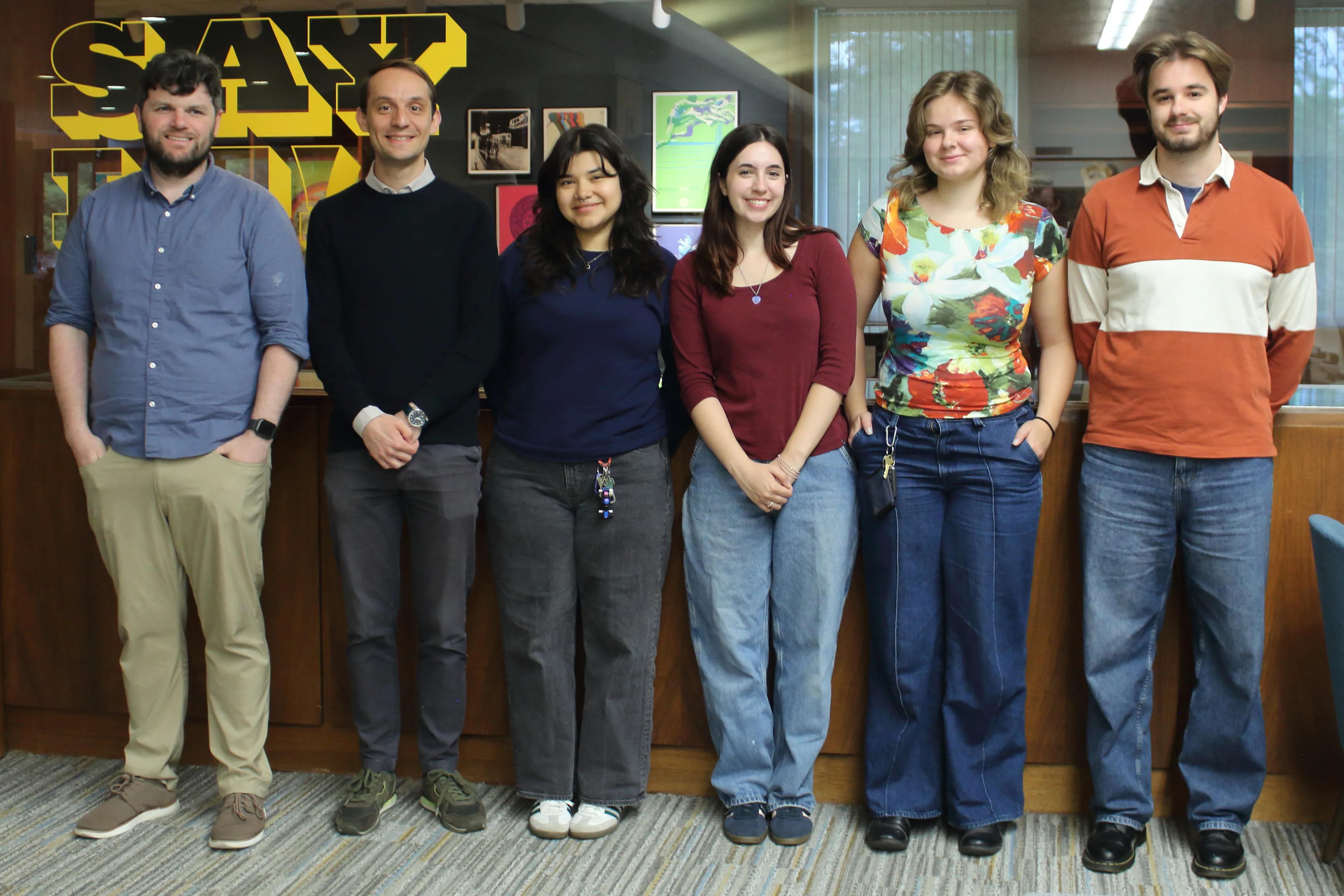
The same applies for the second project, "'Cotto e mangiato': A New OER for Italian," which saw Juliana Gray ’28 develop updated support material on Moodle for the department's online Open-Educational Resource (OER) textbook, Cotto e mangiato, whose two volumes Zipoli wrote and published in 2024 with colleague Roberta Ricci, Professor and Chair of Transnational Italian Studies on the Andrew W. Mellon Foundation Chair in the Humanities. “During my time as a DSPA, I worked with the Beginning Italian I and II Moodle pages to correct any errors and enhance language learning for students,” Gray said. Like the other DSPAs, Gray found her experience educational. “I improved my digital marketing and coding skills, and gained more experience working with the LITS department, the Italian department, and other undergraduate students,” she said. With this work done, Zipoli will be officially adding the updated set of interactive exercises to Bryn Mawr and Haverford’s Moodle sites in the coming weeks, making second-language acquisition more effective, accessible, and user-friendly for the students of Italian.
For the final project, "Early Modern Intersections: A New Italian Renaissance", Eleanor Sullivan '27 helped create a website for Zipoli’s Fall 2024 class of the same name. Sullivan started this work last semester, and she was grateful to continue it. “Getting to expand my technological skills alongside the Italian department for the second semester in a row has been such a highlight,” she said, “allowing me to expand not only my skills and portfolio, but also allowing me to give back to the Bryn Mawr community.” The site, which uses the web-publishing platform Scalar to let users determine how they prefer moving through the content, is now publicly available.
For Zipoli, working with the DSPAs was an invaluable experience, “I think that my four project assistants of this semester went above and beyond my expectations,” he said, “because I ended up reaching myself a better understanding of my own scholarship through their independent discoveries, research, and insights.” He felt similarly about the members of LITS— Senior Digital Scholarship Specialist Alice McGrath, Educational Technology Specialist Jeff Hopkins, Educational and Scholarly Technology Assistant Cameron Boucher ’23—who provided project management and technology assistance. “They guided my project assistants and me throughout the semester, from the early conception to the final touches, and were really instrumental in letting us achieve the many exciting results that we accomplished in four months.” While Zipoli will likely be leading more projects like these in the future, for now he’s appreciative of those he worked with this past semester. “These three projects would have just been impossible without the integration of the excellent second-language skills in Italian of my students with the assistance and guidance of the LITS staff,” he said. “I feel fortunate to have found such a remarkable team.”
Departmental YouTube Channel Departmental Textbook "Cotto e mangiato" Website for "Early Modern Intersections"