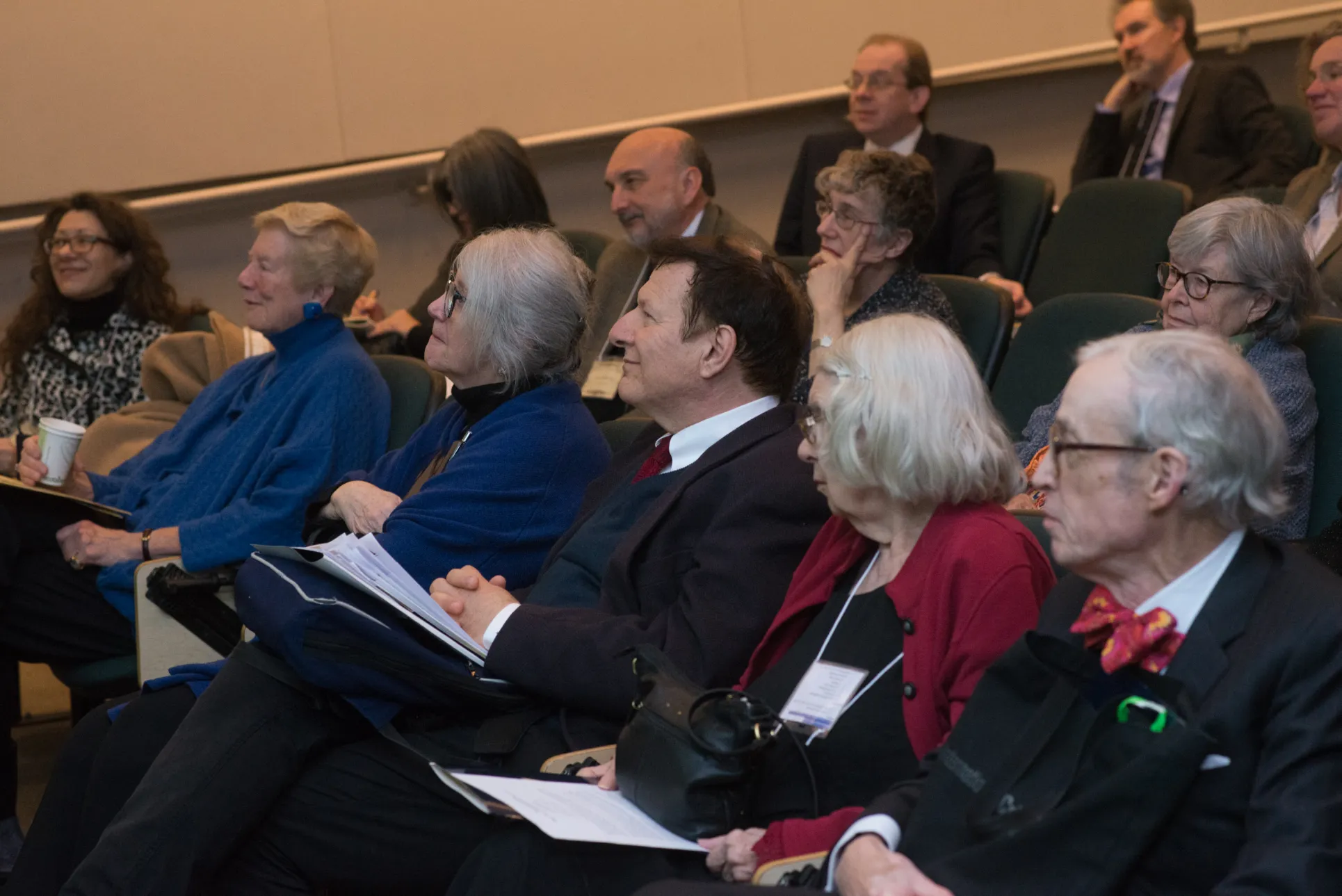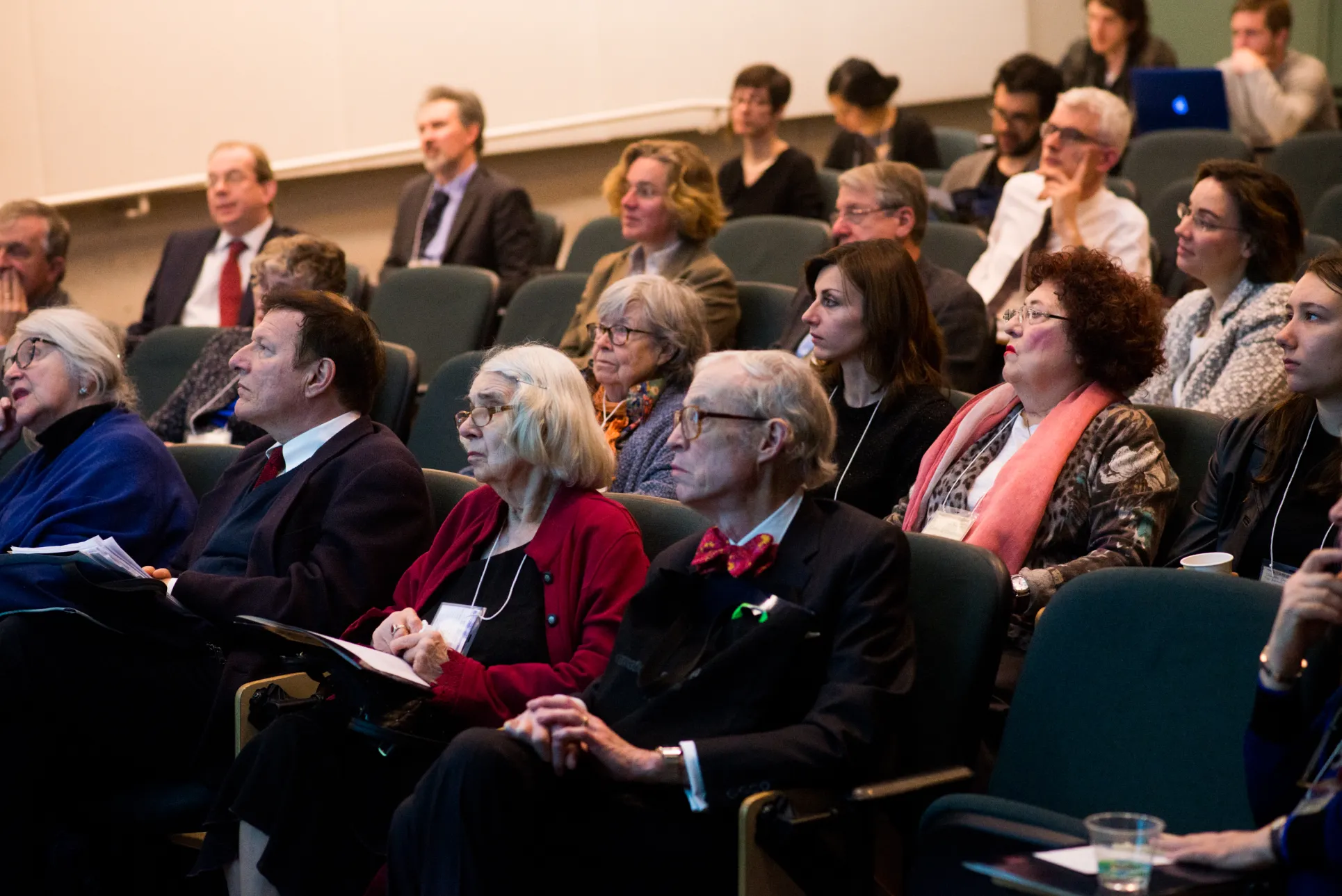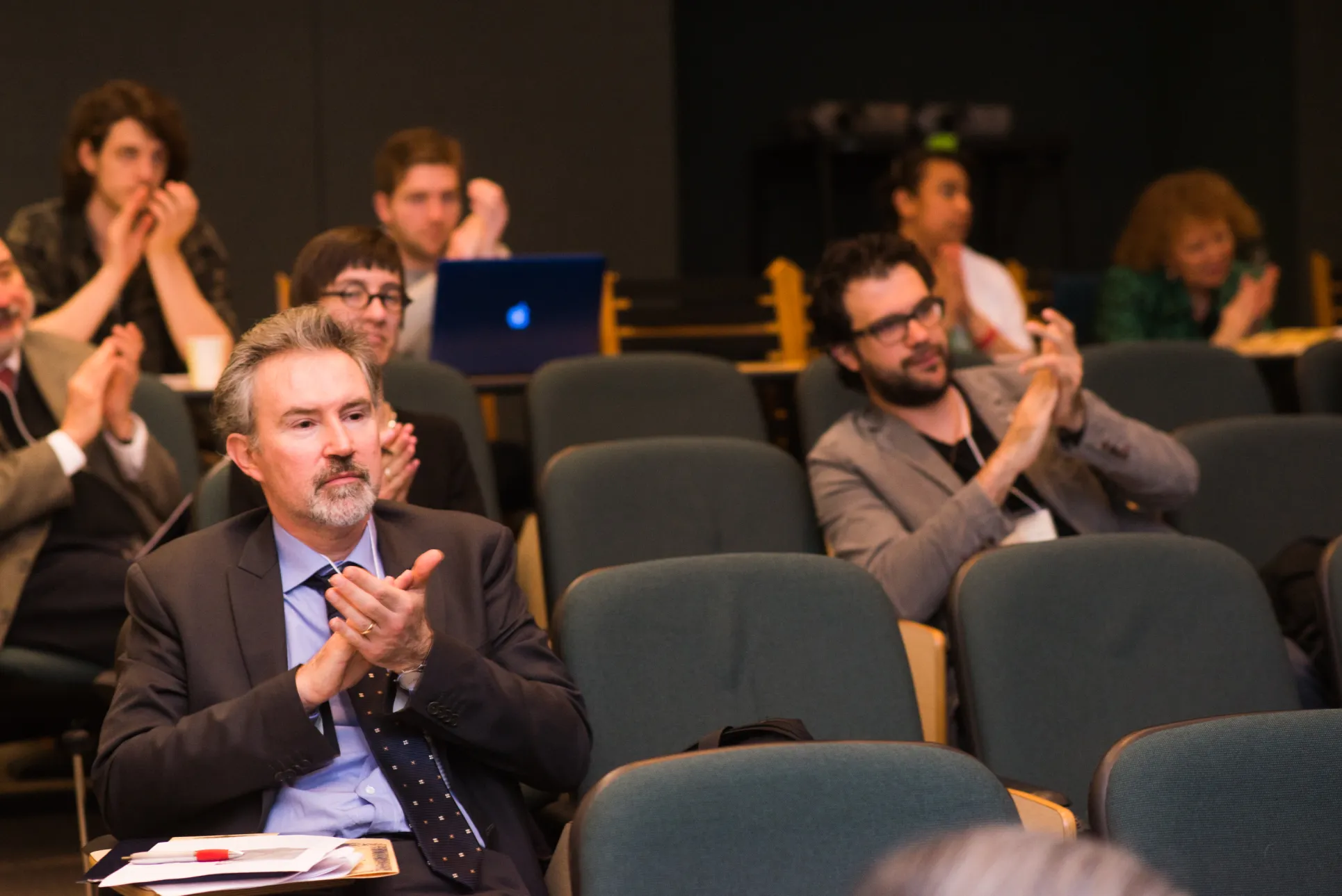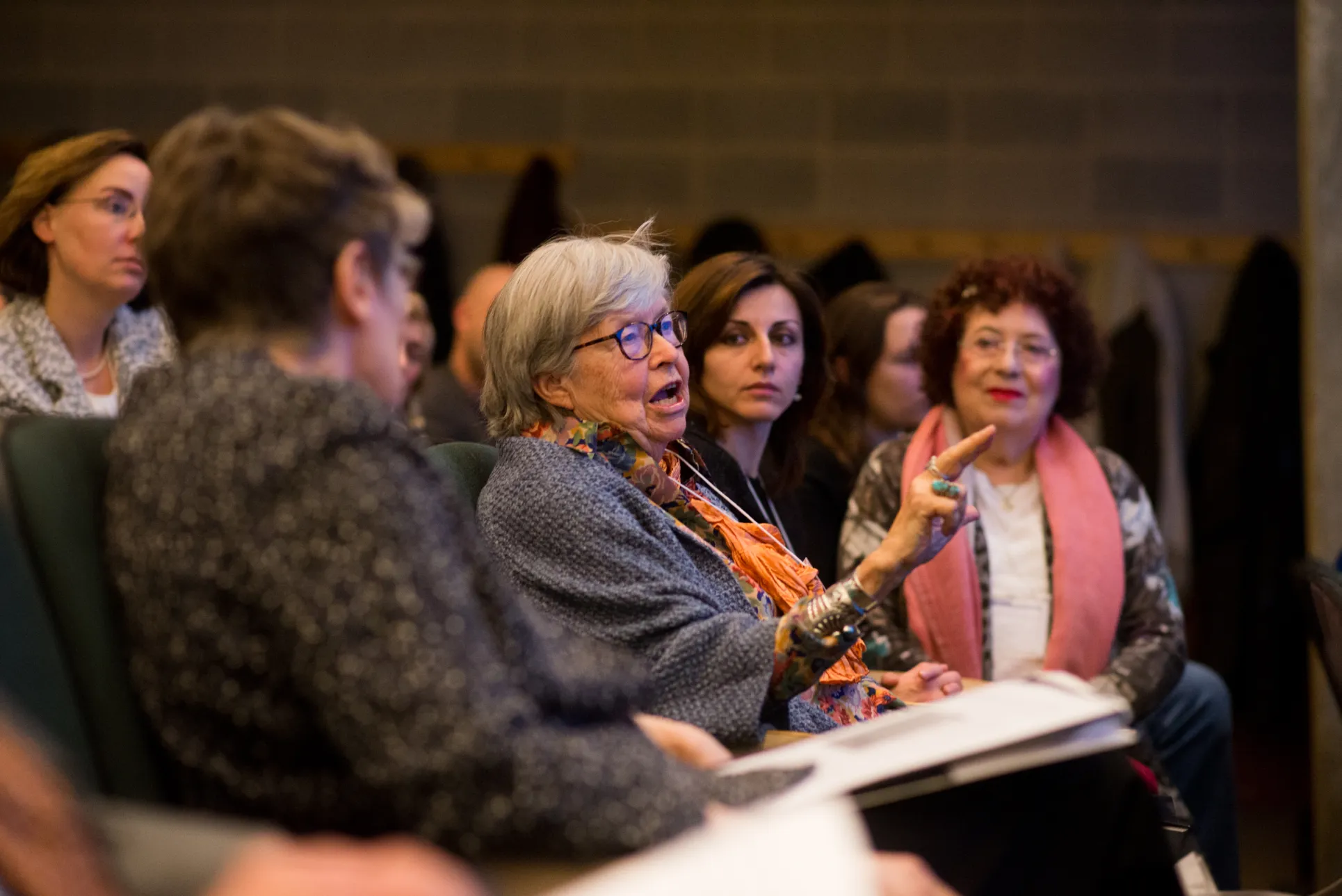
“Classicism, Humanism, and Modernity: Poggio Bracciolini’s Legacy in Florence and Beyond” Symposium
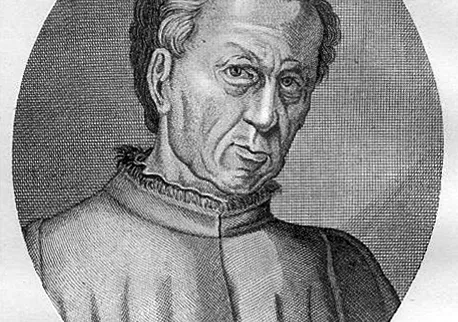
The Italian Humanist Poggio Bracciolini is important both for his rediscovery of classical texts and his design of a new script, later the model for the first printed books, with which to transcribe the material of these texts.
This conference is in memory of Phyllis Goodhart Gordan, a BMC alumna of 1935, who worked on Bracciolini and collected manuscripts of his texts.
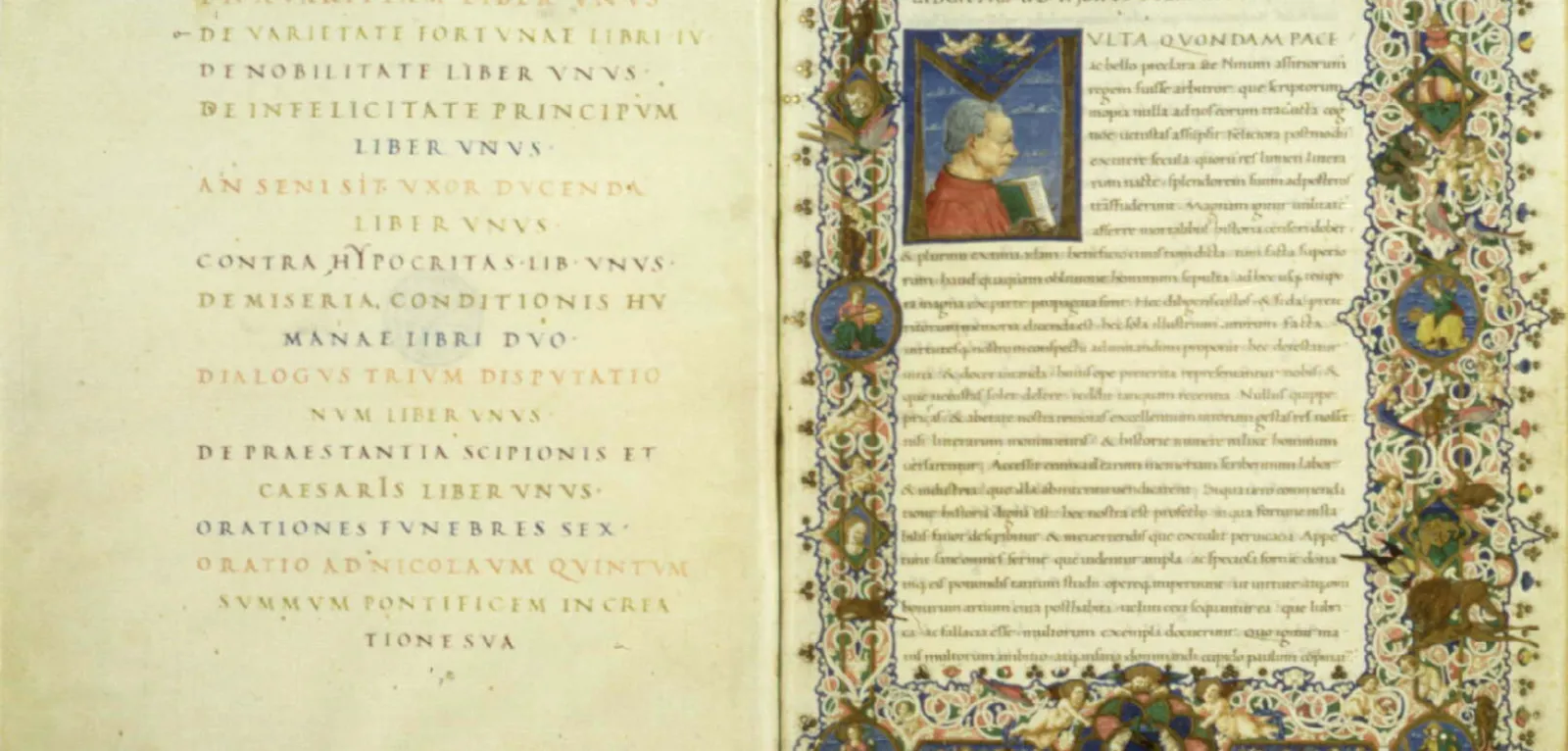
Image at the top of page: Manuscript “De varietate fortunae,” Vatican Library, Ms. Urb. lat. 224, photographic reproduction in the public domain from Wikimedia Commons.
Classicism, Humanism, and Modernity: Poggio Bracciolini’s Legacy in Florence and Beyond
Symposium
Presented by the Department of Transnational Italian Studies. Co-Sponsored by "The Phyllis Goodhart Gordon" grant in collaborating with the Gordon family. The conference website is available at this link.
Friday April 8, 2016 | Carpenter Library B21
5:00 p.m. | Keynote address
Keynote speaker: Victoria Kirkham, University of Pennsylvania (Emerita)
“Before Poggio: Shall We Call Boccaccio a Humanist?”
Saturday, April 9, 2016 | Carpenter Library B21
9:00 a.m. | Registration and Light Breakfast
Quita Woodward Room, Thomas Hall
10:00 a.m. | Opening remarks by organizers
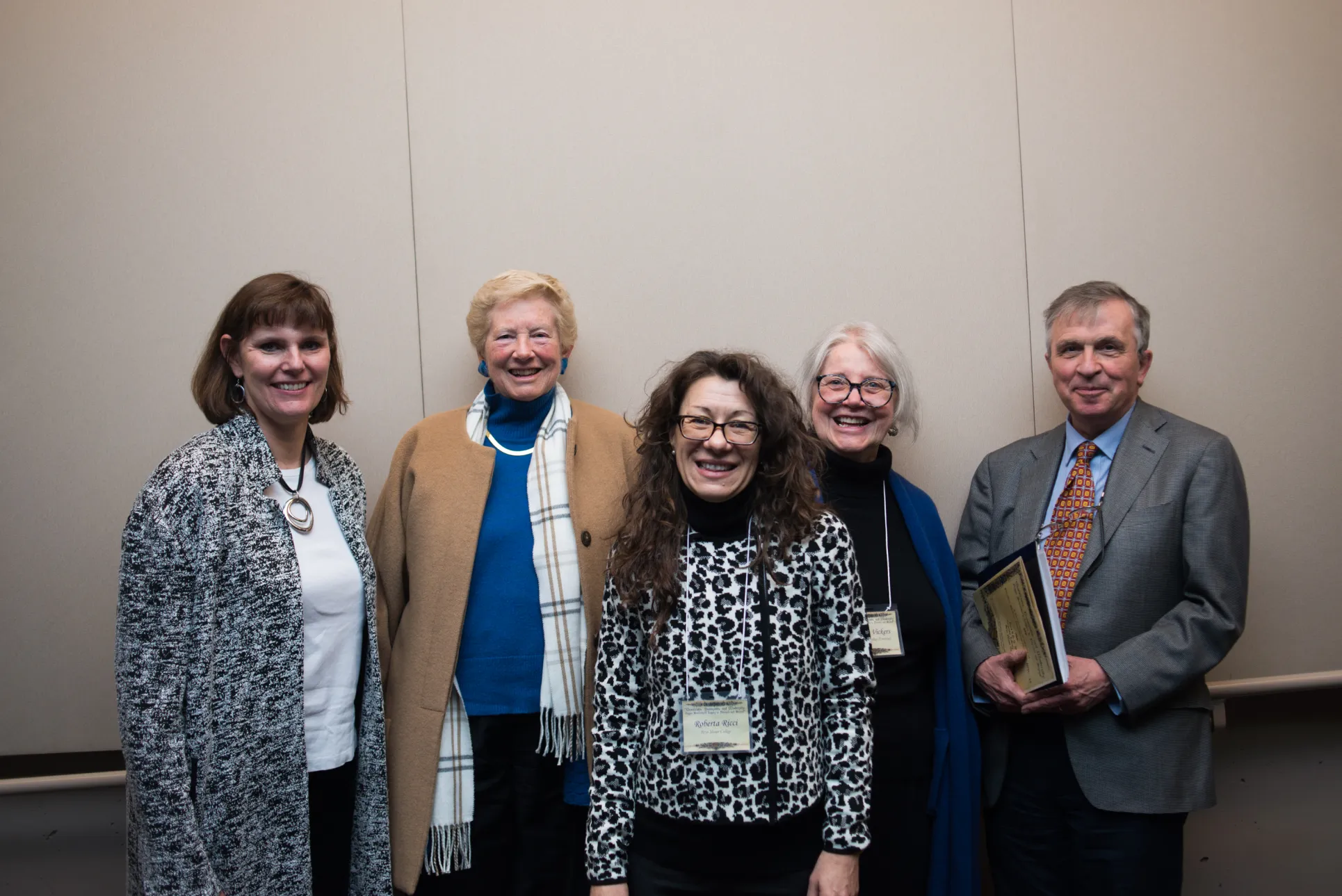
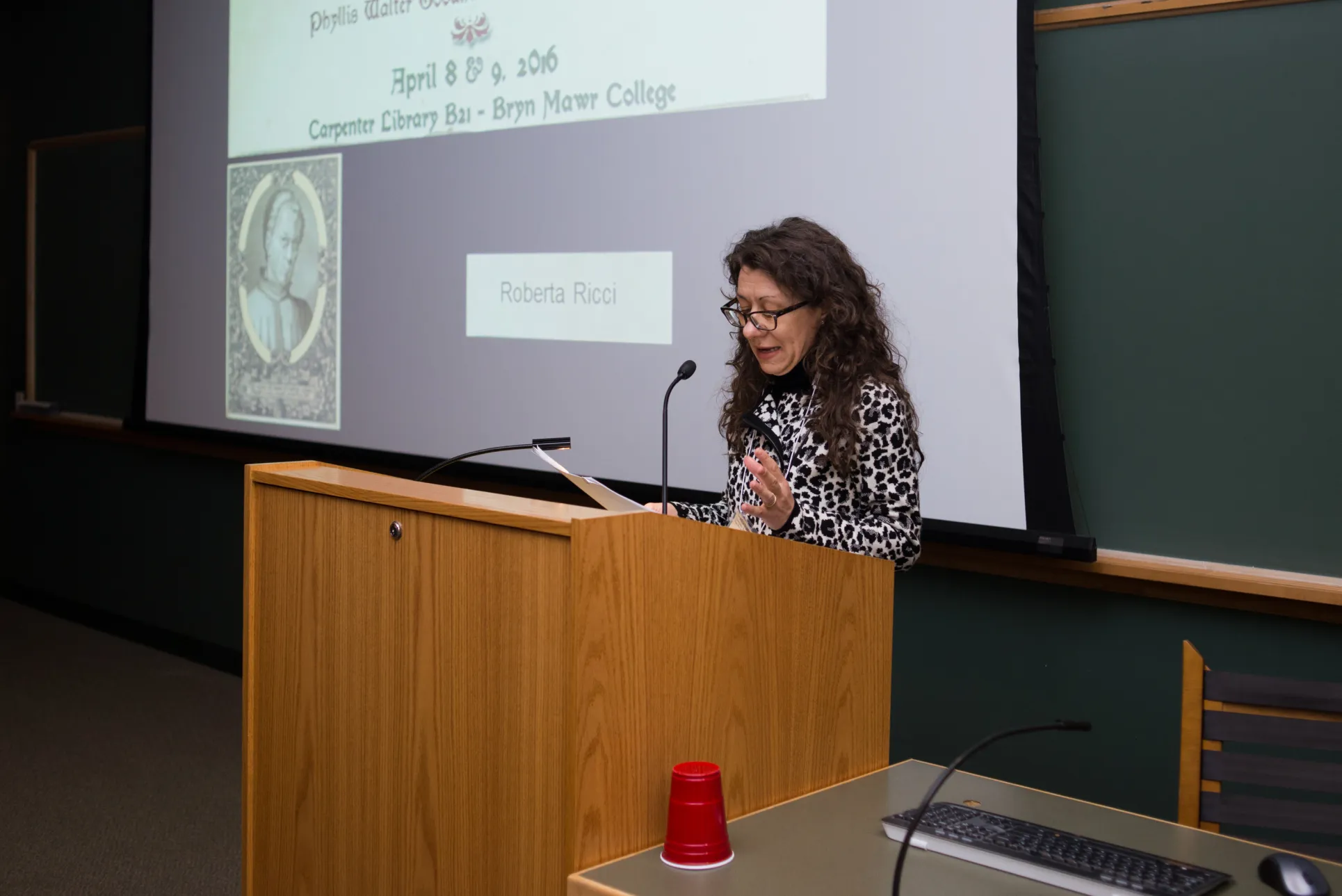
- Roberta Ricci, Italian Studies, Bryn Mawr College
- David Cast, History of Art, Bryn Mawr College
- Eric Pumroy, Special Collections, Bryn Mawr College
10:00 a.m. – 12:00 p.m. | Panel I
Chair: Nancy J. Vickers, President Emerita and Professor Emerita of French, Italian, and Comparative Literature at Bryn Mawr College
- Massimo Zaggia, University of Bergamo and Ann Mullaney, Independent Scholar: “An addition to the anthology of letters edited by Phyllis Walter Goodhart Gordan: the letter to Duke Filippo Maria Visconti in praise of Florentine liberty, 1438. Critical edition, translation into English, historical framework”
- David Rundle, University of Essex: “Philosopher and Joker: Poggio’s International Reputation”
12:00 p.m. – 1:30 p.m. | Lunch
Quita Woodward Room, Thomas Hall
1:30 p.m. – 3:00 p.m. | Panel II
Chair: Eric Pumroy, Special Collections, Bryn Mawr College
- David Marsh, Rutgers University: “Poggio and Alberti Revisited”
- Stefano U. Baldassarri, International Studies Institute Florence: “Poggio Bracciolini and Coluccio Salutati”
3:00 p.m. – 3:15 p.m. | Break
3:15 p.m. – 4:45 p.m. | Panel III
- Nancy Struever, Johns Hopkins University (Emerita): “Valla’s Quintilianesque Criticism and the Humanists’ Critique of Valla”
- Julia Gaisser, Bryn Mawr College (Emerita): “Poggio and Other Book Hunters”
4:45 p.m. | Closing remarks
- William Stenhouse, Yeshiva University, New York City
5:30 p.m. | Reception
London Room, Thomas Hall
More information
Poggio Bracciolini (born February 11, 1380, Terranuova, Tuscany, Italy—died October 30, 1459, Florence, Italy) was one of the most influential humanists, active in Italy in the first half of the fifteenth century. He wrote a number of important treatises; and as a member of the Roman Curia under seven Popes, he travelled widely in Europe, even to England, and maintained a vast correspondence with many of the most significant cultural important figures of the time. But his significance lies also in other areas; for in his travels he was able to rediscover many classical texts, buried in monastic libraries, and in making copies of these he devised a new form of script that was to become the basis for the printed texts that would appear a few years later.
Bryn Mawr College has a particular connection to Poggio for our alumna Phyllis Goodhart Gordon studied his work, collected valuable materials about him, and produced a translation of some of the letters he wrote to his friend Niccolò Niccoli, a fellow Florentine and humanist.
Adapted by Welby E. Lynn ’98 from a lecture given by Julia Gaisser, Professor Emerita of Latin at Bryn Mawr College.
Phyllis Goodhart Gordan, BMC ’35, was deeply rooted in the Bryn Mawr community. Indeed, the Bulletin of 1913 identifies her as the 1912 class baby (the caption appears below a photo of a small and serious – dare we say “scholarly”? – baby in a long white dress). Her mother, Marjorie Walter Goodhart, was a member of the class of 1912. Her father, Howard Goodhart, gave the college not only Goodhart Hall, but also over 960 incunabula – the bulk of the College’s collection. Both gifts were given in memory of his wife, who had died – so young – in 1920, only a few years after leaving Bryn Mawr.
As an undergraduate the young Phyllis Goodhart majored in Latin, studying with some of my most eminent predecessors in the Department, including Bob Broughton, Lily Ross Taylor, Berthe Marti, and a very young Agnes Kirsopp Michels (Nan Michels), then Agnes Lake. (Nan graduated from Bryn Mawr in 1930, and took her Ph.D. in 1934. Berthe Marti was a few years older, but, like Nan, she was a graduate student during most of Phyllis’s undergraduate career.)
Two of Phyllis’s undergraduate papers are preserved in the Archives. One is her senior essay, entitled “The Classical Background of St. Augustine’s Reading as Shown in the De civitate dei.” (I think she must have written it for Nan Michels – Berthe Marti would have been the obvious candidate, but she is not listed in the College Calendar for 1934 or ’35.) This paper, nearly 90 pages long, lives up to its title, for Phyllis has traced and followed to its source every classical reference in Augustine’s great work, using the testimony of Augustine’s Confessions as evidence for his intellectual background and education.
Phyllis’s comment that “Augustine presents a very pleasant field for exploration since the background of De civitate dei is confined to the Bible and Latin literature.” is quite amusing. The young Phyllis Goodhart was already a serious student and researcher, but I think I detect a note of honest relief that she wasn’t going to have to survey the whole of Greek, as well as Latin literature, for Augustine’s sources.
Her other undergraduate paper is entitled “Written by the Hand of Poggio.” Phyllis wrote it in her junior year for Lily Ross Taylor, who had encouraged her to work on the rediscovery of lost classical texts. Miss Taylor was a famous and charismatic teacher, but probably none of her assignments ever had a greater impact on the life of one of her students. Phyllis’ paper on Augustine is thorough and dutiful, but the one on Poggio is a labor of love. The paper is 22 single-spaced pages, and includes in its bibliography not only several works of Poggio, especially his letters, but also various works of intellectual history in French and German, as well as in English. (I might note that we see a similar level of attainment in the Augustine paper, for it is clear that she read all of the City of God and the Confessions in Latin, and then studied all of Augustine’s classical allusions and their contexts in the Latin sources.) This is the kind of work that one might expect from a good Bryn Mawr student 60 years ago.
After graduating from Bryn Mawr, she went to Harvard to study Greek palaeography with Nan Michels’ father, Kirsopp Lake, as she records in a wonderful article for the Alumnae Bulletin of January 1939. Its title, appropriately enough, is “Manuscript Hunters.” In 1936, after her first year at Radcliffe, she and her Bryn Mawr classmate, Helen Ripley, traveled abroad seeking material for Kirsopp Lake’s book, Dated Greek Minuscule Manuscripts. The highpoint of their summer was a week spent in Cheltenham studying the famous manuscript collection of Sir Thomas Phillips under the not very watchful eye of his 80-year-old grandson, T. Fitzroy Fenwick. Although everyone had told them that they would never be admitted, they somehow managed it. Mr. Fenwick discouraged visitors by charging them a pound a day to see the collection, but as Phyllis relates: “He refused to charge us anything, because he had never before had two American college girls come to study his Greek manuscripts.”
Phyllis took her M.A. at Radcliffe in 1938 and married John Gordan in the same year. Between 1942 and 1950 she produced four children. The College News for April 1953 reports that Phyllis visited Bryn Mawr to give a lecture entitled, “How Latin Can Be Fun.” The student reporters, though obviously unconvinced, nevertheless gave the event detailed coverage. They report that “with a microfilm reader set up beside the babies’ playpen she combined her hobby of reading Latin documents from the Renaissance with entertaining her children.”
In these years, and indeed for the rest of her life, Phyllis devoted as much time and energy to fostering the scholarship of others as she did to her own. In 1951 she became one of the 7 founding members of this body, The Friends of the Bryn Mawr College Library; and in the same year she became the first woman trustee of the American Academy in Rome. She was a trustee of the College, of the New York Public Library, of the Renaissance Society, and of the American Philological Association. Among her innumerable gifts to Bryn Mawr scholars I can note only three: the reference room in Canaday, our first microfilm reader, and Mario Cosenza’s invaluable Biographical Dictionary of Italian Humanists.
At last, in 1974, forty years after her fateful undergraduate paper for Lily Ross Taylor, Phyllis brought the first part of her Poggio project to fruition, publishing 108 of Poggio’s letters in an elegant annotated translation entitled: Two Renaissance Book Hunters. The Letters of Poggius Bracciolini to Nicolaus de Niccolis. She planned to publish the rest in subsequent volumes, but, alas, that goal was never realized. Yet her work is not lost. She has left us her Poggio notes and papers with the relevant microfilms and library in the hope that someone else might take up the task. Completing the publication of Poggio’s correspondence will be no easy project (for something like 450 letters remain); but whoever undertakes it will be immeasurably assisted by the resources of the Gordan collection and above all by the meticulous work of Phyllis herself, a woman who knew better than most, “Of What Use are Old Books.”
Speakers
Stefano U. Baldassarri (Director, International Studies Institute, Florence) holds a Ph.D. from Yale University. His main field of study is medieval and Renaissance literature. He has done critical editions of works by Leonardo Bruni, Antonio Loschi, Giannozzo Manetti, and Coluccio Salutati.
David Cast (Ph.D. History of Art, Columbia) is Professor of History of Art and Eugenia Chase Guild Professor of the Humanities at Bryn Mawr College. He works on the history of the Classical Tradition, most specifically in the Italian Renaissance. His most recent publications are The Delight of Art: Vasari and the Traditions of Humanist Discourse (2009) and The Ashgate Companion to Giorgio Vasari (2014).
Julia Gaisser is Eugenia Chase Guild Professor Emerita in the Humanities, Bryn Mawr College. She is principally interested in Latin Poetry, Renaissance humanism, and the reception and transmission of classical texts. Her books include Catullus and His Renaissance Readers (1993), The Fortunes of Apuleius and the Golden Ass (2008), and Catullus (2009); she is also the editor and translator Pierio Valeriano on the Ill Fortune of Learned Men (1999) and Giovanni Pontano’s Dialogues: Charon and Antonius (2012).
Victoria Kirkham is Professor Emerita of Romance Languages at the University of Pennsylvania. She has written on medieval and Renaissance Italian culture, both literary and visual. She contributed the essay on Quattrocento literature, “Poetic Ideals of Love and Beauty,” to Virtue and Beauty: Leonardo’s “Ginevra de’ Benci” and Renaissance Portraits of Women,” catalog of an exhibition at the National Gallery in Washington (2001); and “Hypno What? A Dreamer’s Vision and the Reader’s Nightmare,” to Architectures of the Text: An Inquiry into the Hypnerotomachia Poliphili, in Word and Image (2015). Among other recent articles are “Contrapasso: The Long Wait to Inferno 28,” in MLN (2012); “The Cook’s Decameron, or, Boccaccio to the Rescue of the Dull British Diet,” in Boccaccio in America (2012); “The Apocryphal Boccaccio,” in Mediaevalia (2013); and “The Decameron in Arcadia,” on an eighteenth-century Sienese manuscript anthology at Penn, in Studi sul Boccaccio (2013). Her latest volume, co-edited with Janet Smarr and Michael Sherberg, is Boccaccio: A Critical Guide to the Complete Works (Chicago, 2013).
David Marsh (Ph.D. in Comparative Literature, Harvard) is Professor of Italian at Rutgers University. He is the author of The Quattrocento Dialogue (1980), Lucian and the Latins (1998), Studies on Alberti and Petrarch (2012), and The Experience of Exile Described by Italian Writers (2013); as well as the translator of Alberti’s Dinner Pieces (1987), Vico’s New Science (1999), Petrarch’s Invectives (2003), and Renaissance Fables (2004).
Eric Pumroy is Associate Chief Information Officer and Seymour Adelman Director of Special Collections at Bryn Mawr College. Prior to coming to Bryn Mawr in 1999, he was director of the museum and library at the Balch Institute for Ethnic Studies in Philadelphia, and was head of special collections at Indiana University-Purdue University at Indianapolis. He holds graduate degrees in Early Modern European History and Library and Information Science from the University of Chicago, and has written and spoken extensively on libraries, historical collections, and ethnic studies.
Roberta Ricci received her Ph.D. in Italian Literature from Johns Hopkins University, MD, after a Laurea in Lettere Moderne summa cum laude from the University of Pisa in Philology. She is now working as co-editor for a special interdisciplinary issue of NeMLA Italian Studies 2016 dedicated to the Renaissance, to which she will also contribute with an article on Poggio Bracciolini. She has authored “Scrittura, riscrittura, autoesegesi: voci autoriali intorno all’epica in volgare. Boccaccio, Tasso”, Pisa, ETS Press, and co-edited “Approaches to Teaching the Works of Primo Levi Levi”, New York, MLA Press.
David Rundle is Lecturer in History and Co-Director of the Centre for Bibliographical History at the University of Essex. He is also a member of the History Faculty of the University of Oxford. David is an historian of the intellectual life of Renaissance Europe and is particularly interested in the evidence for the circulation of ideas provided by surviving manuscripts and early printed books. His is completing a monograph to be published by Cambridge University Press entitled The Renaissance Reform of the Book and Britain: the English Quattrocento. He is author, with Prof. Ralph Hanna, of the forthcoming Descriptive Catalogue of the Western Manuscripts, up to c. 1600, of Christ Church, Oxford (Oxford Bibliographical Society). He is also, with Hester Schadee, preparing a translation of some of Poggio Braccolini’s works for the I Tatti Renaissance Library.
William Stenhouse is an Associate Professor of History at Yeshiva University, New York. He works on the renaissance reception of classical antiquities. His books include Reading Inscriptions and Writing Ancient History: Historical Scholarship in the Late Renaissance (2005), and the volume of drawings of inscriptions in the catalogue raisonné of the dal Pozzo Paper Museum (2002).
Nancy Struever is Professor Emerita in the Department of Comparative Thought and Literature, and she was previously a professor at the Hobart and William Smith Colleges. Struever is an American historian of the Renaissance.
Nancy J. Vickers is both President Emerita and Professor Emerita of French, Italian, and Comparative Literature at Bryn Mawr College. She previously taught at Dartmouth College and the University of Southern California. Her interests range from Dante to Renaissance poetry to the transformations of the lyric genre as a result of changing technologies. She has published numerous articles and was a coeditor of Rewriting the Renaissance: The Discourses of Sexual Difference in Early Modern Europe (1986). She recently served as president of the Dante Society of America and is currently treasurer of the board of the American Council of Learned Societies.
Massimo Zaggia (Ph.D. in Italian Philology, Scuola Normale Superiore in Pisa) is an Associate Professor of Italian Philology and Linguistic at the Università di Bergamo. His research focuses on Italian Literature and Civilization in the Middle Ages and in the Renaissance, particularly in Lombardy, in Tuscany, in Sicily. He has published the critical edition of Folengo’s Macaronee minori (1987) and of the Tuscan volgarizzamento from Ovid’s Heroides (2009-2015), the biography Giovanni Matteo Bottigella. Un percorso nella cultura lombarda di metà Quattrocento (1998), three volumes Tra Mantova e la Sicilia nel Cinquecento (2003), and a large number of articles.
News coverage