


Community Engagement
The self-study is intended to be a transparent, collaborative process involving faculty, staff, students, trustees, and alumnae/i. Participation from across the Bryn Mawr community helps ensure that the self-study accurately reflects institutional strengths, challenges, and opportunities.
Surveys and Feedback
Questions, comments, and suggestions about the self-study process are welcome.
How to Participate

Students
Attend forums, participate in surveys, and provide feedback on the student experience.
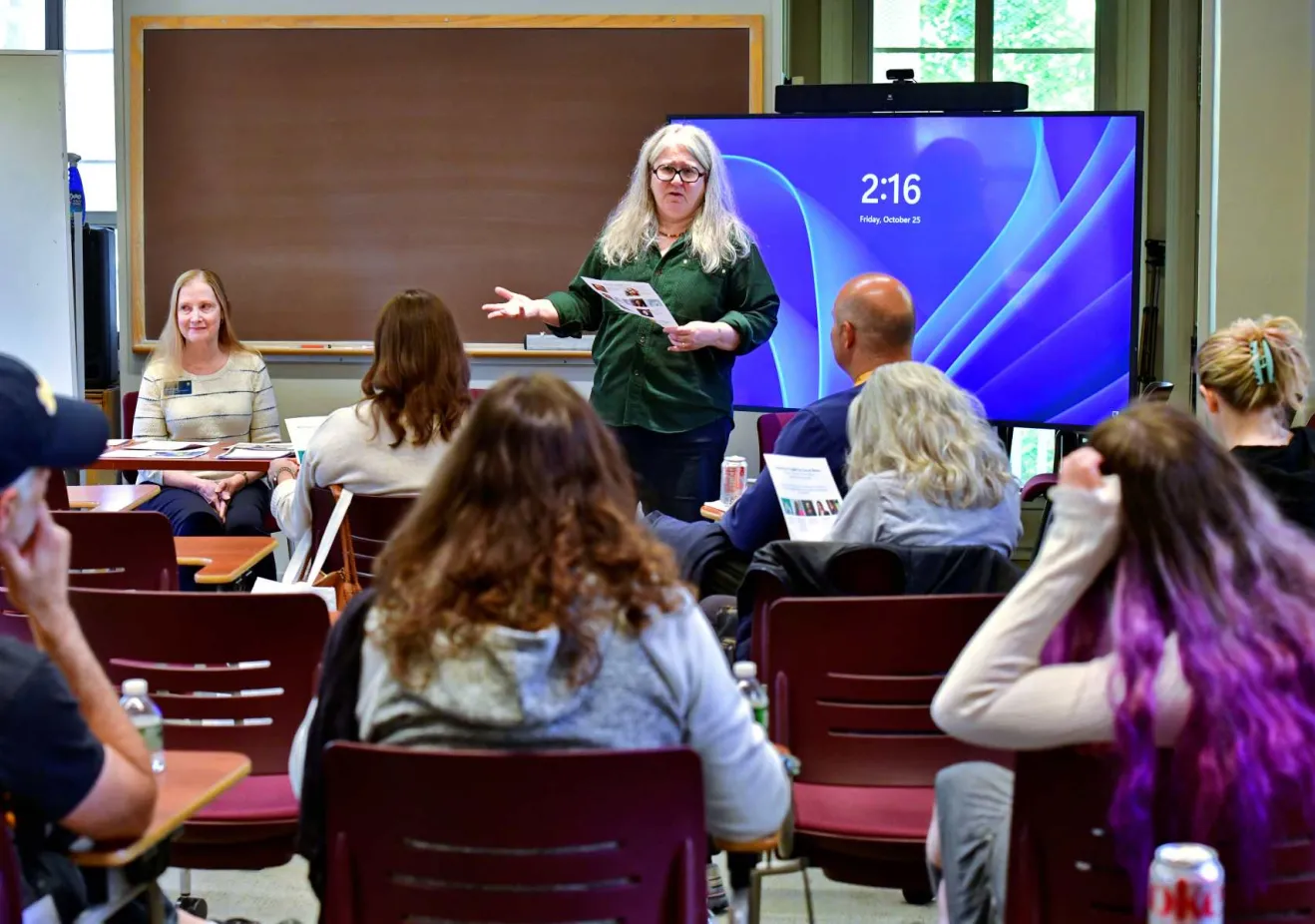
Faculty
Engage through governance structures, working groups, forums, and draft review opportunities.
Staff
Participate in meetings, surveys, and conversations about institutional effectiveness and student support.
Trustees
Receive updates, provide strategic guidance, and participate in governance-related aspects of the review.
Alumnae/i
Review public materials and engage through future feedback opportunities.
Steering Committee

Dee Matthews
Accreditation Liaison Officer
Provost and Professor of Creative Writing. Leads overall coordination of the self-study process.

Matt Ruben
Committee Member
Interim Co-Chair of Growth and Structure of Cities and Visiting Assistant Professor.

Leslie Cheng
Committee Member
Associate Provost for Academic Development and Professor of Mathematics.

Christopher Barth
Committee Member
Vice President, Chief Information Officer, and Constance A. Jones Director of Libraries.
Working Groups
Purpose
This group examines how Bryn Mawr's mission and strategic priorities guide decision-making across the institution. The review explores how the mission informs academic programs, student experiences, resource allocation, and long-term planning.
Working Group
- Dee Matthews, Provost and Professor of Creative Writing (CHAIR)
- Bob Miller, Vice President for Alumnae/i Relations and Development
- Michael Noel, Professor of Physics and Faculty Chair
Key Questions
- How well does Bryn Mawr's mission reflect the values of the College community?
- How are institutional goals aligned with the mission?
- How do academic programs support the mission and strategic direction?
- How do co-curricular and extracurricular experiences support institutional goals?
- How are budgetary decisions aligned with the mission?
- How do institutional goals support the recruitment, retention, and success of students, faculty, and staff?
Campus Partners
Because the mission guides all aspects of College life, this working group will seek input from all major constituencies, including students, faculty, staff, administrators, trustees, and alumnae/i.
Purpose
This group evaluates how Bryn Mawr demonstrates ethical behavior, transparency, fairness, and accountability through its policies, practices, communications, and institutional culture.
Working Group
- Katie Nash, Vice President for External Relations (CHAIR)
- Angi Lee, Undergraduate Student
- Jill Walsh, Vice President and Chief Human Resources Officer
- Monique Scott, Associate Professor of History of Art and Director of Museum Studies
Key Questions
- How effectively does the College support academic freedom and freedom of expression?
- How is campus climate assessed and improved?
- Are grievance processes transparent, equitable, and accessible?
- How are employment and promotion practices communicated and implemented?
- How effectively does the College communicate with internal and external audiences?
- How equitable is access to institutional resources?
- How are campus safety policies developed and evaluated?
Campus Partners
- Human Resources
- Campus Safety
- Provost's Office
- Communications and Marketing
- Admissions
- Financial Aid
- Student Government Association
- Honor Board
- General Counsel
- Library and Information Technology Services (LITS)
Purpose
This group examines how Bryn Mawr delivers a rigorous liberal arts education through academic programs, teaching practices, interdisciplinary learning, and co-curricular opportunities.
Working Group
- Richie Gebauer, Dean of Student Success (CHAIR)
- Alison Cook-Sather, Mary Katherine Woodworth Chair and Professor in the Bryn Mawr/Haverford Education Program, and Director of the Peace, Conflict, and Social Justice Program
- Kirsten O'Beirne, Registrar
- Julia Kotes, Student
Key Questions
- How well do academic programs provide coherent and intellectually integrated learning experiences?
- How do faculty encourage active and engaged learning?
- How are student learning outcomes assessed and used for improvement?
- How effectively does the general education curriculum support critical thinking and communication?
- How are faculty supported in teaching, scholarship, and professional development?
- How are academic and co-curricular experiences connected?
- How effectively are academic requirements and opportunities communicated?
Campus Partners
- Academic departments
- Registrar
- Undergraduate Curriculum Committee
- Office of Academic Support
- Deans of Graduate Programs
- Career and Civic Engagement Center
- Writing Center
- Quantitative Center
- Athletics
Purpose
This group focuses on the student experience from recruitment through graduation and beyond, examining the programs, services, and support systems that contribute to student success and wellbeing.
Working Group
- Katie Krimmel, Dean of Career & Civic Engagement (CHAIR)
- Catharine Slusar, Associate Professor and Director of Theater on the Theresa Helburn Chair of Drama, and Director of the Arts
- Melissa Giess, Assistant Dean, Sophomore Experience
- Jennifer Prudencio, Senior Associate Director, Employer Relations and Internships
Key Questions
- How effectively do student support services advance Bryn Mawr's mission?
- How well does the College recruit and support students who are a strong fit for Bryn Mawr?
- How effectively are students supported academically, socially, and personally throughout their time at the College?
- How are professional staff prepared to provide high-quality student support?
- How is assessment data used to improve programs and services?
Campus Partners
- Center for Student Success
- Center for Student Engagement
- Career & Civic Engagement Center
- Admissions
- Financial Aid
- Health Center
- Athletics
- IMPACT Center
- Writing Center
- Quantitative Center
- Graduate and Post-Baccalaureate students
Purpose
This group evaluates how Bryn Mawr measures student learning and educational effectiveness and how those results are used to improve programs, curriculum, and institutional practices.
Working Group
- Richard Barry, Director of Institutional Research, Planning, & Assessment (CHAIR)
- David Consiglio, Director, Assessment, Learning Spaces and Special Projects
- Leslie Cheng, Associate Provost for Academic Development and Professor of Mathematics
- Sarah Leonard-Hayward, Director, Data Strategy and Governance
- Matt Ruben, Interim Co-Chair of Growth and Structure of Cities and Visiting Assistant Professor of Cities and The Emily Balch Seminars
Key Questions
- How are institutional learning goals developed and communicated?
- How does the College assess student learning outcomes?
- How are assessment results analyzed and used for improvement?
- How does Bryn Mawr help students connect their education to meaningful careers and lives?
- How is learning assessment communicated across campus?
- How are results examined for different student populations?
- How are departmental assessments integrated into institution-wide assessment efforts?
Campus Partners
- Institutional Research
- Registrar
- Admissions
- Academic Support
- Curriculum Committee
- Graduate School of Arts and Sciences
- Graduate School of Social Work and Social Research
Purpose
This group examines how planning, budgeting, resources, technology, facilities, and assessment support Bryn Mawr's mission and strategic priorities.
Working Group
- Patricia Langer, Vice President for Finance and Administration (CHAIR)
- Janet Shapiro, Dean, Graduate School of Social Work and Social Research and Director, Center for Child and Family Wellbeing
- Thomas Mozdzer, Professor of Biology
- Neha Sood, Director, Sustainability and Environmental Action
- Ernesto Gonzalez, Associate Vice President, Facilities Services
- Mike Chaplinski, Budget Manager
Key Questions
- How clearly are organizational structures and responsibilities defined?
- How are planning and assessment processes coordinated across the institution?
- How are budgets developed and aligned with the mission?
- How effectively do facilities, technology, and infrastructure support teaching and learning?
- How are financial and operational decisions informed by institutional data?
- How does Bryn Mawr continuously assess and improve its use of resources?
Campus Partners
- Finance Office
- Facilities Services
- Human Resources
- Board of Trustees
- Sustainability Office
- LITS
- Institutional Research
- Residential Life
- Transportation
- Environmental Health and Safety
Purpose
This group evaluates Bryn Mawr's governance structures, leadership practices, administrative processes, and systems of accountability.
Working Group
- Jonas Goldsmith, Associate Professor and Chair of Chemistry (CHAIR)
- Amanda Chudnow, Secretary of the College
- Tijana Stefanovic, Controller
- Saskia Subramanian, Chair, Board of Trustees
Key Questions
- How clear and accessible are Bryn Mawr's governance structures?
- How do governance systems support the College mission?
- How are institutional decisions made and communicated?
- How are leaders recruited, supported, and evaluated?
- How effective are administrative structures and processes?
- How are opportunities for feedback incorporated into governance?
- How does the Board provide oversight and support institutional effectiveness?
Campus Partners
- President's Office
- Provost's Office
- Board of Trustees
- Finance
- Human Resources
- General Counsel
- Student Government Association
- Honor Board
- Staff Association
- Faculty committees