

Courses
This page displays the schedule of Bryn Mawr courses in this department for this academic year. It also displays descriptions of courses offered by the department during the last four academic years.
For information about courses offered by other Bryn Mawr departments and programs or about courses offered by Haverford and Swarthmore Colleges, please consult the Course Guides page.
For information about the Academic Calendar, including the dates of first and second quarter courses, please visit the College's calendars page.
Fall 2026 EDUC
| Course | Title | Schedule/Units | Meeting Type Times/Days | Location | Instr(s) |
|---|---|---|---|---|---|
| EDUC B105-001 | Education Studies: Theories, Practices, & Possibilities | Semester / 1 | Lecture: 2:40 PM-4:00 PM MW | Dalton Hall 1 |
Lesnick,A. |
| EDUC B275-001 | Emergent Multilingual Learners in U.S. Schools | Semester / 1 | Lecture: 10:10 AM-11:30 AM MW | Carpenter Library 21 |
|
| EDUC B301-001 | Curriculum and Pedagogy Seminar | Semester / 1 | Lecture: 7:10 PM-10:00 PM T | Bettws Y Coed 127 |
Jimenez,I. |
| EDUC B403-001 | Supervised Work | 1 | Dept. staff, TBA | ||
| SOCL B275-001 | Social Problems, Community Conversations | Semester / 1 | Lecture: 12:10 PM-3:00 PM F | Dalton Hall 2 |
Sorge,D. |
Spring 2027 EDUC
| Course | Title | Schedule/Units | Meeting Type Times/Days | Location | Instr(s) |
|---|---|---|---|---|---|
| EDUC B200-001 | Community Learning Collaborative: Practicing Partnership | Semester / 1 | Lecture: 7:10 PM-10:00 PM M | Price,E. | |
| EDUC B300-001 | Community-Engaged Learning: Theory, Research, and Practice | Semester / 1 | Lecture: 2:40 PM-4:00 PM TTH | Lesnick,A. | |
| EDUC B403-001 | Supervised Work | 1 | Dept. staff, TBA | ||
| SOCL B275-001 | Social Problems, Community Conversations | Semester / 1 | Lecture: 12:10 PM-3:00 PM F | Sorge,D. |
Fall 2027 EDUC
(Class schedules for this semester will be posted at a later date.)
2026-27 Catalog Data: EDUC
EDUC B105 Education Studies: Theories, Practices, & Possibilities
Fall 2026
This course is designed for students interested in exploring key theories, competencies, and questions in the field of education studies in general and the Education Department at Bryn Mawr and Haverford in particular in relation to each enrolled student's experiences and aspirations. Areas of exploration include: the significance of community-based praxis and research; skill-building in conflict resolution and restorative practice; the nature of assessment; the role of technology in education and society; the meaning and purpose of theory; and, throughout, retrospective experiential reflection in dialogue with students' future goals.
Cross-Cultural Analysis (CC)
Power, Inequity, and Justice (PIJ)
EDUC B200 Community Learning Collaborative: Practicing Partnership
Spring 2027
One of the four entry-point options for student majoring or minoring in Education Studies, this course is open to students exploring an interest in educational practice, theory, research, and policy. The course asks how myriad people, groups, and fields have defined the purpose of education, and considers the implications of conflicting definitions for generating new, more just, and more inclusive modes of "doing school" informed by community-based as well as academic streams of educational practice. In collaboration with practicing educators, students learn practical and philosophical approaches to experiential, community-engaged learning across individual relationships and organizational contexts. Fieldwork in an area school or organization required
Writing Attentive
Cross-Cultural Analysis (CC)
Power, Inequity, and Justice (PIJ)
Counts Toward: Africana Studies; Child and Family Studies.
EDUC B210 Perspectives on Special Education
Not offered 2026-27
One of the four entry-point options for students majoring or minoring in Education Studies, this course has as its goal to introduce students to a range of topics, challenges and dilemmas that all teachers need to consider. Students will explore pedagogical strategies and tools that empower all learners on the neurological spectrum. Some of the topics covered in the course include how the brain learns, how past learning experiences impact teaching, how education and civil rights law impacts access to services, and how to create an inclusive classroom environment that welcomes and affirms all learners. The field of special education is vast and complex. Therefore, the course is designed as an introduction to the most pertinent issues, and as a launch pad for further exploration. Weekly fieldwork required.
EDUC B215 Democracy, Race, and American Education
Not offered 2026-27
In this course participants will collectively ask: what function does education play in a healthy democracy? How has the United States' history of race relations informed its institutions-both governing and educational ones? And perhaps most critically, what do we hold as hopes for the future of education and how can we shape that future? This seminar will include film screenings and engage with the work of scholars, activists, collectives, and politicians.
EDUC B220 Changing Pedagogies in Mathematics and Science
Not offered 2026-27
This Praxis course will examine research-based approaches to teaching mathematics and science. What does research tell us about how people learn? How can one translate this learning theory into teaching approaches that will help all students learn mathematics and science? How are these new approaches, that often involve active, hands-on, inquiry based learning, being implemented in the classroom? What challenges arise when one tries to bring about these types of changes in education? How do issues of equity, discrimination, and social justice impact math and science education? The Praxis component of the course usually involves two (2) two hour visits per week for 8 weeks to a local math or science classroom.
Cross-Cultural Analysis (CC)
Counts Toward: Praxis Program.
EDUC B225 Topics: Empowering Learners
Not offered 2026-27
This is a topics course. Course content varies. Praxis course.
EDUC B240 Qualitative Research
Not offered 2026-27
This course teaches students to use and interpret observation, survey, interview, focus group, and other qualitative methods of educational research, as well as to read and write about such research. In addition to class meetings, research teams will meet regularly.
EDUC B250 Literacies and Education
Not offered 2026-27
A critical exploration of what counts as literacy, who decides, and what the implications are for teaching and learning. Students explore both their own and others experiences of literacy through reading and writing about power, privilege, access and responsibility around issues of adult, ESL, cultural, multicultural, gendered, academic and critical literacies. Fieldwork required. Priority given first to those pursuing certification or a minor in educational studies.
EDUC B255 Technology, Education and Society Altering Environments
Not offered 2026-27
This course examines the dynamic role and impact of technology in classroom, informal, community, and global contexts. In order to develop agency and judgment in using, creating and evaluating technologies, students will learn via experience and critical exploration of associated questions of power, knowledge, culture, access, and identity. Prerequisite: EDUC 200
Critical Interpretation (CI)
Cross-Cultural Analysis (CC)
Counts Toward: Africana Studies; Education.
EDUC B266 Geographies of School and Learning: Urban Education Reconsidered
Not offered 2026-27
This course examines issues, challenges, and possibilities of urban education in contemporary America. We use as critical lenses issues of race, class, and culture; urban learners, teachers, and school systems; and restructuring and reform. While we look at urban education nationally over several decades, we use Philadelphia as a focal "case" that students investigate through documents and school placements. Weekly fieldwork in a school required.
EDUC B275 Emergent Multilingual Learners in U.S. Schools
Fall 2026
This course, offered as both an elective as well as a course required for students pursuing secondary teaching certification in Pennsylvania through the Bi-Co Education Program, operates from a heteroglossic and culturally and linguistically sustaining stance that has four intersecting aims. First, the course seeks to support students in a critical self-examination of the ways that language has shaped their lives and learning, particularly in the context of racism, linguicism, ethno- and euro-centrism, marginalization and austerity in schools and society. Second, students investigate the ways that both historical and contemporary educational policy concerning the education of EMLLs in the United States has operated from a monoglossic orientation that has limited programmatic and pedagogical options within the classroom to those that fail to address the lived realities and needs of this growing population of students. Third, students collaboratively research and present their findings on heteroglossic classroom language practices that, in contrast to those above, respect and leverage students' community cultural wealth and full linguistic repertoires. Fourth, students, drawing upon these findings as well as research on multiple language and literacy acquisition, hone their skills as curriculum designers and pedagogues, working to address EMLLs' diverse strengths and needs in mainstream classrooms and other educational settings. All four aims are bolstered by weekly fieldwork opportunities to learn with and from EMLLs and their educators in the Philadelphia area. Lottery Preference(s): 1. EDUC majors and Certification students; 2. EDUC minors; 3. then by seniority
Cross-Cultural Analysis (CC)
Power, Inequity, and Justice (PIJ)
Counts Toward: Child and Family Studies; Peace Justice and Human Rights.
EDUC B290 Co-creation for Equity & Justice: Theory & Practice
Not offered 2026-27
This course explores co-creation of teaching and learning for equity and justice as a growing practice in various national and global contexts. Students will: (a) analyze the theories, traditions, and policies that inform co-creation (e.g., pedagogical partnership; student voice/Committee on the Rights of the Child; the democratic schools movement; critical and feminist pedagogies; decolonizing and anti-racist education); (b) explore practices of co-creation across contexts around the world; and (c) generate an action plan for a co-creation approach appropriate to one of the area of specialization offered through the major in Education Studies (e.g., secondary education, out-of-school contexts, higher education) and focused on fostering equity and justice within that area.
Writing Attentive
Critical Interpretation (CI)
Power, Inequity, and Justice (PIJ)
EDUC B295 Exploring and Enacting Transformation of Higher Education.
Not offered 2026-27
As institutions of higher education embrace and even seek greater diversity, we also see an increase in tensions born of differences across which we have little preparation to communicate, learn, and live. This course will be co-created by students enrolled and the instructor, and it will provide a forum for exploration of diversity and difference and a platform for action and campus-wide education. Extensive, informal writing and more formal research and presentations will afford you the opportunity to craft empowering narratives for yourselves and your lives and to take research and teaching beyond the classroom. Two to three hours of campus-based field work required each week.
EDUC B300 Community-Engaged Learning: Theory, Research, and Practice
Spring 2027
As one of the foundations of education studies, community-engaged learning requires that students integrate academic and experiential learning, which depends on the development of knowledge, skills, and dispositions to learn from field experience. By examining and enacting community-engaged learning from the perspectives of theory, research, and practice, advanced Education students in this course will extend and deepen prior experience in an educational organization with a blend of continued field work, associated research, and mentoring of Education students new to the setting. Through this approach, enrolled students will a) build an enriched relational, contextual (policy-based and geographic) and historical understanding of a specific educational organization; b) gain an understanding of how practitioners and learners in that site conceptualize their work and goals; and c) study and practice methods for initiating and supporting students of education in successful, imaginative working relationships that foster community-engaged learning towards equity and justice.
Writing Attentive
Counts Toward: Museum Studies; Praxis Program.
EDUC B301 Curriculum and Pedagogy Seminar
Fall 2026
A consideration of theoretical and applied issues related to effective curriculum design, pedagogical approaches and related issues of teaching and learning. Fieldwork is required. Enrollment is limited to 15 with priority given first to students pursuing certification and second to seniors planning to teach.
Writing Intensive
Counts Toward: Child and Family Studies; Praxis Program.
EDUC B303 Practice Teaching in Secondary Schools
Not offered 2026-27
Supervised teaching in secondary schools (12 weeks). Two units of credit are given for this course. Open only to students preparing for state certification.
EDUC B310 Redefining Educational Practice: Making Space for Learning in Higher Education
Not offered 2026-27
A course focused on exploring, developing, and refining pedagogical conceptions and approaches appropriate to higher education contexts. Three hours a week of fieldwork are required. Enrollment is limited to 20 with priority given to students pursuing the minor in educational studies.
EDUC B403 Supervised Work
ARTD B260 Dance Education: Practice and Performance
Not offered 2026-27
Dance education is a world where teaching and performance coalesce to center being-with-our-bodies as a platform for learning. This course involves collaboratively creating an educational program for young audiences, communities, and participants in various educational sites. The seminar portion of the course engages students in reading, writing, and discussion on various perspectives of dance pedagogy, theory, and teaching strategies. The embodied component of the course brings students into a fluid relationship between theory and practice through teaching, peer-observation, and reflection on arts in education. There will be field visits during the course that include teaching and performance opportunities. This course is intended for students with experience in any dance form or theatrical performance at any level and we welcome students who are courageously beginning their journey with dance. It is embodied and writing attentive.
ENGL B261 Colonizing Girlhoods: L.M.Montgomery and Laura Ingalls Wilde
Not offered 2026-27
This class explores what we can see anew when we juxtapose two iconic figures of North American children's literature: L.M. Montgomery's Anne Shirley and Laura Ingalls Wilder's fictionalized self-portrait, Laura Ingalls. Both characters have risen to mythic proportions in their respective countries, and are powerful signs in an international culture industry. After setting up key eighteenth-century concepts and contexts for what French historian Philippe Ariès calls the "invention of childhood", we will explore the ways in which images of young girls have been deployed as the benign faces of ruthless imperialism, reading through the entirety of each original series. We will track the geographical movement of both heroines, with particular attention to different spatial narratives of nationhood and empire-building, whether manifest destiny in the U.S., or what critic Northrop Frye has termed the "garrison mentality" of Canadian culture. Here we'll be especially attentive to commonalities in how both authors produce class-stratified and racialized notions of girlhood, as well as divergences in how both countries, each still framed to varying degrees as the "infant nation" of Great Britain, yield new and evolving discourses of girlhood.
Critical Interpretation (CI)
Counts Toward: Education Studies; Gender & Sexuality Studies; Gender Sexuality Studies; Gender Sexuality Studies.
SOCL B258 Sociology of Education
Not offered 2026-27
Major sociological theories of the relationships between education and society, focusing on the effects of education on inequality in the United States and the historical development of primary, secondary, and post-secondary education in the United States. Other topics include education and social selection, testing and tracking, and micro- and macro-explanations of differences in educational outcomes. This is a Praxis II course; placements are in local schools.
SOCL B275 Social Problems, Community Conversations
Fall 2026, Spring 2027
This Praxis course will create space for students and community members to examine social problems in a co-created, diverse setting. We'll ask questions like: What social problems have shaped our lives? How do they connect to the social problems of other generations? Who defines social problems, and how? Who tries to solve social problems, and how? How might sociology help us shed light on these problems? How can we design and participate in productive dialogues across difference around these social problems? The course will examine a variety of social issues chosen by students and community members (e.g. crime, racial/ethnic inequality, gender inequality, educational, environmental, healthcare, and housing crises, AI, changing workplaces). The course emphasizes co-creation and modes of learning that bring together lived experience, library knowledge, and conversation across diverse communities.
Cross-Cultural Analysis (CC)
Power, Inequity, and Justice (PIJ)
Counts Toward: Education Studies; Praxis Program.
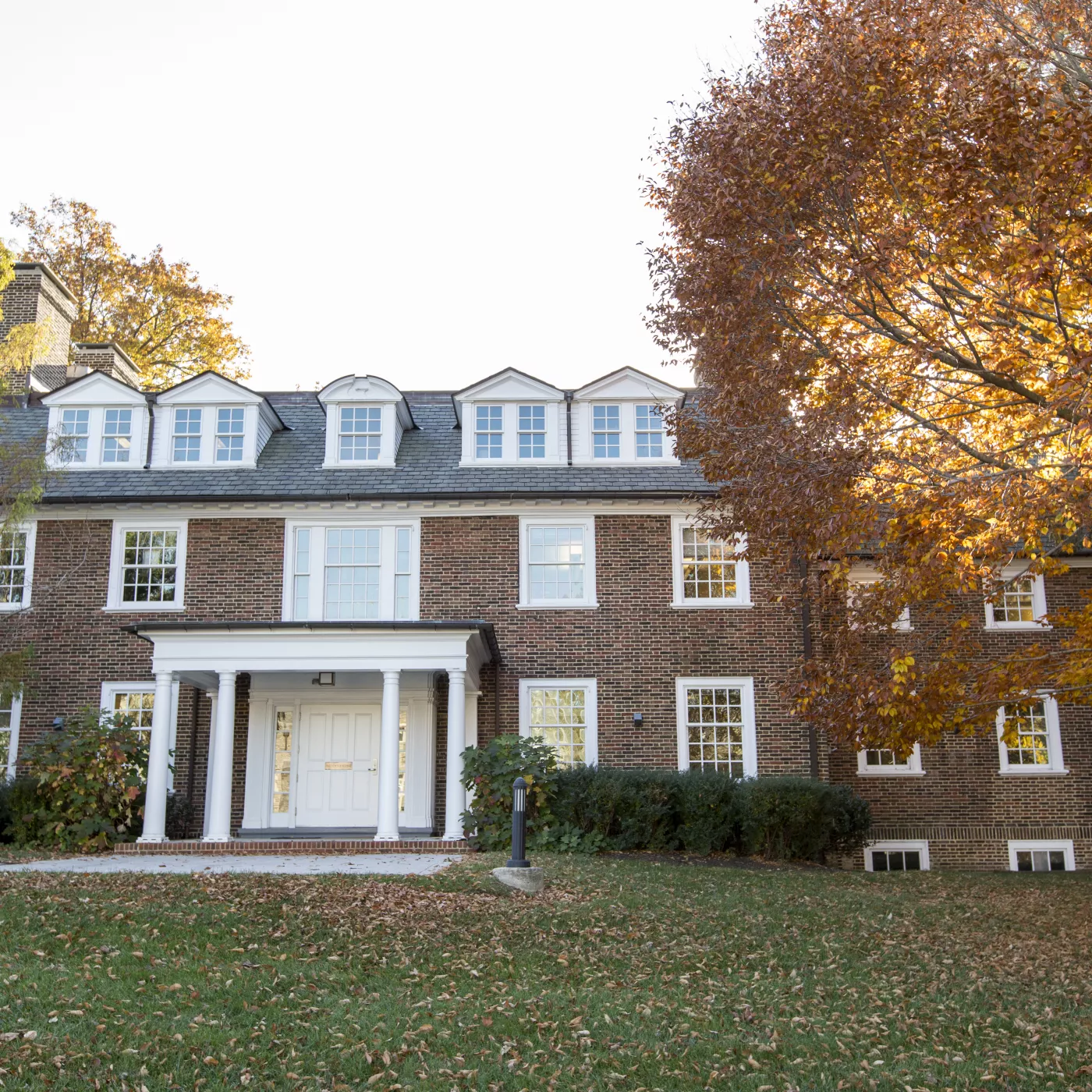
Contact Us
Bryn Mawr/Haverford Education Studies Department
Bryn Mawr College
Bettws-y-Coed
101 N. Merion Avenue
Bryn Mawr, PA 19010-2899
Phone: 610-526-5010
Haverford College
Founders 028
370 Lancaster Avenue
Haverford, PA 19041-1392