
Instructional Technology and Design
Schedule a consultation
Technology for Teaching
Below are some of the resources our staff can help you with. Not seeing something you need? Search for info in Ask Athena or contact us!
Every academic course has a Moodle site where instructors can share resources with students and set up assignments, quizzes, polls, discussion boards and other online activities. See the Moodle section of Ask Athena for how-to guides and links to video tutorials.
Nearly all Bryn Mawr College classrooms have a data projector and screen and a podium computer and/or laptop and tablet data connection. Lecture halls have a lecture capture camera and microphone facing the podium. Some rooms are equipped with cameras and microphones facing the audience for video conferencing.
To see details about a specific room, including its technology, browse for it in the Locations section of the College's room reservation system.
For training and troubleshooting of classroom technologies, contact Multimedia (multimedia@brynmawr.edu; 610-526-7449).
The Registrar's Office assigns classrooms for academic courses. Use the room reservation system to reserve classrooms for other purposes.
Log into Panopto. See the Panopto section of Ask Athena for more info about how to use it to record, upload and share course content, create video quizzes or receive video assignment submissions.
Faculty, students and staff can check out DVD/CD drives, cameras, voice recorders, tripods and other multimedia equipment from the Canaday Library circulation desk for 7-day loan periods. See our Ask Athena article for details.
Public computer labs, scanners and printers are available throughout the libraries, including some accessible 24 hours/day in Canaday. Some software can be accessed on personal devices; if not, it can be accessed remotely through our LabStats and Apporto virtual lab computer services.
The College site-licenses both Microsoft Teams and Zoom. Both can be used to create and host online meetings; Zoom is integrated with Panopto and Moodle to facilitate sharing meeting links and recordings with course participants.
Instructional Design Services
Our team can help you with many aspects of digital course design and pedagogy.
Course Design
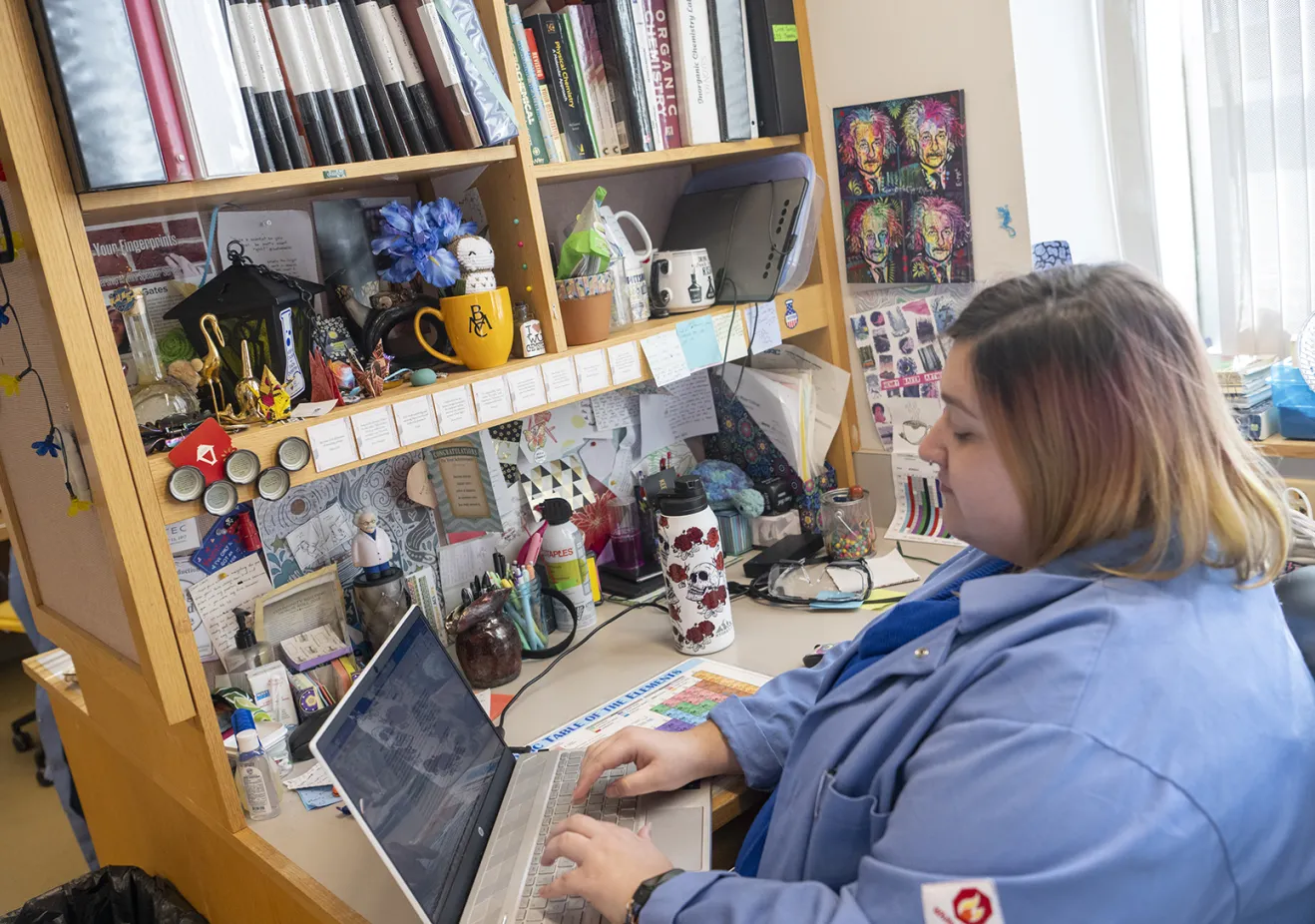
We can help you design effective Moodle courses, explore digital options for course management, appointment booking or polling, and adapt face-to-face learning activities to be online and/or asynchronous. Our Online Teaching Institute course page also contains self-help resources.
Universal Design for Learning (UDL)
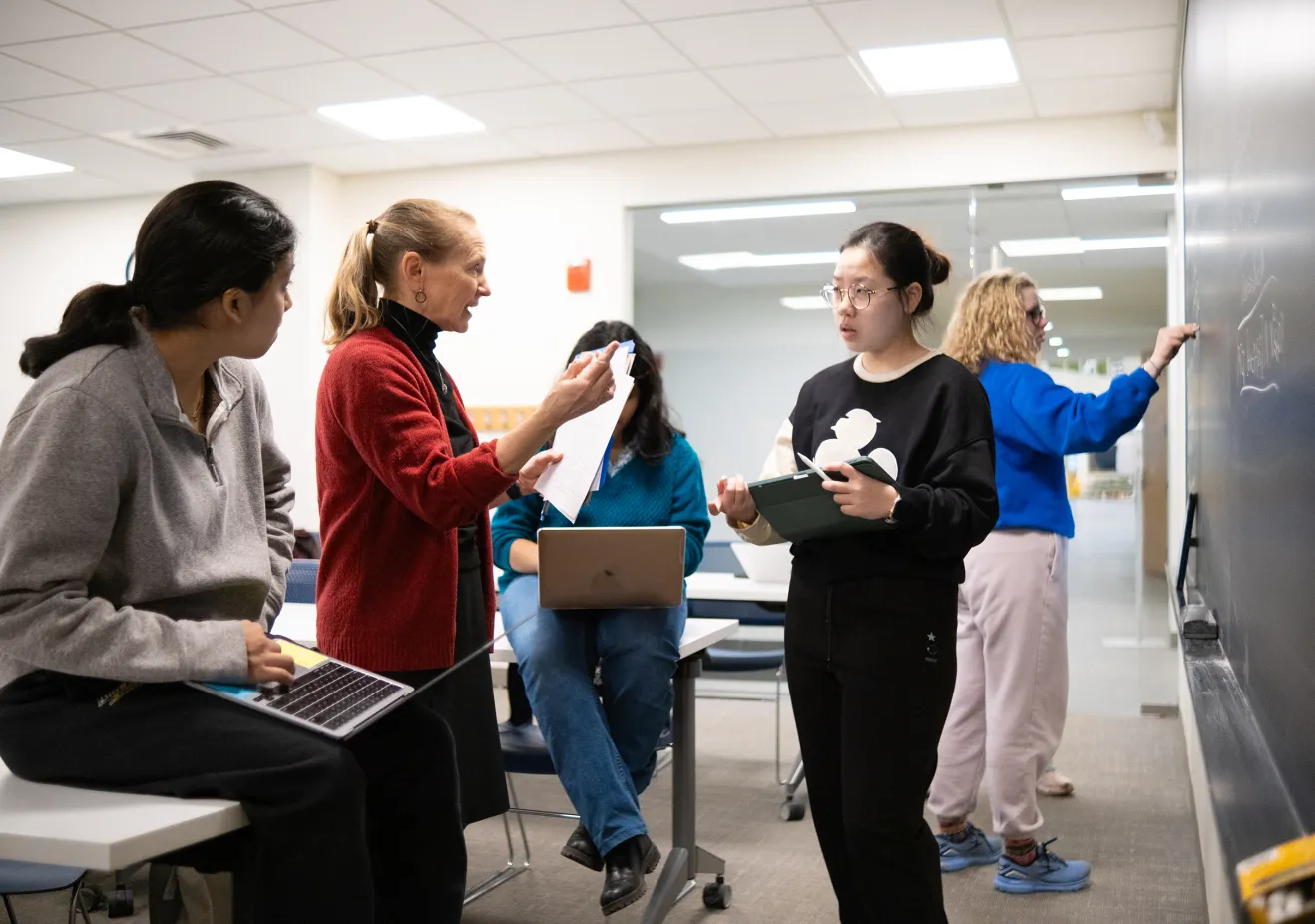
LITS supports the College's commitment to designing learning experiences that meet the needs of all learners. We can help you apply UDL Guidelines for Learning Experiences to any course, workshop or learning experience.
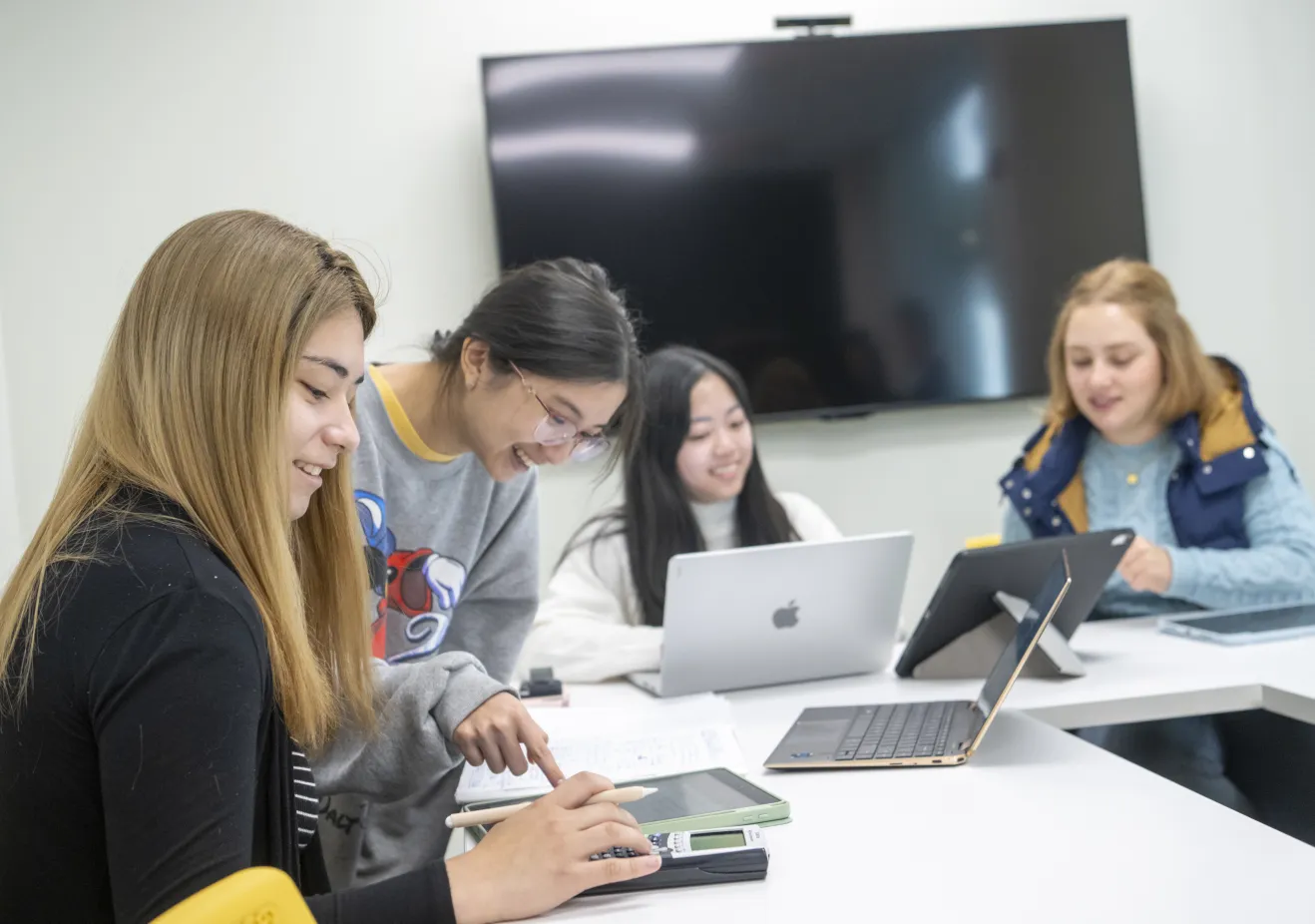
Digital Assignment Design and Support
We can help you design successful digital assignments and provide workshops and support for students via our digital scholarship/data science office hours on Fridays 1-3 in Carpenter or by arrangement.
Workshops, Conferences and Institutes
Looking for pedagogical ideas? Explore archives of Blended Learning in the Liberal Arts Conferences, pandemic-era Online Teaching Institute, and the Symposium on Post-Pandemic Teaching and Learning.
On May 25, 2021, LITS held a symposium for faculty to gather and share successes and lessons learned from the 2020-2021 academic year, including teaching practices and learning technology uses they intended to continue over coming semesters. Recordings of these presentations are linked below; use the bookmarks within them to jump to a specific presentation.
- Symposium Recording Part 1
- “Padlet: A Tool for In-Class Communication,” Amanda Cox
- “Padlet as a Multi-Purpose T&L Tool,” Ignasi Gozalo-Salellas and Inés Arribas
- “Online Learning: Mapping Languages Via Storymap,” Agnès Peysson-Zeiss
- Symposium Recording Part 2
- “It is on the syllabus Moodle: Using the LMS to Clarify a Foreign Language Curriculum,” Irina Walsh
- “Using Moodle and Zoom for Foreign Language Teaching,” Ying Liu
- “Pre-Class Questionnaires for Flipped Classrooms,” Lisa Traynor
- “Using UDL Concepts to Create a Collaborative and Inclusive Learning Environment in a Remote Hispanic Linguistics Course,” Kaylea Berard and Tala Anderson
- Symposium Recording Part 3
- “Classroom Zoom Visits from Away and Abroad,” Martín Gaspar
- “Encouraging Student Engagement Using Zoom Private Chat,” Chris Murphy
- “A Fun and Rewarding Summer Project: Film Translation with Your Students,” Manar Darwish and Esther Kim
- Symposium Keynote: "Saving the Silver Lining: How the Pandemic Opened the World of Learning to Students with Disabilities and How We Can Keep Access in Our New Normal," Grace Cipressi
See also:
When Covid-19 pandemic forced a hiatus in in-person learning, Bryn Mawr College developed a much-emulated Online Teaching Institute in summer 2020 to help faculty transition courses to fully online and hybrid formats, through a partnership between Assistant Professor of Social Work Tamarah Moss, Senior Educational Technologist Christine Boyland and other LITS staff. The institute provides hands-on experience taking an online course; introduces relevant pedagogical theory and practices; and invites participants to share ideas, receive peer feedback, and work with LITS consultants as they develop their own course pages, assessments, activities and materials.
From 2011 to 2020, Bryn Mawr College hosted an annual conference on Blended Learning in the Liberal Arts, which drew over a hundred faculty, educational technologists and other academic support staff from across the country and internationally.
Conference presentation information, materials and recordings are archived in Bryn Mawr College's repository and the Blended Learning in the Liberal Arts YouTube Channel.
Other Past Initiatives
Bryn Mawr College is leader in incorporating technology into liberal arts curricula, teaching and research. Learn more about some of our past projects.
This 2014-2018 Andrew F. Mellon foundation award funded curricular development grants, summer undergraduate internships and two term-limited post-baccalaureate educational technology staff positions to further twin goals:
- Supporting faculty use of technology to enhance teaching and learning
- Creating opportunities for Bryn Mawr College students to develop the skills and perspectives they need to be leaders in a digital age.
The College has sustained this work post-grant through the Digital Bryn Mawr grant program, summer digital technology internships and two EAST Assistant positions open to recent Bryn Mawr College graduates and alums.
Funded by a "First in the World” (FITW) grant from the U.S. Department of Education (P116F140302), this 2014-2018 project led by PIs Elizabeth McCormick and Jennifer Spohrer focused on improving STEM completion by addressing a key stumbling block: difficulty with the required mathematics. Faculty and academic support staff at the ten participating colleges developed a suite of online, interactive learning materials designed to help students review and practice mathematics concepts and skills commonly encountered in introductory chemistry, physics and calculus courses. We used a modified RCT approach to test using materials to provide a co-requisite, blended learning approach to math remediation in introductory physics, calculus and chemistry courses.
Partners
- Allegheny College
- Bryn Mawr College
- Denison University
- Grinnell College
- Lafayette University
- Mills College
- Oberlin College
- Smith College
- St. Olaf College
- Vassar College
- Wellesley College
- Whittier College
Online Materials
The interactive online tutorials and assessments used in this study were developed and published on the OER platform, MyOpenMath. Please see our instructor's guide for information on how to preview and adopt them.
In 2016-2018, Bryn Mawr College partnered with Pearson Interactive to explore and test potential higher education applications for the Microsoft HoloLens. Pearson Education provided several of these augmented reality devices, and LITS and Pearson staff hosted demonstration events for faculty and staff, science courses, students participating in the Career and Civic Engagement Center's STEM Intensives and Sudo Hoot and Engineers and Makers clubs. We jointly sponsored winter break and summer internships for undergraduates to give students first-hand experience developing and testing applications for a 3D, augmented reality environment and working as part of a diverse development team distributed across continents.
Blog posts and videos from student interns and staff working with the HoloLenses:
- The HoloLens as an Educational Tool (video)
- Hololenses are Here!
- HoloLens Applications: Telling Indigenous Stories with Virtual Reality
- Developing for the HoloLens: A Winter Intern's Perspective
- Can you spot the Great Hall in this Microsoft HoloLens video?
- Summer Interns 2017: Digital Competencies and More
- Creating an Augmented and Virtual Reality Course
The HoloLens Project in the News:
- Cathy Campo, "Making Music Education More Accessible Through Technology" Bryn Mawr College News, 2 March 2017.
- "Bryn Mawr College 'Winterns' Develop Educational App for Microsoft HoloLens" Pearson News, 28 February 2017.
- Laura Devaney, "Visionary: How 4 Institutions are Venturing into a New Mixed Reality," eCampus News, 22 November 2016
- Joshua Kim, "Why I'm Intrigued About Pearson's HoloLens Initiative: Augmented Reality and Non-Incremental Change in Higher Education," Inside Higher Ed, 20 November 2016.
- Andrew Koke and Anthony Guest-Scott, "How Virtual Reality Could Change the Way Students Experience Education," EdTech, 18 November 2016
- Matthew Scott, "HoloLens Bryn Mawr Project Off to Flying Start," LinkedIn, 15 November 2016.
- "Pearson Announces Mixed Reality Pilots Designed to Solve Real World Learning Challenges at Colleges and Universities" (press release), 26 October 2016.
Bryn Mawr College led this project, funded by the Teagle Foundation's Hybrid Learning and the Residential Liberal Arts Experience initiative, to develop online, interactive instructional materials for college-level Psychology Research Methods and Statistics (Psych RMS). These materials allow students to practice, assess, and get feedback on concepts and skills online at their own pace and can help faculty differentiate learning to meet the range of skill and confidence levels typical in this introductory course. They are published as free, open educational resources (OER) on MyOpenMath; our Instructor's Guide explains how instructors can preview and adopt them.
Project Personnel (with appointment at time of grant)
- Anjali Thapar, Professor of Psychology, Bryn Mawr College
- Jennifer Spohrer, Coordinator for Academic Technology Initiatives, Bryn Mawr College
- Lisa Dierker, Professor of Psychology, Wesleyan University
- Caitlin Powell, Assistant Professor of Psychology, St. Mary's College of California
- Emily Hause, Associate Professor of Psychology, St. Mary's College of California
- Julia F. Heberle, Associate Professor of Psychology and Director of Albright College Honors Program
- Linda Tennison, Associate Professor of Psychology, College of St. Benedict & St. John's University
- Robert Kachelski, Associate Professor of Psychology, College of St. Benedict & St. John's University
- Kasselman, Lora | Assistant Professor of Psychology, Albright College
- Andrew Ward, Professor & Department Chair of Psychology, Swarthmore College
- Jürgen Kremer, Professor & Department Chair of Behavioral Sciences, Santa Rosa Junior College
- Paul Zarnoth, Associate Professor & Department Chair of Psychology, St. Mary's College of California
This 2014-17 project was funded by a TIDES: Teaching to Increase Diversity and Equity in STEM initiative, launched by American Association of Colleges and Universities (AAC&U) through a grant from the Leona M. and Harry B. Helmsley Charitable Trust. The project team developed a set of interactive modules for develop physics majors' computational skills, designed for use in a dedicated course or as self-paced resources distributed across the curriculum. The modules include stories highlighting the careers and work of non-Western, women, and under-represented minority scientists as a means of engaging and retaining a more diverse student body.
- Building Digital Competencies through Online Computational Skills Modules (video)
- Bryn Mawr Faculty Adding Computational Skills to STEM Courses (Bryn Mawr College News, 8 July 2014)
This Next Generation Learning Challenges grant-funded study in 2011-2013 was designed to foster faculty experimentation with blended learning, to evaluate those experiments, and share our findings among a community of 40 partner colleges. At that time, research suggested that blended approach -- i.e., one that combined online interactive self-paced learning with classroom instruction -- could significantly improve student learning, engagement, and satisfaction over wholly online or wholly classroom based courses, but all available studies focused on community colleges and large universities. Our goal was learning whether blended approaches provided comparable benefits in a smaller and residential liberal arts college setting.
In 2011-2012 Bryn Mawr College faculty developed and piloted blended approaches to 18 courses in a variety of subjects, with an emphasis on introductory STEM courses. We shared resources, experiences, and findings with partner schools in conferences and webinars throughout that year, and in 2012-2013 faculty from 25 of our partner colleges developed and taught over 40 blended courses on their own campuses. We learned that blended learning could improve student learning in this context and supported the meaningful faculty-student interactions and deep, active learning pedagogies that liberal arts colleges value.
- Studying Blended Learning in a Liberal Arts College Setting (slides), Jennifer Spohrer, e-learning 2.0 Conference, 29 March 2012. Published by Next Generation Learning Challenges.
